In today’s fast-evolving digital world, cloud technology has become the backbone of modern businesses-powering everything from data storage to global collaboration. But as organisations migrate to the cloud, the risks of cyberattacks, data breaches, and compliance violations have surged dramatically.
Protecting sensitive data and maintaining trust now demands more than just firewalls-it requires intelligent, adaptive cloud security solutions. From detecting vulnerabilities in real time to enforcing access controls and ensuring regulatory compliance, cloud security tools are redefining digital defense.
What Are Cloud Security Tools?
Cloud security Software are special software systems that are used to secure data, applications and infrastructure in a cloud setting e.g. AWS, Azure and Google Cloud. They assist the organisations in identifying vulnerabilities, controlling configurations, tracking user entry, and stopping cyber crimes such as data breaches and malware attacks.
Cloud security tools guarantee that the cloud operations are secure, resilient, and in line with regulatory requirements by offering real-time visibility, compliance automation, and intelligence of threats. They are critical to business models that are taking multi-cloud or hybrid, as they allow relentless protection and risk reduction in flexible digital ecosystems.
Why Cloud Security Tools Are Critical
- Emerging Cyber Threats: In 2025, cyberattacks targeting cloud infrastructure will become more advanced and sophisticated such as ransomware, supply chain attacks, and sophisticated incident management tools are essential to preemptively detect, prevent, and respond to attacks affecting distributed systems.
- Multi-Cloud Complexity: Today, enterprises can work with two or more cloud platforms, each having specific configurations and risks. Cloud security solutions can help streamline management so that there is consistency of policies, visibility, and compliance between AWS, Azure, and Google Cloud.
- Regulatory Compliance: The global laws on data protection, such as GDPR, HIPAA, and ISO 27001, require constant adherence to these regulations. To avoid the expensive fines and legal ramifications, cloud security software enable compliance audits, reporting, and enforcement to be performed automatically.
- Identity and Access Control: With the increasing incidence of identity breaches, user permissions are very important. A CIEM-enabled cloud security platform can be used to stop the misuse of privileges, implement least-access controls, and protect APIs and service accounts in any environment.
- DevSecOps Integration: In contemporary development cycles, it is necessary to integrate security. Cloud security tools can be combined with CI/CD pipelines, such that vulnerabilities, misconfigurations and policy breaches may be identified by developers before deployment, which enhances software reliability.
- AI-Powered Threat Detection: AI-led analytics detects abnormal behaviors, insider threats, and zero-day exploits at a quicker rate. In 2025, cloud security platforms will make use of machine learning to improve accuracy, minimize false positives, and automatically address threats.
- Data Privacy and Protection: The protection of sensitive data is a priority with the growing exponential data. Cloud security means that the data at rest and in transit is encrypted, their access is monitored, and sharing or exfiltration of essential assets is not allowed by unauthorized parties.
- Cost and Operational Efficiency: Manual monitoring of the cloud is time consuming and prone to error. Cloud security solutions are automated to save resources, minimize human interaction, and decrease the total cost of functioning yet ensuring protection on the high level and performance.
List of Top 15 Cloud Security Tools
1. Wiz
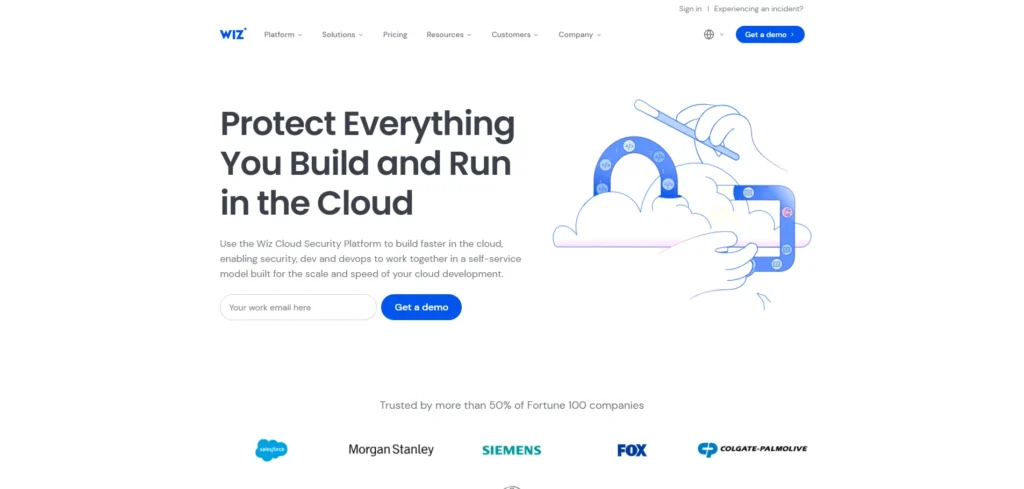
Wiz is a top Cloud-Native Application Protection Platform (CNAPP) with full visibility of multi-cloud environments such as AWS, Azure, and Google Cloud. It is agentless and scans in real time to identify misconfigurations, vulnerabilities, secrets, and identity risks.
The Security Graph by Wiz compares the results on workloads, networks, and identities to rank the risks that are considered the most important. It makes cloud security easier for enterprises with compliance mapping, workload scanning and policy enforcement.
The platform is connected to DevOps tools, which boosts shift-left security and protection. Wiz is highly intuitive and scalable with its dashboard, making it the best choice in organisations that embrace multi-cloud or hybrid infrastructures.
Website: https://www.wiz.io/
Key Features:
- Agentless, real-time cloud scanning across AWS, Azure, and GCP.
- Security Graph for contextual risk prioritization.
- Automated detection of misconfigurations and vulnerabilities.
- Built-in compliance mapping for major frameworks (ISO, SOC 2).
- Seamless DevOps integration for shift-left security.
Pricing:
- Custom Pricing
2. Microsoft Defender for Cloud
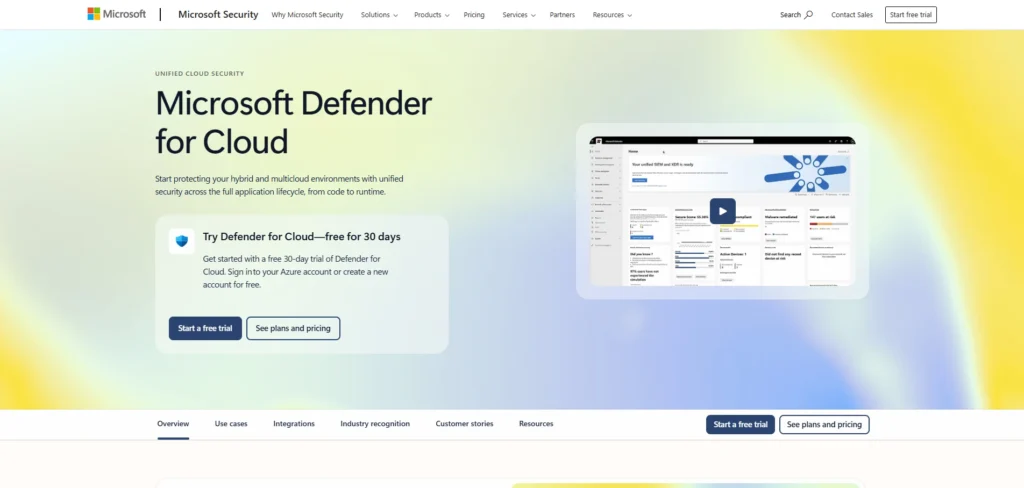
Microsoft Defender for Cloud provides single-cloud security control on Azure, AWS, and Google Cloud. It is a combination of Cloud Security Posture Management (CSPM) with Cloud Workload Protection (CWPP) to protect resources, identities and workloads.
The platform identifies misconfigurations, vulnerabilities, as well as suspicious activities and guarantees that the system is compliant with significant frameworks. It is an AI-based threat detector, which is integrated with Microsoft Sentinel and Defender products to achieve greater visibility.
Automated remediation, advanced analytics, and a centralised dashboard can be valuable to businesses. Defender for Cloud assists businesses in tracking hybrid environments effectively, reducing exposure, and creating resilient cloud operations in accordance with the principles of zero-trust.
Website: https://www.microsoft.com/en-us/security/business/cloud-security/microsoft-defender-cloud/
Key Features:
- Unified CSPM and CWPP across multi-cloud and hybrid environments.
- AI-driven threat detection and automated remediation.
- Continuous compliance with regulatory frameworks.
- Integration with Microsoft Sentinel for SIEM capabilities.
- Centralized dashboard for visibility and posture management.
Pricing:
- Request Pricing
3. Palo Alto Networks Prisma Cloud
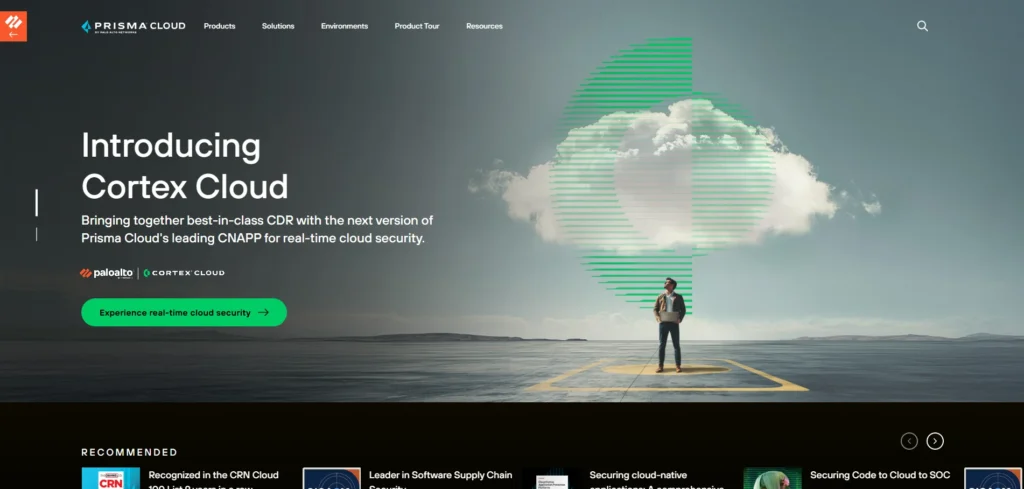
Prisma Cloud is a single CNAPP cloud by Palo Alto Networks that provides full visibility and protection throughout the application lifecycle. It combines CSPM, CWPP and CIEM scanning to AWS, Azure and GCP environments.
The tool allows maintaining compliance, identifying vulnerabilities, and defending containers, Kubernetes and serverless workloads in real time. Prisma Cloud prioritizes risks and automates remediation with its machine learning-based threat analysis.
It also fits in the CI/CD pipelines to obtain the security of DevOps workflows. Prisma Cloud was engineered to be scalable and performance-sensitive on an enterprise level, providing steady governance, profound visibility, and compliance to the sophisticated cloud environment.
Website: https://www.paloaltonetworks.com/prisma/cloud
Key Features:
- Unified CNAPP integrating CSPM, CWPP, CIEM, and IaC security.
- Continuous compliance and automated policy enforcement.
- Deep visibility into container and serverless environments.
- Risk-based prioritization using ML-driven analytics.
- DevOps pipeline integration for proactive security.
Pricing:
- Request Pricing
4. Orca Security
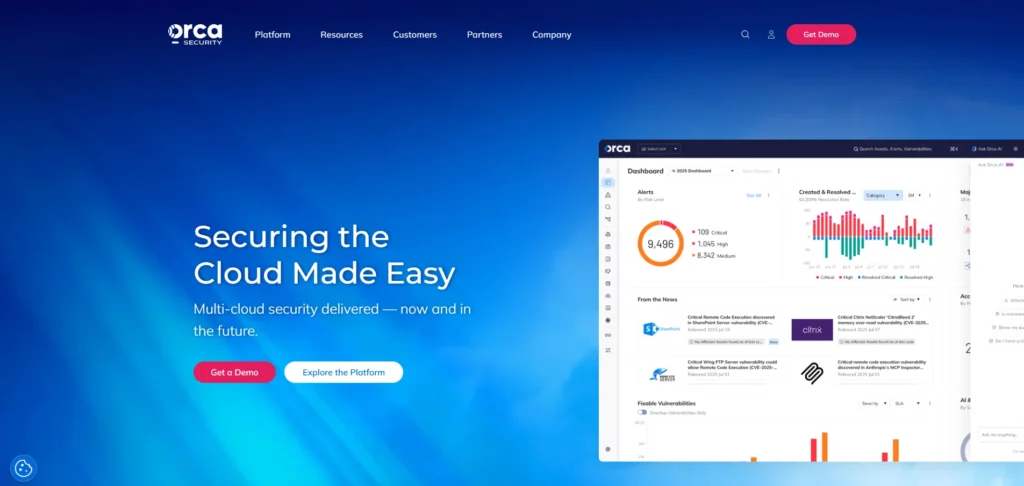
Orca Security is an agentless and side-scanning cloud security that removes blind spots in multi-cloud configurations. It uses innovative technology to collect metadata on workloads and configurations, which can be fully viewed without affecting performance.
The platform also determines vulnerabilities, misconfigurations, and malware and establishes their connection, which is used to prioritize risks in a context. Within one dashboard, orca incorporates CSPM, CWPP, and compliance management. Incident response is facilitated through automated alerts and interactions with DevSecOps tools.
The compliance of frameworks such as ISO 27001, HIPAA, and PCI-DSS is also guaranteed by ORCA with powerful analytics. It is reliable because of its ease, scalability, and rapid onboarding without the use of agents.
Website: https://orca.security/
Key Features:
- Agentless side-scanning for comprehensive visibility.
- Context-aware risk prioritization across workloads.
- Built-in compliance monitoring (PCI, HIPAA, ISO).
- API integration with SIEM and SOAR tools.
- Unified dashboard for all cloud accounts.
Pricing:
- Request Pricing
5. Check Point CloudGuard
Check Point CloudGuard offers security in the cloud (Multi-cloud and hybrid) in a unified manner. It secures workloads, networks, and applications on AWS, Azure and GCP, as well as on private data centers.
CloudGuard is a system that integrates posture management, threat prevention, and compliance monitoring, which is driven by the AI of ThreatCloud of Check Point. The platform automates misconfigurations, data exposure, and identity risk detection. Its policy-as-code platform facilitates ongoing compliance and has CI/CD pipelines.
CloudGuard is built to minimize threats against advanced attacks through visibility, scalability, and protection based on threat intelligence to safeguard enterprises. It has an integrated console that facilitates smooth and effective management of cloud assets.
Website: https://www.checkpoint.com/cloudguard/
Key Features:
- Multi-cloud threat prevention powered by ThreatCloud AI.
- Policy-as-code framework for continuous compliance.
- Protection for workloads, networks, and applications.
- Integration with CI/CD pipelines for DevSecOps.
- Real-time visibility and configuration monitoring.
Pricing:
- Request Pricing
6. Cloudanix CSPM
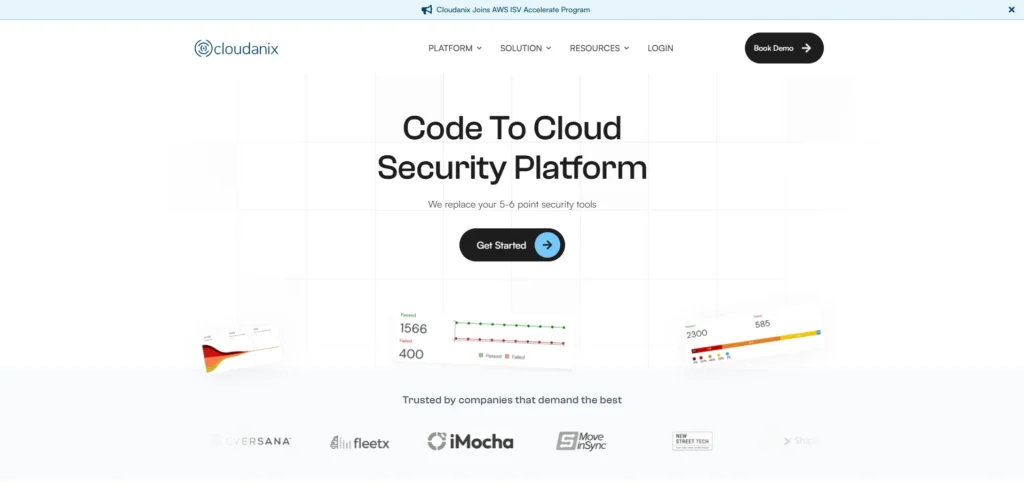
Cloudanix CSPM is a multi-cloud security solution that offers real-time monitoring, misconfiguration, and automatic remediation of AWS, Azure, GCP, and OCI clouds. Its single dashboard brings together CSPM, CWP,P, and CIEM capabilities, and this feature allows organizations to keep track of risk and compliance in hybrid environments at all times.
Cloudanix adheres to such significant regulatory standards as SOC 2, HIPAA, GDPR, and CIS. Having a policy-enforcement built-in feature of DevSecOps workflows it provides code-to-cloud security.
The platform focuses on the contextual analysis of risks and provides automation of remediation, alerts, and reporting. Cloudanix is aimed at companies that want to have a scalable, efficient, and centralized cloud management.
Website: https://www.cloudanix.com/
Key Features:
- Real-time misconfiguration detection and remediation playbooks.
- Multi-cloud asset visibility (AWS, Azure, GCP, OCI) with drift detection.
- Built-in compliance frameworks (SOC 2, HIPAA, GDPR, CIS).
- CI/CD / DevSecOps support with policy enforcement from code-to-cloud.
- Unified dashboard for CSPM, CIEM, CWPP in one platform.
Pricing:
- Custom Pricing
7. CrowdStrike Falcon Cloud Security
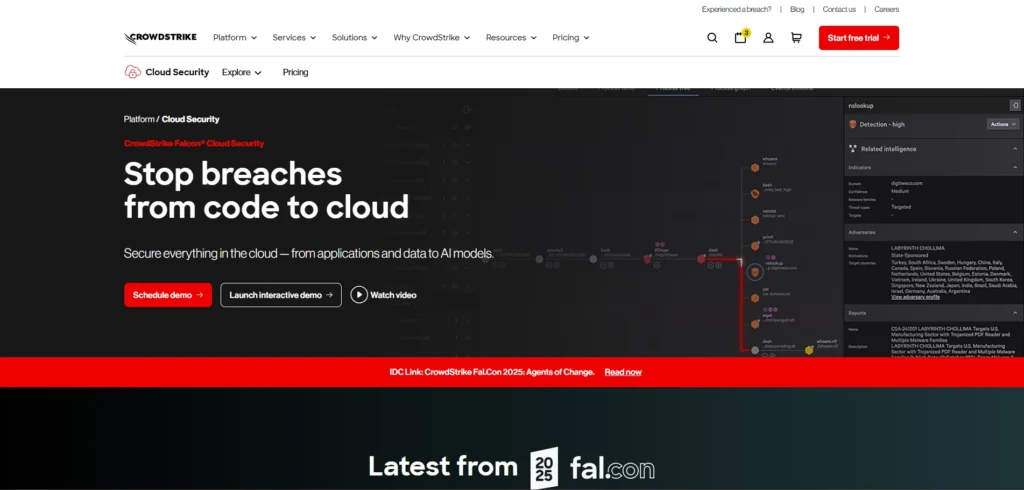
CrowdStrike Falcon Cloud Security extends the company’s renowned endpoint protection capabilities to cloud workloads and containers. It delivers real-time visibility, attack detection, and policy enforcement across multi-cloud environments.
The platform integrates CWPP and CSPM capabilities to detect misconfigurations, privilege escalation, and runtime threats. Backed by the Falcon platform’s threat intelligence and AI engine, it provides proactive defense against zero-day attacks.
CrowdStrike’s lightweight architecture ensures performance without compromising security. Designed for DevOps integration, it enhances runtime protection and compliance management, ensuring a unified view of cloud workloads and identities.
Website: https://www.crowdstrike.com/en-us/platform/cloud-security/
Key Features:
- Unified CWPP and CSPM for cloud workloads and containers.
- AI-driven threat detection using the Falcon platform.
- Real-time monitoring and runtime protection.
- API integrations with DevOps and ITSM tools.
- Centralized management for hybrid environments.
Pricing:
- Falcon Go- $59.99 per device / billed annually
- Falcon Pro- $99.99 per device / billed annually
- Falcon Enterprise- $184.99 per device / billed annually
8. Trend Micro Cloud One
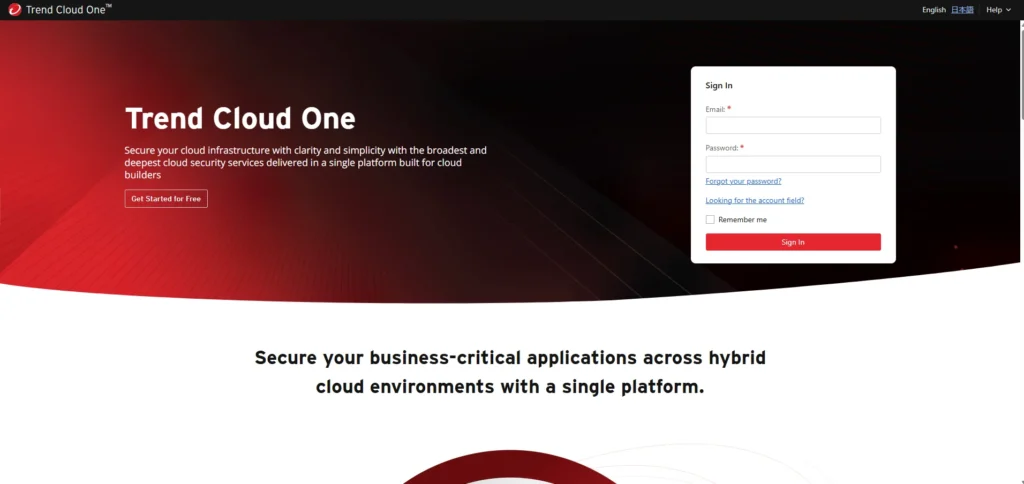
Trend Micro Cloud One is an integrated cloud security suite covering workload, container, file, and network protection. It offers modules for CSPM, CWPP, and application security, providing consistent visibility across AWS, Azure, and Google Cloud.
The platform automates compliance checks and identifies misconfigurations, vulnerabilities, and policy deviations. Trend Micro’s threat intelligence ensures protection against evolving attacks.
Its integration with CI/CD pipelines allows developers to embed security early in the process. With centralized management and scalability, Cloud One empowers organizations to safeguard hybrid and multi-cloud infrastructures efficiently.
Website: https://cloudone.trendmicro.com/
Key Features:
- Unified security suite covering workload, file, and network protection.
- Continuous compliance monitoring for major standards.
- Built-in vulnerability detection and policy automation.
- Integration with AWS, Azure, and Google Cloud APIs.
- Central management console for visibility across assets.
Pricing:
- Request Pricing
9. Tenable Cloud Security (formerly Ermetic)
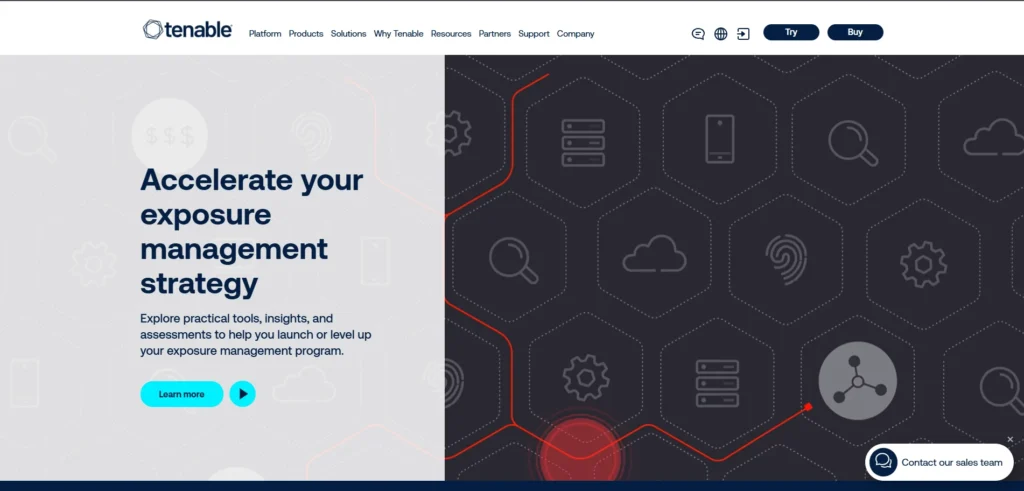
Tenable Cloud Security, developed from Ermetic’s CIEM technology, provides identity-first cloud protection. It focuses on analyzing permissions, entitlements, and configurations to reduce access-related risks.
The platform supports AWS, Azure, and GCP, offering automated risk detection, compliance mapping, and least-privilege recommendations. With integrated CSPM and CIEM, Tenable helps visualize exposure paths and misconfigurations across large-scale cloud environments.
The platform’s analytics and policy automation ensure continuous posture management. Ideal for enterprises adopting a zero-trust model, Tenable Cloud Security enhances governance, identity management, and cloud compliance with actionable insights.
Website: https://www.tenable.com/cloud-security
Key Features:
- Identity-first cloud protection with CIEM capabilities.
- Visualization of permission and entitlement risks.
- Automated least-privilege recommendations.
- Compliance monitoring across AWS, Azure, and GCP.
- Continuous CSPM with alerting and policy automation.
Pricing:
- Custom Pricing
10. Qualys Cloud Security
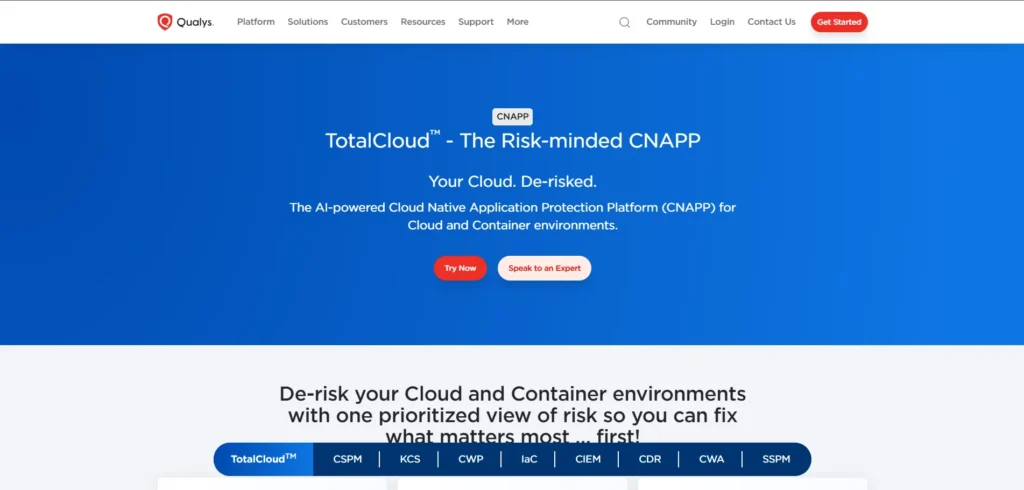
Qualys Cloud Security provides comprehensive visibility and compliance for cloud workloads, containers, and infrastructure. It integrates vulnerability management with CSPM capabilities to identify configuration flaws, mismanaged identities, and weak encryption policies.
The platform supports automated policy enforcement, continuous monitoring, and detailed risk reports. Qualys’s modular approach allows organizations to scale easily while maintaining unified security across hybrid environments.
Its integrations with CI/CD pipelines enable early detection of vulnerabilities during development. Known for its reliability and accuracy, Qualys helps organizations maintain compliance with standards like ISO 27001, PCI DSS, and SOC 2.
Website: https://www.qualys.com/apps/totalcloud/
Key Features:
- Integrated CSPM and vulnerability management in one platform.
- Continuous visibility into cloud assets and workloads.
- Automated remediation and compliance reporting.
- API integration with DevOps and SIEM tools.
- Cloud agent technology for real-time scanning.
Pricing:
- Request Pricing
11. Cyscale
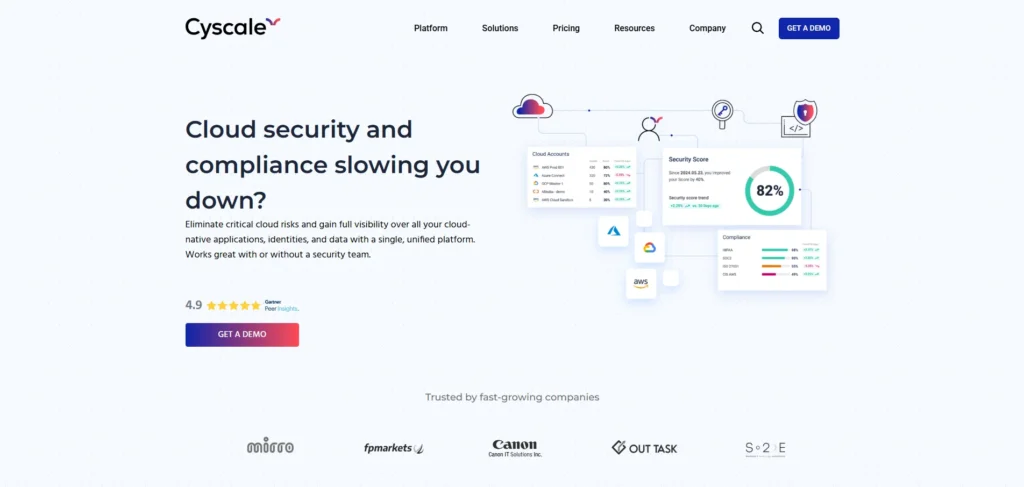
Cyscale is a dynamic CSPM platform that provides visualization-driven cloud security management. It automatically discovers assets, identifies misconfigurations, and ensures compliance with frameworks like GDPR, SOC 2, and ISO 27001.
The platform offers a “Security Knowledge Graph” that correlates data from identities, workloads, and networks to highlight the most critical issues. Cyscale integrates easily with AWS, Azure, and Google Cloud.
Its automation simplifies risk remediation and continuous posture improvement. Designed for visibility and collaboration, Cyscale empowers teams to secure multi-cloud environments efficiently while enhancing governance and compliance reporting.
Website: https://cyscale.com/
Key Features:
- Visual “Security Knowledge Graph” for contextual analysis.
- Automated asset discovery and classification.
- Compliance automation for ISO, SOC 2, and GDPR.
- AI-based risk scoring and alerting.
- Multi-cloud support across AWS, Azure, and GCP.
Pricing:
- Custom pricing
12. CloudWize
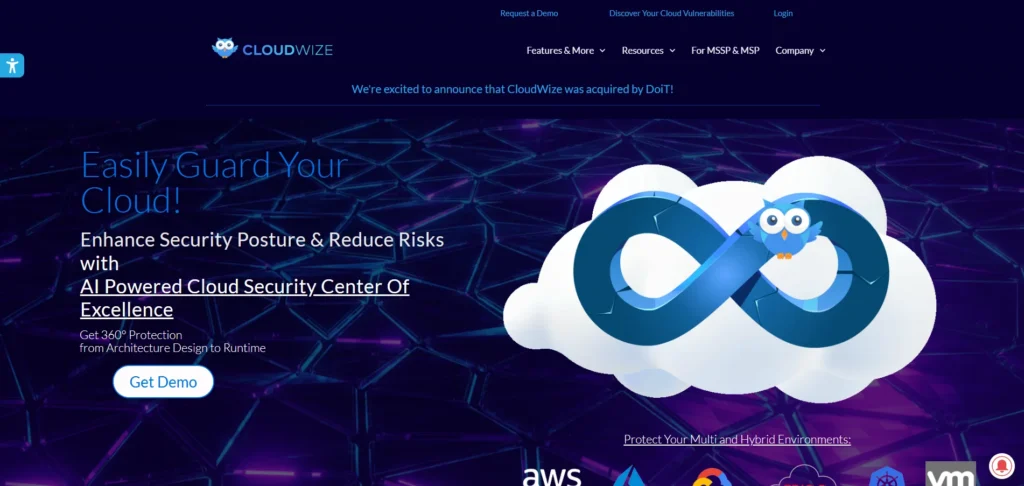
CloudWize is a unified multi-cloud security and observability platform combining CSPM, CWPP, CIEM, and KSPM capabilities.
It offers a visual topology of cloud architectures, identifying vulnerabilities, misconfigurations, and compliance gaps in real time. The platform supports AWS, Azure, and GCP, helping teams monitor performance and security simultaneously. Its policy engine automates detection and remediation workflows.
CloudWize enhances collaboration between DevOps and security teams, ensuring security-as-code integration. With AI-powered insights and compliance automation, it helps businesses maintain secure, optimized, and regulatory-compliant cloud environments efficiently and intuitively.
Website: https://www.cloudwize.io/
Key Features:
- Unified CSPM, CWPP, CIEM, and KSPM capabilities.
- Real-time topology visualization for multi-cloud systems.
- AI-powered anomaly and risk detection.
- Automated policy enforcement and remediation workflows.
- Developer-friendly API and DevOps integration.
Pricing:
- Request Pricing
13. Fortinet FortiCNAPP
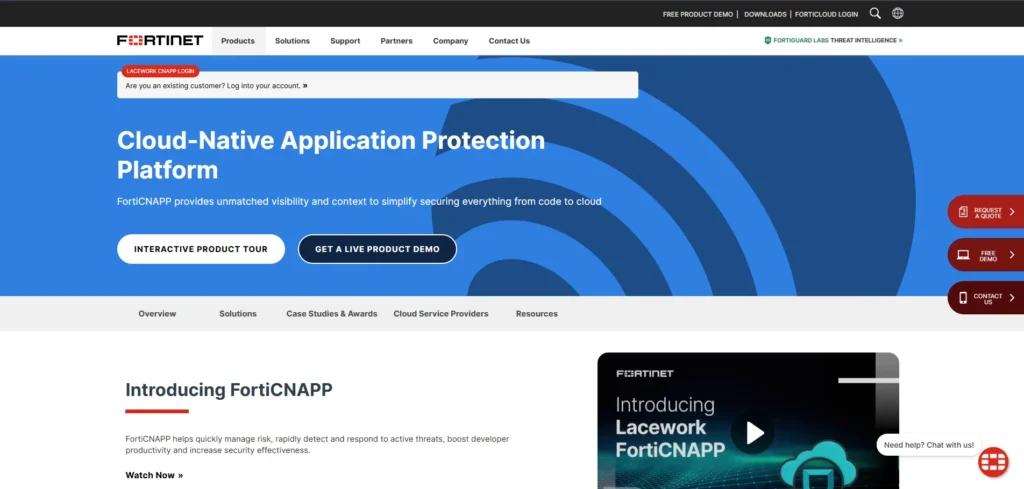
FortiCNAPP, part of Fortinet’s cloud security suite, integrates Cloud Workload Protection (CWPP) and Cloud Security Posture Management (CSPM) in one platform. It provides real-time visibility, misconfiguration detection, and runtime protection for workloads across public and hybrid clouds.
The platform leverages FortiGuard threat intelligence for proactive defense and contextual risk analysis. With built-in compliance templates and automation, FortiCNAPP reduces the complexity of multi-cloud security management.
It also integrates with Fortinet’s broader ecosystem for end-to-end protection. FortiCNAPP’s scalability and unified policies make it ideal for enterprises managing diverse cloud infrastructures.
Website: https://www.fortinet.com/products/forticnapp
Key Features:
- Combined CSPM and CWPP for unified cloud protection.
- Real-time visibility and threat detection.
- Built-in compliance templates for quick audits.
- FortiGuard AI-powered threat intelligence.
- Seamless integration with Fortinet Security Fabric.
Pricing:
- Custom Pricing
14. Rapid7 InsightCloudSec
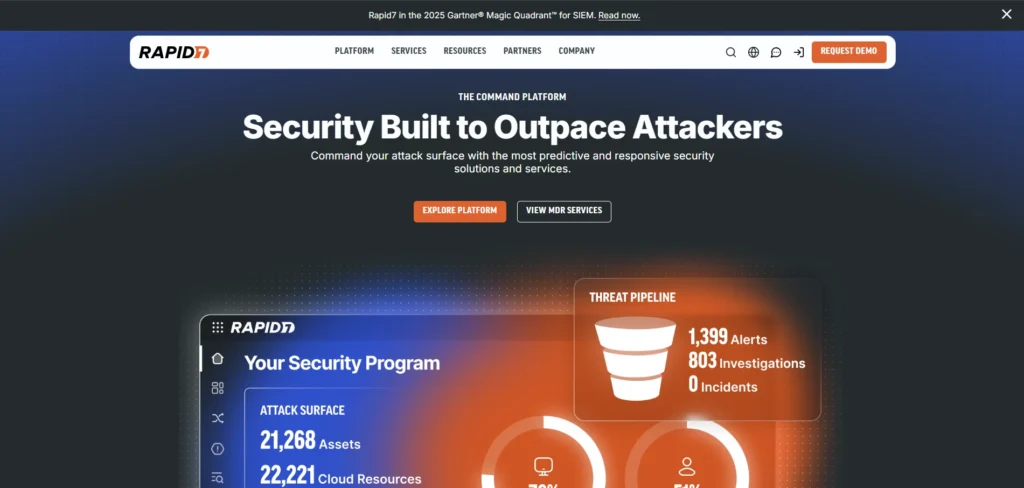
Rapid7 InsightCloudSec is an advanced CNAPP platform providing real-time visibility, governance, and risk management for cloud and container environments.
It integrates CSPM, CWPP, CIEM, and compliance automation for AWS, Azure, and GCP. The tool continuously monitors configurations, permissions, and workloads to detect security drift and vulnerabilities. InsightCloudSec’s unified dashboard and automation features enable rapid remediation and threat response.
Its integration with DevOps workflows enhances agility and cloud governance. With strong analytics and customizable policies, it supports enterprises in building secure, compliant, and scalable multi-cloud operations.
Website: https://www.rapid7.com/products/insightcloudsec/
Key Features:
- Real-time monitoring of cloud posture and compliance.
- Integrated CSPM, CWPP, and CIEM in one dashboard.
- Automated remediation and alerting workflows.
- Continuous drift detection and risk analytics.
- API integration with DevOps pipelines and SIEM tools.
Pricing:
- $5,775/mo
15. Sysdig Secure
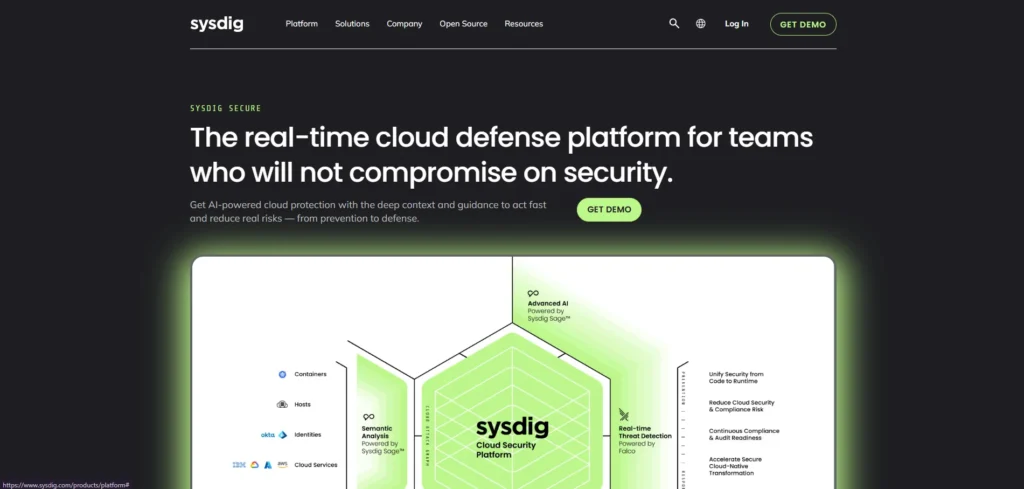
Sysdig Secure provides runtime security, threat detection, and compliance for containers, Kubernetes, and cloud workloads. It combines CSPM and CWPP capabilities to deliver full lifecycle protection—from build to runtime.
Sysdig leverages Falco, an open-source runtime security engine, to detect anomalies and suspicious activities. The platform supports vulnerability scanning, compliance automation, and forensic analysis.
Sysdig integrates deeply with CI/CD pipelines and DevOps tools, ensuring continuous security coverage. With strong visualization and policy automation, it empowers organizations to maintain secure and compliant cloud-native infrastructures efficiently.
Website: https://www.sysdig.com/products/platform
Key Features:
- Runtime security powered by open-source Falco engine.
- Vulnerability scanning for containers and Kubernetes.
- Compliance automation with CIS and NIST benchmarks.
- Detailed forensic analysis and policy enforcement.
- Integration with CI/CD pipelines for continuous protection.
Pricing:
- Request Pricing
Quick Comparison
| Name | Pros | Cons |
| Wiz | Agentless scanning provides full visibility without deploying any software. | May be costly for smaller teams or startups due to enterprise-level pricing. |
| Microsoft Defender for Cloud | Seamlessly integrates with Microsoft ecosystem including Azure and Sentinel. | Limited functionality for non-Microsoft cloud environments without extra configuration. |
| Palo Alto Networks Prisma Cloud | Combines multiple cloud security capabilities in one unified platform. | Complexity may require significant training for security teams. |
| Orca Security | Context-aware prioritization reduces alert fatigue by focusing on the riskiest issues. | Agentless scanning may miss some very low-level runtime anomalies. |
| Check Point CloudGuard | ThreatCloud AI provides advanced threat intelligence across multiple clouds. | Integration with CI/CD pipelines can be complex for large-scale deployments. |
| Cloudanix CSPM | Supports multi-cloud and OCI, enabling comprehensive visibility. | Relatively new platform; smaller community and limited third-party integrations. |
| CrowdStrike Falcon Cloud Security | Lightweight architecture minimizes performance overhead while securing workloads. | Pricing tiers can become expensive for very large-scale deployments. |
| Trend Micro Cloud One | Comprehensive coverage including workload, file, network, and container security. | Some modules require separate licensing, increasing total cost. |
| Tenable Cloud Security | Identity-first approach enhances zero-trust security posture. | Complex UI may require training for effective navigation and reporting. |
| Qualys Cloud Security | Modular design allows scaling security across hybrid environments. | May require separate modules for certain cloud platforms, adding to cost. |
| Cyscale | Security Knowledge Graph provides clear visualization of risk relationships. | Limited third-party integrations compared to larger competitors. |
| CloudWize | Combines CSPM, CWPP, CIEM, and KSPM in a single platform. | May require significant setup to fully utilize AI-driven insights. |
| Fortinet FortiCNAPP | Deep integration with Fortinet Security Fabric for end-to-end protection. | Best performance achieved when used with other Fortinet products. |
| Rapid7 InsightCloudSec | Continuous drift detection helps maintain compliance automatically. | Pricing can be high for multi-cloud, large-scale enterprise environments. |
| Sysdig Secure | Strong runtime security for containers and Kubernetes with Falco integration. | Focused mainly on containerized workloads; may not cover all traditional workloads equally. |
Ending Thoughts
In 2025, cloud security tools have become indispensable for safeguarding digital infrastructures amid increasing cyber threats and complex hybrid environments. As businesses migrate sensitive operations and data to the cloud, the need for proactive defense mechanisms has never been greater. These tools provide continuous monitoring, automated compliance checks, identity management, and advanced threat detection to ensure data integrity and business continuity.
With the rapid evolution of AI-driven attacks and stricter data privacy regulations, organizations must rely on robust cloud security solutions to maintain resilience. Ultimately, cloud security software empower enterprises to innovate confidently, protect their assets, and build trust with customers in an ever-connected digital landscape.
FAQs
What Are The Main Types Of Cloud Security Platforms?
Cloud security tools include Cloud Security Posture Management (CSPM), Cloud Workload Protection Platforms (CWPP), Cloud Access Security Brokers (CASB), and Cloud Infrastructure Entitlement Management (CIEM), each addressing specific security needs in cloud environments.
How Do Cloud Security Platforms Help Prevent Data Breaches?
These tools continuously monitor configurations, detect vulnerabilities, control access permissions, and provide real-time threat alerts—ensuring misconfigurations or unauthorized activities are identified and mitigated before causing data breaches.
Are Cloud Security Tools Necessary For Small Businesses?
Yes. Small businesses are equally vulnerable to cyberattacks. Cloud security software offer scalable protection, affordable compliance solutions, and automated monitoring—helping smaller organizations secure their data without needing extensive IT resources.