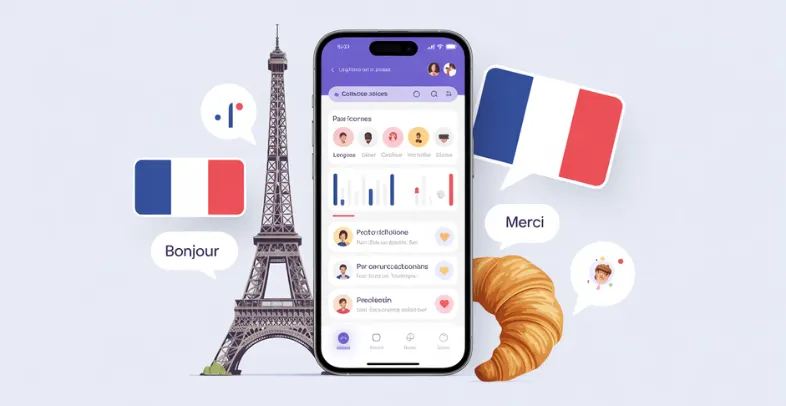
Learning French no longer requires expensive classes or rigid schedules, thanks to the growing popularity of French language learning apps. These apps have transformed the way people learn languages by offering flexible, interactive, and personalized lessons that fit into everyday life. Whether you are a beginner starting with basic vocabulary, a student preparing for exams, or a professional aiming to improve conversational fluency, mobile apps make learning French accessible for everyone.
Most French learning apps combine short lessons, pronunciation practice, listening exercises, and real-life conversations to help users build confidence step by step. Features like gamification, AI-based feedback, daily reminders, and progress tracking keep learners motivated and consistent. From mastering grammar and vocabulary to improving speaking and listening skills, these apps support learners at every stage. This guide explores the best French language learning applications, their key features, and how they can help you learn French faster and more effectively from anywhere.
Why Learning French Is Becoming Important for Students Today
French is no longer just a foreign language taught in schools. It has become a useful life skill. French is spoken in many countries across Europe, Africa, and Canada, which means learning it opens doors to global communication. Students who know French often find more opportunities in higher studies, international programs, and even online work in the future. Many universities and global companies prefer candidates who know more than one language, and French is usually one of the most valued.
For students, learning French early helps build confidence and improves overall learning ability. When you understand another language, your brain becomes better at remembering, focusing, and solving problems. Apps make this process easier because they remove the fear of learning something “difficult.” You learn step by step, without pressure, and at your own speed.
Key Points
- French is spoken in many countries worldwide
- Helpful for future studies, travel, and careers
- Improves memory and thinking skills
- Learning early gives long-term benefits
- Apps make French less scary for beginners
Why Apps Are Better Than Traditional Methods for Beginners
Traditional language learning often depends on textbooks, grammar rules, and memorization. For beginners, this can feel confusing and boring. French Language Learning Apps use audio, visuals, repetition, and interaction, which makes learning more natural. Instead of memorizing rules, you start understanding the language by listening and practicing.
Many beginners feel shy speaking French in front of others. Apps remove that fear by letting you practice pronunciation, repeat words, and make mistakes without judgment. This builds confidence and helps learners improve faster.
Key Points
- Learning feels more natural and interactive
- No fear of making mistakes
- Better pronunciation practice
- More engaging than textbooks
- Builds confidence step by step
How to Choose the Right French Learning Application
Choosing the right app depends on what you want. If you’re just starting and want something fun, Duolingo is a good choice. If you want to speak properly and understand grammar, Babbel works well. If you want real feedback, Busuu is helpful.
Think about your goal. Do you want to pass an exam? Travel? Speak confidently? Your goal should decide the app, not popularity alone.
What Makes a Good French Learning Application?
Before choosing any app, it’s important to know what actually helps you learn and what doesn’t. A good French learning application is not just about flashy design. It should help you understand and remember the language.
First, the app should be easy to use. If the app is confusing, you’ll lose interest quickly. Clear lessons and simple instructions matter a lot.
Second, pronunciation is important. French words are not always pronounced the way they are written. A good app uses native French speakers or clear audio so you can hear how words are really spoken.
Third, lessons should be short. Long lessons feel tiring, especially for beginners. Apps that break learning into small steps help you stay consistent.
Lastly, progress tracking helps. Seeing how much you’ve learned gives motivation. It feels good to know you are improving little by little.
List of 15 Best French Language Learning Apps
1. Duolingo – Best for Absolute Beginners
Duolingo is one of the most downloaded Language Learning Apps in the world for a reason. It makes learning feel like a game. You earn points, complete levels, and collect rewards just by repeating words, answering simple questions, and listening closely to French speakers. The lessons are short, so you don’t feel overwhelmed, and the app encourages you every day so you build good learning habits. If you’ve never studied French before, this is a great place to start. You can learn many other languages like Korean, japanes etc.
Key Highlights
- Perfect for absolute beginners
- Short, gamified lessons
- Audio, reading, and writing exercises
- Daily reminders to keep you learning
- Free version available with optional premium
2. Babbel – Best for Practical Conversation
Babbel focuses on teaching French that you can really use in real life. Instead of just learning random words, you work on phrases like “Where is the bus stop?” or “How much is this?” The lessons simply explain grammar, help you build real sentences, and give you listening practice that sounds like actual conversations. It’s great if your goal is to communicate confidently.
Key Highlights
- Focus on real-world conversations
- Easy-to-understand grammar lessons
- Structured lesson levels
- Great for travel and speaking practice
- Subscription model with full access
3. Busuu – Best for Community Feedback

Busuu connects you with real people who speak French. When you complete writing or speaking activities, native speakers can correct your work. That feedback is powerful because you learn not just how something should be said, but how it actually sounds to a French speaker. It blends lessons with real practice and is great for learners who want interaction.
Key Highlights
- Live feedback from native speakers
- Mix of lessons and practice
- Vocabulary and grammar exercises
- Helpful for speaking confidence
- Free version with optional upgrade
4. Memrise – Best for Pronunciation and Real Audio

Memrise is one of the most effective French Language Learning Apps because it uses videos of real French speakers instead of robotic audio. This helps you understand how French really sounds in day-to-day conversations. It also uses memory techniques to help you remember words better. The app starts easy but gets more challenging as you go. If you want to improve your listening skills and pronunciation, this app helps a lot.
Key Highlights
- Real native speaker videos
- Strong focus on listening and pronunciation
- Fun memory-based learning system
- Vocabulary-heavy but practical
- Beginner to intermediate friendly
5. Rosetta Stone – Best for Deep Immersion
Rosetta Stone teaches you French the way children learn their first language — through pictures, audio, and context instead of translation. You learn by listening and repeating without relying on English explanations. At first this might feel a little tough, but over time your brain starts thinking in French instead of translating in your head. It’s one of the most respected language learning systems out there.
Key Highlights
- Immersion-based learning
- Focus on pronunciation with TruAccent tech
- Lessons develop listening, reading, speaking
- Great for long-term understanding
- Subscription-based, premium quality
Suggested read:
6. LingQ – Best for Reading and Listening Together
LingQ is built for learners who want to dive into real French texts and audio. You read articles, stories, or dialogues and listen at the same time. The app shows dictionary meaning instantly so you don’t stop to look things up. Over time, this method builds vocabulary naturally. It’s perfect if you enjoy reading stories or listening to authentic French conversations.
Key Highlights
- Combines reading and listening lessons
- Instant dictionary help
- Real-world French materials
- Helps build a strong vocabulary
- Good for serious learners
7. HelloTalk – Best for Chatting With Native Speakers
Unlike most other French Language Learning Apps, HelloTalk is more of a social language exchange platform. You connect with native French speakers who want to learn your language. You chat, send voice messages, correct each other, and learn together. It’s not a traditional lesson app, but practicing with real people is one of the fastest ways to improve your French.
Key Highlights
- Connect with native speakers worldwide
- Text and voice chat practice
- Mutual language exchange learning
- Real conversations, real practice
- Great for improving speaking confidence
8. Tandem – Best for Speaking Practice
Similar to HelloTalk, Tandem focuses on matching you with native speakers. What makes Tandem special is that it pairs you with partners who fit your learning level and interests. You can talk about everyday topics, ask questions, and receive natural corrections. This helps you learn how French speakers actually use the language in real situations, not just textbook sentences.
Key Highlights
- Personalized language partner matching
- Voice and text practice
- Community-based learning
- Focus on real-life conversations
- Helps with speaking confidence
9. Beelinguapp – Best for Story-Based Learning
If you love stories, this app can make learning French exciting. Beelinguapp shows French and your native language side-by-side, so you learn by comparing. You can read and listen to stories, articles, and news in French with translation right beside it. It’s a fun and slower pace way to learn, perfect if you like reading.
Key Highlights
- French and native language side-by-side
- Audio narration while you follow text
- Great for reading comprehension
- Ideal for beginners to intermediate
- Helps build vocabulary in context
10. FluentU – Best for Real Video Lessons
FluentU is one of the most engaging French Language Learning Apps, teaching French through real-world videos like movie clips, news, and music videos. Each video includes captions, translations, and built-in flashcards. You get to see how French is used in real conversations, not just textbooks. This app is excellent for learners who want exposure to natural French.
Key Highlights
- Uses real videos with captions
- Interactive quizzes with video clips
- Helps listening and speaking together
- Good for learners who enjoy multimedia
- Paid subscription for full access
11. Pimsleur – Best for Audio-First Learning
Pimsleur focuses mainly on audio lessons that feel like listening to a teacher in your ear. You repeat phrases out loud and practice speaking a lot. If your main goal is to speak French confidently, this app builds strong listening and speaking skills. The lessons are longer, but they stick with you because you learn by repetition and speaking practice.
Key Highlights
- Audio-first approach
- Great for speaking and listening
- Builds conversational confidence
- Structured audio lessons
- Subscription or purchase options
12. Clozemaster – Best for Sentence-Based Practice
Clozemaster is one of the more advanced French Language Learning Apps, teaching you French through complete sentences instead of single words. You fill in missing words in real sentences and gradually learn grammar and vocabulary together. It’s more fun if you already know basic words and want to level up. This app helps bridge the gap between beginner and intermediate fluency.
Key Highlights
- Sentence-based learning
- Ideal after basic vocabulary stage
- Helps with grammar intuition
- Quick learning practice sessions
- Great for intermediate learners
13. Lingodeer – Best for Grammar Foundations
Lingodeer explains grammar clearly and simply, which many apps don’t do well. It breaks down sentence structures, verb conjugations, and grammar rules without confusing you. If you want a strong foundation in French grammar while still learning vocabulary and conversation, this one is worth trying.
Key Highlights
- Strong grammar explanations
- Lessons designed for clarity
- Combines grammar, vocab, and listening
- Great for beginners who want structure
- Free and paid content available
14. Rocket Languages – Best for Deep Learning
Rocket Languages offers full courses that cover everything — speaking, reading, writing, culture, grammar, and conversation. It feels more like a complete program than a simple app, but it is designed to help you reach real fluency. If you’re serious and want a deep learning experience, this one gives a lot of content.
Key Highlights
- Full course with culture and grammar
- Clear explanations and real conversations
- Focus on pronunciation and comprehension
- Good for long-term learners
- Paid access with lifetime option
15. Mango Languages – Best for Structured Learning
Mango Languages is one of the most structured French Language Learning Apps, providing lessons similar to a language school but in a simple app format. It focuses on practical sentence structures, cultural context, and real-world conversation. Each lesson builds on the last, so you feel like you are progressing step by step. It’s calming, clear, and effective.
Key Highlights
- Structured lesson progression
- Focus on real-world usage
- Cultural context included
- Complements school learning well
- Free through many libraries
Quick Comparison Table
| App Name | Best For | Learning Style |
| Duolingo | Beginners | Game-like lessons |
| Babbel | Conversations | Practical speech |
| Busuu | Feedback | Community help |
| Memrise | Pronunciation | Real speaker audio |
| Rosetta Stone | Deep immersion | Listening & speaking |
| LingQ | Reading & listening | Story-based learning |
| HelloTalk | Chatting | Real conversations |
| Tandem | Speaking partners | Live practice |
| Beelinguapp | Reading | Bilingual stories |
| FluentU | Real videos | Multimedia lessons |
| Pimsleur | Speaking focus | Audio lessons |
| Clozemaster | Intermediate boost | Sentence practice |
| Lingodeer | Grammar | Structured lessons |
| Rocket Languages | Deep learning | Complete courses |
| Mango Languages | Structured | School-style lessons |
Tips to Learn French Faster Using Apps
Consistency is more important than speed. Learning for 10 minutes every day is better than one hour once a week. Try to listen carefully to pronunciation and repeat words aloud, even if you feel shy.
Watching French cartoons, listening to French songs, or reading simple French sentences can also help. The more you see and hear French, the more natural it feels.
Don’t be afraid of mistakes. Making mistakes is part of learning. Apps are safe spaces to learn without fear.
Conclusion
In today’s digital world, learning a new language no longer depends on classrooms or fixed schedules. With the help of French Language Learning Apps, anyone can begin their French journey in a way that feels comfortable and manageable. These apps break down a complex language into small, practical lessons that fit easily into daily life. Whether your goal is to improve career opportunities, prepare for travel, or simply learn something new, apps offer flexibility that traditional methods often lack.
What truly matters is consistency and choosing an app that matches your learning style. Small daily efforts, listening carefully, and practicing without fear of mistakes can lead to steady progress over time. Learning French is not about perfection, but persistence. Start slow, stay curious, and enjoy the process—because with the right tools, French can become a skill you confidently use, not just a language you study.
FAQs
1. Can I Really Learn French Using Just an App?
Yes, especially for beginners and basic conversation skills.
2. Which App is Best for Beginners?
Duolingo is the easiest for beginners.
3. Are French Learning Apps Free?
Many have free versions with optional paid features.
4. How Long Does it Take to Learn French
It depends on practice, but basics can be learned in a few months.
5. Is French Difficult for Beginners?
It feels hard at first, but apps make it easier step by step.