The appropriate choice of a Best Browsers for Mac can radically change your online life. As the macOS keeps on changing, it has become more important than ever to find the most suitable browsers to use in Mac balancing between speed, security and functionality. Be it a creative worker with a task-centered resource requirement, a privacy-conscious online user, or just someone who has a desire to have a smooth browsing experience, 2026 has an excellent selection of browsers available to Macintosh users.
The native optimization of Safari does have its merits, and Google Chrome offers a huge range of ecosystem options, each of which has its benefits. In this all-inclusive guide, the author discusses the 10 best browsers that are the most effective in their performance and protecting privacy as well as innovative features that can help you to make the right choice according to your needs and workflow requirements.
Essential Traits of the Best Browsers for Mac
When comparing the Best Browsers for Mac, it is not possible to limit the analysis to a set of functional characteristics. Performance- Performance is the primary component, how effectively is the browser making use of your Mac Apple Silicon or Intel processor? Memory management is a big issue, particularly when a person is using a number of tabs together with professional programs. Privacy is now a non-negotiable business point that involves tracker blocking, encrypted connections, and transparency of the way the data is handled.
Integrating with the features of the macOS ecosystem, such as Handoff, Keychain, and Continuity, is improved to deliver better user experience. Finally, it allows plenty of extensions to add new functionality, and there can always be customization options. Battery utilization influences the productivity of the MacBook users and frequent security patches safeguard the user against the threats arising. Lastly, cross-platform syncing can also facilitate a smooth passage between your iPad, Mac and iPhone.
Quick Overview
|
Name |
Best For |
Free/Paid |
Key Highlights |
Ratings |
|
Safari |
Native Mac integration |
Free |
Energy efficient, privacy-focused, seamless Apple ecosystem sync |
4.5/5 |
|
Google Chrome |
Extension ecosystem |
Free |
Massive extension library, Google services integration, cross-platform |
4.3/5 |
|
Mozilla Firefox |
Privacy advocates |
Free |
Enhanced tracking protection, open-source, customizable |
4.4/5 |
|
Microsoft Edge |
Windows-Mac switchers |
Free |
Built-in features, efficiency mode, vertical tabs |
4.2/5 |
|
Brave |
Ad-blocking & privacy |
Free | Built-in ad blocker, crypto rewards, Tor integration |
4.3/5 |
|
Arc |
Modern design enthusiasts |
Free |
Split-view browsing, organized workspaces, innovative UI |
4.4/5 |
|
Opera |
Built-in VPN users |
Free |
Free VPN, ad blocker, battery saver |
4.1/5 |
|
Vivaldi |
Power users |
Free |
Extreme customization, tab management, built-in tools |
4.2/5 |
|
DuckDuckGo Browser |
Maximum privacy |
Free |
Zero tracking, forced encryption, cookie pop-up blocking |
4.3/5 |
|
Tor Browser |
Anonymous browsing |
Free |
Onion routing, maximum anonymity, censorship circumvention |
4.0/5 |
Explore our detailed guide on Chrome Extensions for Color Picker
List of Top 10 Browser Options for Mac
1. Safari
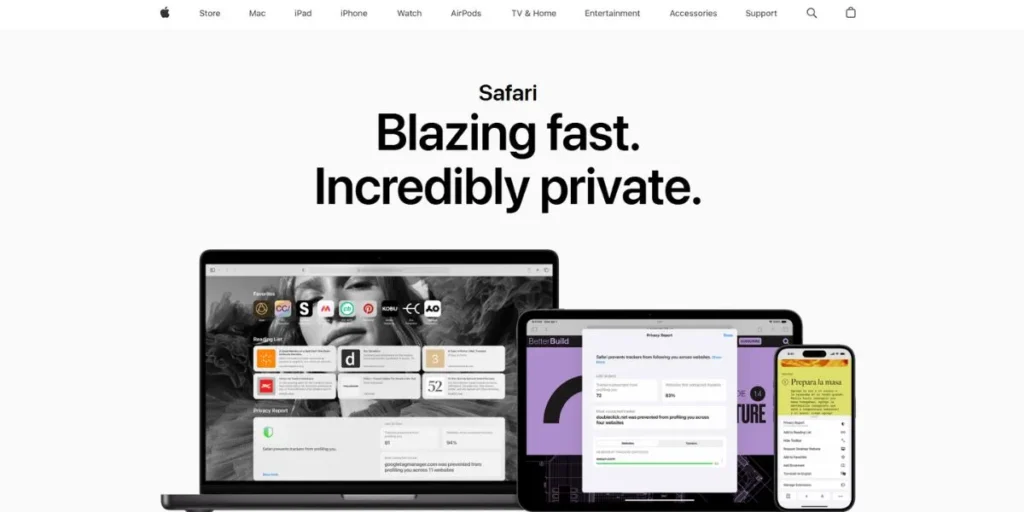
In 2026, Apple continues to use its native navigator by providing the best optimization to Apple Silicon and Intel-based Macs. Safari is also remarkable in speed and requires little battery consumption, which makes it acceptable among MacBook users. Its powerful support of the iCloud Keychain, Handoff, and Continuity functions forms a complete, smooth ecosystem experience that works across all Apple devices.
Strengths:
- Optimized battery efficiency
- Native macOS integration
- Advanced privacy features
- Fastest page loading
Limitations:
- Limited extension library
- Fewer customization options
- Apple ecosystem dependency
- Less developer tools
Best For: Users deeply invested in the Apple ecosystem who prioritize battery life and seamless device synchronization.
Link: https://www.apple.com/safari/
2. Google Chrome
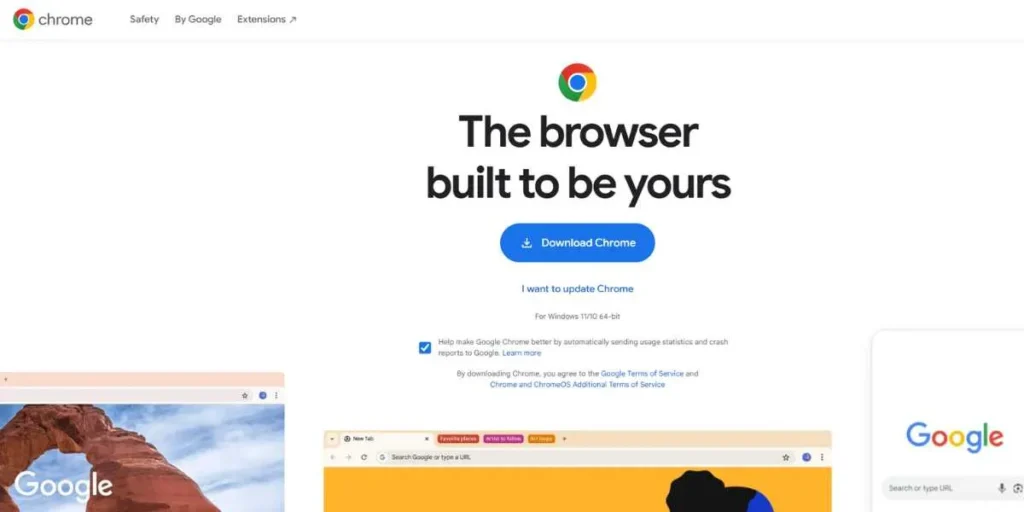
Chrome remains the number one preferred Best Browsers for Mac with its enormous extension ecosystem and strong integration with Google services. The 2026 also has better memory management and Apple Silicon optimization. The cross-platform feature also makes Chrome experiences and features optimally similar to those of other devices, and its developer toolkit provides web professionals and web designers with best of breed tools.
Strengths:
- Extensive extension marketplace
- Google services integration
- Superior developer tools
- Cross-platform synchronization
Limitations:
- High memory consumption
- Battery drain concerns
- Privacy concerns persist
- Resource-intensive performance
Best For: Users who rely heavily on Google Workspace, need extensive extensions, and prioritize cross-platform functionality.
Link: https://www.google.com/chrome/
3. Mozilla Firefox
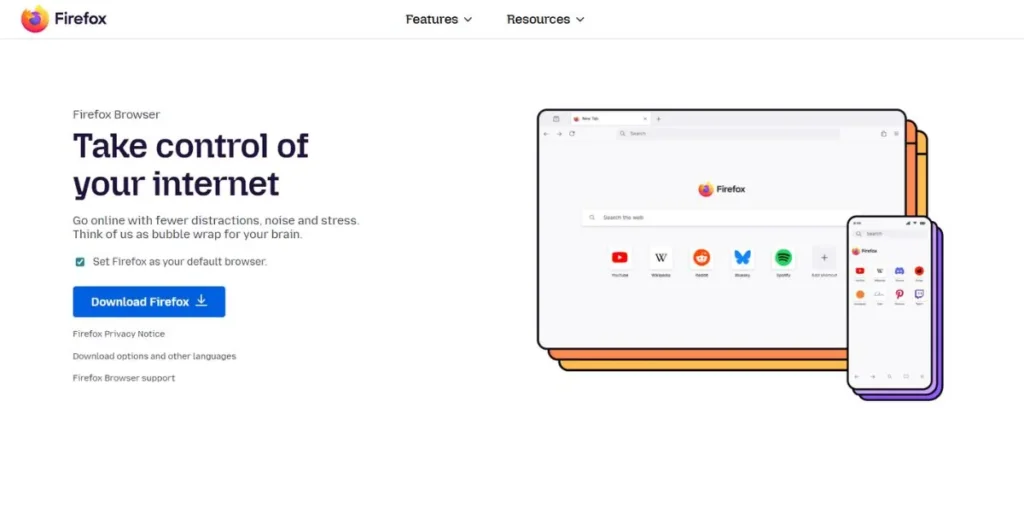
Firefox has secured a position as one of the leading privacy-oriented browsers in the Mac platform with added protection of tracking privacy and full transparency. The 2026 model comes with an updated speed and Apple Silicon optimization by use of the Quantum engine. Firefox being an open-source browser gives you full control over your data and it is compatible with most web standards and extensions.
Strengths:
- Strong privacy protections
- Open-source transparency
- Customizable interface options
- Container tabs feature
Limitations:
- Smaller extension selection
- Occasional compatibility issues
- Higher memory usage
- Slower update cycle
Best For: Privacy-conscious users who want transparency, customization options, and strong tracking protection without compromising functionality.
Link: https://www.mozilla.org/firefox/
4. Microsoft Edge
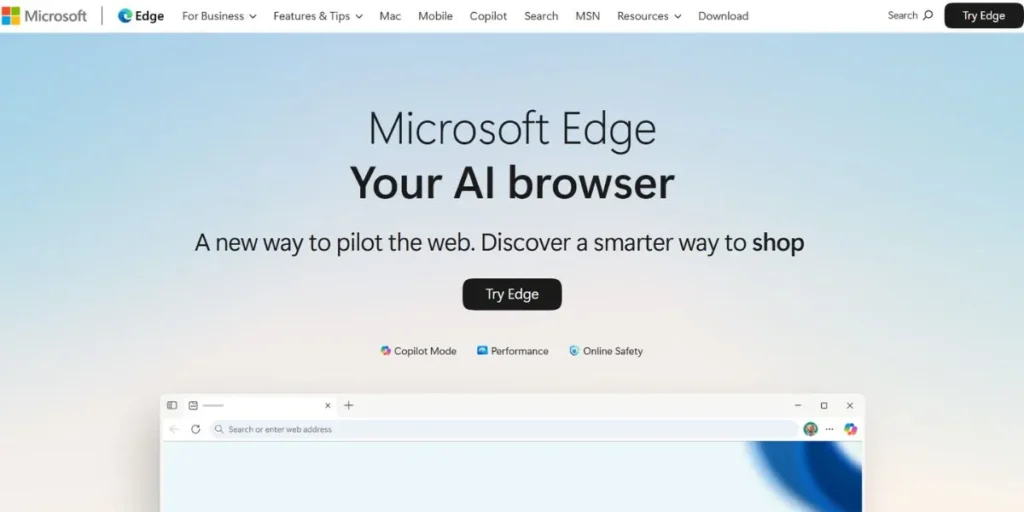
Microsoft Edge has emerged to be one of the Top Browsers for Mac based on chromium with the addition of Microsoft peculiar features. The 2026 has efficiency mode that allows it to have longer battery life, tabs that are vertically oriented allowing easy organization, and is also integrated with Microsoft 365 services. Edge is compatible with Chrome extensions, and uses less resources than Google equivalent.
Strengths:
- Efficiency mode available
- Vertical tab management
- Microsoft 365 integration
- Chrome extension compatible
Limitations:
- Microsoft account dependency
- Excessive feature bloat
- Privacy concerns exist
- Aggressive default settings
Best For: Users transitioning between Windows and Mac or those heavily invested in Microsoft’s ecosystem and Office applications.
Link: https://www.microsoft.com/edge/
5. Brave
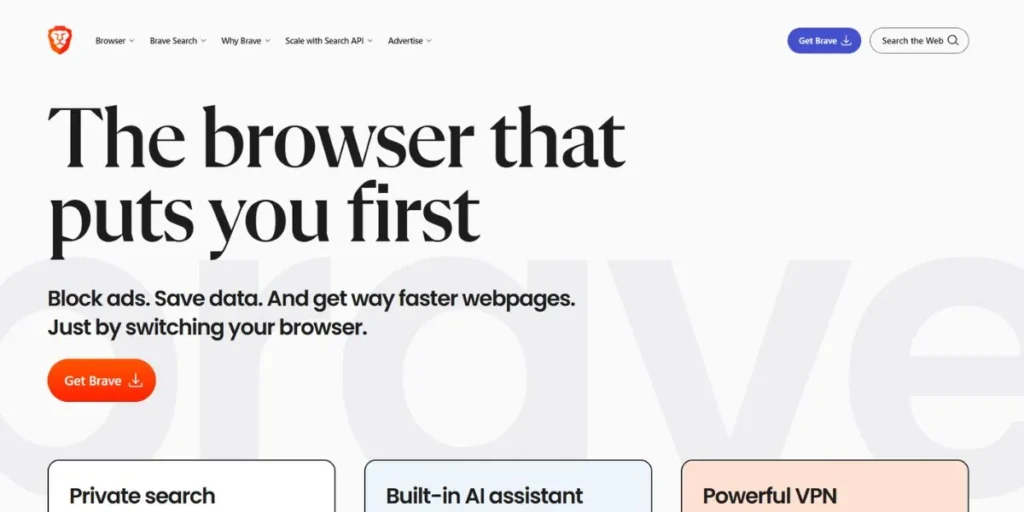
Brave has also completely transformed the experience of browsing since it can block advertisements and trackers by default, which makes it one of the Best Browsers for Mac users, who are privacy-conscious users. The 2026 version also comes with a lot of Brave Shields, in-built Tor support to browse privately, and optional crypto rewards. Brave is just as fast as Chromium and it saves a lot of time page load because it automatizes the process of removing ads and tracking scripts.
Strengths:
- Built-in ad blocker
- Privacy-first approach
- Crypto rewards system
- Tor integration available
Limitations:
- Breaks some websites
- Limited search engine
- Smaller user community
- Occasional compatibility issues
Best For: Users who want aggressive ad-blocking, enhanced privacy protection, and are interested in cryptocurrency rewards programs.
Link: https://brave.com/
6. Arc
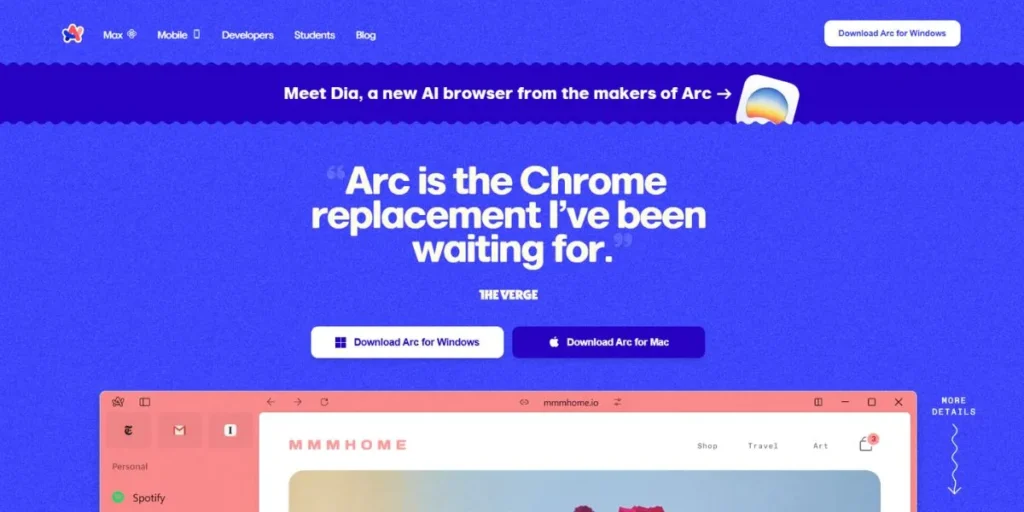
Arc is the future of browsing as it features a ground breaking interface design and workspace structure. Arc is one of the newest leadinng Browsers for Mac which introduces split view browsing, automatic tab organization and a side-bar based navigation system. The 2026 edition has better artificial intelligence capabilities, collaborative browsing, and smooth integration into the productivity processes of the Mac users only.
Strengths:
- Innovative UI design
- Split-view functionality
- Workspace organization tools
- Built-in productivity features
Limitations:
- Learning curve required
- Mac-only availability
- Beta-stage features
- Limited extension support
Best For: Creative professionals and productivity enthusiasts who want a modern, organized browsing experience with innovative workspace management.
Link: https://arc.net/
7. Opera
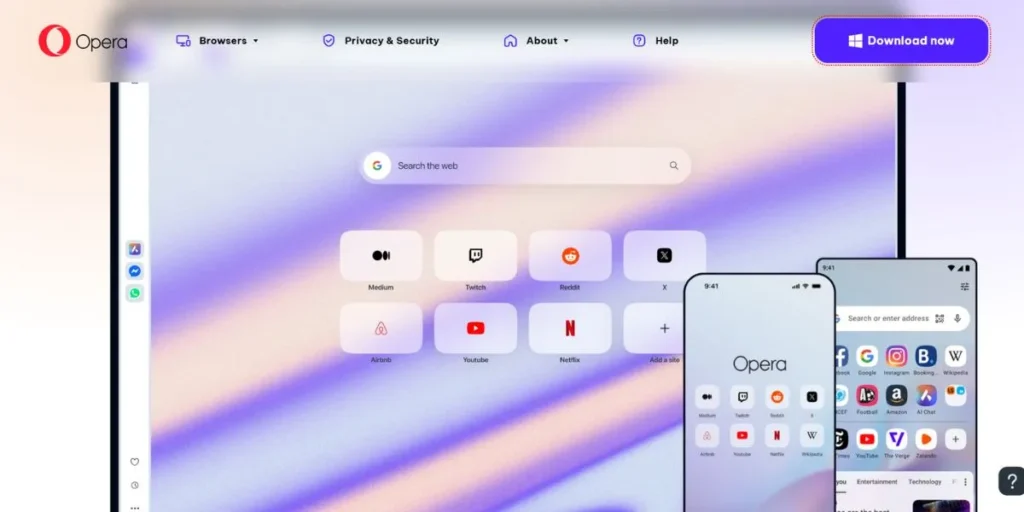
Opera stands out as one of the applications that are the Best Browsers for Mac as they offer free inbuilt VPN, ad blocker and battery saving mode without the need of further extensions. The 2026 edition comes with Opera GX gaming, sidebar messengers which enable instant communication, and Flow which enables devices to be seamlessly synchronized with one another. Opera Chromium underpinning provides compatibility with other systems and includes some exclusive features that make browsing it outstanding every day.
Strengths:
- Free VPN included
- Built-in ad blocker
- Battery saver mode
- Sidebar messenger apps
Limitations:
- Chinese ownership concerns
- Occasional VPN slowdowns
- Cluttered interface design
- Privacy policy questions
Best For: Users seeking an all-in-one browser with built-in VPN, ad-blocking, and additional features without installing extensions.
Link: https://www.opera.com/
8. Vivaldi
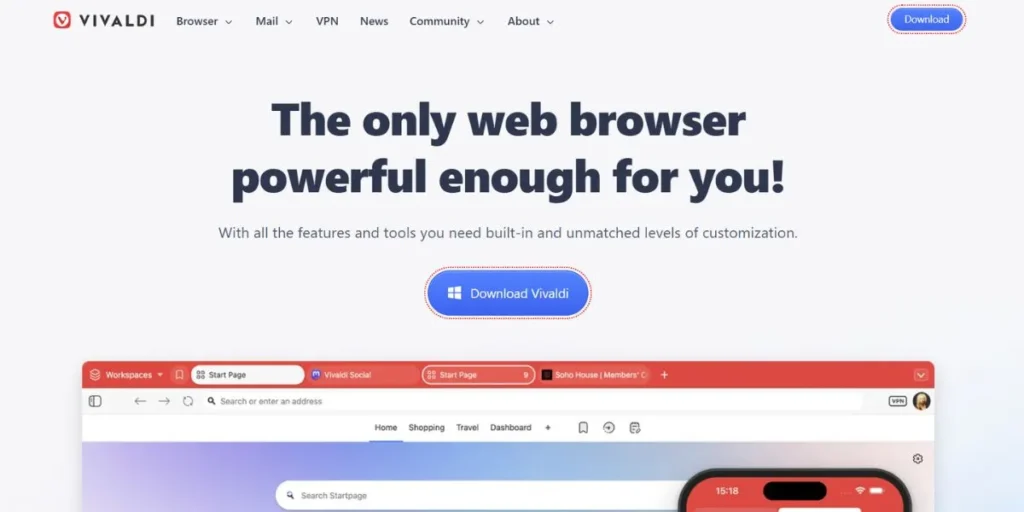
Vivaldi serves the needs of power users who intend to fully build up such a feature as tab management. Vitali is one of the Top Browsers for Mac among the advanced users, as it provides the tabs stacking and tiling, as well as the notes, in-built email and calendar opportunities. The 2026 variant has greater privacy settings, tracker block, and a multitude of keyboard shortcuts, which is ideal in the case of users who desire the luxury of being in total control of the browsing environment.
Strengths:
- Extreme customization available
- Advanced tab management
- Built-in productivity tools
- Privacy-focused features
Limitations:
- Overwhelming for beginners
- Steeper learning curve
- Resource-intensive operation
- Complex settings menu
Best For: Power users and professionals who need advanced tab management, extensive customization options, and integrated productivity tools.
Link: https://vivaldi.com/
9. DuckDuckGo Browser
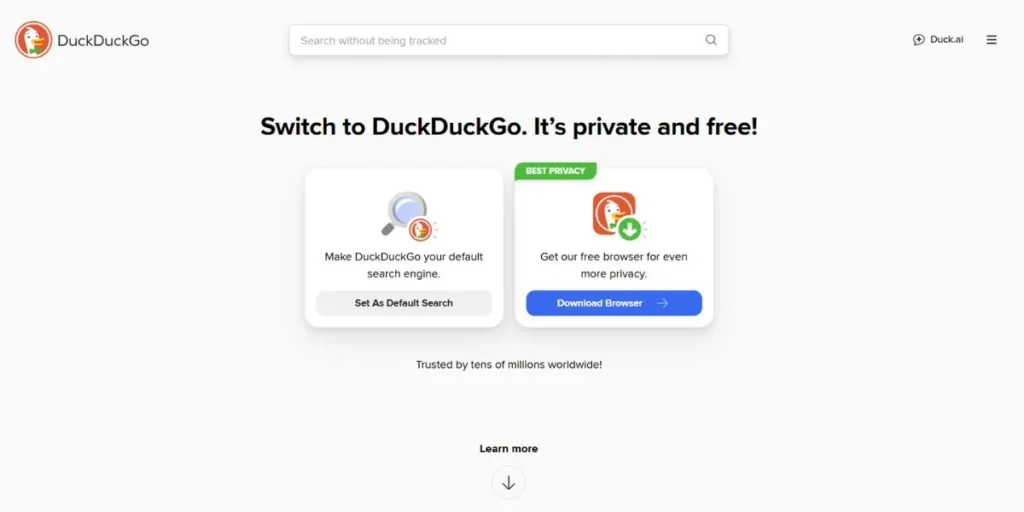
The privacy-first search engine has the DuckDuckGo Browser that extends the philosophy of privacy-first to Mac, including zero tracking, forced HTTPS encryption, and auto-consent of cookies. Being one of the most privacy-conscious Best Browsers for Mac, the 2026 version can offer more privacy-enhancing features, namely, Fire Button with instant data destruction, email protection, and all-inclusive privacy dashboard. It is simple and yet well-protected in terms of privacy as you go through the navigation process.
Strengths:
- Zero tracking guarantee
- Automatic HTTPS encryption
- Fire Button clearing
- Simple, clean interface
Limitations:
- Limited features available
- Smaller extension library
- Basic customization options
- Newer browser option
Best For: Users who prioritize maximum privacy protection, minimal tracking, and straightforward browsing without complex features or settings.
Link: https://duckduckgo.com/browser/
10. Tor Browser

Tor Browser offers the utmost degree of anonymity among the Top Browsers for Mac, and the connection is directed through different encrypted nodes. The 2026 version has high speed, macros support and more security facilities. Tor relates to the deep web allowing bypass of censorship, surveillance of users, and access to the deep web and is invaluable to journalists, activists and privacy-conscious people who need the utmost levels of anonymity.
Strengths:
- Maximum anonymity achieved
- Onion routing technology
- Censorship circumvention
- Deep web access
Limitations:
- Significantly slower speeds
- Some sites blocked
- Complex configuration needed
- Limited plugin support
Best For: Users requiring maximum anonymity, journalists working in sensitive areas, activists, and those needing to circumvent censorship.
Link: https://www.torproject.org/
Which Browser is Best to Use on a Mac?
- Safari is still the best option to be chosen by the majority of Mac consumers since it is not only the most native but also the most efficient in battery consumption, and it is the easiest to integrate into the Apple ecosystem, which makes it the default choice with the general needs of the user in terms of browsing.
- Chrome is better suited to the user who is committed to using Google services and to those that need a lot of extensions even though it uses more resources than any other browser.
- Firefox provides the most sufficient strike between privacy and functionality with good protection against tracking and is compatible with most web applications and sites.
- Bold cares about the privacy-conscious users wishing to have ruthless blocking of ads and tracking preventer without compromising on the speed the browsing or compatibility of it with the Chrome extensions.
- Arc is offered to creative workers who need a new workspace structure and sophisticated interface design, which is optimized in the Mac workflow.
- The most appropriate one is within your unique needs; the most suitable ones include privacy requirements, ecosystem integration, extensions needs, and performance priorities when choosing among the best browsers on Mac.
What is the Fastest Browser on a Mac?
On Mac, Safari is the fastest, especially on Apple Silicon, thanks to native optimization and tight hardware-software integration. Chrome is slightly slower due to higher memory use, despite its powerful V8 engine.
Brave often outperforms Chrome by blocking ads and trackers before loading, while Edge uses efficiency mode to match Chrome’s speed with better resource management. Performance also depends on your Mac: Apple Silicon favors Safari, while Intel Macs can be competitive with Chrome or Edge.
What is the Most RAM-Efficient Browser on a Mac?
- Safari is memory efficient on Mac and consumes much less RAM than other ones and offers seamless performance which is useful to users with less than 8GB RAM.
- The efficiency mode of Microsoft Edge actively lowers memory usage when used in the background, which is why it can be compared with Safari as far as RAM management on Mac is considered.
- Firefox has also become better in memory handling in the new versions although it continues to use more RAM as compared to Safari but less as compared to Chrome during heavy loads on tabs.
- Even though Chrome is based on the Chromium platform, Brave consumes less memory because it avoids loading memory-intensive ads and tracking scripts at the beginning.
- Chrome is still the highest RAM-consuming of popular browsers, regularly consuming twice the memory of Safari with the same tab settings.
- The memory consumption of Arc is determined by the workspace settings but tends to be in the range between Firefox and Chrome when it comes to the overall pattern in terms of RAM usage.
Is There a Better Browser than Chrome?
Safari excels in battery life and Mac integration, while Firefox leads in privacy with strong tracking prevention and open-source transparency. Brave offers a native ad blocker for faster performance, and Edge provides efficient resource management without losing Chrome extension support. Arc introduces innovative workspace and productivity features. Chrome remains best for extensions and Google integration, but rivals outperform it in privacy, efficiency, and specialized features.
How to Choose Based on Your Mac Use-Case
- Creative Professionals: Safari or Arc for macOS-optimized performance, native features, and innovative workspace controls that enhance productivity.
- Privacy-Focused Users: Firefox, Brave, or DuckDuckGo for stronger privacy protection, though may require more configuration.
- Google Workspace Users: Chrome for deep integration with Gmail, Drive, and other Google apps, streamlining workflows.
- Battery-Conscious Mac Users: Safari for optimal battery life; Edge’s efficiency mode is a decent alternative for Windows-to-Mac switchers.
- Developers & Web Professionals: Chrome or Firefox for advanced developer tools and large-scale cross-platform testing.
- Casual Users: Start with Safari for simplicity, then explore other browsers if additional extensions or features are needed.
Conclusion
In order to pick the Best Browsers for Mac in 2026, it is necessary to strike the balance between performance, privacy and features on the one hand and your needs, on the other hand. In terms of Apple integration, battery efficiency, no alternative has been able to compete with Safari, whilst Chrome has fulfilled itself when it comes to browser extensions and cross-platform support. Firefox, Brave, and DuckDuckGo provide excellent alternatives to unscrupulous users, each offering a variety of approaches toward online security.
New browsers such as Arc reinvent what can be used with new interfaces, and some existing offerings, such as Edge and Opera, all offer their own unique sets of features. The type of browser you prefer is based on your preference of speed, privacy, customization, or integration. The good is that 2026 presents outstanding options in all categories and a change of browsers will take a few minutes.
FAQs
Is it possible to run more than one browser at the same time on my Mac?
Yes, you are able to run and install as many browsers as you want to. Many users maintain Safari as an everyday browsing browser and keep Chrome or Firefox to perform specific work which needs use of certain extensions or features.
Do Mac browsers work on iphone and ipad?
Through iCloud, Safari works perfectly with all the Apple products. Chrome, Firefox, Edge and Brave have cross-platform syncing, requiring signing in with your account, but integrated differently.
Are free Mac browsers safe to use?
Oh, such reputable, free browsers as Safari, Chrome, Firefox, or Brave are of high security due to frequent updates. Unfamiliar browsers that have no proven track records are to be avoided.
How much RAM on the Mac will I need to browse efficiently?
8GB RAM is sufficient to support light browsing using resource efficient browsers such as Safari, though additional 16GB or more is recommended to support heavy multitasking where CPU-consuming browsers are used such as Chrome.
Is it possible to import bookmarks with a change of Mac browsers?
All the top browsers have import features that bring across bookmarks, passwords, and history of other browsers. All that is required is a couple of clicks via browser settings