Acquiring a new language may be the gateway to new and thrilling experiences, and in the case of learning the Korean language, an appropriate application can be the key. You might be interested in the Korean culture, you may plan to visit this country, or just want to expand your career opportunities, and a convenient and efficient approach to develop your skills at the pace that fits you best is to use a convenient Korean language learning apps.
A combination of interactive lessons, practical vocabulary learning, and interesting exercises is offered using these apps with audio and visual support to enable learners of any level, including complete beginners to advanced speakers, to immerse themselves in it in a natural environment.
You can be motivated with such features as speech recognition and reminders of everyday practices, and get used to reading, writing, listening, and speaking Korean by getting culturally relevant content. The blog will discuss some of the most useful Korean language teaching applications in the market today, their special features, level of simplicity and how they appeal to various learning styles.
You can use only a few minutes a day, or you can spend a couple of hours, you will still find something that will fit your busy schedule and will allow you to make fast and pleasant steps on your way to language knowledge.
Features That Make Korean Apps Effective
The success of Korean language learning applications are based on the fact that these apps integrate interactive applications, real-life scenarios, and adaptive learning systems that enable users to develop feasible skills effectively.
Key Features:
- Sentence-Based Learning: The most effective applications are designed to learn either a whole sentence, not single words, which can assist students in acquiring grammar and how to use it in a practical environment.
- Grammar Integration: Apps such as Taalhammer and LingoDeer integrate grammar by default (through repetition and examples), so learning complicated structures does not demand too much theory.
- Native Speaker Interaction: Talkpal and Pingo AI provide live practice of conversation with native speakers, which improves the level of confidence and listening abilities.
- Personalised Content: There are apps where the user can choose what they prefer to learn or provide their own content, which makes the process more personal and interesting.
- Pronunciation and Feedback: Advanced applications involve the use of audio files, video files and AI-based feedback to assist the learner in mastering pronunciation and get smart suggestions.
- Gamification and Motivation: Streaks, rewards, and progress tracking are the features that keep the learners motivated and consistent.
- Spaced Repetition: Several apps apply algorithms of adaptation to repeat vocabulary and grammar in the optimal time to increase retention.
Choosing the Right Korean Language App
The following are some of the main considerations in selecting the appropriate Korean language application:
- Evaluate your learning objectives: In the case of wanting to practice fluency in full sentences and in conversational practice, applications like Taalhammer and LingoDeer are most effective due to their structured grammar and sentence structure model.
- Clear grammar explanations should be the priority of beginners: LingoDeer is particularly good in terms of absolute beginners, providing step-by-step lessons, courses in Hangul (Korean alphabet), and clear explanations of grammar rules.
- Find immersive material: LingQ and Memrise have native audio and video in Korean, which will assist in listening skills and the pronunciation of the language in the real world.
- Check speaking and writing exercise: The app, such as Taalhammer and Cake, is centered on speaking and writing in Korean, which provides the user with a greater number of opportunities to use the language actively instead of memorising phrases.
- Take into account customisation and flexibility: There are apps where you have an option to post your own materials, or you can select the topics of your interest, and learning will be more individual and even more interesting.
- Check the app structure and the curriculum: In case you feel comfortable with a fixed and guided course, Duolingo and LingoDeer have structured lessons. LingQ and Memrise are more liberating and engaging.
- Read reviews and ratings: User comments and ratings on websites such as Reddit and language-specific sites can be used to discover the best apps to use at various levels and to learn most effectively.
- By the choice of the appropriate app, it is possible to rely on the style of learning, your purpose, and your preferences regarding the structured lessons, immersion content, and personal practice.
How Korean Language Apps Support Learning
The Korean language apps are simple to operate and effective in learning since they:
- Vocabulary development: Apps: Spaced repetition and contextual learning, and approaches used by the apps to memorise words and phrases.
- Grammar lessons: Grammars are taught systematically; they learn about the rules of the Korean grammar and the structure of the sentence, and they use real-life examples regularly.
- Improving Pronunciation: Speech recognition and audio lessons help the learner to pronounce correctly.
- Practice: Exercises and challenges, daily quizzes make the learners very active and motivated.
- Provision of Culture Clues: Many apps contain cultural borderlines and real-life scenarios that will enable the learner to understand the traditions and culture of the Koreans.
List of Top 12 Korean Language Learning Apps
1. Duolingo
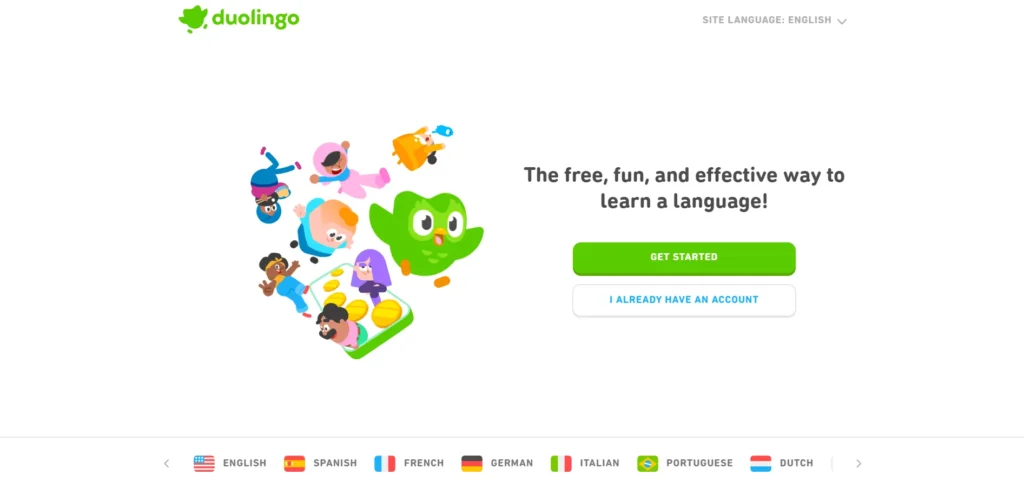
Duolingo is a common gamified language-learning application that has numerous uses and is a more engaging method of learning the Korean language, especially when an individual needs to learn the basics and transition to practical communication.
The curriculum is quite strict in the application, starting with the mastery of the Hangul, which is the Korean alphabet and which is then followed by the introduction of vocabulary and grammar and other common phrases, which also have some cultural touch to it to make the process of learning easier and more realistic.
Key Features:
- Good navigation and user-friendly interface.
- Gamify with the help of points, streaks and levels.
- Little learning units that may be planned with ease.
- Hangul, words, grammar and expressions.
- Listening, talking, reading, and writing activities.
- Pronunciation practice: speech recognition.
- Help and instructions on grammar.
- Situations of life and cultural aspects.
Price:
Duolingo offers a free tier with adverts and a paid tier known as Super Duolingo that is priced at $12.99/month or $83.88/year with no advertisements and an unlimited number of hearts and personalised feedback.
Website: https://www.duolingo.com.
2. LingoDeer
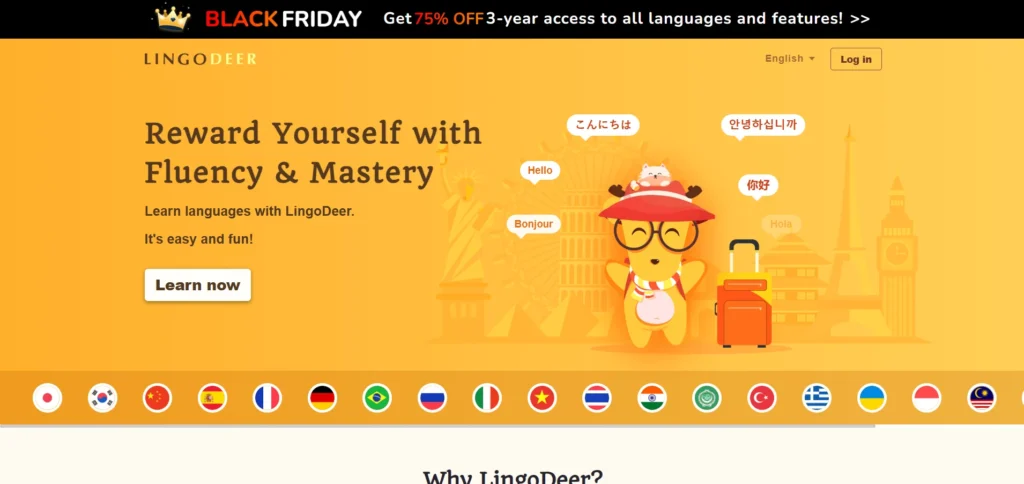
LingoDeer is one of the most rated apps in language learning, which is created to assist the user to learn Korean and other Asian languages in the form of interactive lessons developed by the language gurus. The application teaches the learners through the foundations of the Korean alphabet (Hangul) to a conversation level in clear explanations and interesting activities, which concentrate on grammar, vocabulary, and the structure of the sentence.
Key Features:
- Differentiated curriculum based on the needs of the Korean students, moving through the beginner to the low-intermediate levels.
- Lectures on listening, reading, writing, and speaking based on interaction with the native speakers and their audio.
- The explanation of grammar and sentence-structuring problems to further study.
- Online learning in offline mode.
- Tracking of progress and gaming to maintain a high level of motivation.
- Adaptive study: alternate Hangul and romanisation, and study two or more languages in a single application.
Price:
LingoDeer has subscriptions beginning with ₹600/month or $14.99/month plans, annual and lifetime plans.
Website: https://www.lingodeer.com
3. Drops
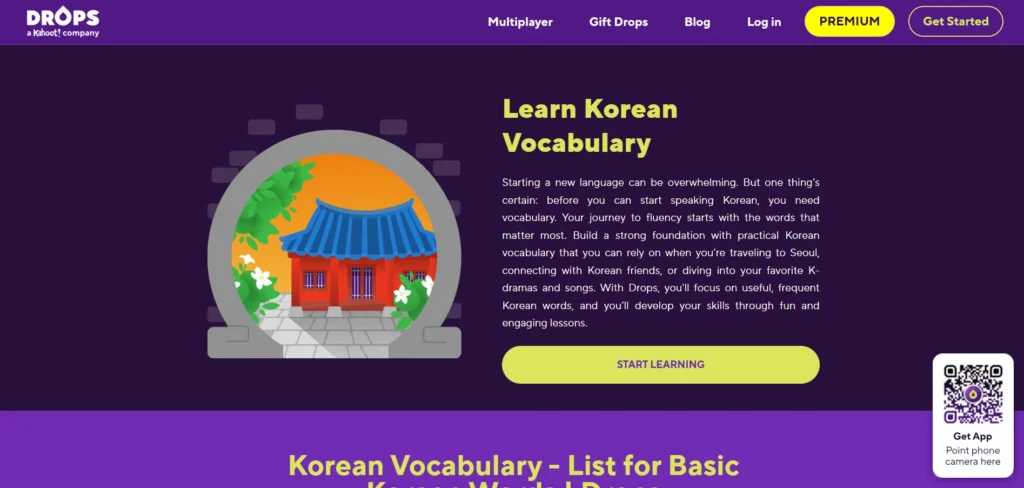
Drops Korean Language Learning Apps are an attractive application that learns the Korean language using illustrated mini-games and brief lessons that users should do every day, which teaches vocabulary in a visual manner and simplifies the process of learning the language to five minutes a day.
The application is designed with beautiful graphics and the voice of native speakers in order to enable the user to memorise words without the aid of translation, with emphasis on useful vocabulary and the Hangul alphabet.
Key Features:
- Did not need to translate; literally 100 per cent forced drawings of vocabulary.
- 5-minute bite-sized lessons every day to establish regular learning practices.
- More than 2,700 words on over 150 topics are free.
- Premium subscription will give unlimited access to learning time, offline support and no ads.
- Word recognition and comprehension: Listening games.
- Personalised review classes and the possibility to skip the learned words
- Dojo mode to practice more on already acquired information.
Price:
Free version with 5-minute daily limit; the remaining charges are premium with a beginning cost of $13/month or $69.99/year, and the lifetime option is $159.99.
Website:https://languagedrops.com/learn-korean
4. Pimsleur Korean
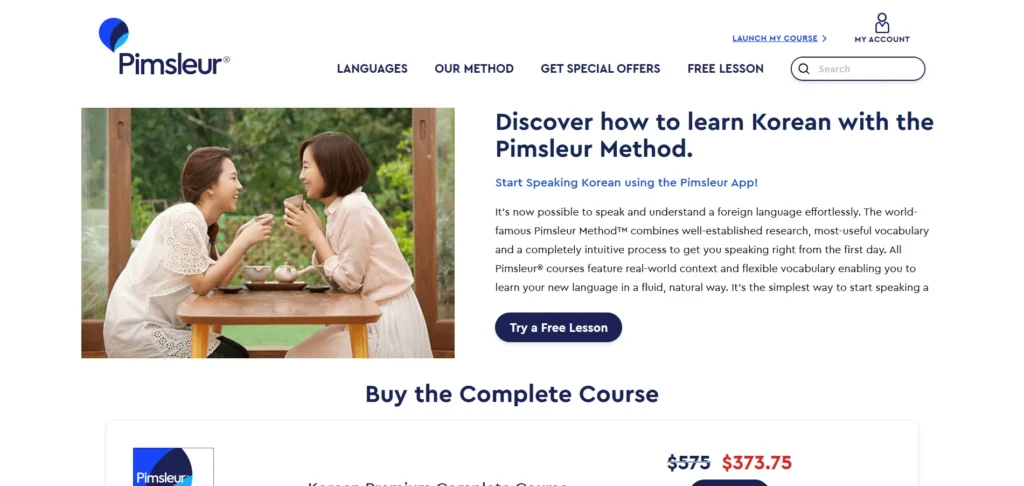
Pimsleur Korean is a language educational application based on the creation of speaking and listening skills with the help of audio lessons with the Pimsleur Method. This approach focuses on spaced repetition, graduated interval recall, and interactive activities to enable learners to develop conversational fluency and correct pronunciation in Korean; thus, it is the best approach to be taken when an individual wishes to speak with confidence on the first day.
Key Features:
- Lessons based on audio and aimed at speaking and listening.
- Organised learning progression through 30-minute lessons a day, which increase in complexity.
- It focuses on speaking fluency and practical and everyday expression.
- Real-time feedback- Voice Coach feature and pronunciation training with native speakers.
- Mobile access, development of cross-device synchronisation, and learning without an internet connection.
- Lessons on reading to acquaint oneself with Hangul, the Korean alphabet.
- Vocabulary review- Digital flashcards, quizzes and interactive games.
- Additional practice in terms of role-play conversations and written transcripts.
Price:
Pimsleur Korean is available as a subscription service of 60+ lessons, the cost of which starts at $14.95/month, and a 7-day free trial period is offered.
Website: https://www.pimsleur.com/learn-korean/
Suggested read:
5. Rosetta Stone
Rosetta Stone is one of the most popular language learning applications, which is based on an immersive method of teaching the Korean language without using translation and memorisation. This app provides an introduction to vocabulary and grammar based on interactive tasks, visuals, and audio, which enables the learners to train speaking, listening, reading, and writing naturally.
Its Dynamic Immersion technique and TruAccent speech recognition system are used to assist users to get better pronunciation and fluency on the very first day.
Key Features:
- No direct translations in an immersive style of learning.
- TruAccent speech recognition pronunciation feedback.
- Listening, vocabulary, grammar, and reading lessons are interactive.
- Delayed practice to practice long-term memory.
- Nuggets of culture in lessons.
- Online presence and mobile application.
- Online classroom and live classes (non-obligatory).
Price:
Rosetta Stone has a variety of subscriptions as well, beginning at $47.97 per 3 months (one language) and a lifetime subscription is routinely reduced to $199 or lower.
Website:https://www.rosettastone.com/learn-korean/
6. Rocket Korean
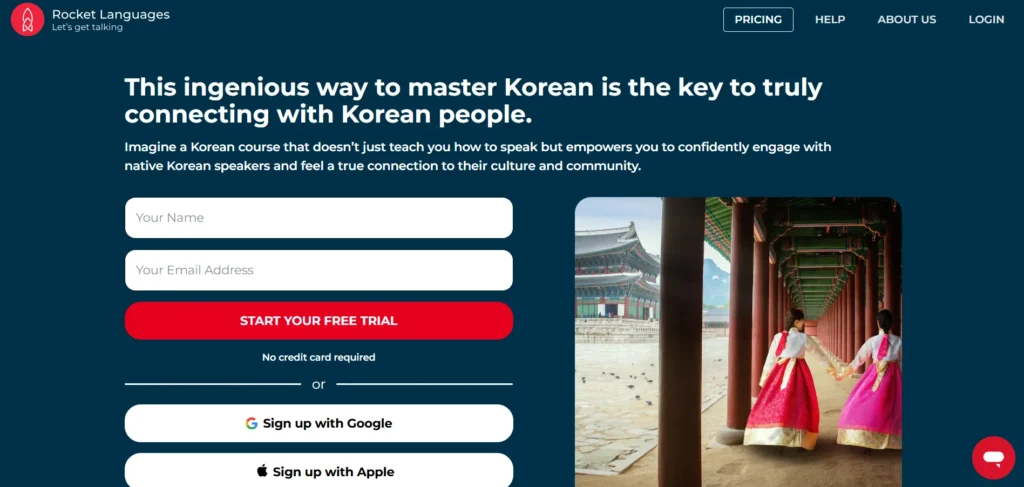
Rocket Korean is one of the best Korean Language Learning Apps and a universal language learning application that can be used at beginner and intermediate levels to follow a systematic way to learn the Korean language through interactive audio sessions, cultural information, and real-life conversations.
The app includes the essentials of reading, writing, speaking, and listening through native-speaker dialogues, grammar clarification, and voice recognition technology to enhance pronunciation and overall understanding.
Key Features:
- Live audio lessons, including dialogues by native speakers to practice conversations in real life.
- Korean culture, manners and social behaviour.
- Lessons about the Hangeul script and grammar worksheets.
- Pronunciation practice in voice recognition technology.
- Vocabulary retention and grammar exercises in the form of a Quiz, flashcards, and role-playing.
- Modular learning programs (beginner, intermediate, advanced) comprising more than 120 hours of material.
- Synchronisation of progress on devices to have an ongoing learning process.
Price:
Rocket Korean has a 6-month subscription of $27 and a lifetime access of $149, which has a 60-day money-back guarantee.
Website:https://www.rocketlanguages.com/korean
7. HelloTalk
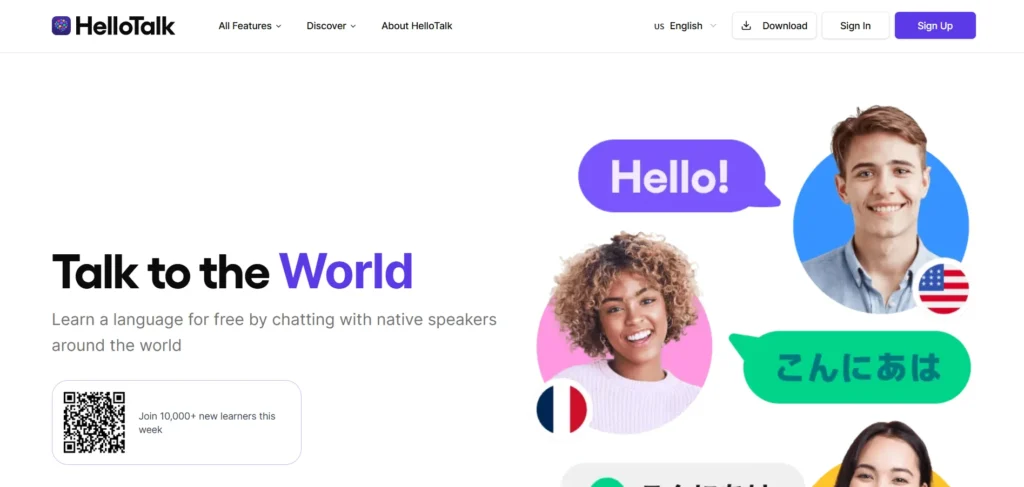
HelloTalk is an app that is used for learning the Korean language and is aimed at enabling the user to practice interactions with a native speaker and thus make the process of language learning interactive and immersive.
The gap between the learners and the native speakers is filled through the app that offers an opportunity to chat in real-time, make phone calls, and conduct audio rooms so that learners can practice their skills in the native language in the context that is legitimate context.
Key Features:
- Text, voice, and video Chat and messaging with native speakers.
- Live audio conversation and group practice voice rooms.
- Interactive classes and cultural insights: Live Streaming.
- Artificial intelligence translation and one-tap translation to comprehend instant messaging.
- Real-time correction of language errors by other language participants to learn.
- Clips are available in the form of posts and interaction with the community.
- Word lessons and audio lessons.
- To monitor improvement, progress tracking and learning goals.
Price:
HelloTalk has a free version that has limited features, and VIP membership costs $12.99/month or $79.99/year with unlimited access.
Website:https://www.hellotalk.com
8. TEUIDA
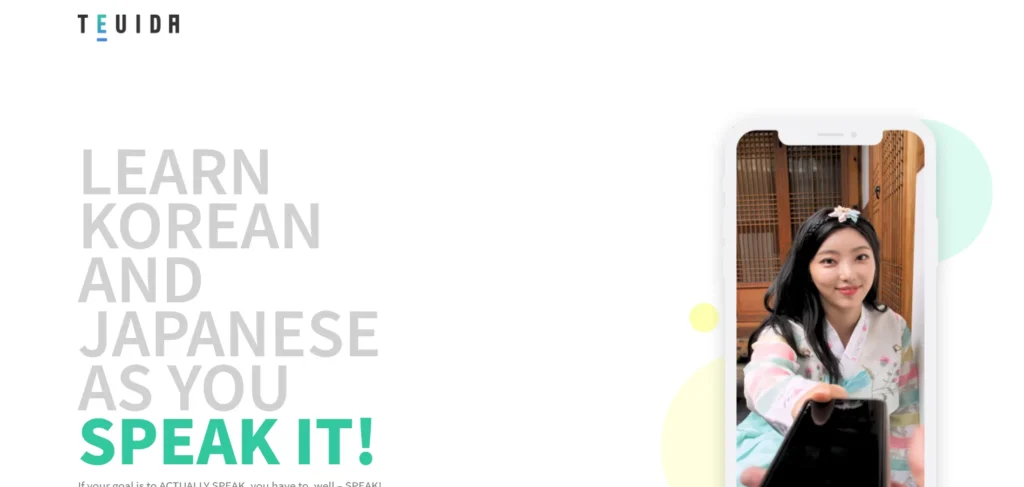
Giving maximum priority to speaking at the first stage, TEUIDA is a Korean language learning application based on interactive lessons and real-life situations as a way to encourage a person to gain confidence and conversational skills in practice. The app has bilingual tutors, AI-based pronunciation analysis, interactive stories which are fun, and cultural tips that make learning entertaining and productive.
Key Features:
- Simulated lessons of real-life conversations.
- One-on-one professional development through bilingual tutors.
- Automatic feedback on AI pronunciation.
- Humorous entertaining tales and cultural hints.
- Tracking of progress and an easy interface.
- Think over major, useful expressions in everyday use.
- Oral POV to enhance self-confidence to speak.
Price
Individual lessons are free in the first chapter; the rest of the subscription costs are $7.99 a month or $79.99 a year.
Website:https://www.teuida.net
9. Migaku
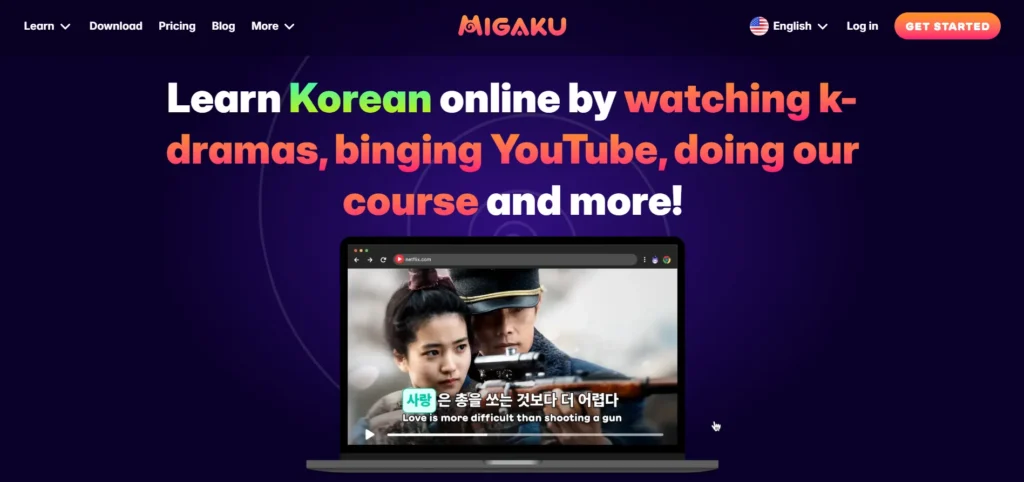
It is focused on acquiring the Korean language through immersive learning materials the Netflix shows, YouTube videos, and K-pop, to teach the language to learners through the use of context-based learning. The application contains guided lessons and courses designed to guide beginners and advanced users.
It offers options to form flashcards and word lookups, and track their progress individually. And it is not difficult to learn Korean naturally and efficiently.
Key Features:
- Students learn Korean using actual material such as K-dramas, YouTube, and webtoons.
- Single-word look up and automatic flashcard generation with audio, images and sample sentences.
- An AI-based individual learning journey that changes with your progress.
- Spaced repetition system (SRS) of effective vocabulary retention.
- Progress and understanding scores of various types of content.
- Introduction to advanced-level classes in Hangul, grammar, and culture.
- Mobile application and browser extension that allows smooth cross-platform learning.
Price
The starting price of Migaku is $10 a month, and there are annual and lifetime plans.
Website:https://migaku.com/learn-korean
10. LingQ
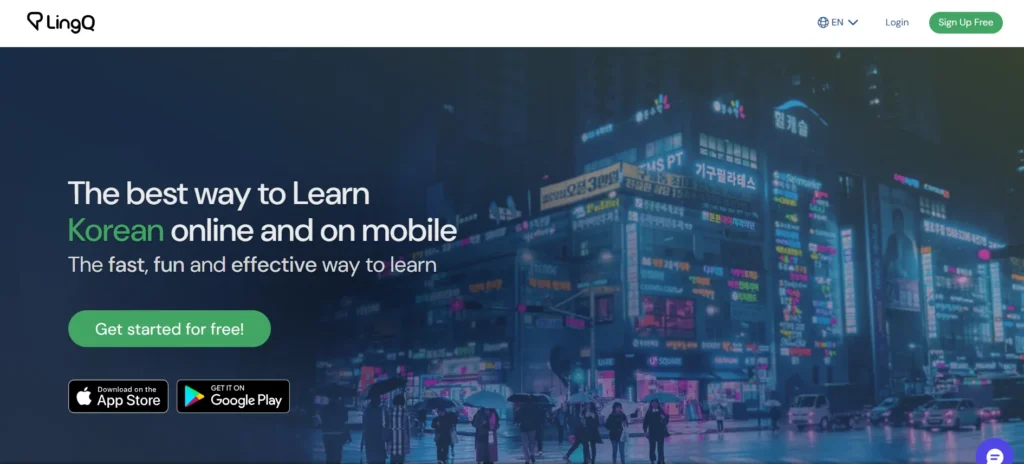
LingQ is one of the best Korean Language Learning Apps that employs an immersive approach to help people learn the language by listening to and reading articles, audiobooks, podcasts, and other similar content, with corresponding text to practice both listening and reading.
The application uses artificial intelligence to streamline and tailor lessons to suit not only new students but also more advanced learners who wish to expand their vocabulary and understanding of the language in a natural way through comprehensible input and immersion.
Key Features:
- Learn anything by watching, listening to, or reading (Netflix, YouTube, podcasts, articles).
- When needed, the vocabulary growth interface.
- Interactive learning: hear, read along, and immediately look up new words.
- The vocabulary review is done with the help of SRS (Spaced Repetition System) to memorise.
- Listening, reading and vocabulary development progress.
- Study on devices and update progress.
- Karaoke mode to get a better understanding.
- Individual playlists and social contests.
- Lesson simplification by AI that is aimed at beginners.
Price :
The subscription plans are approximately $14.99/month to $119.99/year.
Website: https://www.lingq.com/en/learn-korean-online/
11. Write It! Korean
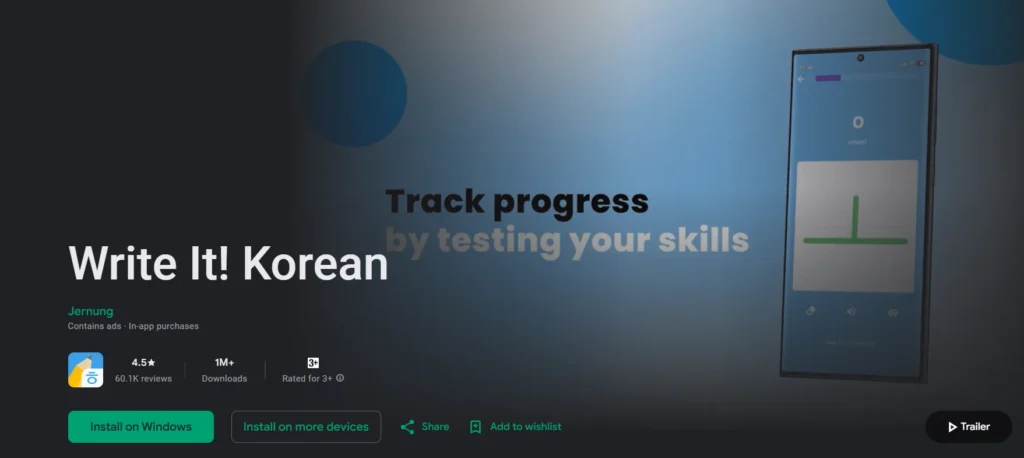
Write It! Korean is a top language learning application, which can make the user master the art of writing Korean, which is specifically the Hangul alphabet, guided by the interactive lesson with expert instructions and real handwriting recognition technology. The app provides a step-by-step method of learning each Hangul character stroke by stroke, which makes it accurate and gives the user confidence in his writing ability.
Key Features:
- True handwriting identification to get the right feedback.
- Lessons led by experts on all Hangul characters.
- Learning the Korean writing stroke by stroke.
- Test, practice, and get stars to measure the progress.
- Small learning lessons to learn at a convenient time.
- Individualised reinforcement meetings.
- Offline practice at any point in time.
Price:
It is a free application that has optional in-app purchases to gain higher features.
Website: Write It! Korean – Google Play
12. KoreanClass101
KoreanClass101 is an all-encompassing Korean language study application and one of the top-rated Korean Language Learning Apps, providing a vast amount of content to any student, whether they are a complete beginner or an advanced speaker.
The application is highly interactive and productive for learning Korean, offering audio and video lessons by native Korean educators, guaranteeing correct pronunciation and cultural context. Lessons include vocabulary, grammar, reading, listening, and speaking, designed to enable users to progressively master the language.
Key Features:
- Video and audio lessons with native Korean speakers to use their authentic pronunciation and conversation practice.
- Activities on vocabulary and grammar to be supported with interactive quizzes and flashcards.
- Lesson notes and PDFs that may be used offline.
- Individualised instructional plans and lesson plans that can be tailored depending on individual objectives.
- Anytime, anywhere, offline access to learning.
- Cultural information and lessons to enhance the knowledge of Korean traditions and manners.
- Tracking and synchronising within the app and web.
Price:
It is free to join; premium subscriptions begin at approximately $3.50 a month over 24 months, with higher-level subscriptions providing more features, such as access by teachers.
Website: https://www.koreanclass101.com
Conclusion
The world has never been better equipped to learn Korean, and this is due to the numerous and creative Korean language learning apps that exist in the market today. Duolingo, LingoDeer, and Lingory are a few apps that provide structured, gamified, and real-life application of Hangul and can be used by the novice or the more advanced learner who is aiming to refine their grammar, conversation, and practice skills, regardless of the time of day.
These tools are able not only to create confidence and cultural awareness but also to make the learning of language interesting and open to all. With the help of the right application and practice, you will be able to get a new opportunity and get acquainted with the Korean culture in a significant way. You just need to start this process today and feel the happiness of knowing Korean at your own pace.
FAQs
Q.1 Which is the most effective Korean learning application?
The apps that are being suggested to beginners by the majority of users include Duolingo, LingoDeer, and Pingo AI, as they provide interactive lessons and practice conversations in real time. The applications assist in simple vocabulary, pronunciation, and simple phrases.
Q.2 Is it possible to acquire knowledge of speaking Korean fast using an app?
Yes, there are quite many apps that are developed with fast advancement in mind, where one only speaks on the first day itself. Applications such as Pingo AI and Eggbun rely on chatbots and customised feedback based on AI to assist you in talking Korean in a brief time and instinctively.
Q.3 Do we have the free Korean learning applications?
Sure, there are a few apps with a free version with the basic features. Indicatively, vocabulary, pronunciation and community services are free at BNR languages and HiNative, with additional services like advanced speaking being paid for with an upgrade.
Q.4 What is the most effective app to learn Hangul (Korean alphabet)?
“Write it! Korean is highly recommended when it comes to mastering Hangul. It provides step-by-step instructions and interactive exercises to help you learn how to read and write Korean characters in an effective way.
Q.5 Do these apps have an opportunity to talk in Korean?
Pingo AI and Eggbun are among the diverse apps that provide chatbot and conversation modes. These programs give you the opportunity to practice speaking, be corrected, and take part in simulated conversations to be more fluent.
Q.6 Are these applications personalised?
Yes, there are applications such as Pingo AI and Migaku, which customise lessons to your level and interests and allow you to make your own lessons and study on real materials, such as K-dramas and articles.