Imagine your engineering team finalizing a brilliant design, only to discover the manufacturing floor is building a prototype from an outdated file. This costly nightmare happens daily.
Bringing a new product to market is complex. Disconnected teams, poor version control, and inefficient collaboration lead to expensive manufacturing mistakes and delayed launches. When engineering and production departments fail to share the exact same information, your bottom line suffers.
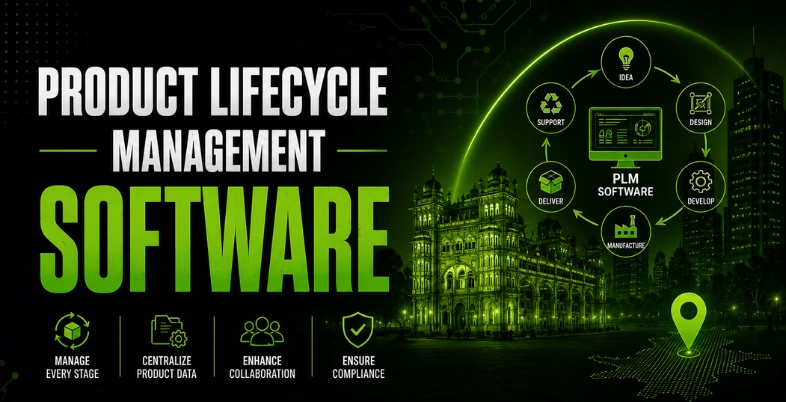
Product Lifecycle Management Software solves these challenges by creating a single source of truth for your entire organization. Centralizing product data ensures everyone works from the most current information. This guide shows manufacturers, engineering teams, and product managers how PLM tools streamline workflows, reduce errors, and accelerate time to market. Read on to discover the top platforms available today and find the perfect match for your specific needs.
What Is Product Lifecycle Management (PLM) Software?
Product Lifecycle Management Software is a specialized digital platform designed to manage a product through its entire journey, from the initial idea to its final retirement. It acts as a central hub where all information related to a product lives. Instead of scattered emails, spreadsheets, and data entry software, teams use this software to handle collaboration, organize documentation, streamline daily workflows, secure product data, and ensure strict compliance management.
By keeping everything in one place, these platforms prevent miscommunication between different departments. The benefits are clear and highly impactful for businesses of any size. Companies experience faster product launches, fewer manufacturing errors, improved product quality, and significantly lower production costs. Ultimately, PLM software connects people, processes, and business systems to provide a clear, real-time picture of what is happening with any product at any given moment.
Comparison Table: Top PLM Software at a Glance
| Software | Best For | Deployment | Starting Price | Free Trial |
| Siemens Teamcenter | Large global enterprises | Cloud & On-premise | Custom | No |
| PTC Windchill | Complex manufacturing | Cloud & On-premise | Custom | No |
| Dassault ENOVIA | 3D design environments | Cloud & On-premise | Custom | No |
| Autodesk Fusion Manage | Growing businesses | Cloud-based | $920/user/year | Yes |
| Duro PLM | Agile hardware teams | Cloud-native | Custom | Yes |
| SAP PLM | Current SAP ERP users | Cloud & On-premise | Custom | No |
| Aras Innovator | Custom software needs | Cloud & On-premise | Free (Open) | Yes |
| Arena PLM | Electronics and tech | Cloud-native | Custom | No |
| Infor PLM | Fashion and consumer goods | Cloud & On-premise | Custom | No |
| Propel Software | Salesforce platform users | Cloud-native | Custom | No |
| OpenBOM | Small startups and teams | Cloud-based | $55/user/month | Yes |
| Autodesk Vault | AutoCAD engineering teams | On-premise | $18/month | Yes |
List Of Top 12 Product Lifecycle Management Software
1. Siemens Teamcenter
Website: siemens.com/en-us/products/teamcenter/
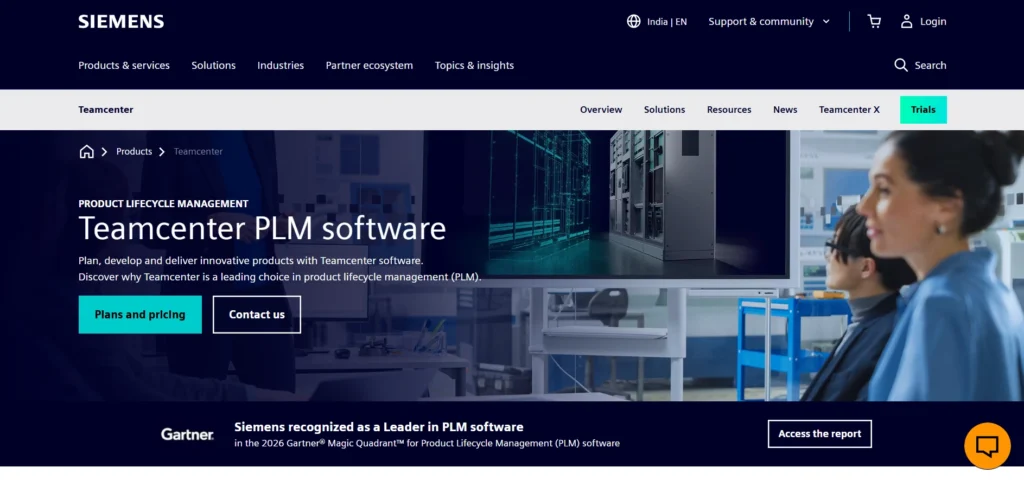
Siemens Teamcenter is an incredibly powerful platform that connects people and processes across functional silos. This software acts as a comprehensive digital thread covering every phase of a product’s life. Its core PLM capabilities include incredible document control, advanced bill of materials management, and highly detailed 3D design integrations. The key strength of Teamcenter is its unmatched ability to scale alongside massive global operations. It primarily serves automotive, aerospace, and heavy machinery industries. Businesses choose this platform because it offers total control over highly complex manufacturing environments.
Key Features
- Advanced product data management
- Seamless CAD software integration
- Comprehensive bill of materials
- Automated engineering change workflows
- Strong document control systems
Pros
- Highly scalable enterprise solution
- Excellent global team collaboration
- Deep industry compliance tracking
- Robust digital twin capabilities
Cons
- Very expensive starting price
- Complex initial system setup
- Requires dedicated admin support
- Steep learning curve expected
Best For: Large global enterprises in aerospace and automotive industries needing complex manufacturing control.
Pricing
- 30 days free trial
- Pricing available on request
2. PTC Windchill
Website: www.ptc.com/en/products/windchill
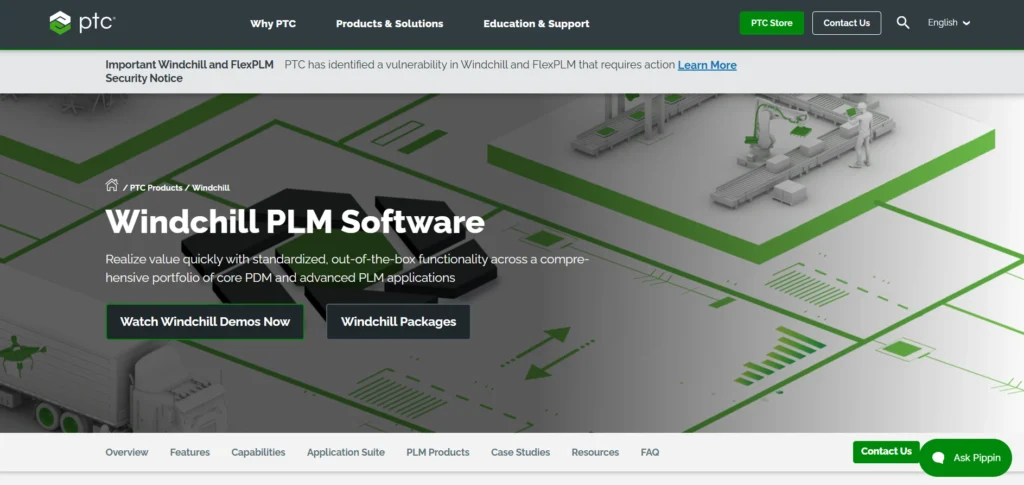
PTC Windchill offers highly advanced engineering collaboration software that breaks down organizational barriers. The software provides a solid foundation for data governance and traceability across the entire value chain, supported by enterprise-grade database management platforms. Its core capabilities center on integrating product data from various systems directly into one secure environment. The key strength here is its unique connection with smart, connected IoT devices in the field. Windchill heavily serves medical device manufacturers, defense contractors, and industrial equipment makers. Companies choose Windchill to guarantee product quality and maintain strict regulatory compliance effortlessly.
Key Features
- Real time data visualization
- Multi system data integration
- Secure product data sharing
- Automated quality management tools
- Dynamic parts classification system
Pros
- Exceptional product data security
- Connects with IoT devices
- Highly customizable workflow processes
- Strong supply chain visibility
Cons
- User interface feels outdated
- Implementation takes significant time
- High total ownership cost
- Complex administrative backend tools
Best For: Complex manufacturing firms requiring strict compliance and IoT device data integration.
Pricing: Pricing available on request
3. Dassault Systèmes ENOVIA

Website: www.3ds.com/products/enovia
Dassault Systèmes ENOVIA is built on the famous 3DEXPERIENCE platform to drive collaborative innovation. The software excels at connecting massive networks of designers, engineers, and suppliers together. Core capabilities include virtual product simulation, sophisticated project management, and global product tracking. ENOVIA shines brightly due to its flawless integration with highly detailed 3D design programs like SolidWorks. It is widely used in transportation, life sciences, and high-tech electronics industries. Organizations choose this platform because it enables teams to plan, design, and simulate products virtually before physical manufacturing begins.
Key Features
- Global product development tracking
- Virtual product simulation tools
- Advanced compliance management features
- Intelligent supply chain management
- Collaborative design review spaces
Pros
- Powerful 3D design integration
- Excellent for large enterprises
- Supports complex manufacturing processes
- Strong project management features
Cons
- Pricing requires custom quote
- Not ideal for beginners
- Resource heavy system requirements
- Lengthy user training needed
Best For: Large enterprises heavily invested in 3D design and virtual product simulations.
Pricing
- Demo available
- Contact sales for a quote.
4. Autodesk Fusion Manage

Website: autodesk.com/products/fusion-360/fusion-manage
Autodesk Fusion Manage provides accessible and modern cloud PLM software. This tool is designed to make product development workflows smooth, fast, and easy to understand. Core capabilities involve managing new product introductions, supplier collaboration, and quality control systems. Its biggest strength is how quickly it can be deployed compared to massive legacy systems. It perfectly serves consumer goods brands, industrial machinery companies, and growing hardware startups. Businesses choose this platform because it offers modern features without requiring dedicated IT teams to maintain it.
Key Features
- Cloud based product management
- Fast new product introduction
- Automated change management workflows
- Supplier collaboration portals included
- Quality management system integration
Pros
- Quick and easy deployment
- Modern intuitive user interface
- Accessible from any device
- Highly flexible configuration options
Cons
- Limited offline functionality available
- Less robust than Teamcenter
- Advanced reporting costs extra
- Occasional slow loading times
Best For: Growing businesses and mid-sized manufacturers seeking fast, cloud-based product management workflows.
Pricing: Per User- $920/year
5. Duro PLM
Website: www.durolabs.com/
Duro PLM is a modern cloud native product lifecycle management tool built specifically for agile hardware teams. It prioritizes speed and simplicity over complicated enterprise features. Core capabilities include automated bill of materials management, streamlined engineering change orders, and direct CAD software integration. The defining strength of Duro is its incredibly fast deployment time and user-friendly interface. It perfectly serves hardware startups, robotics companies, and electronics manufacturers. Emerging tech companies choose Duro because it bridges the gap between basic spreadsheets and overwhelming legacy systems.
Key Features
- Centralized hardware product data
- Agile change order management
- Automated CAD file syncing
- Real time component sourcing
- Intuitive supplier management portals
Pros
- Extremely fast system deployment
- Highly intuitive modern interface
- Excellent native CAD integrations
- Ideal for hardware startups
Cons
- Limited advanced customization options
- Fewer deep compliance features
- Best for smaller engineering teams
- Occasional reporting limitations noted
Best For: Agile hardware startups and electronics manufacturers needing fast implementation and streamlined product data control.
Pricing
- Free plan: Trial demos available upon request
- Contact sales for quote
6. SAP PLM
Website: www.sap.com
SAP PLM is an incredibly robust product data management software built directly into the SAP ecosystem. It ensures that product design is perfectly aligned with manufacturing, sales, and service departments. Core capabilities include managing complex product structures, handling regulatory compliance globally, and controlling highly detailed engineering documents. Its key strength is the frictionless synchronization with SAP ERP systems. This platform serves the automotive, chemicals, and industrial manufacturing sectors effectively. Companies heavily invested in SAP choose this software to unify their entire business within a single database architecture.
Key Features
- Direct SAP ERP integration
- Collaborative product development tools
- Integrated product compliance tracking
- Recipe and formula management
- Advanced document control system
Pros
- Perfect for SAP users
- Handles massive data volumes
- Excellent global regulatory compliance
- Unifies engineering and manufacturing
Cons
- Extremely complex to configure
- High cost of implementation
- Interface is not intuitive
- Requires specialized IT knowledge
Best For: Current SAP ERP users who need unified processes across manufacturing and engineering teams.
Pricing
- Demo available
- Contact sales for a quote.
7. Aras Innovator
Website: www.aras.com/
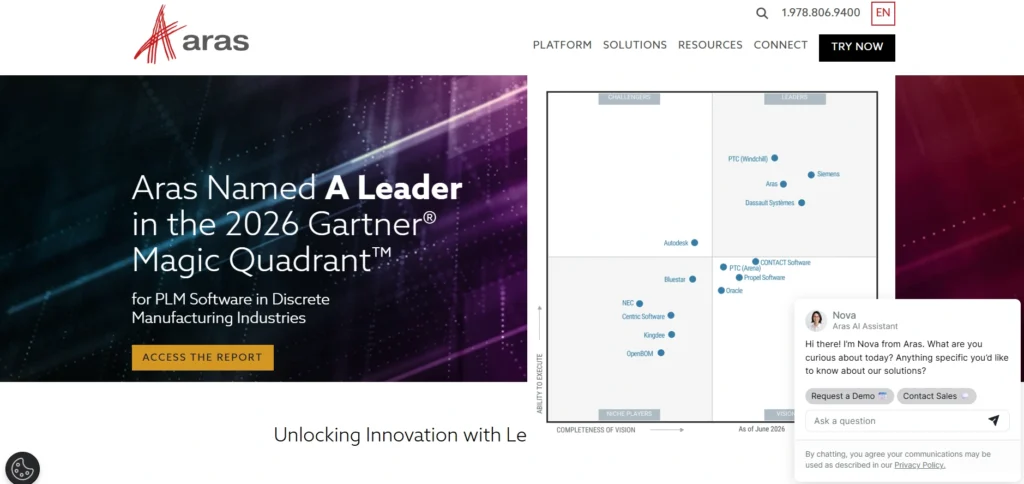
Aras Innovator is a highly unique entry in the product innovation management market. It features a totally open architecture that allows businesses to customize the platform extensively. Core capabilities revolve around flexible change management, resilient product data models, and comprehensive requirements tracking. Its biggest strength is its low-code environment, letting companies build custom apps quickly. It serves aerospace, automotive, and defense industries looking for complete control. Organizations choose Aras when traditional off-the-shelf software is too rigid for their highly specialized internal engineering processes.
Key Features
- Open architecture software design
- Flexible change management tools
- Resilient product data models
- Low code application development
- Comprehensive requirements management tools
Pros
- Highly customizable open platform
- Free to download initially
- Adapts to unique workflows
- Easy system upgrade process
Cons
- Community support lacks speed
- Enterprise features cost extra
- Interface looks somewhat dated
- Requires internal developer resources
Best For: Companies with custom software needs that require a highly flexible and open architecture.
Pricing
- Demo available
- Contact sales for a quote.
8. Arena PLM
Website: www.arenasolutions.com
Arena PLM, now owned by PTC, is a pioneering cloud-native product lifecycle management tool. It unites product design teams with quality control teams to launch products rapidly. Core capabilities include managing complex electronic bill of materials, tracking quality issues, and streamlining supplier communication. The platform’s major strength is its incredibly user-friendly supplier portal. It is the dominant choice for consumer electronics, high-tech hardware startups, and medical device companies. Businesses love Arena because it completely eliminates the need for messy email chains during the manufacturing phase.
Key Features
- Cloud native product management
- Integrated quality management system
- Supply chain collaboration tools
- Automated engineering change orders
- Real time BOM management
Pros
- Very fast system implementation
- Great for electronics manufacturing
- Excellent supplier collaboration portal
- Highly intuitive user experience
Cons
- Limited custom reporting options
- CAD integrations cost extra
- Less flexible than competitors
- Pricing tiers jump quickly
Best For: Electronics and high-tech hardware companies needing excellent supplier collaboration and quality tracking.
Pricing
- Demo available
- Pricing available on request
9. Infor PLM
Website: www.infor.com
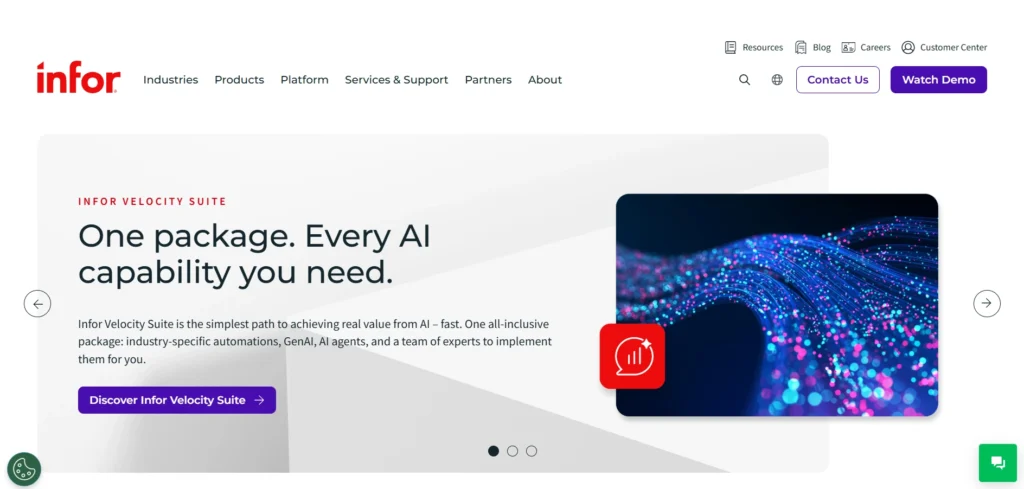
Infor PLM is specialized manufacturing PLM software tailored perfectly for discrete and process manufacturing. It links the creative design phases directly to actual production floor realities. Core capabilities include robust document management, visual lifecycle tracking, and advanced product configuration options. Its main strength is its beautiful, highly visual interface that simplifies complicated product data. This system primarily serves fashion, apparel, food, and consumer goods industries. Brands select Infor to accelerate their product launch times and easily manage constantly changing seasonal product collections.
Key Features
- Specialized discrete manufacturing tools
- Advanced product configuration options
- Seamless ERP system integration
- Visual product lifecycle tracking
- Robust document management capabilities
Pros
- Perfect for fashion industries
- Accelerates product launch times
- Strong vendor collaboration features
- Highly visual user interface
Cons
- Niche industry focus primarily
- Customization can be difficult
- Support response times vary
- Limited standalone PLM capabilities
Best For: Fashion, apparel, and consumer goods brands needing visual tracking and seasonal collection management.
Pricing
- Demo available
- Pricing available on request
10. Propel Software

Website: www.propelsoftware.com
Propel Software uniquely combines product lifecycle management, quality management, and commercialization into one platform. Built entirely on the Salesforce ecosystem, it bridges the massive gap between engineering and sales departments. Core capabilities include cloud-based change management, product commercialization tracking, and customer feedback loop integration. Its definitive strength is how easily it shares product updates with customer service teams. It serves consumer goods, medical devices, and high-tech hardware brands. Companies choose Propel to ensure customer feedback directly influences future product design improvements.
Key Features
- Built on Salesforce platform
- Integrated product success platform
- Customer feedback loop integration
- Cloud based change management
- Commercialization tracking tools included
Pros
- Seamless native Salesforce integration
- Connects sales and engineering
- Modern and clean interface
- Extremely reliable cloud uptime
Cons
- Requires Salesforce user knowledge
- Pricing depends on Salesforce
- Limited legacy CAD integrations
- Not ideal for on premise
Best For: Salesforce platform users wanting to connect engineering teams directly with customer feedback data.
Pricing
- Demo available
- Pricing available on request
11. OpenBOM
Website: www.openbom.com
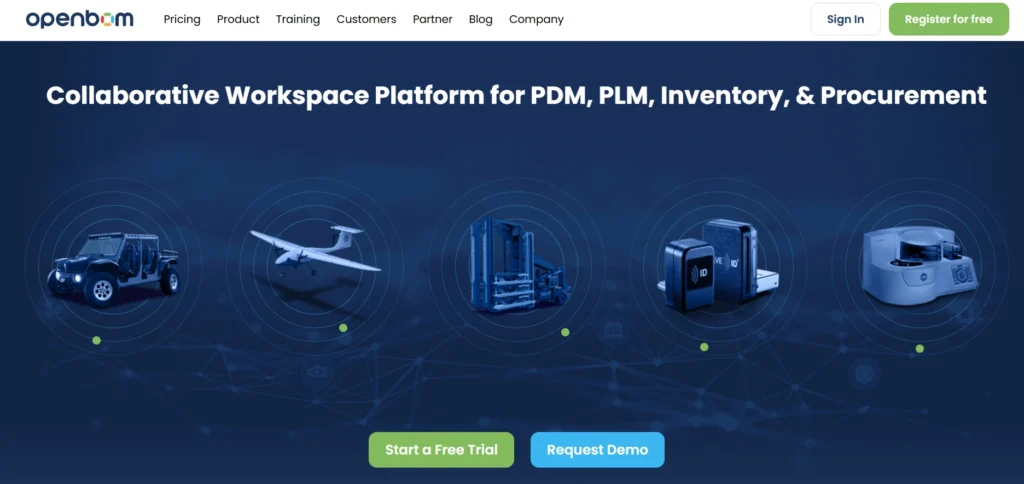
OpenBOM is a lightweight, highly accessible cloud PLM software focused heavily on simplified inventory and parts management. It completely revolutionizes how small teams handle product data. Core capabilities include real-time BOM collaboration, instant CAD data extraction, and simplified purchase order creation. The defining strength of OpenBOM is its affordability and incredibly fast setup time. It perfectly serves small hardware startups, independent engineering teams, and small-scale manufacturers. Entrepreneurs choose OpenBOM to graduate from confusing spreadsheet management without breaking their limited software budgets.
Key Features
- Real time BOM collaboration
- Cloud based inventory management
- Instant CAD data extraction
- Multi tier supply chain
- Simplified purchase order creation
Pros
- Very affordable pricing structure
- Extremely easy to learn
- Great for small startups
- Fast implementation in hours
Cons
- Lacks advanced enterprise features
- Basic workflow automation only
- Limited strict compliance tracking
- User interface feels cluttered
Best For: Small startups and independent teams needing rapid inventory management and affordable product tracking.
Pricing
- Free basic plan and trial available
- Professional Team: $55 / seat / month
- Company: $165 / seat / month
- Enterprise: Custom
12. Autodesk Vault
Website: www.autodesk.com/products/vault/overview
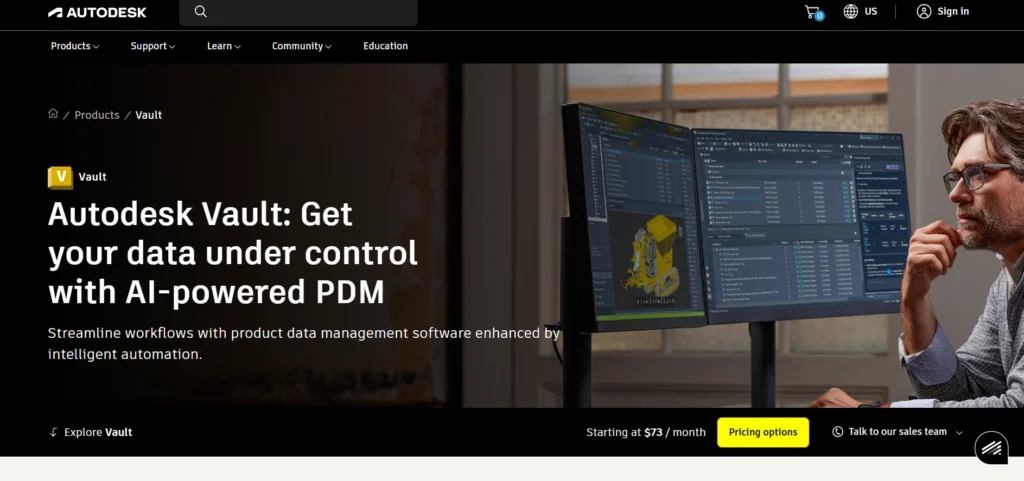
Autodesk Vault is an incredibly reliable product data management software designed specifically to handle complex engineering files. It operates brilliantly as a secure local data management system for engineering departments. Core capabilities include rapid design file searching, automated design revision control, and concurrent team access. Its primary strength is its seamless, native integration with AutoCAD and Inventor. It serves architecture, engineering, and traditional manufacturing firms. Engineering teams choose Vault to safely prevent accidental design file overwrites and securely manage thousands of technical drawings.
Key Features
- Secure local data management
- Deep Autodesk CAD integration
- Rapid design file searching
- Automated design revision control
- Concurrent engineering team access
Pros
- Perfect for AutoCAD users
- Prevents design file overwrites
- Familiar interface for engineers
- Highly reliable local performance
Cons
- Primarily on premise deployment
- Limited enterprise PLM features
- Difficult external supplier access
- Requires local server maintenance
Best For: AutoCAD engineering teams that need secure, on-premise management for extensive 3D and 2D design files.
Pricing
- Flex: $99/33 tokens
- Vault office: $18/month
- Vault Professional: $73/month
Key Features To Look For In PLM Software
Evaluating the right platform means focusing on features that directly impact your daily operations. A great PLM system acts as your company’s central nervous system. Look for these essential capabilities:
- Product Data & Document Control: Secures and centralizes all files, 3D models, and technical specifications in a single searchable vault. This ensures every department works from a single source of truth and eliminates errors from outdated document versions.
- Change Management & Workflow Automation: Tracks every product revision by recording who made the change, when it occurred, and why it was approved. It automatically routes documents to managers for signature, eliminating manual tracking bottlenecks.
- Bill of Materials (BOM) Management: Handles your product’s ultimate recipe by tracking every single component. It dynamically updates inventory and purchasing requirements across your supply chain, similar to a modern supply chain management solution, whenever design changes occur.
- CAD Integration & Collaboration Tools: Connects directly with design software so engineers can save models without leaving their primary environment. It also allows internal teams and external suppliers to markup 3D models and solve design issues together in real time.
- Compliance Management: Monitors industry-specific regulations, quality standards, and environmental rules directly within your active product data. This helps your business pass quality audits easily and prevents costly legal fines or product recalls.
- Cloud Accessibility & Analytics: Provides secure, browser-based access for remote teams and global suppliers without the high overhead of maintaining local servers. It turns complex data into easy-to-read visual dashboards to track development costs and project timelines.
PLM Software vs. PDM Software: What Is The Difference?
Understanding the difference between PLM and PDM is incredibly important before making a software purchase. While people often confuse the two terms, they serve very different purposes within a business. Think of PDM as a secure digital filing cabinet used specifically by engineers during the design phase. It manages CAD files and prevents file overwrites. On the other hand, PLM is a massive corporate ecosystem that takes those engineering files and shares them with manufacturing, sales, procurement, and quality control teams from the product’s birth until its retirement.
| Feature | PLM Software | PDM Software |
| Scope | Manages the entire product lifecycle | Focuses only on the product design phase |
| Data Management | Handles all business and product data | Handles mostly technical CAD and design files |
| Collaboration | Connects all corporate departments globally | Connects primarily internal engineering teams |
| Change Management | Manages enterprise-wide change processes | Tracks basic design file version revisions |
| Compliance | Tracks global industry regulatory standards | Offers very limited compliance features |
| Product Lifecycle Coverage | Covers idea creation to market retirement | Covers only the design and drafting stages |
| Users | Engineers, marketers, suppliers, executives | Almost exclusively mechanical and electrical engineers |
Who Should Use PLM Software?
These platforms are no longer exclusive to massive corporations. Any business that designs, builds, or sells physical goods can benefit from a single source of truth. The core groups that benefit most include:
- Manufacturing and Production Teams: Ensures the factory floor always works from accurate, up-to-date drawings to eliminate expensive scrap, rework, and communication errors.
- Engineering and Design Firms: Centralizes thousands of CAD files and technical revisions so multiple engineers can work simultaneously without overwriting critical data.
- Highly Regulated Sectors (Aerospace, Auto, Medical): Tracks extensive component histories and quality compliance records to guarantee adherence to strict safety standards and regulatory audits like the FDA and broader risk management software requirements.
- High-Tech and Consumer Electronics: Manages rapid change orders, global electronic component sourcing, and overseas manufacturing to keep pace with compressed product lifecycles.
- Consumer Goods and Apparel Brands: Accelerates seasonal product rollouts and streamlines design collaboration with international raw material and fabric suppliers.
- Growing Businesses and Enterprises: Replaces chaotic spreadsheets and fragmented email chains with professional, unified processes that scale smoothly as the organization expands.
How To Choose The Right PLM Software For Your Business
Selecting the perfect system requires careful consideration of your unique business landscape. A platform that works perfectly for a global automaker might be a terrible fit for a small hardware startup. Review these key factors carefully before signing any contracts.
- Company Size & Scalability: Match the platform to your current operational scale and future growth. Startups need lightweight, agile systems to avoid overwhelm, while global corporations require heavy-duty platforms that let you easily add seats and advanced modules as your product catalog expands.
- Industry & Compliance Requirements: Choose a platform that explicitly specializes in your sector’s daily challenges. Ensure it includes built-in audit trails, environmental tracking, and electronic signature support if you operate in heavily regulated markets like aerospace or medical devices.
- Deployment & Integration Needs: Weigh the fast setup and easy remote access of cloud-native systems against the maximum data control of on-premise servers. Crucially, ensure the software offers robust, pre-built connectors to your existing CAD programs and Enterprise Resource Planning (ERP) databases.
- Ease of Use & Adoption: Opt for a modern, intuitive, and logical user interface. The most powerful software becomes a liability if non-technical team members refuse to adopt it due to a steep and frustrating learning curve.
- Total Cost of Ownership & Support: Look beyond the base sticker price. Calculate your true budget by factoring in mandatory implementation fees, staff training, and maintenance contracts. Prioritize vendors offering responsive customer support, training academies, and help in your exact time zone.
Conclusion
Product Lifecycle Management software is an absolute necessity for businesses manufacturing physical goods. By replacing chaotic spreadsheets with a single, reliable source of truth, companies drastically reduce manufacturing errors, improve team collaboration, and accelerate product launches. Ultimately, selecting the right tool depends entirely on your company size, budget, and industry requirements.
For massive global brands requiring deep complexity, Siemens Teamcenter is the best overall PLM software. If your team relies on Salesforce, Propel Software seamlessly connects sales and engineering. For startups needing an affordable cloud-based option, OpenBOM offers incredible value and rapid setup. Evaluate your options, request live demonstrations, and choose the platform that best drives your product development forward.