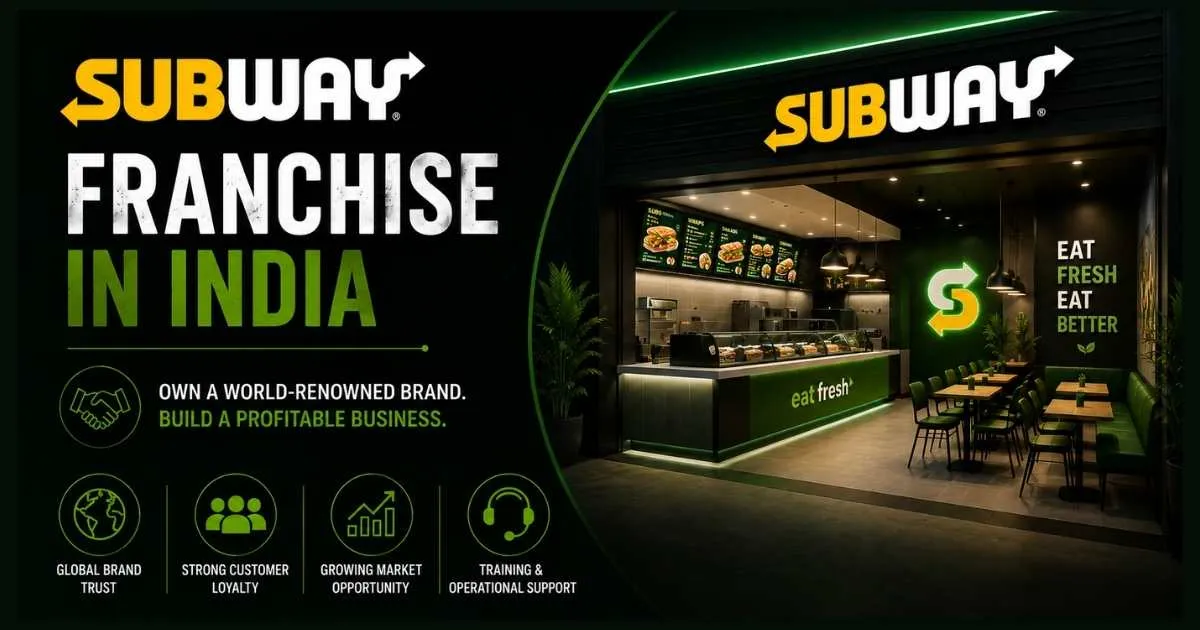
If you have ever walked past a Subway outlet and thought, ‘I could run one of these,’ you are not alone. Subway is one of the most recognised fast-food brands in the world, and in India, it has built a strong base since 2001. For many entrepreneurs, it feels like the perfect entry point into the food business — a globally loved brand, a straightforward menu, and a model that does not require a massive kitchen setup.
But before you fill out any application, you need a clear picture of what this investment actually looks like in 2026. How much does a Subway franchise cost in India? What are the ongoing fees? And most importantly, can you make real money from it?
This guide covers everything — the real numbers, the store formats, the profit potential, and a step-by-step guide to getting started.
About Subway
| Category | Details |
| Founder | Fred DeLuca and Dr. Peter Buck |
| Founded in | 1965 |
| Products Offered | Sub sandwiches, wraps, salads, cookies, drinks, and breakfast items |
| Number of Franchises | Over 37,000 locations worldwide (as of 2026), 1,000+ stores in India |
| Target Audience | All age groups, health-conscious consumers, fast-casual dining patrons, budget-conscious families |
| Growth Potential | High, with ongoing expansion in emerging markets and a growing demand for healthier, customizable fast food |
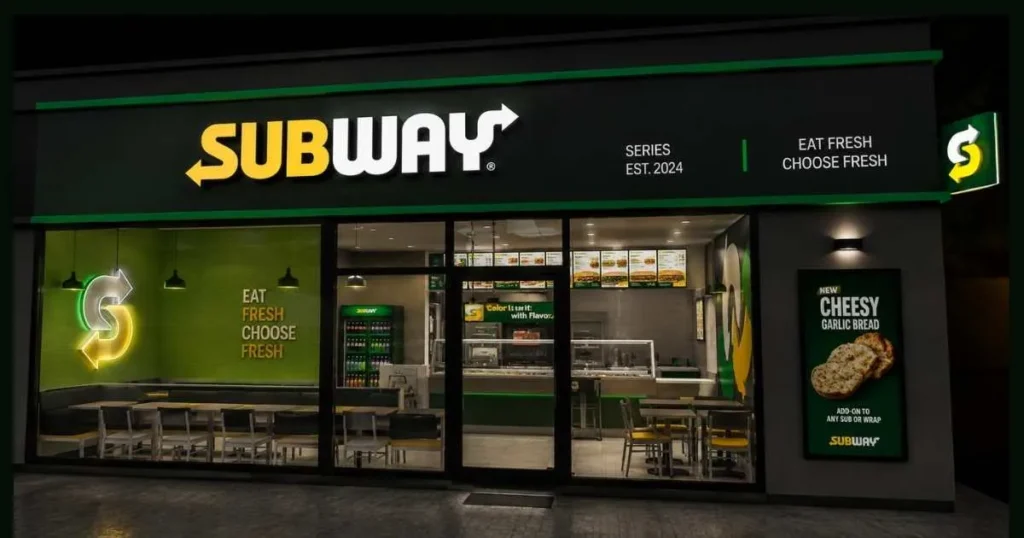
Subway is an international fast-food brand that is known for fresh and customizable sandwiches. Founded in 1965 by Fred DeLuca and Dr. Peter Buck, the brand has an edge in fast food being a healthier, cheaper alternative and has a Globalized Market for Increasingly Health-conscious Customers. In India, Subway opened its doors in 2001 and has since expanded by huge margins because of the increase in demand for food that is simple and nutritious.
Recently, Subway has consolidated its firm grip over the market, introducing innovative menu items and systems for ordering through the use of digitization, as well as green initiatives. As of 2026, Subway generates an estimated ₹2,200–₹2,800 crore ($260M–$330M) annually in India, driven by 1,000+ outlets. Globally, Subway records around $9–10 billion in system-wide sales, making it one of the largest QSR chains in the world. The Indian market is still a priority, and more will be opened in tier-2 and tier-3 cities. Because of a well-defined value chain and strong brand loyalty, Subway still ranks among preferred franchises for investment within India premises.
Why Subway Makes Sense for Indian Entrepreneurs in 2026
India’s Quick Service Restaurant (QSR) market crossed USD 28.6 billion market size in 2025 with forecast to exceed USD 70 billion by 2035. Also continues to grow at a healthy pace, driven by urbanisation, rising incomes, and a younger population that eats out frequently. Within this space, the demand for healthier fast food options is rising faster than traditional segments.
Subway has positioned itself smartly in this gap. It is neither a pizza chain nor a burger joint — it sits in the ‘fresh and customisable’ segment that appeals to health-conscious urban consumers. As of 2026, Subway generates an estimated ₹2,200–₹2,800 crore ($260M–$330M) annually in India. With over 1000+ outlets across 160+ cities in India, the brand is established enough to have strong recall but still has room to grow, especially in Tier 2 and Tier 3 cities.
Here is what makes Subway particularly attractive for new business owners:
- Global trust: Brand recognition that reduces your customer acquisition cost from day one
- Simpler operations: No deep-frying, complex cooking, or large kitchen teams required
- Customisation model: Guests pick their own ingredients, keeping things fresh and personalised
- Lower investment: Competitive compared to other international QSR brands in India
- Localised menu: Subway India menus include options suited to Indian taste preferences
Subway Franchise Cost in India 2026 — The Real Breakdown
The total investment for a Subway franchise in India ranges from ₹60 Lakhs to ₹1.1 Crores, depending on the store format and city tier. Here is a detailed cost-by-cost breakdown so you know exactly what you are paying for:
| Subway Franchise Cost in India (Components) | Estimated Amount (INR) |
| One-Time Franchise Fee | ₹6.5 Lakhs – ₹10 Lakhs |
| Interior & Store Design | ₹12 Lakhs – ₹20 Lakhs |
| Kitchen Equipment & Fit-Out | ₹5 Lakhs – ₹10 Lakhs |
| Initial Inventory & Supplies | ₹1.5 Lakhs – ₹3 Lakhs |
| Signage & Branding | ₹2 Lakhs – ₹4 Lakhs |
| Staff Hiring & Training | ₹1 Lakhs – ₹2 Lakhs |
| Licences, Permits & Legal | ₹1 Lakh – ₹1.5 Lakhs |
| Security Deposit (Real Estate) | ₹10 Lakhs – ₹20 Lakhs |
| Working Capital (3 months) | ₹5 Lakhs – ₹10 Lakhs |
| Total Estimated Investment | ₹60 Lakhs – ₹1.1 Crores |
Note: These are estimates. City tier, exact location, and property rental rates significantly affect the final number. A Subway in a Mumbai mall will cost more to set up than one in a Tier 2 city high street.
Ongoing Fees You Need to Budget For
Owning a Subway franchise is not just about the upfront cost. You also pay:
- Royalty fee: 8% of gross weekly sales goes to Subway as a royalty fee
- Advertising fee: 4.5% of gross weekly sales goes into a marketing and advertising fund
- Rent: Depending on the location, rent can range from ₹60,000 to ₹2 Lakhs per month
A good rule of thumb is to keep your rent-to-revenue ratio below 15%. If rent is eating more than that, your margins shrink fast.
Subway Franchise Models Available in India
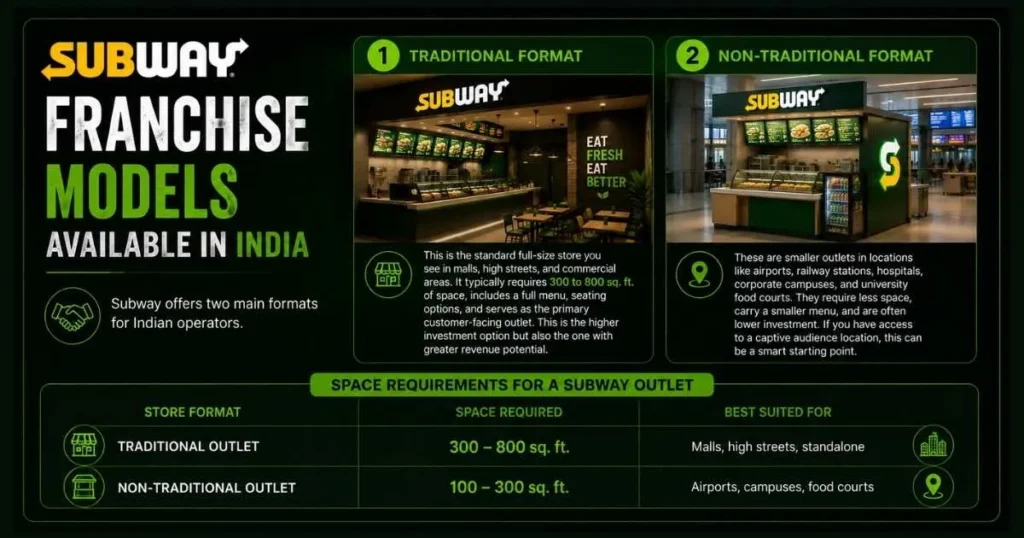
Subway offers two main formats for Indian operators:
1. Traditional Format
This is the standard full-size store you see in malls, high streets, and commercial areas. It typically requires 300 to 800 square feet of space, includes a full menu, seating options, and serves as the primary customer-facing outlet. This is the higher investment option but also the one with greater revenue potential.
2. Non-Traditional Format
These are smaller outlets in locations like airports, railway stations, hospitals, corporate campuses, and university food courts. They require less space, carry a smaller menu, and are often lower investment. If you have access to a captive audience location, this can be a smart starting point.
Space Requirements for a Subway Outlet
| Store Format | Space Required | Best Suited For |
| Traditional Outlet | 300 – 800 sq. ft. | Malls, high streets, standalone |
| Non-Traditional Outlet | 100 – 300 sq. ft. | Airports, campuses, food courts |
Profit Potential and ROI — What to Realistically Expect
This is the question everyone really wants answered. Here is an honest look at the numbers:
Break-Even Timeline
Most well-run Subway outlets in high-footfall locations reach operational break-even (monthly revenue covers monthly costs) within 12 to 24 months. Full capital recovery typically takes between 34 to 60 months for an average performing location.
Profit Margins
The profit margin for a Subway franchise in India generally falls in the 30% to 45% range before deducting royalties and rent. Net profit after all expenses is typically between 15% and 25% for a well-managed outlet. Metro city outlets with high footfall can push toward the higher end of this range.
Monthly Revenue Expectations
| Location Type | Estimated Monthly Revenue | Estimated Net Profit |
| Metro City (Prime Location) | ₹6 Lakhs – ₹12 Lakhs | ₹1 Lakh – ₹2.5 Lakhs |
| Tier 2 City | ₹3 Lakhs – ₹6 Lakhs | ₹50,000 – ₹1.2 Lakhs |
| Campus / Non-Traditional | ₹2 Lakhs – ₹4 Lakhs | ₹35,000 – ₹80,000 |
These are estimated ranges. Actual performance depends on location quality, local competition, operational efficiency, and how actively you manage the store.
Factors Affecting Subway Franchise Profit
Some of the major essentials in order to operate a franchise are as follows.
1. Location
One of the major success factors includes location. This brand’s franchises prove to be good at high foot traffic locations, like shopping malls, shopping complexes, office areas, or highly busy streets. It would also be good to close proximity to schools, colleges, or gyms as they attract healthy people.
2. Operational Standards
This brand has set operational standards to meet for quality and uniformity. Among them are proper training, control of inventory, cleanliness, and food safety standards.
3. Staffing
This franchises require well trained and committed staff for making food, serving the consumers, and managing day to day affairs. Though this brand has training programs offered, finding skilled employees fit for brand values is needed.
4. Marketing
This brand have an business opportunity for corporate marketing campaigns that are undertaken by the companies. The local marketing opportunities are also required in case of this brand.
Who is a Good Fit for a Subway Franchise?
Subway does not require you to have prior food industry experience, which makes it popular among first-time business owners. However, here is what helps:
- Financial capacity: You can invest ₹18 Lakhs to ₹1.1 Crores depending on the format and city
- Suitable location: A space of 200 to 800 sq. ft. in a commercially active area
- Willingness to operate by the book: You must follow Subway’s operational, hygiene, and food quality standards
- Basic business sense: Especially helpful for store management and team supervision
- Property ownership advantage: Owning the property or having a long-term lease reduces financial risk
Licences and Documents Needed
Before you can open your doors, you will need to put together a few essential documents and licences:
- FSSAI food safety registration or licence
- GST registration
- Trade licence from the local municipal body
- Shop and Establishment Act registration
- Fire safety certificate (if applicable)
- PAN card and Aadhaar card
- Business address proof
- Bank account in the business name
How to Apply for a Subway Franchise in India — Step by Step
This process, however simple, initiates with proper planning and research work. Here is step by step procedure to file a request for this Franchise:
1. Research work
Before the franchisee applies, it is very much required that deep research on the Subway brand as well as on its business model and the presence of this brand in the Indian market should be done and evaluate whether it is at the apt time or not considering its financial capabilities and its business agenda.
2. Application
The application may be done either online by using their website or directly to Subway’s franchise development team. This application will ask for personal information, financial information, and a concise business plan showing what you want from the franchise.
3. Franchise Review
They will review your financials, your business background and your fit to open up the franchise once your application hits their desk. The procedure may involve an interview or a meeting to delve deeper into your background and intent in this process.
4. Site location
Once your application goes through, the next action is to identify a desirable location for your franchisee. This brand will help the franchisee select a proper location, but the ability of the site to perform finally depends on the potential of it.
5. Franchise Agreement
You will then sign with Subway a legal agreement that details terms of the franchise, the fee to take over a franchise, paying royalties and other obligations.
6. Training and Setup
After signing an agreement, The barnd will offer training for you and your employees. The brand further helps in the setting up of the store based on its operational procedures to get the location ready to be opened.
Subway Franchise Contact Details (India)
| Type | Details |
|---|---|
| Online Inquiry | Official franchise form (recommended) |
| info@subway-india.in | |
| customercare@subway.in | |
| franchising@subway.com | |
| partner@subway.in | |
| Contact Number | +91 86570 01462 |
| Address | Eversub India Pvt. Ltd., Andheri East, Mumbai |
Important Links
Support and Training Provided by Subway
This brand has a good, strong training program in place to prepare franchisees for running their outlets properly. Here’s an overview of the support and training you can expect:
1. The High-Intensity Training Program
Business Subway also provides a very intensive training program regarding the entire extent of the business. For example, one would discuss food preparation, customer service provision, supply management, functional functions, and workers. The franchises are trained through these local learning centers or even subsidiaries.
2. Ongoing support in operation:
After opening its franchise, The brand offers operating support in the following operational areas: day-to-day operation and marketing strategies, training on employees, and new menus. This will help keep franchisees at par with operating challenges while maintaining a strong level of operational performance.
3. Supply Chain and Procurement Support:
Subway supplies the franchisees with an integrated supply chain that offers regular supply of quality raw materials and other products they may require. This gives assurance to the franchisee to control the quality, so food served to customers remains fresh.
4. Marketing and Advertising:
The brand also provides support for its franchisees through a national and local marketing effort. The efforts of the brand are focused on increased foot traffic to the franchises, to promote special offers, and to enhance brand visibility. This also covers local advertising and promotions, which are part of the packages for support.
Subway Franchise: Is It Really Worth the Investment?
Below are the most important points to evaluate whether or not this brand’s Franchise is worth the investment.
1. Low Initial Investment
This brand is one of the cheapest international food chains. The subway franchise cost in India will depend upon its size and location. It can go up to ₹30 lakhs and ₹1 crore. Therefore, such an investment will be significantly lower compared to other QSR (quick-service restaurant) brands, thus being relatively feasible for entrepreneurs.
2. Steady Growth of the QSR Market:
The Indian QSR market is growing at a very high rate due to urbanization, changing eating habits, and increasing demand for fast food. In this market, this brand stands out as an option with healthier eating and customizable meals.
3. Profit Potential
The entry level is not too high, but the profit potential is based on the location and efficiency of operation. If the customers come frequently, with steady sales and cost control, good ROI is expected over time.
4. Global Brand Recognition
Subway is a global brand with high brand recognition that supports customer loyalty and foot traffic. This makes marketing and attracting customers easier than establishing a new food brand.
Pros & Cons of Subway Franchise Business
Any other business has pros and cons, so this franchise does. Here is a quick look at the pros and cons:
Pros:
- Brand Recognition: It is one of those brands that can easily pull in customers.
- Low Investment Cost: It has a pretty low initial investment compared to other QSRs that makes it very attractive to wannabe franchisees.
- Healthy Menu: The health-orientated menu of the brand has attracted the ever-growing Indian consumer base.
- Training and Support: Subway offers to the franchisee extensive training and ongoing support, so running the business becomes simpler for him or her.
Cons:
- Location dependent: Success is largely dependent upon selecting the right high foot-fall location, which, at times, becomes highly challenging or expensive.
- Ongoing Royalties: The ongoing royalty and marketing fees drawn by the brand directly impact profit margins.
- Competition: QSR market is very competitive because of the numerous local and international brands for consumer attention.
Common Mistakes First-Time Subway Franchisees Make
Knowing what not to do is just as important as knowing the process. Here are the most common pitfalls:
- Underestimating location quality: Picking a location with low foot traffic to save on rent — this kills revenue before you start
- Not budgeting for working capital: Many first-timers forget to account for 3 to 6 months of operating costs
- Ignoring ongoing fees: Subway’s royalty and ad fees add up; ignoring them in your projections leads to nasty surprises
- Poor staff management: Staff turnover is real in QSR; plan for ongoing training and retention
- Not leveraging delivery platforms: Many operators rely only on walk-in traffic and ignore Zomato, Swiggy, and Google My Business
Subway vs. Other QSR Franchise Options in India
| Brand | Approx. Total Investment | Royalty Fee | Avg. Break-Even |
| Subway | ₹60 L – ₹1.1 Cr | 8% + 4.5% ad fee | 12–36 months |
| Domino’s | ₹30 L – ₹50 L | 5.5% | 18–30 months |
| KFC | ₹1 Cr – ₹2 Cr | 5% | 24–48 months |
| McDonald’s | ₹6 Cr – ₹14 Cr | 4% | 48–60 months |
| Burger King | ₹2.5 Cr – ₹5 Cr | Varies | 36–60 months |
Subway sits in a middle ground — not as cheap as some local QSR options, but far more affordable than premium international brands. This makes it one of the more accessible globally recognised brands for Indian entrepreneurs.
Final Thoughts: Is a Subway Franchise Worth It in 2026?
For the right person, in the right location, with realistic financial planning — yes, a Subway franchise can be a genuinely good business in India. It is not a get-rich-quick play; it requires hands-on management, especially in the first year. But you have the backing of a global brand, a proven operational system, and a product that has clear demand.
The key is to be honest with yourself about your location, your investment capacity, and your willingness to run the day-to-day operations. Do that, and Subway gives you a solid foundation to build a profitable food business.
FAQs
What is the minimum investment for a Subway franchise in India?
The minimum realistic investment, for a non-traditional format in a lower-rental city, starts at around ₹18 to ₹30 Lakhs. A full traditional store in a metro will need ₹60 Lakhs to ₹1.1 Crores.
Can I own multiple Subway outlets?
Yes. Subway actively encourages multi-unit ownership. Once your first store is stable and profitable, you can apply for additional franchise agreements.
Does Subway provide training and support?
Yes. All new franchisees go through a 2-week training programme covering food preparation, customer service, health and safety, and daily operations. Subway also provides ongoing operational support through its regional development teams.
Is a Subway franchise profitable in smaller Indian cities?
Tier 2 and Tier 3 cities are actually showing strong growth for QSR brands. Lower rent costs and growing urban populations make them viable, though you need to ensure there is sufficient foot traffic and brand awareness in the area before committing.
How long does it take to open a Subway outlet after approval?
Typically between 3 to 6 months from agreement signing — this includes store fit-out, training, licensing, and the soft launch period.