
A single delayed shipment, a sudden regional conflict, or an unseasonal climate event can paralyze an entire business overnight. For years, supply chain managers played a relentless game of catch-up, reacting to bottlenecks after the damage was already done. Today, that reactive approach is a luxury no enterprise can afford. In a market defined by razor-thin margins and instant customer expectations, relying on fragmented legacy systems or manual spreadsheets is a distinct operational liability.
To survive this landscape, enterprises are rapidly migrating toward integrated, cloud-based ecosystems. The global supply chain management (SCM) software market is projected to surge to $69.27 billion this year, fueled by a collective corporate sprint toward total operational visibility. This massive capital shift isn’t just about keeping tabs on cargo; it is driven by the reality that companies investing heavily in advanced, data-driven supply chain platforms are experiencing up to 61% higher revenue growth than their slower-moving competitors.
Modern SCM software has evolved from a basic back-office tool into a proactive, intelligent command center utilizing predictive analytics, real-time IoT tracking, and automated workflows. To help you cut through the noise and find the right fit for your operations, we have evaluated and curated the top 15 supply chain management software solutions dominating the market this year. Whether you are an SME looking to scale efficiently or a global enterprise optimizing multi-warehouse logistics, these platforms offer the strategic anchor your business needs to stay resilient.
What Is Supply Chain Management Software?
At its core, Supply Chain Management (SCM) software is a centralized digital platform designed to oversee, optimize, and execute the entire lifecycle of a product from raw material sourcing to final delivery at the customer’s doorstep. Instead of allowing departments to operate in isolated silos, this software connects suppliers, manufacturers, wholesalers, and retailers into a single, cohesive network. By gathering and analyzing data across production schedules, inventory levels, order processing, and shipping logistics, SCM tools give businesses a bird’s-eye view of their operations. This transparency eliminates costly blind spots, ensures demand patterns align with production, and prevents the frequent communication gaps that typically stall product movement.
Beyond simple tracking, modern SCM software serves as an intelligent operational engine that replaces guesswork with precision. It automates repetitive tasks like reorder triggers and invoice processing while utilizing predictive algorithms to forecast demand fluctuations, manage warehouse space, and optimize delivery routes. When an unexpected disruption occurs such as a port delay or a sudden component shortage the software doesn’t just flag the issue; it allows managers to run simulations and instantly pivot to alternative suppliers or shipping lanes. Ultimately, it transforms a business’s supply chain from a vulnerable, reactive cost center into a resilient, competitive advantage.
Why Businesses Need SCM Software
Operating in a volatile global market means that relying on manual tracking or gut instinct is a fast track to disrupted operations and lost revenue. Businesses require dedicated SCM software to transform their logistics from a chaotic series of reactions into a predictable, highly efficient workflow. Implementing these platforms offers five distinct advantages that directly impact a company’s bottom line:
- End-to-End Visibility: It eliminates operational blind spots by providing real-time tracking of raw materials, warehouse inventory, and transit fleets, allowing managers to address bottlenecks before they cause delays.
- Accurate Demand Forecasting: By analyzing historical sales data and market trends, the software helps businesses stock exactly what they need, drastically reducing the costs of excess inventory while preventing expensive stockouts.
- Enhanced Supplier Collaboration: The software creates a unified communication channel with vendors, automating purchase orders and sharing production schedules to ensure suppliers consistently meet quality and delivery deadlines.
- Cost and Route Optimization: Machine learning algorithms analyze traffic, weather, and fuel variables to plot the most cost-effective shipping routes, significantly lowering freight expenses and carbon footprints.
- Rapid Risk Mitigation: When global disruptions strike, the system allows companies to instantly model alternative logistics scenarios and switch to backup suppliers, maintaining business continuity without halting operations.
Comparison Table
Selecting the right SCM platform requires balancing highly specific operational demands against deployment reality and budget structures. To help you cross-reference the top 15 solutions at a glance, we have mapped their target use cases, primary deployment architectures, and core capabilities side by side.
| Software | Best For | Pricing | AI Features | Deployment | Free Trial |
| SAP IBP | Large global enterprises | Custom Quote | ML demand sensing & forecasting | Cloud | No |
| Oracle Fusion Cloud | All-in-one planning & execution | Custom Quote | Predictive maintenance & procurement | Cloud | No |
| Kinaxis Maestro | Fast manufacturing networks | Custom Subscription | Concurrent simulation & anomalies | Cloud | No |
| Blue Yonder | FMCG and retail networks | Custom Subscription | Cognitive demand & macro trends | Cloud | No |
| NetSuite SCM | Growing mid-sized brands | Modular Quote | Basic predictive trend matching | Cloud | No |
| Infor CloudSuite | Vertical-specific workflows | Custom Subscription | Automated line-level bottlenecking | Cloud | No |
| Manhattan Active | Omnichannel retailers | Transaction-based | Robotic orchestration & labor sync | Cloud | No |
| Coupa Design | Strategic network twins | Custom Subscription | Shipping lane & cost simulations | Cloud | No |
| Odoo SCM | Small-to-midmarket teams | Free basic / $24.90 mo | Minimal rule-based automation | Cloud / On-Prem | Yes |
| Epicor Kinetic | Medium discrete manufacturing | Custom Subscription | Predictive material requirements | Cloud / On-Prem | No |
| E2open | Multi-tier supplier networks | Custom Network-based | Upstream risk & transit sensing | Cloud | No |
| Logility | Sustainable retail & sourcing | Custom Subscription | ESG tracking & demand sensing | Cloud | No |
| HighJump (Körber) | High-volume custom warehouses | Custom Enterprise | Dynamic labor & slotting math | Cloud / On-Prem | No |
| Descartes | Fleet operators & logistics | Transaction/Monthly | Last-mile route optimization | Cloud | No |
| QAD Adaptive | Automotive & life sciences | Custom Subscription | Predictive allocation & quality drift | Cloud | No |
List Of Top 15 Supply Chain Management Software
1. SAP Integrated Business Planning (IBP)

- Website: sap.com
- Best For: Large multi-national enterprises needing deep, ecosystem-wide global planning.
SAP IBP is a premium, cloud-based platform engineered for massive organizations that operate complex, global supply chains. It unifies sales and operations planning (S&OP), demand forecasting, forecasting accuracy tracking, and inventory optimization into a single digital layer. By natively tying into existing SAP S/4HANA infrastructure, the platform uses machine learning to identify hidden consumer trends and instantly evaluate how unexpected supply shocks impact financial goals. It is built to turn siloed data into real-time, actionable insights for complex corporate frameworks.
Key Features:
- Real-time multi-scenario modeling and simulation.
- AI-powered demand planning and outlier exemption.
- Automated sales and operations planning (S&OP) workflows.
- End-to-end supply chain control tower for bottleneck alerts.
Pros:
- Flawless native integration with existing SAP ERP architectures.
- Extremely powerful predictive analytics and machine learning forecasting models.
Cons:
- Massive, costly implementation processes that typically take months to fully deploy.
- A highly rigid user interface that requires specialized training and consultant dependencies.
Pricing: Custom quote based on enterprise operational scale and module selection.
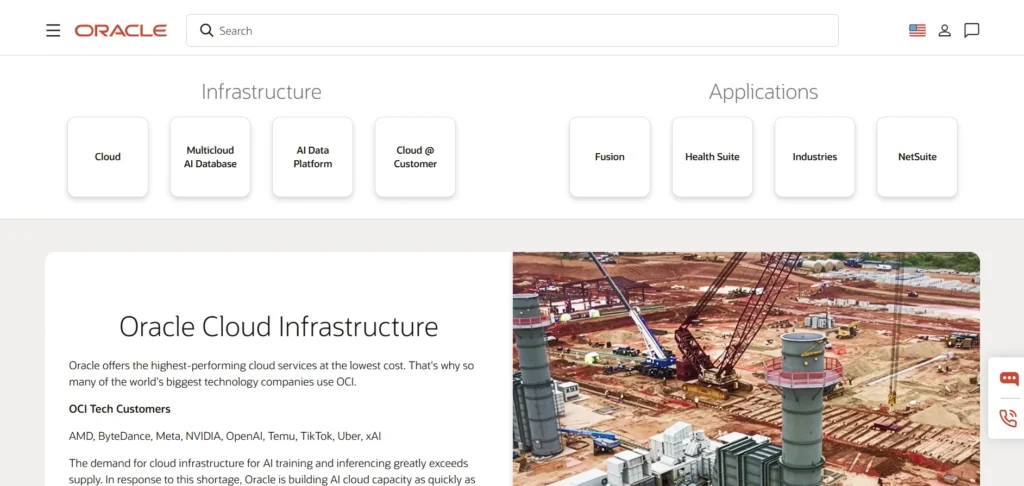
2. Oracle Fusion Cloud SCM
- Website: oracle.com
- Best For: Mid-to-large enterprises seeking a single, all-in-one cloud suite for planning and execution.
Oracle Fusion Cloud SCM provides a massive, comprehensive suite that seamlessly connects procurement, product lifecycles, manufacturing, and shipping workflows. Instead of forcing businesses to stitch together multiple niche software tools, Oracle unifies the entire lifecycle, including AP automation software for manufacturing workflows, under one unified data engine.. It allows multi-region companies to watch how downstream changes affect their global balance sheets instantly. This architecture helps logistics teams pivot rapidly during port congestion or raw material shortages without losing synchronization with procurement or customer services.
Key Features:
- Unified execution across manufacturing, maintenance, and logistics.
- Automated supplier lifecycle and procurement management.
- Global order promising with real-time transit visibility.
- Integrated intelligent inventory and asset tracking.
Pros:
- Eliminates multi-vendor complexity by covering both planning and physical execution.
- Strong cross-functional continuity between corporate finance data and daily logistics.
Cons:
- Licensing costs can quickly multiply as you activate more modular features.
- The vast scope of configuration can feel overwhelming for teams requiring straightforward upgrades.
Pricing: Custom enterprise pricing available via direct sales inquiry.
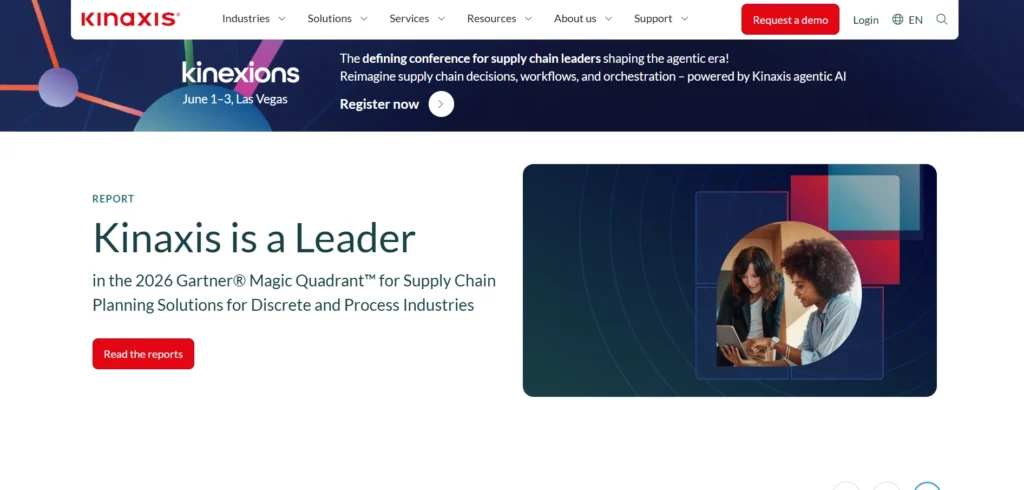
3. Kinaxis Maestro
- Website: kinaxis.com
- Best For: Fast-moving manufacturing networks needing ultra-fast scenario planning and disruption response.
Formerly known as RapidResponse, Kinaxis Maestro is an agile platform designed specifically to eradicate operational latency. While legacy systems require hours or days to calculate how a sudden forecast shift affects assembly plants, Kinaxis uses its concurrent planning engine to bridge the gap between supply, demand, and capacity in seconds. The software allows planners to run instantaneous “what-if” simulations, assessing exactly how switching vendors impacts factory output or shipping margins, making it a critical asset for high-tech, automotive, and volatile manufacturing sectors.
Key Features:
- Patented concurrent planning engine for real-time visibility.
- Advanced “what-if” impact simulation for instant risk mitigation.
- AI-infused automation for automated inventory and supply balancing.
- Visual drag-and-drop workflow dashboards with multi-ERP connectivity.
Pros:
- Unmatched planning speed that reflects unexpected changes across the entire chain instantly.
- Pre-built templates that integrate easily with diverse external data streams (SAP, Oracle, Salesforce).
Cons:
- Lacks the native deep warehouse management (WMS) execution features found in other large suites.
- Requires clean, high-quality historical data inputs to generate highly accurate simulations.
Pricing: Subscription-based enterprise pricing tailored to network complexity.
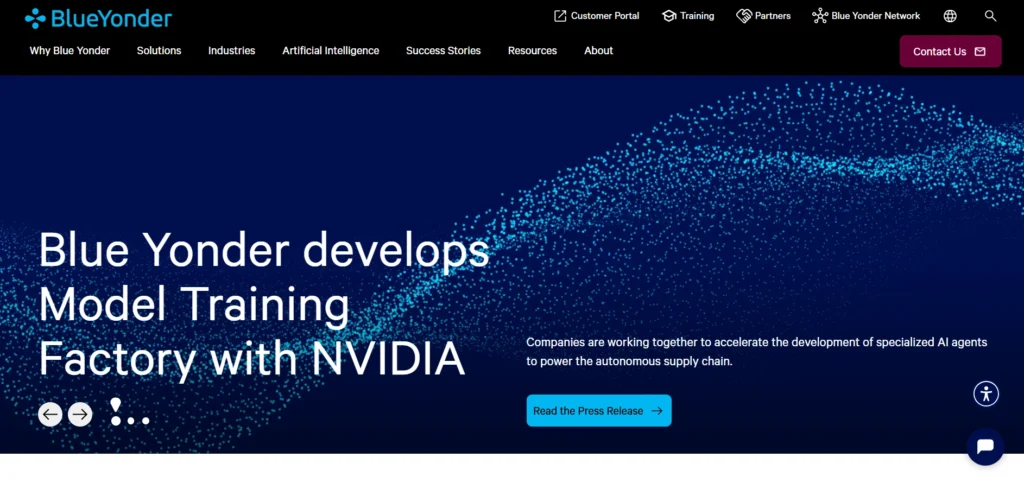
4. Blue Yonder Supply Chain Planning
- Website: blueyonder.com
- Best For: Fast-moving consumer goods (FMCG) and retail networks managing high SKU counts.
Description: Blue Yonder uses machine learning and cognitive intelligence to help retail, consumer goods, and distribution businesses automate high-volume operations. The platform monitors dynamic external variables such as shifting weather patterns, local events, and consumer trends to generate accurate predictive forecasts. By constantly re-calculating ideal safety stocks and tracking warehouse labor productivity, Blue Yonder minimizes excess inventory carrying costs while simultaneously maximizing retail store fulfillment rates across highly distributed physical and digital commerce networks integrated with POS billing software systems.
Key Features:
- Cognitive AI/ML engines for dynamic demand and replenishment planning.
- SKU-level inventory optimization across distributed e-commerce hubs.
- Integrated labor management and transportation route scheduling.
- Automated execution alerts to prevent imminent brick-and-mortar stockouts.
Pros:
- Exceptional intelligence tailored precisely to the rapid cycles of retail and FMCG sectors.
- Highly proactive recommendations that replace manual monitoring with automated triggers.
Cons:
- The complex configuration requires significant internal technical expertise to maintain over time.
- The platform can feel overly complex for B2B industrial manufacturers with low SKU variations.
Pricing: Custom subscription structures based on modules and operational volume.
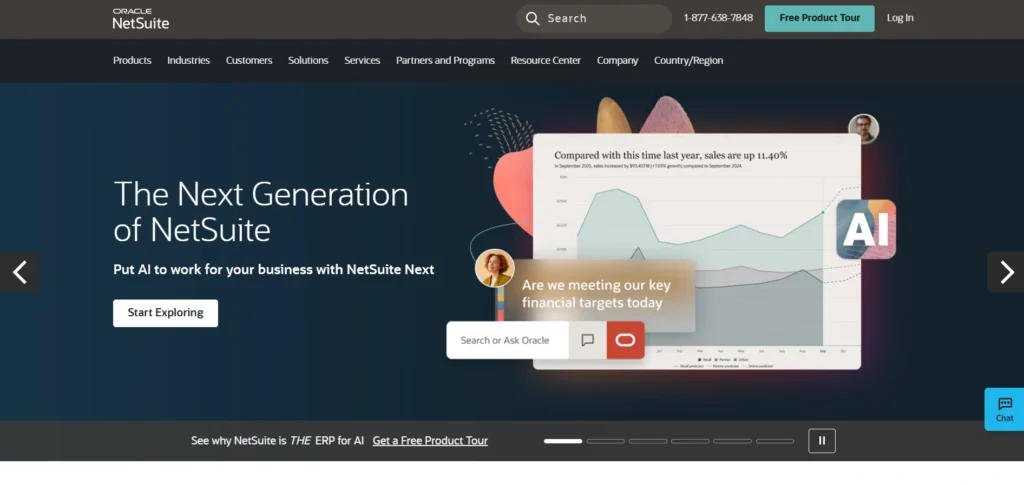
5. NetSuite Supply Chain Management
- Website: netsuite.com
- Best For: Growing mid-sized businesses and fast-scaling e-commerce brands.
NetSuite SCM provides small-to-mid-sized operations with an integrated, cloud-native tool to graduate from chaotic manual spreadsheets. As a built-in module of the popular NetSuite ERP stack, this platform unifies procurement, multi-warehouse stock tracking, and outbound shipping fulfillment within an accessible, user-friendly interface. It gives mid-market businesses immediate visibility over regional inventory hubs, tracks supplier performance lead times, and triggers automatic replenishment alerts, allowing lean operations using warehouse stock management software to scale up effectively without ballooning their overhead administrative costs.
Key Features:
- Multi-location inventory tracking with barcode and scan support.
- Automated purchase order and request-for-quote (RFQ) lifecycles.
- Predictive demand analysis tied directly to core corporate financials.
- Inbound gate entry, material tracking, and customer return workflows.
Pros:
- An exceptionally user-friendly interface that scales smoothly with growing businesses.
- Perfect, out-of-the-box integration with NetSuite’s native CRM and accounting systems.
Cons:
- Offers less depth in advanced AI scenario simulation compared to heavy enterprise competitors.
- Custom third-party integrations with non-NetSuite applications can require complex development work.
Pricing: Modular pricing that scales alongside company growth, requiring a custom corporate quote.
6. Infor CloudSuite SCM
- Website: infor.com
- Best For: Industrial manufacturers and distributors looking for highly specialized, industry-specific workflows.
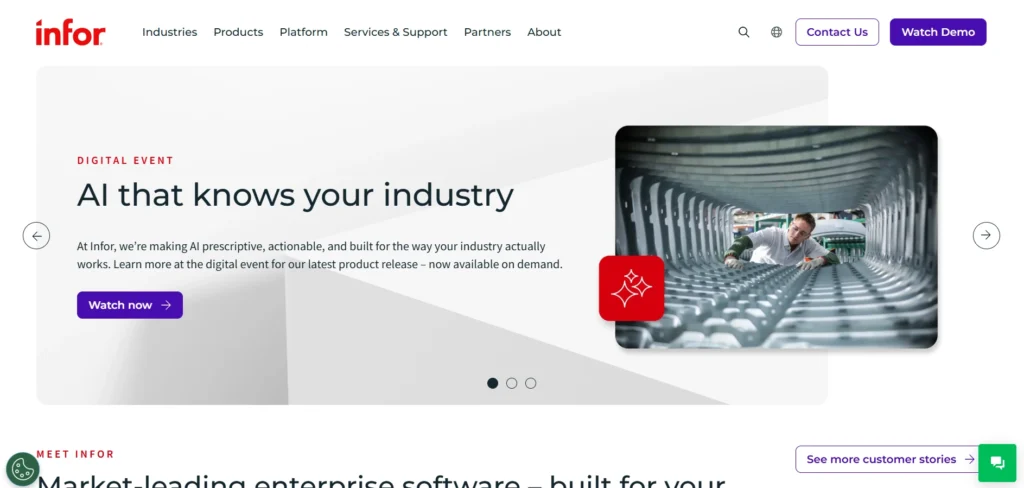
Infor CloudSuite SCM provides a deeply tailored approach to logistics by moving away from generic, one-size-fits-all software configurations. It offers native functionality optimized for discrete and process manufacturing, healthcare networks, and food and beverage distribution. By combining advanced supply planning with real-time global tracking networks, the platform helps enterprises balance complex production lines with unpredictable material arrivals. Its embedded analytics engine allows teams to pinpoint line bottlenecks and supplier delivery issues before they scale into systemic delays.
Key Features:
- Industry-specific analytics built directly into core modules.
- Advanced production planning and scheduling tools.
- Nexus multi-enterprise supplier network visibility.
- Automated warehouse storage optimization and transit tracking.
Pros:
- Requires minimal custom code due to deep out-of-the-box vertical features.
- Excellent collaboration network linking vendors, carriers, and financial institutions.
Cons:
- Navigating the complex administrative backend requires a steep learning curve.
- Reporting engines can run slowly when querying heavy legacy multi-region architectures.
Pricing: Tailored annual subscription pricing available via direct sales consultation.
7. Manhattan Active Supply Chain
- Website: manh.com
- Best For: Large-scale omnichannel retailers managing vast distribution and warehouse networks.
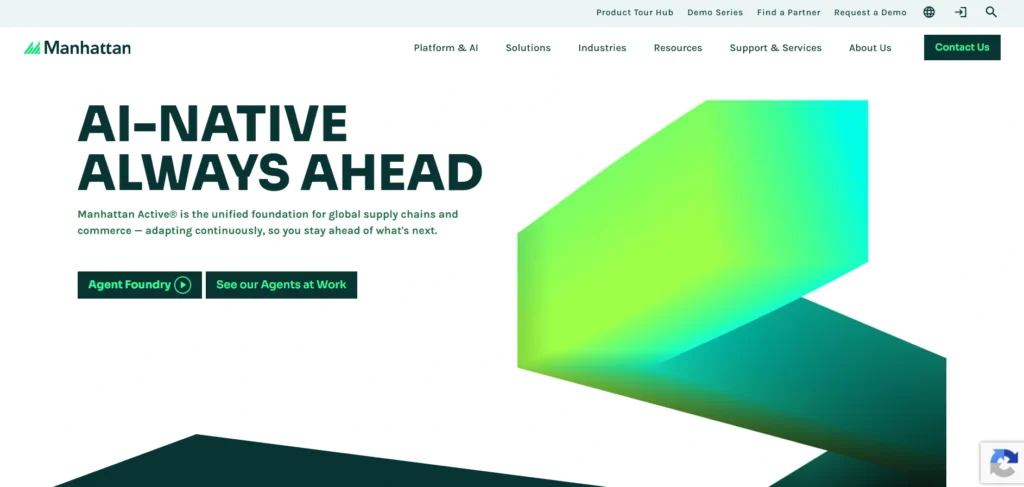
Manhattan Active unifies warehouse management (WMS), labor management, and transportation systems (TMS) into a single, cloud-native operational console. Built explicitly to support high-velocity retail environments, the software manages complex e-commerce fulfillment strategies alongside traditional brick-and-mortar store replenishment. By automatically calculating labor capacity against real-time order backlogs, it streamlines picking, packing, and dispatch cycles. This helps large retail footprints maintain quick turnaround guarantees while protecting tight operating margins.
Key Features:
- Unified warehouse, labor, and transportation management workspace.
- Dynamic cross-docking and order slotting optimization tools.
- Real-time automated robotic and automation equipment orchestration.
- Continuous software updates with zero operational downtime upgrades.
Pros:
- Industry-leading warehouse management capabilities for high-volume operations.
- Exceptionally responsive microservices architecture scales with peak holiday demands.
Cons:
- Too heavy and functionally dense for small manufacturing companies.
- The deployment and consulting costs represent a major capital investment.
Pricing: Enterprise software pricing structured on transaction volume and nodes.
8. Coupa Supply Chain Design & Planning

- Website: coupa.com
- Best For: Companies needing to design resilient supply chain networks and optimize procurement spend.
Built through the acquisition of LLamasoft, Coupa Supply Chain Design & Planning excels at strategic network modeling rather than day-to-day shipping execution. It gives executives the tools to build digital twins of their global logistics footprint, testing how moving manufacturing hubs or opening new fulfillment centers affects taxes, duties, and lead times. By linking these structural simulations with corporate procurement data, the platform empowers companies to proactively de-risk their operations, minimize total landed costs, and prepare for unexpected geopolitical changes.
Key Features:
- Advanced digital twin creation and systemic network simulation.
- AI-driven optimization for factory production and shipping lanes.
- Landed cost analysis including customs, duties, and localized tax.
- Integrated corporate spend management and strategic sourcing tools.
Pros:
- Unrivaled “what-if” strategic modeling for long-term corporate agility.
- Helps teams uncover immense hidden savings within complex distribution footprints.
Cons:
- It is not designed to handle real-time warehouse execution or individual shipment tracking.
- Requires highly specialized data analysts to manage the complex simulation engines.
Pricing: Custom enterprise subscription packages based on network model variables.
9. Odoo SCM
- Website: odoo.com
- Best For: Small-to-midmarket businesses seeking an affordable, modular open-source ecosystem.
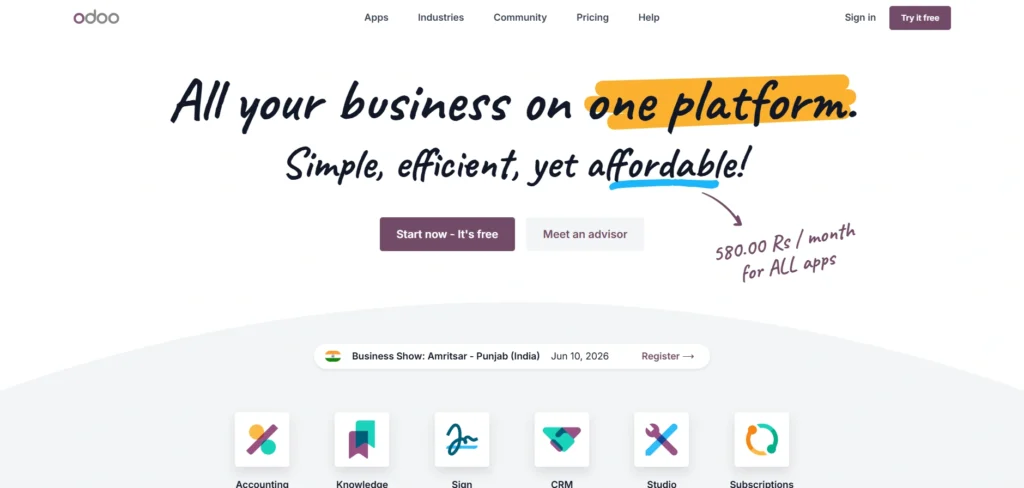
Odoo SCM offers an intuitive, open-source approach to operations by dividing features into individual apps like Inventory, Purchase, MRP, and PLM. Businesses can start with basic stock tracking and systematically activate advanced manufacturing, barcode scanning, and multi-warehouse routing as they expand. The platform’s modern, clean user interface stands in sharp contrast to rigid legacy systems, offering small and mid-market teams immediate clarity on raw material quantities, supplier lead times, and dropshipping fulfillment streams without overwhelming them with unnecessary features.
Key Features:
- Modular app ecosystem allowing custom-paced feature rollouts.
- Double-entry inventory tracking system for perfect trace precision.
- Automated procurement triggers based on real-time minimum stock rules.
- Native barcode interface compatible with standard mobile devices.
Pros:
- Highly cost-effective pricing structure compared to enterprise legacy suites.
- An incredibly flexible open-source environment allowing custom developer modifications.
Cons:
- Community-built third-party plugins occasionally suffer from stability issues during upgrades.
- Lacks the heavy predictive AI forecasting capacity of premium systems.
Pricing: Free basic tier, with paid plans starting at $24.90 per user monthly for all apps.
10. Epicor Kinetic
- Website: epicor.com
- Best For: Medium-sized discrete manufacturing businesses optimizing factory floors and inventory.
Epicor Kinetic is an industry-focused platform explicitly built to coordinate manufacturing operations with downstream distribution networks. It provides fabrication shops, aerospace suppliers, and industrial parts producers with a granular look at the factory floor, matching production schedules to raw component arrivals. By tightly coupling material requirements planning (MRP) with modern warehouse workflows, Kinetic prevents companies from over-purchasing raw goods while ensuring production lines run continuously. This keeps client fulfillment dates accurate and reliable.
Key Features:
- Granular materials requirements planning (MRP) and real-time scheduling.
- Shop floor control tracking scrap, labor, and machine performance.
- Embedded quality assurance and product data management tools.
- Multi-site inventory management with synchronized replenishment schedules.
Pros:
- Deep engineering-level data tracking tailored perfectly for manufacturing businesses.
- Strong customer tracking tools connect original designs directly to part shipments.
Cons:
- The legacy desktop interface components feel dated despite web-based upgrades.
- Configuring complex variant custom billing structures takes significant time.
Pricing: Enterprise subscription quote provided upon company size assessment.
11. E2open
- Website: e2open.com
- Best For: Large enterprises managing complex, multi-tiered supplier networks and global trade logistics.
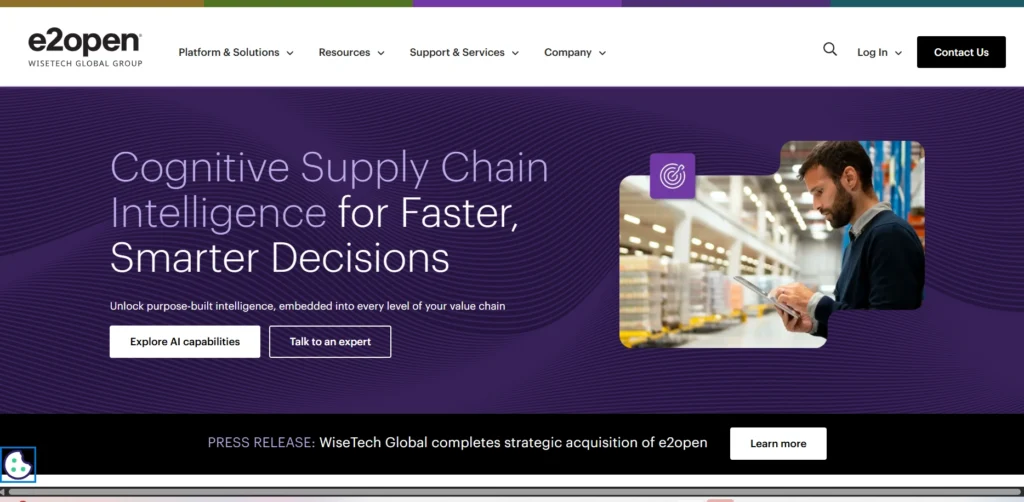
E2open is a powerful, cloud-based platform built to handle end-to-end global supply chain operations, from deep-tier raw material sourcing to final ocean container tracking. It operates as a massive network connecting manufacturers directly with their suppliers, contract packagers, logistics providers, and distributors. By aggregating real-time data across all external partners, the software helps businesses spot ocean freight delays, automate customs compliance paperwork, and proactively re-route goods, reducing ocean demurrage fees and smoothing multi-border customs clearance.
Key Features:
- Multi-tier supplier connectivity for upstream production tracking.
- Integrated global trade management for automated customs compliance.
- Real-time ocean, air, and over-the-road freight tracking.
- Collaborative manufacturing dashboards for outsourced production partners.
Pros:
- Exceptional depth in managing international trade documentation and tariffs.
- Provides unparalleled visibility into external partner networks beyond your own warehouses.
Cons:
- The vast scale of the system makes user onboarding and training slow.
- Custom report builders require a steep technical learning curve to master.
Pricing: Enterprise pricing customized according to network connections and data transaction volumes.
12. Logility Digital Supply Chain Platform
- Website: logility.com
- Best For: Mid-to-large consumer goods and retail businesses focused on sustainable sourcing and demand planning.
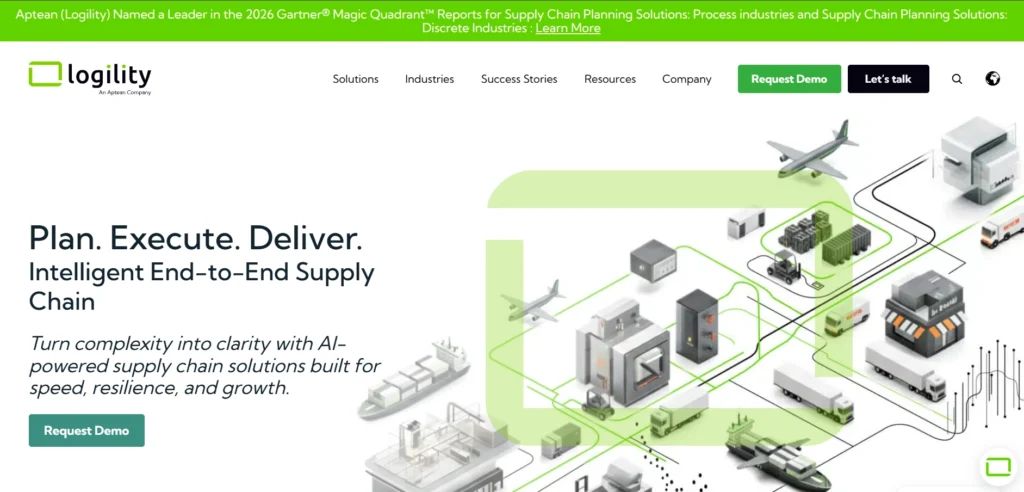
Logility leverages advanced AI and machine learning to build highly responsive, trace-accurate supply chains. The software is designed to synchronize market demand signals directly with manufacturing schedules and vendor orders. A key differentiator is its focus on sustainability and compliance; it allows companies to monitor the carbon footprint of their shipping lanes and verify the ethical sourcing practices of their raw material suppliers. This makes it an ideal choice for corporate brands prioritizing modern environmental standards alongside profit margins.
Key Features:
- AI-driven demand sensing to spot shifting retail trends early.
- Corporate sustainability and environmental footprint tracking engines.
- Automated multi-echelon inventory optimization across global networks.
- Supplier risk monitoring evaluating financial and environmental variables.
Pros:
- Excellent predictive accuracy for fast-moving retail and consumer products.
- Strong integrated tools for tracking corporate ESG metrics across vendors.
Cons:
- Setting up the advanced AI forecasting models requires high-quality clean historical data.
- Less robust out-of-the-box features for heavy custom industrial manufacturing setups.
Pricing: Subscription structures based on corporate modules and total supply chain scope.
13. Korber Supply Chain
- Website: koerber-supplychain.com
- Best For: High-volume distribution companies needing highly customizable warehouse management systems.
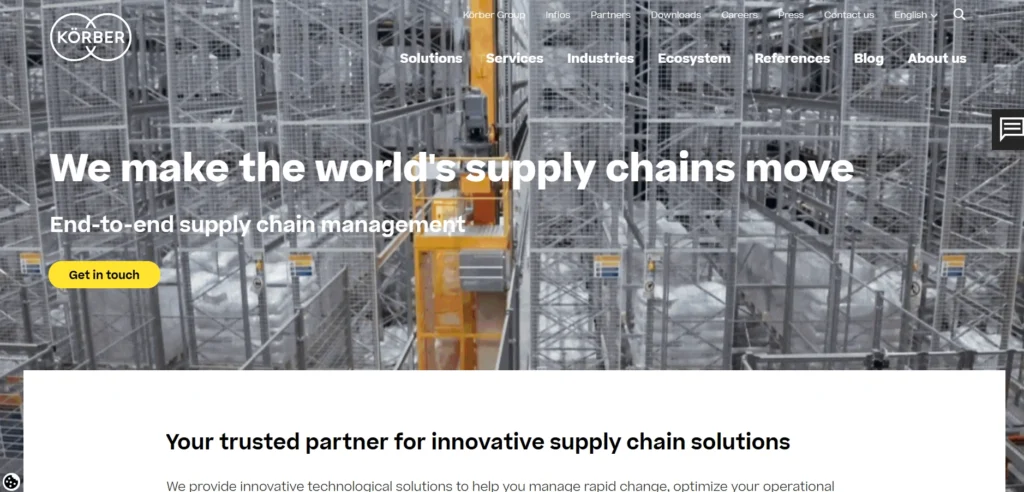
Now a core part of Körber Supply Chain, HighJump provides an exceptionally flexible warehouse management system (WMS) built to withstand grueling retail and wholesale order fulfillments. Unlike rigid off-the-shelf software, HighJump’s unique architecture allows internal IT teams to alter workflows, change packing routines, and modify storage rules without breaking the underlying code or voiding future upgrades. This adaptable structure makes it the software of choice for distribution operations that operate highly specialized sorting systems or complex picking requirements.
Key Features:
- Adaptable workflow design engine built for custom warehouse floor steps.
- Dynamic labor scheduling matched against historical picking efficiencies.
- Direct hardware orchestration linking conveyor systems and autonomous robots.
- Multi-facility inventory tracking with integrated cross-docking software tools.
Pros:
- Unrivaled customization potential for unique, non-standard warehouse blueprints.
- Excellent stability and high-speed processing during peak holiday order waves.
Cons:
- Requires a dedicated internal IT developer or specialized consultant to handle major configuration changes.
- Lacks native, long-term strategic network design or macro demand planning modules.
Pricing: Enterprise subscription tiers quoted upon specific warehouse footprint analysis.
14. Descartes Systems Group
- Website: descartes.com
- Best For: Transportation-heavy businesses, fleet operators, and global freight forwarders.
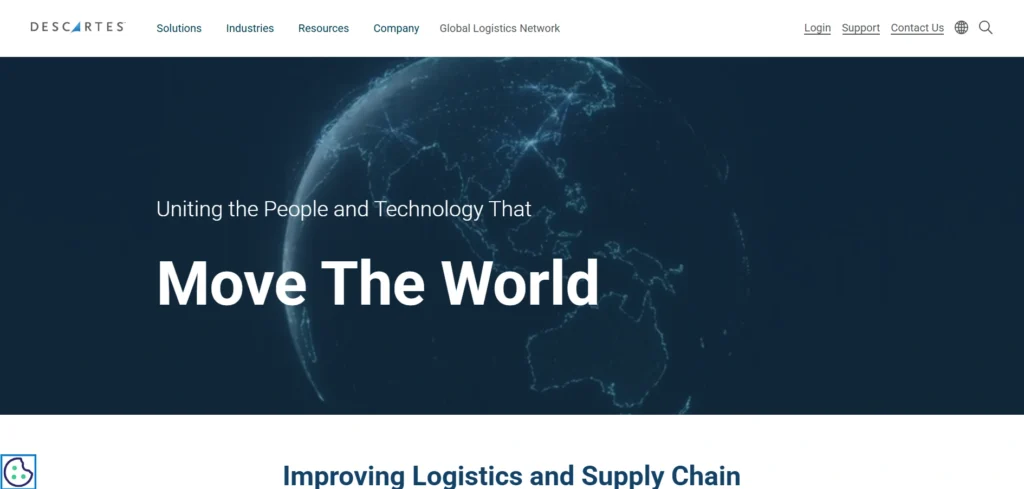
Descartes focuses heavily on the execution side of global logistics, specializing in transport systems, route scheduling, and border compliance. The platform connects users to the Global Logistics Network (GLN), allowing real-time tracking of air, ocean, rail, and truck freight. Descartes helps businesses automate final-mile deliveries by using smart scheduling engines to minimize drive times, lower fuel usage, and keep delivery windows accurate. This makes it a great fit for distributors, logistics providers, and businesses using 3PL software for delivery fleet operations.
Key Features:
- Global Logistics Network access for multi-modal carrier tracking.
- Dynamic real-time last-mile route planning and fleet optimization.
- Automated customs filing, documentation, and security screening.
- Integrated freight broker and transportation management portals.
Pros:
- Unmatched strength in last-mile fleet routing and driving efficiency.
- Comprehensive global compliance features covering import and export security mandates.
Cons:
- The software interface feels highly transactional and lacks a modern visual layout.
- Does not offer core raw material manufacturing or factory-floor production scheduling.
Pricing: Transaction-based or monthly subscription pricing customized by fleet and cargo volume.
15. QAD Adaptive ERP (SCM Module)
- Website: qad.com
- Best For: Global automotive, life sciences, and industrial manufacturing companies.
QAD Adaptive ERP offers a dedicated supply chain module designed to meet the highly precise tracking requirements of heavily regulated manufacturing industries. It excels in environments where a single batch of materials must be tracked with full traceability from supplier arrival to customer delivery, such as medical devices or automotive parts production. The platform helps teams manage inventory across international networks, coordinate production schedules, and communicate with suppliers on short notice. This ensures production lines keep moving without running into sudden regulatory compliance bottlenecks.
Key Features:
- End-to-end serialized component and batch-level inventory tracking.
- Automated supplier kanban and dynamic multi-facility release systems.
- Integrated quality management tracking product material certifications.
- Adaptive cloud architecture supporting localized tax and shipping compliance.
Pros:
- Built-in features designed specifically for the strict audit demands of automotive and medical fields.
- Strong multi-currency and multi-site coordination for international manufacturing setups.
Cons:
- The complex interface requires extensive user training to reduce simple entry errors.
- Custom integrations with creative third-party e-commerce storefronts require advanced development work.
Pricing: Tailored corporate cloud subscriptions based on user licenses and active operational modules.
Key Features Of A Supply Chain Management Software
Modern SCM platforms have evolved far beyond basic data logging and digital bookkeeping. Today, a truly effective solution acts as a predictive operational engine that synchronizes chaotic global market variables into a unified, high-speed workflow with stronger ROI alignment across logistics and inventory operations.. When auditing platforms for your logistics architecture, look for these five non-negotiable capabilities:
- AI-Driven Demand Sensing and Forecasting: Instead of relying strictly on historical sales patterns, modern platforms utilize predictive machine learning algorithms to evaluate real-time market data, macro trends, and external variables like changing weather or economic shifts to optimize stocking levels and eliminate stockouts.
- End-to-End Inventory and Multi-Echelon Visibility: This feature connects disparate data points across the entire network, granting managers precise, real-time tracking of raw materials, warehouse inventory, and assets currently in transit across international shipping lanes.
- Dynamic Transportation and Route Optimization: This module evaluates shifting traffic bottlenecks, fuel costs, and carrier constraints on the fly to automatically map out the most efficient, cost-effective, and carbon-conscious shipping routes for final-mile or bulk distribution.
- Automated Procurement and Supplier Relationship Management: It streamlines the procurement cycle by deploying self-triggering reorder workflows and document control software capabilities while providing unified portals where vendors can directly track purchase orders, share timelines, and review performance metrics.
- Digital Twin Simulation and Risk Mitigation: The software builds a virtual replica of the physical logistics footprint, allowing management to stress-test their operations by running hundreds of automated “what-if” disruption scenarios, such as border delays or factory shutdowns, to design pre-validated backup strategies.
AI In Supply Chain Management Software
Artificial Intelligence has fundamentally rewritten the playbook for logistics, transforming supply chain software from a passive database into a predictive, autonomous engine. Historically, organizations relied on backward-looking data to manage inventory, which created massive operational blind spots when faced with sudden market shocks. Driven by this shift, the global AI in supply chain market size is surging toward $13.81 billion this year, expanding at a massive compound annual growth rate (CAGR) of over 37%. Modern platforms use machine learning and advanced AI tools for business to ingest hundreds of fragmented data streams such as local weather shifts, sudden port traffic bottlenecks, and microeconomic trends allowing enterprises to completely bypass traditional silos and improve localized demand forecasting by up to 30%
The practical financial return of this transition has moved AI from an experimental tech upgrade to a critical metric for corporate survival. Recent data reveals that implementing AI-driven SCM modules successfully reduces total logistics operational costs by 15% while simultaneously decreasing overall inventory carrying requirements by up to 35%. While the industry-wide hype peaked over the last year, this year marks the rise of practical, agentic automation where 48.7% of surveyed global organizations have fully moved away from manual spreadsheets to deploy predictive logistics models. These smart systems operate within set corporate guardrails, running continuous “what-if” risk scenarios to automatically secure alternative suppliers or re-map long-haul freight routes before a physical delay can paralyze fulfillment operations.
How To Choose The Right Supply Chain Management Software
Investing in a new SCM platform is a high-stakes decision that locks your business into a specific operational blueprint for years to come. With vendors offering vastly different architectures, the goal is to cut through the marketing noise and evaluate how a platform handles your physical constraints and data maturity. To protect your capital and ensure long-term agility, use these five critical selection criteria:
- Assess Unified Architecture vs. Fragmented Integration: Determine whether the platform offers a unified planning and execution model or if it forces you to stitch separate planning tools to your warehouse systems via complex middleware. A unified suite eliminates information gaps, while fragmented tools require constant, costly API upkeep.
- Audit Data Readiness and Master Data Quality: A predictive SCM engine is only as good as the information feeding it. Before choosing a vendor, evaluate how cleanly the software digests your existing product, location, and supplier lead-time data, as messy legacy data will cause advanced AI forecasting models to fail immediately.
- Evaluate Cross-Functional AI and Autonomous Capabilities: Look past basic automation templates and examine how the system handles complex disruptions. High-performing platforms use cognitive AI agents to actively link different workflows, automatically executing alternative sourcing or shipping lanes when port bottlenecks or vendor shortages strike.
- Verify Vertical-Specific Fit Over Generic Features: A retail business dealing with high SKU counts and rapid e-commerce fulfillment needs an entirely different tool than an automotive or medical manufacturer tracking strict serialized batch compliance. Prioritize vendors that offer out-of-the-box vertical features to avoid expensive custom software coding.
- Calculate Total Landed Cost and Scaling Transparency: Look beyond the baseline user license fees to map out the true five-year cost of ownership. Ensure the pricing structure clearly accounts for data transaction volumes, multi-warehouse expansions, specialized consultant implementation fees, and recurring software training cycles.
Conclusion
In conclusion, picking the right supply chain management software isn’t just about getting a new computer program it is about future-proofing your entire business. The days of managing complex shipping, packed warehouses, and unpredictable vendors using messy spreadsheets and guesswork are officially over. In today’s fast-paced market, the businesses that win are the ones that can spot an upcoming disruption, like a port delay or a sudden supply shortage, and adapt within seconds. By putting a modern, smart SCM platform at the center of your operations, you turn your logistics from a constant source of stress and unexpected costs into a smooth, highly efficient competitive advantage.
As you look over your options, remember that the “best” software is simply the one that fits your unique daily workflows, your team’s size, and your budget. Whether you choose a massive, all-in-one corporate suite or a flexible, modular system you can build out over time, the goal is to gain complete clarity from your raw materials all the way to your customer’s front door. Take the time to audit your current data, talk directly with your team about their biggest bottlenecks, and choose a partner that can scale alongside your growth. Investing in the right tool today ensures your business stays resilient, agile, and profitable no matter what challenges tomorrow brings.
Suggested More: