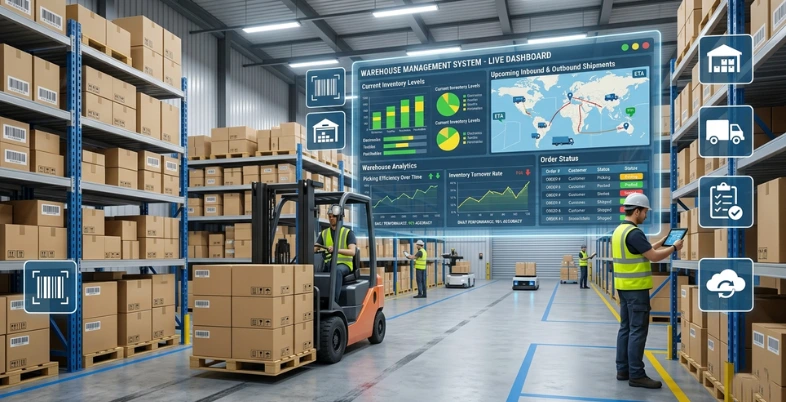
Managing a warehouse isn’t just about stacking products on shelves anymore, it’s about knowing exactly what you have, where it is, and when you need more of it. One small mistake in stock tracking can lead to delayed orders, unhappy customers, or even lost revenue. And let’s be honest, doing all of this manually or with spreadsheets can quickly become overwhelming.
That’s where warehouse stock management software comes in. These tools are designed to simplify your operations, reduce errors, and give you complete control over your inventory in real time. Whether you’re running a small eCommerce business, a growing startup, or managing a large warehouse, the right software can save you hours of work and help your business scale smoothly.
Key Benefits Of Using Warehouse Stock Management Platform
- Improves inventory accuracy with real-time tracking: Every stock movement is automatically recorded, helping you always know exact inventory levels and avoid mismatches.
- Reduces manual work and human errors through automation: Tasks like stock updates, order processing, and reporting are automated, minimizing mistakes and saving time.
- Speeds up order fulfillment and delivery processes: Faster picking, packing, and shipping ensures customers receive orders quickly, improving satisfaction.
- Prevents stockouts and overstocking issues: Smart alerts and forecasting tools help maintain optimal stock levels, reducing losses and storage costs.
- Provides actionable insights with data and analytics: Detailed reports on sales trends, stock movement, and demand help in making smarter business decisions.
Features To Look For In Warehouse Management Software
- Real-time inventory visibility across all locations: Track stock levels instantly across multiple warehouses, stores, or sales channels from a single dashboard.
- Multi-warehouse and multi-channel support: Manage inventory seamlessly across different locations and platforms like Amazon, Shopify, or retail stores.
- Integration with accounting, shipping, and eCommerce tools: Ensures smooth data flow between systems, reducing duplication and improving operational efficiency.
- Advanced reporting and analytics dashboards: Generate insights on inventory turnover, demand forecasting, and operational performance.
- User-friendly interface with automation and scalability: Easy to use for teams while being powerful enough to support business growth and increasing complexity.
List Of 15 Best Warehouse Stock Management Software
1. Zoho Inventory
Website: https://www.zoho.com/inventory/
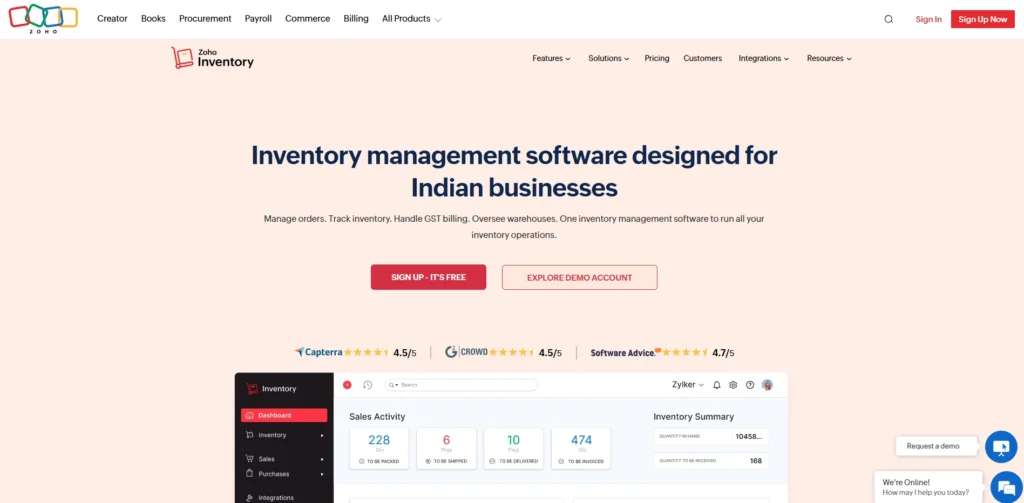
Zoho Inventory is a cloud-based solution built for small to medium-sized businesses that want to simplify warehouse operations. It helps track stock levels, manage orders, and handle shipments efficiently, all from a centralized dashboard. Its seamless integration with Zoho apps and platforms like Amazon and Shopify makes it highly flexible for growing businesses.
With features like real-time inventory updates and multi-warehouse support, it reduces manual errors and improves operational flow. Businesses can automate routine tasks, ensuring faster order fulfillment and better stock visibility across locations as a warehouse stock management platform.
Top Features:
- Real-time inventory tracking
- Multi-warehouse management
- Order and shipment tracking
- Barcode scanning support
- Integration with eCommerce platforms
Pros:
- Easy to use with a clean interface
- Strong integration with Zoho ecosystem and eCommerce platforms
- Affordable pricing for small businesses
Cons:
- Limited advanced warehouse features
- Not ideal for large enterprises
- Customization options are somewhat limited
Pricing:
| Standard | Professional | Premium | Enterprise |
| $10.63/mo | $21.26/mo | $31.90/mo | $79.76/mo |
2. NetSuite ERP
Website: https://www.netsuite.com/
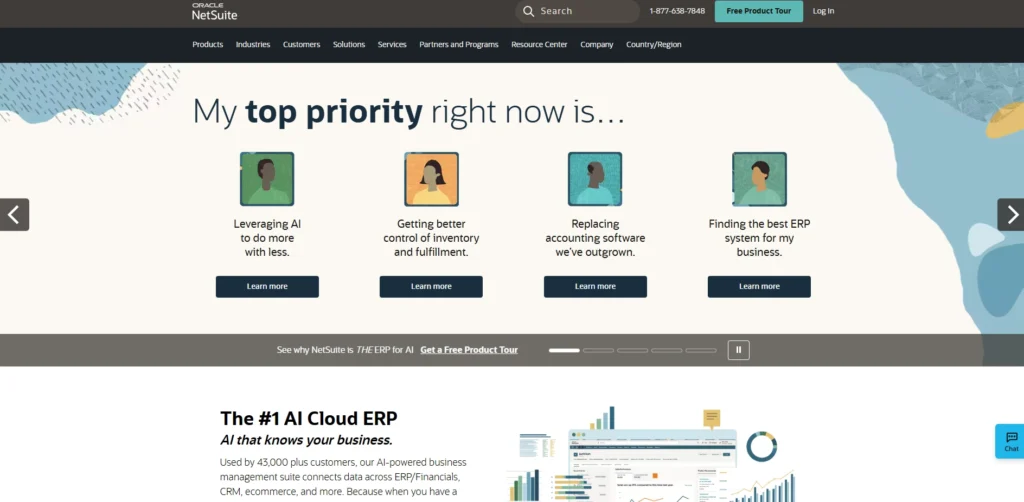
NetSuite ERP by Oracle is a powerful enterprise-grade platform that combines inventory management with broader business operations like finance and supply chain. It is best suited for large organizations that need full visibility and control over complex warehouse networks and warehouse stock management software solutions.
The platform offers advanced tools for demand planning, automated replenishment, and real-time analytics. Its scalability ensures it grows with your business, while detailed reporting helps improve forecasting and decision-making.
Top Features:
- Advanced inventory forecasting
- Real-time dashboards and reporting
- Automated replenishment
- Multi-location inventory tracking
- Integration with financial management
Pros:
- Complete end-to-end business solution
- Highly scalable for growing enterprises
- Advanced analytics and reporting
Cons:
- Expensive for small businesses
- Complex implementation process
- Requires training to use effectively
Pricing:
- Available on request
3. Fishbowl Inventory
Website: https://www.fishbowlinventory.com/
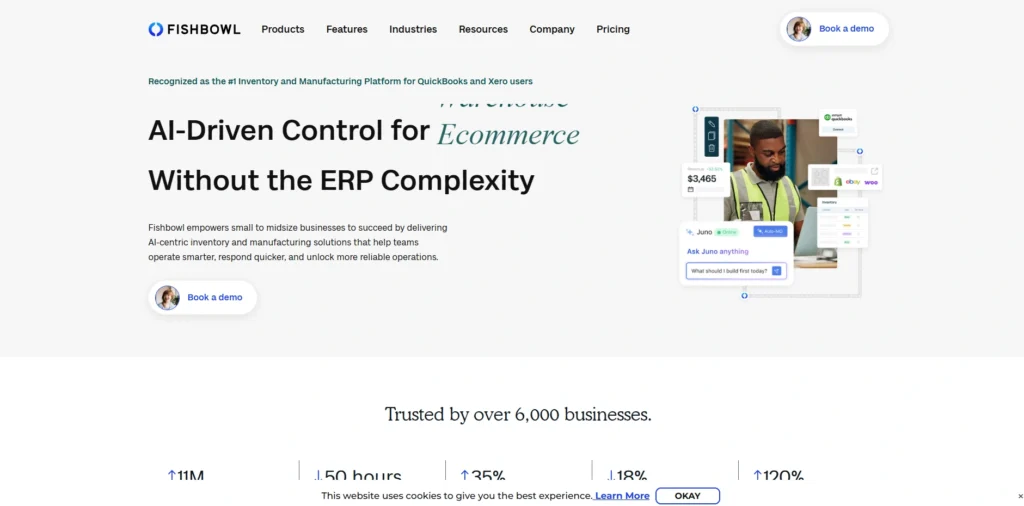
Fishbowl Inventory is designed for manufacturers and wholesalers who need better control over stock and production workflows. It integrates smoothly with QuickBooks, making it a strong choice for businesses already using accounting software.
It provides tools for asset tracking, barcode scanning, and manufacturing management. This helps maintain accurate inventory records while improving production efficiency and order fulfillment processes.
Top Features:
- QuickBooks integration
- Barcode and asset tracking
- Manufacturing and production management
- Inventory automation
- Order management
Pros:
- Excellent QuickBooks integration
- Strong manufacturing features
- Good inventory tracking accuracy
Cons:
- Interface feels outdated
- Limited cloud-native capabilities
- Setup can be complex
Pricing:
| Essential | Growth | Scale | Advanced |
| $299/mo | $429/mo | $729/mo | Available on request |
4. Cin7
Website: https://www.cin7.com/
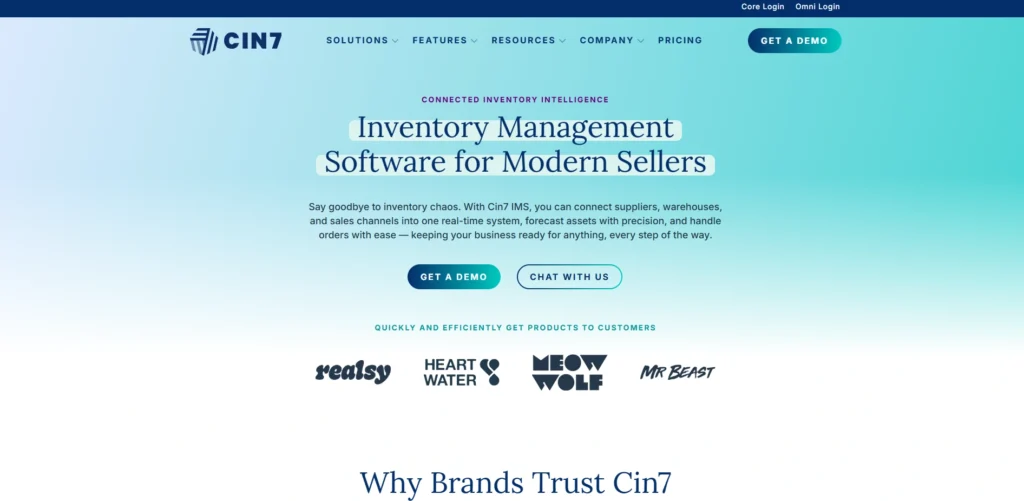
Cin7 is a cloud-based inventory and warehouse stock management software tailored for businesses operating across multiple sales channels. It helps manage stock across online stores, retail outlets, and marketplaces from one unified platform.
With built-in POS and B2B eCommerce capabilities, Cin7 simplifies complex operations. It ensures real-time synchronization of stock and automates workflows to improve efficiency and reduce errors.
Top Features:
- Omnichannel inventory management
- Built-in POS billing system
- Automated workflows
- Real-time stock updates
- B2B eCommerce integration
Pros:
- Great for omnichannel selling
- Built-in POS system
- Strong automation features
Cons:
- Pricing can be high
- Learning curve for beginners
- Occasional sync issues reported
Pricing:
| Standard | Pro | Advanced |
| $349/mo | $599/mo | $999/mo |
5. inFlow Inventory
Website: https://www.inflowinventory.com/
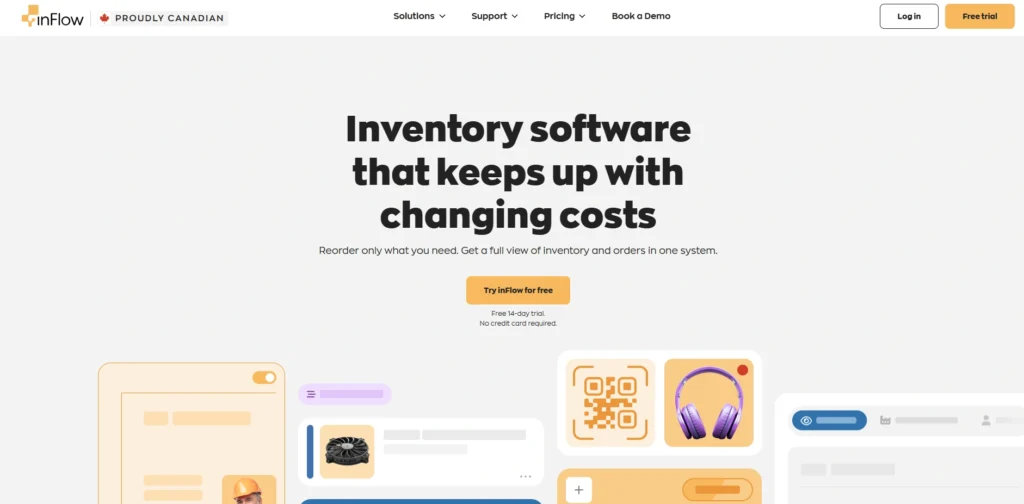
inFlow Inventory is a user-friendly solution designed for small businesses that want a simple yet effective way to manage warehouse stock. It offers essential tools for tracking inventory, managing orders, and maintaining accurate records.
Its clean interface and easy setup make it ideal for teams without technical expertise. Despite its simplicity, it includes powerful features like barcode scanning and reporting to help businesses stay organized and efficient.
Top Features:
- Simple and intuitive interface
- Barcode and stock tracking
- Purchase and sales order management
- Reporting and analytics
- Multi-user access
Pros:
- Very user-friendly
- Quick setup and implementation
- Good for small teams
Cons:
- Limited scalability
- Fewer advanced features
- Not ideal for complex warehouses
Pricing:
| Entrepreneur | Small Business | Mid Size | Enterprise |
| Starts at $129/mo | Starts at $349/mo | Starts at $699/mo | Available on request |
6. Odoo Inventory
Website: https://www.odoo.com/
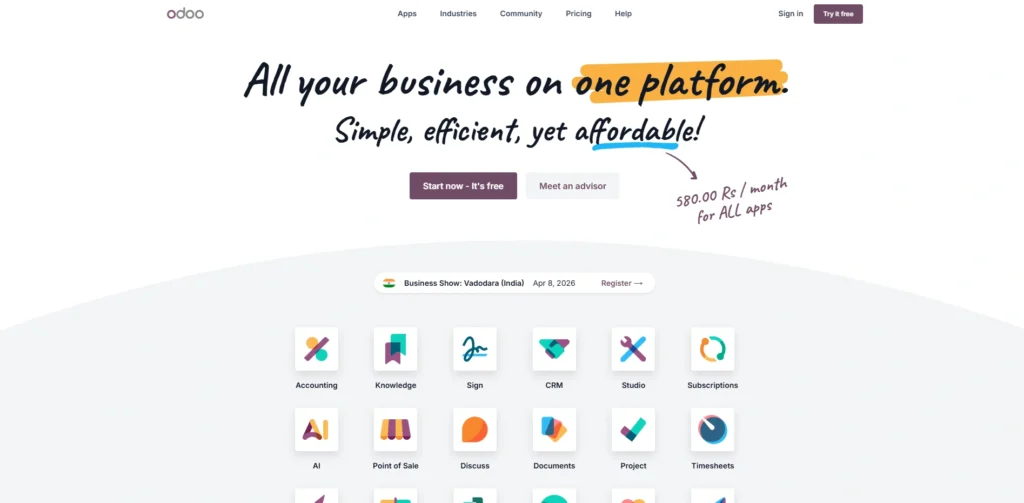
Odoo Inventory is a modern, open-source warehouse stock management platform that offers flexibility and customization for businesses of all sizes. It is part of the larger Odoo ecosystem, allowing seamless integration with accounting, sales, and manufacturing modules.
The platform supports advanced warehouse operations like double-entry inventory tracking and automated replenishment. Its user-friendly interface combined with powerful backend capabilities makes it a strong choice for businesses looking for scalability and control.
Top Features:
- Open-source and highly customizable
- Double-entry inventory system
- Automated stock replenishment
- Barcode scanning and tracking
- Integration with Odoo apps
Pros:
- Highly customizable and modular
- Open-source flexibility
- Wide range of integrations
Cons:
- Requires technical knowledge for setup
- Customization can increase costs
- Performance depends on configuration
Pricing:
| Free | Standard | Custom |
| $0 | $6.17/mo | $9.47/mo |
7. QuickBooks Commerce

Website: https://quickbooks.intuit.com/
TradeGecko, now known as QuickBooks Commerce, is a robust inventory and order management platform designed for eCommerce and wholesale businesses. It helps manage stock, orders, and customer data across multiple sales channels.
With strong integration capabilities and automation features, it simplifies inventory workflows and improves accuracy. Businesses can gain better visibility into stock levels while ensuring smooth order processing.
Top Features:
- Multi-channel inventory management
- Order and customer management
- Automation of workflows
- Integration with accounting tools
- Real-time inventory insights
Pros:
- Strong multi-channel management
- Good integration with accounting tools
- Easy-to-use interface
Cons:
- Limited advanced warehouse features
- Pricing may not suit small startups
- Feature updates have slowed
Pricing:
| Simple | Essential | Plus | Advanced |
| $19/mo | $37.50/mo | $57.50/mo | $137.50/mo |
8. DEAR Systems
Website: https://dearsystems.com.cn/
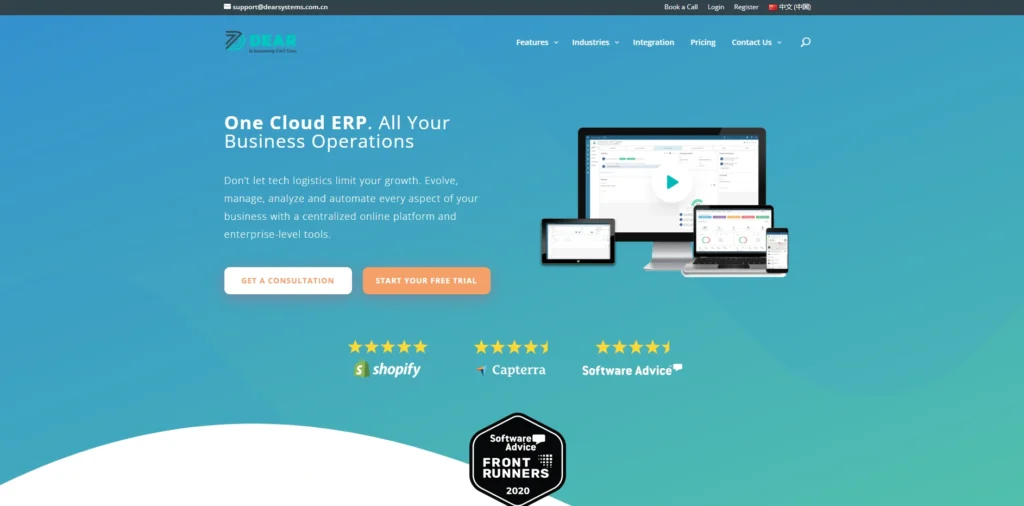
DEAR Systems is a comprehensive inventory and warehouse stock management platform tailored for retail, wholesale, and manufacturing businesses. It provides complete visibility into inventory movements and financials.
The software helps streamline purchasing, sales, and production processes while maintaining accurate stock records. Its integration with accounting platforms ensures better financial tracking alongside inventory control.
Top Features:
- Real-time inventory tracking
- Production and manufacturing management
- Purchase and sales automation
- Accounting integrations
- Batch and expiry tracking
Pros:
- Strong accounting integration
- Suitable for manufacturing and retail
- Good reporting capabilities
Cons:
- Interface can feel complex
- Slower performance at times
- Learning curve for new users
Pricing:
- $289.36/mo
9. ShipBob WMS
Website: https://www.shipbob.com/
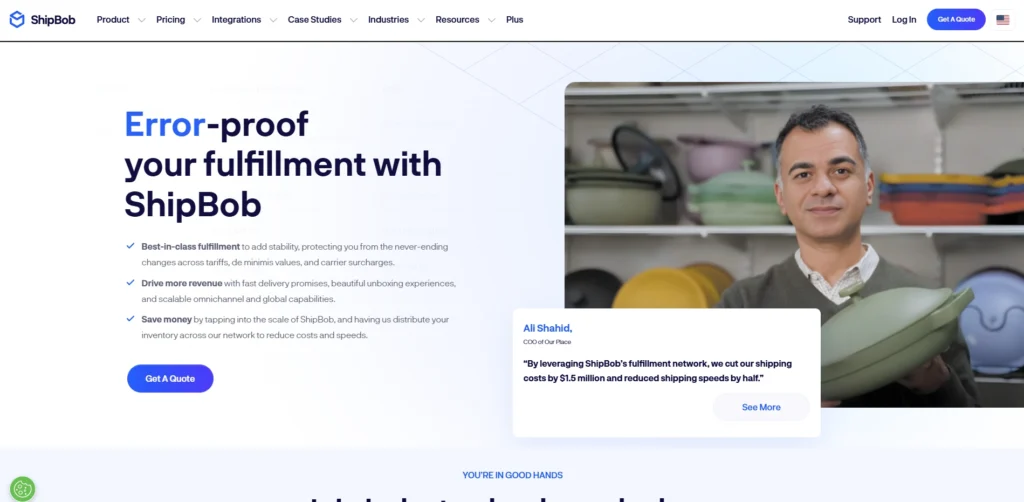
ShipBob WMS is a warehouse stock management software designed for eCommerce fulfillment. It combines inventory management with logistics and shipping services, making it ideal for online businesses.
The platform provides real-time inventory visibility and order tracking, ensuring faster and more accurate deliveries. Its distributed warehouse network also helps businesses optimize shipping times and costs.
Top Features:
- Real-time inventory and order tracking
- Distributed warehouse network
- Shipping and fulfillment automation
- eCommerce integrations
- Analytics and reporting
Pros:
- Integrated fulfillment and shipping
- Real-time inventory tracking
- Ideal for eCommerce businesses
Cons:
- Less control over outsourced warehouses
- Costs can increase with scale
- Limited customization
Pricing:
- Available on request
10. Brightpearl

Website: https://www.brightpearl.com/
Brightpearl is a retail-focused operations platform that combines inventory management , warehouse control, order processing, and accounting in one system. It is designed specifically for retailers and wholesalers who want to automate back-office operations and scale efficiently.
The platform stands out for its strong automation engine, which handles repetitive tasks like order routing, inventory updates, and fulfillment workflows. With real-time visibility and centralized control, Brightpearl helps businesses reduce operational complexity and improve overall efficiency.
Top Features:
- Retail-focused inventory and warehouse management
- Automated order processing and workflows
- Real-time inventory and financial visibility
- Integration with major eCommerce platforms
- Built-in CRM and accounting capabilities
Pros:
- Strong automation engine
- All-in-one retail operations platform
- Real-time financial and inventory visibility
Cons:
- Primarily focused on retail, not all industries
- Implementation can be complex
- Higher pricing for small businesses
Pricing:
- Available on request
11. Oracle Warehouse Management Cloud
Website: https://www.oracle.com/
Oracle Warehouse Management Cloud is a powerful enterprise-grade solution designed for complex and large-scale warehouse operations and warehouse stock management software. It provides end-to-end visibility and control over inventory, labor, and order fulfillment processes.
The platform uses advanced technologies like IoT, AI, and real-time analytics to optimize warehouse performance. It is ideal for businesses that require high scalability, automation, and precision in managing large inventories across multiple locations.
Top Features:
- Cloud-based warehouse management
- Advanced analytics and reporting
- Labor and resource optimization
- Real-time inventory visibility
- Integration with Oracle ecosystem
Pros:
- Highly scalable and powerful
- Advanced analytics and automation
- Enterprise-grade performance
Cons:
- Expensive solution
- Complex setup and onboarding
- Requires skilled users
Pricing:
- Available on request
12. Manhattan WMS
Website: https://www.manh.com/
Manhattan WMS is a highly advanced warehouse management system known for its strong supply chain and distribution capabilities. It is widely used by large enterprises that need efficient and scalable warehouse operations.
The platform focuses on optimizing inventory movement, improving order accuracy, and enhancing overall warehouse productivity. Its intelligent automation and predictive analytics tools help businesses gain predictive insights, improve forecasting, and streamline complex logistics processes.
Top Features:
- Advanced warehouse optimization
- Predictive analytics and insights
- Order fulfillment automation
- Labor management tools
- Scalable enterprise solution
Pros:
- Excellent for complex supply chains
- Advanced optimization features
- Strong industry reputation
Cons:
- Very high cost
- Long implementation time
- Not suitable for small businesses
Pricing:
- Available on request
13. SAP Extended Warehouse Management (EWM)
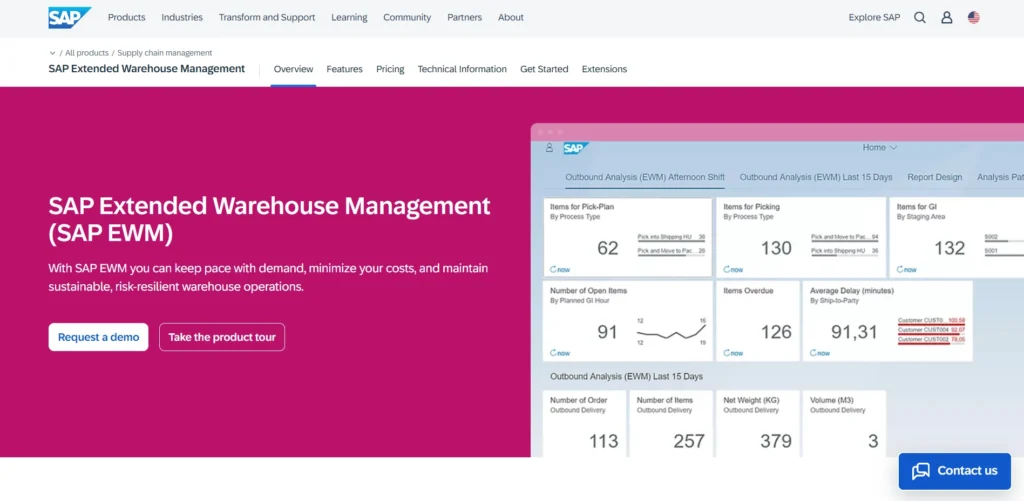
SAP Extended Warehouse Management (EWM) is a robust warehouse stock management platform solution designed for businesses already using SAP systems. It provides detailed control over warehouse processes, including inventory tracking, labor management, and goods movement.
The software enables high levels of automation and supports complex warehouse structures. With real-time data and analytics, businesses can improve operational efficiency and maintain accurate inventory records.
Top Features:
- Deep SAP integration
- Advanced warehouse automation
- Real-time inventory tracking
- Labor and resource management
- Flexible warehouse structure support
Pros:
- Deep SAP integration
- Advanced warehouse automation
- Highly configurable
Cons:
- Requires SAP ecosystem
- Expensive and complex
- Steep learning curve
Pricing:
- Available on request
14. Logiwa WMS
Website: https://www.logiwa.com/
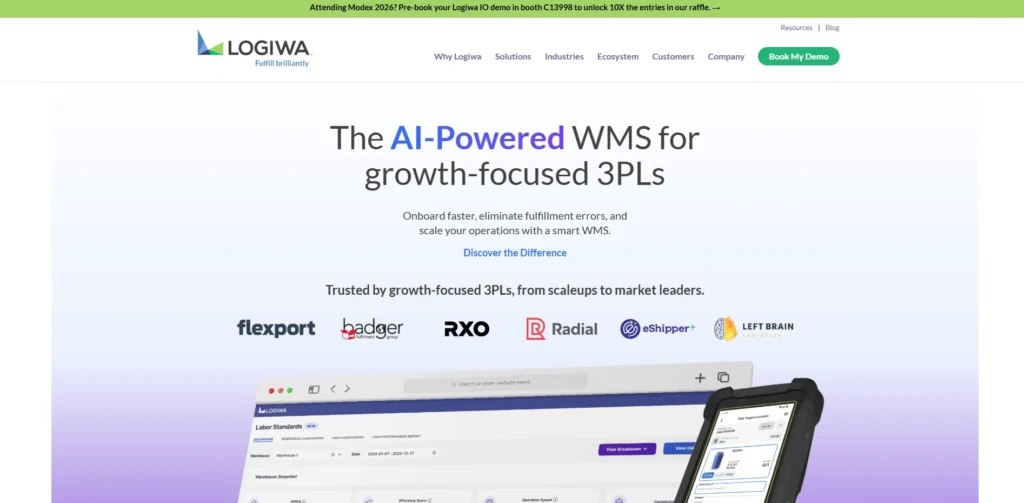
Logiwa WMS is a cloud-based warehouse management system designed for fast-growing eCommerce and 3PL businesses. It focuses on speed, accuracy, and automation in warehouse operations.
The platform offers real-time inventory tracking, order management, and seamless integration with popular eCommerce platforms using data integration tools. Its intuitive interface and automation capabilities help businesses scale operations efficiently.
Top Features:
- Deep SAP integration
- Advanced warehouse automation
- Real-time inventory tracking
- Labor and resource management
- Flexible warehouse structure support
Pros:
- Great for eCommerce and 3PL
- Easy-to-use interface
- Strong automation features
Cons:
- Limited enterprise-level features
- Integration limitations in some cases
- Reporting could be improved
Pricing:
- Available on request
15. EasyEcom Inventory Management
Website: https://www.easyecom.io/
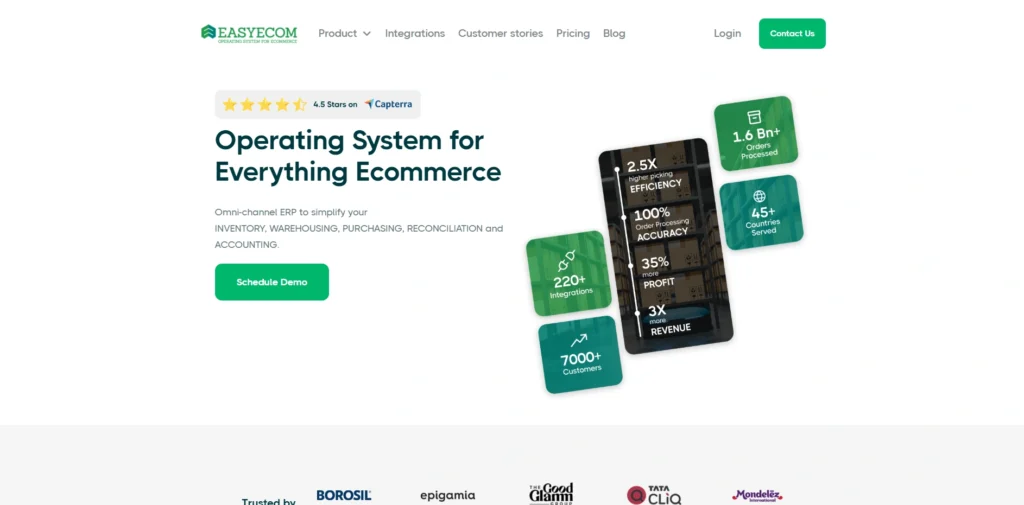
EasyEcom Inventory Management is designed specifically for eCommerce businesses to manage warehouse operations and inventory across multiple marketplaces as a warehouse stock management software. It helps streamline order processing, stock tracking, and fulfillment.
The platform provides centralized control over inventory, reducing stock mismatches and improving order accuracy. It is especially useful for businesses selling on platforms like Amazon, Flipkart, and other online channels.
Top Features:
- Multi-channel inventory management
- Order and fulfillment automation
- Marketplace integrations
- Real-time stock updates
- Centralized dashboard
Pros:
- Excellent for marketplace sellers
- Strong multi-channel integration
- Easy order and inventory syncing
Cons:
- Limited for offline businesses
- Fewer advanced warehouse features
- Dependence on marketplace ecosystem
Pricing:
- Available on request
Comparison Table
| Software Name | Best For | Deployment | Best Use Case | Target Audience |
| Zoho Inventory | SMBs & eCommerce | Cloud | Managing online orders & multi-channel inventory | Small Businesses, Startups |
| NetSuite ERP | Large Enterprises | Cloud | End-to-end enterprise inventory & finance management | Large Enterprises |
| Fishbowl Inventory | Manufacturers | On-premise/Cloud | Manufacturing & warehouse tracking with accounting | Manufacturers, SMEs |
| Cin7 | Omnichannel Businesses | Cloud | Managing inventory across multiple sales channels | Retailers, eCommerce Brands |
| inFlow Inventory | Small Businesses | Cloud/On-premise | Simple stock tracking and order management | Small Businesses |
| Odoo Inventory | Customizable Businesses | Cloud/Open-source | Custom workflows with modular integrations | Startups, SMEs, Tech Teams |
| QuickBooks Commerce | eCommerce & Wholesale | Cloud | Order and inventory sync with accounting | Wholesalers, eCommerce |
| DEAR Systems | Retail & Manufacturing | Cloud | Inventory + accounting integration with production | Retailers, Manufacturers |
| ShipBob WMS | eCommerce Fulfillment | Cloud | Outsourced fulfillment and logistics management | eCommerce Brands |
| Brightpearl | Retail & Wholesale | Cloud | Automated retail operations and inventory management | Retail Chains, Wholesalers |
| Oracle WMS Cloud | Large Enterprises | Cloud | Advanced warehouse automation & large-scale ops | Enterprises |
| Manhattan WMS | Enterprise Supply Chains | Cloud | Complex supply chain and warehouse optimization | Large Enterprises |
| SAP EWM | SAP Users | Cloud/On-premise | Deep integration with SAP ecosystems | Enterprises using SAP |
| Logiwa WMS | eCommerce & 3PL | Cloud | Fast-growing 3PL and eCommerce warehouse automation | 3PL Providers, eCommerce |
| EasyEcom | Marketplace Sellers | Cloud | Managing inventory across marketplaces like Amazon | Online Sellers, D2C Brands |
Conclusion
In conclusion, choosing the right warehouse stock management software can make a huge difference in how smoothly your business runs. Instead of struggling with manual tracking, errors, and delays, these tools help you stay organized, save time, and manage inventory with confidence.
The best part is that there’s no one-size-fits-all solution. Some tools are perfect for small businesses just getting started, while others are built for large enterprises with complex operations. The key is to understand your needs, budget, and scale and then pick a solution that fits your workflow. By investing in the right software, you’re not just managing stock, you’re building a more efficient, scalable, and future-ready business.
FAQs
1. Who Should Use Warehouse Management Software?
Any business that handles physical products can benefit from it including eCommerce stores, wholesalers, manufacturers, and large warehouses.
2. Can Small Businesses Use Warehouse Management Software?
Indeed, a lot of tools are made especially for small firms. They are easy to use, affordable, and help improve efficiency without needing a large team.
3. What Are The Primary Characteristics To Search For?
Some important features include real-time inventory tracking, multi-warehouse support, integrations with other tools, reporting, and automation capabilities.
4. Is Cloud-Based Inventory Software Better?
Cloud-based software is often preferred because it allows you to access your data from anywhere, offers automatic updates, and reduces the need for expensive hardware.
5. How Do I Choose The Right Software For My Business?
Start by identifying your business needs, budget, and scale. Then compare features, ease of use, and integrations before selecting the software that fits best.