Cybersecurity has become a necessity rather than an option. From online banking and cloud storage to social media and e-commerce platforms, billions of people rely on digital systems every day. This growing digital dependence also increases exposure to cyber threats. According to reports from 2025, cybercrime was projected to lost the global economy more than $10.5 trillion annually, with a cyberattack occurring approximately every 39 seconds worldwide. These alarming numbers highlight the importance of protecting sensitive information and digital assets.
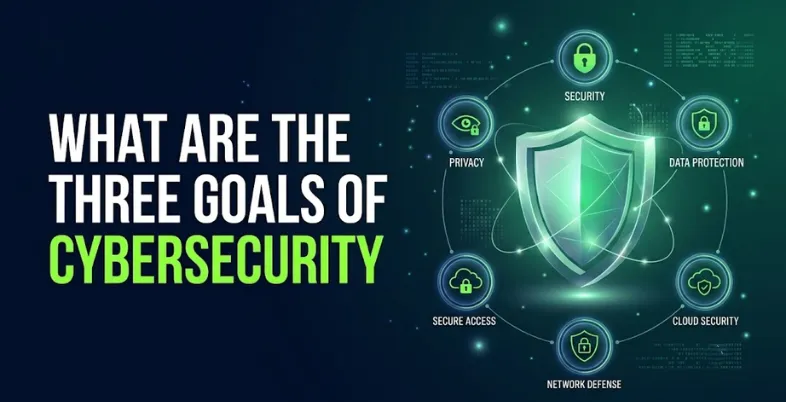
But have you ever wondered what are the three goals of cybersecurity? At its core, cybersecurity focuses on three fundamental objectives known as the CIA Triad, Confidentiality, Integrity, and Availability. These three pillars serve as the foundation of every cybersecurity framework, helping organizations and individuals safeguard data, maintain trust, and ensure uninterrupted access to critical systems. Understanding these goals is the first step toward building a safer digital environment.
Why Understanding Cybersecurity Goals Matters
Cybersecurity is much more than installing antivirus software or creating strong passwords. It is a structured approach to protecting information, systems, and digital assets from a wide range of cyber threats. As organizations continue to adopt cloud computing, remote work environments, and digital services, the risk of data breaches, ransomware attacks, and unauthorized access continues to grow.
To effectively protect digital information, cybersecurity professionals follow a set of core principles that guide every security strategy and decision. These principles help organizations determine what needs protection, how data should be secured, and how systems can remain operational during cyber incidents.
At the heart of these principles lies the CIA Triad, a globally recognized cybersecurity framework built on three essential goals: Confidentiality, Integrity, and Availability. Understanding these goals provides a clear foundation for recognizing how cybersecurity systems works and why each pillar plays a crucial role in protecting modern digital environments.
What Are the Three Goals of Cybersecurity?

The three primary goals of cybersecurity are:
- Confidentiality
- Integrity
- Availability
Together, these principles are known as the CIA Triad. They serve as a framework for designing secure systems, protecting digital assets, and minimizing cyber risks.
Let’s understand each goal in detail.
1. Confidentiality: Protecting Sensitive Information
Cybersecurity is built on a few core principles that help protect digital systems and data. One of the most important among them is Confidentiality.
What Is Confidentiality?
Confidentiality is the foundation of data privacy in cybersecurity. It refers to the practice of ensuring that sensitive information is only accessible to authorized individuals, systems, or organizations. In simple terms, confidentiality means keeping private data away from people who should not have access to it.
In today’s digital environment, individuals and businesses generate and store vast amounts of information online. This includes personal details, financial records, customer databases, intellectual property, healthcare information, and business strategies. If unauthorized users gain access to this information, it can result in identity theft, financial fraud, reputational damage, and legal consequences.
Cybersecurity professionals implement various security controls to maintain confidentiality and ensure that confidential information remains protected throughout its lifecycle.
Why Confidentiality Matters
Confidentiality is essential because trust is built on the assurance that sensitive information will remain private. Customers share personal details with businesses, employees access confidential company data, and governments store citizens’ information with the expectation that it will not be exposed.
Without confidentiality, organizations become vulnerable to data breaches, cyber espionage, and unauthorized disclosure of critical information. A single breach can result in significant financial losses and loss of customer confidence. For industries such as healthcare, banking, education, and government services, maintaining confidentiality is not only a security requirement but often a legal obligation.
Real-Life Example
Consider your online banking account. When you log in to view your account balance, transfer funds, or check transaction history, you expect that information to remain visible only to you and authorized banking personnel. If a hacker gains access to your account and views or steals your financial information, confidentiality has been compromised.
Similarly, if a company’s customer database containing names, addresses, and payment details is leaked online, it represents a major confidentiality breach that can affect thousands or even millions of users.
Methods Used to Maintain Confidentiality
Protecting sensitive information requires a combination of security practices and technologies. Organizations use several methods to ensure that confidential data remains accessible only to authorized users and is protected from unauthorized access, theft, or exposure.
1. Strong Passwords: Strong passwords act as the first line of defense against cyber threats. A secure password typically includes a combination of uppercase and lowercase letters, numbers, and special characters, making it difficult for attackers to guess or crack. Organizations also encourage users to avoid reusing passwords across multiple accounts and to update them regularly to reduce security risks.
2. Multi-Factor Authentication (MFA): Multi-Factor Authentication adds an extra layer of security beyond a username and password. It requires users to verify their identity through two or more authentication methods, such as an OTP sent to a mobile device, a fingerprint scan, or a security app. Even if a cybercriminal obtains a user’s password, MFA significantly reduces the chances of unauthorised access.
3. Encryption: Encryption protects data by converting it into an unreadable coded format that can only be decrypted using a specific key. Whether information is stored on a device or transmitted across networks, encryption ensures that even if hackers intercept the data, they cannot understand or misuse it without the proper authorization.
4. Access Control: Access control ensures that users can only view or interact with the information necessary for their role. Organizations assign permissions based on job responsibilities, limiting exposure to sensitive data. This approach reduces the risk of accidental data leaks and prevents unauthorized individuals from accessing confidential information.
5. Data Classification: Data classification involves organizing information based on its level of sensitivity and importance. For example, public information may require minimal protection, while financial records or customer data demand stricter security measures. By classifying data, organizations can apply appropriate safeguards and allocate resources more effectively to protect critical information.
Benefits of Confidentiality
- Protects personal and organizational privacy
- Reduces the risk of data breaches
- Strengthens customer trust and confidence
- Helps meet legal and regulatory requirements
- Prevents financial and reputational losses
2. Integrity: Ensuring Data Accuracy and Trustworthiness
Integrity is the second pillar of the CIA Triad and focuses on maintaining the accuracy and reliability of information. While confidentiality protects data from unauthorized access, integrity ensures that data remains correct, consistent, and unaltered throughout its lifecycle.
What Is Integrity?
Integrity refers to maintaining the accuracy, consistency, and reliability of information throughout its entire lifecycle. In cybersecurity, integrity ensures that data remains complete, unchanged, and trustworthy unless modifications are made by authorized individuals or systems.
Simply put, integrity guarantees that the information being viewed, stored, or transmitted is exactly as it was originally intended. Any unauthorized alteration, deletion, or corruption of data represents a violation of integrity.
Organizations rely heavily on accurate information for daily operations and strategic decision-making. Therefore, protecting data integrity is just as important as protecting data confidentiality.
Why Integrity Matters
Imagine making an important business decision based on inaccurate information. The consequences could be severe. In healthcare, incorrect patient records could affect treatment outcomes. In banking, altered transaction records could lead to financial disputes. In government agencies, manipulated documents could impact policy decisions.
Maintaining integrity ensures that stakeholders can trust the information they use. It prevents malicious actors from manipulating data and helps organizations maintain operational reliability.
Real-Life Example
Suppose an online retailer lists a laptop on its website for ₹50,000. A cybercriminal gains unauthorized access to the system and changes the price to ₹500. Customers immediately begin purchasing the product at the incorrect price, resulting in significant financial losses for the company.
This situation demonstrates a breach of integrity because the original information was altered without authorization. Although the system may still be functioning, the data itself can no longer be trusted.
Methods Used to Maintain Integrity
Maintaining data integrity is essential to ensure that information remains accurate, complete, and trustworthy throughout its lifecycle. Organizations use various security measures to prevent unauthorized modifications and quickly identify any changes that may compromise the reliability of data.
1. Data Hashing: Data hashing generates a unique fixed-length value, often called a “digital fingerprint,” for a specific piece of information. Even a minor change in the original data results in a completely different hash value, making it easy to detect unauthorized alterations. Organizations use hashing to verify that files, documents, and transmitted data remain unchanged and authentic.
2. Digital Signatures: Digital signatures help verify both the identity of the sender and the integrity of the information being shared. They use cryptographic techniques to ensure that data has not been altered during transmission. If any modification occurs after the signature is applied, the system can immediately detect the change, helping maintain trust and authenticity.
3. Access Restrictions: Not every employee or user should have permission to modify critical information. Access restrictions ensure that only authorized individuals can create, edit, or delete sensitive data. By limiting modification privileges, organizations reduce the risk of accidental errors, insider threats, and unauthorized changes that could compromise data integrity.
4. Audit Logs: Audit logs maintain a detailed record of all activities performed within a system, including who accessed information, what changes were made, and when those changes occurred. These records help organizations track modifications, investigate suspicious activities, and quickly identify any unauthorized attempts to alter important data.
5. Regular Backups: Regular backups create secure copies of important data that can be restored if the original information becomes corrupted, deleted, or compromised. In the event of cyberattacks, system failures, or human errors, backups help organizations recover accurate and reliable data, ensuring business continuity and maintaining information integrity.
Benefits of Integrity
- Maintains data accuracy and reliability
- Supports informed decision-making
- Prevents unauthorized modifications
- Improves operational efficiency
- Enhances organizational credibility and trust
3. Availability: Ensuring Reliable Access to Information
Protecting data is important, but users must also be able to access it when needed. Availability focuses on keeping systems, applications, and information accessible, reliable, and operational.
What Is Availability?
Availability is the third pillar of the CIA Triad and focuses on ensuring that authorized users can access systems, applications, networks, and data whenever they need them. While confidentiality protects information from unauthorized access and integrity ensures its accuracy, availability guarantees that information remains accessible and usable.
A system may have strong security controls and accurate data, but if users cannot access it when required, it fails to serve its purpose. Availability is therefore critical for maintaining business operations, customer services, and organizational productivity.
Businesses operate around the clock. Customers expect websites, banking applications, cloud services, and communication platforms to be available at all times. Even short periods of downtime can result in financial losses and damage to an organization’s reputation.
Why Availability Matters
Availability plays a crucial role in ensuring business continuity and user satisfaction. Organizations across industries depend on uninterrupted access to digital systems to perform essential operations.
For example, hospitals need immediate access to patient records during emergencies. Banks must ensure that customers can perform transactions at any time. E-commerce platforms rely on continuous website availability to process orders and generate revenue.
When systems become unavailable due to cyberattacks, hardware failures, software issues, or natural disasters, organizations may experience operational disruptions, customer dissatisfaction, and financial losses. Therefore, maintaining availability is a key objective of every cybersecurity strategy.
Real-Life Example
Imagine a popular online shopping platform launching a major festive sale. Thousands of customers visit the website simultaneously to purchase products at discounted prices. Suddenly, the website crashes and becomes inaccessible for several hours.
Although customer data remains secure and unchanged, users cannot browse products, place orders, or complete payments. As a result, the company loses sales opportunities, customers become frustrated, and its reputation may suffer.
This situation represents a failure of availability because authorized users were unable to access the service when they needed it most.
Common Threats to Availability
Availability ensures that systems, applications, and data remain accessible whenever authorized users need them. However, various cyber threats, technical failures, and unexpected events can disrupt access to critical resources. Understanding these threats helps organizations prepare effective strategies to minimize downtime and maintain business continuity.
1. Distributed Denial-of-Service (DDoS) Attacks
A Distributed Denial-of-Service (DDoS) attack occurs when cybercriminals flood a server, website, or network with an overwhelming amount of traffic. As the system struggles to handle the excessive requests, legitimate users are unable to access services. These attacks can cause significant downtime, disrupt business operations, and negatively impact customer experience.
2. Hardware Failures
Physical infrastructure plays a crucial role in maintaining system availability. Failures in servers, storage devices, routers, or network equipment can interrupt access to applications and data. Hardware issues may occur due to aging equipment, manufacturing defects, overheating, or power-related problems, making proactive maintenance essential.
3. Software Bugs
Software applications can contain coding errors, compatibility issues, or configuration problems that affect performance and reliability. Faulty updates or unexpected glitches may cause systems to crash, slow down, or become completely inaccessible. Regular testing and maintenance help organizations reduce the impact of software-related disruptions.
4. Ransomware Attacks
Ransomware is a type of cyberattack in which attackers encrypt an organization’s files and systems, making them inaccessible until a ransom is paid. These attacks can bring business operations to a standstill and result in significant financial and operational losses. Even organizations with strong security measures remain vulnerable if proper backup and recovery plans are not in place.
5. Natural Disasters
Natural disasters such as floods, earthquakes, fires, storms, and power outages can severely impact IT infrastructure. These events may damage data centers, network equipment, and communication systems, preventing users from accessing critical services. Organizations often implement disaster recovery and business continuity plans to minimize the effects of such disruptions.
Methods Used to Ensure Availability
To maintain continuous access to systems and data, organizations implement various measures designed to prevent disruptions and enable rapid recovery when incidents occur. These strategies help ensure that critical services remain operational even during cyberattacks, hardware failures, or unexpected emergencies.
1. Data Backups: Data backups involve creating copies of important information and storing them in secure locations. If data is lost, corrupted, or encrypted during a cyberattack, organizations can quickly restore it from backup copies. Regular backups reduce downtime and help maintain business operations during unexpected incidents.
2. Redundant Infrastructure: Redundancy involves deploying backup servers, storage systems, and network components that can take over when primary systems fail. By eliminating single points of failure, organizations can ensure that services remain available even if hardware or infrastructure issues occur.
3. Disaster Recovery Plans: A disaster recovery plan outlines the steps an organization should take to restore systems, data, and operations after a disruption. These plans define recovery procedures, responsibilities, and timelines, enabling businesses to respond quickly and efficiently during emergencies.
4. Continuous System Monitoring: Continuous monitoring tools track the health, performance, and security of systems in real time. These tools help IT teams detect unusual activities, performance issues, or potential failures before they cause major disruptions. Early detection allows organizations to resolve problems proactively and reduce downtime.
5. Regular Software Updates: Software updates and security patches play a vital role in maintaining system stability and security. Updates fix known vulnerabilities, improve performance, and reduce the risk of cyberattacks that could affect system availability. Keeping software current helps organizations maintain reliable and uninterrupted services.
Benefits of Availability
- Minimizes operational downtime
- Improves customer satisfaction and trust
- Supports uninterrupted business operations
- Enhances employee productivity
- Reduces financial losses caused by service disruptions
- Strengthens overall business resilience
- Ensures critical services remain accessible during emergencies
Why Is the CIA Triad important in Cybersecurity?

Organizations face a growing number of cyber threats, ranging from data breaches and ransomware attacks to system outages and insider threats. To effectively protect information and maintain business continuity, organizations need a structured security framework. This is where the CIA Triad becomes essential.
The CIA Triad, Confidentiality, Integrity, and Availability, acts as the foundation of modern cybersecurity. It helps organizations create security strategies that not only protect sensitive data but also ensure that information remains accurate and accessible when needed. By following these three principles, businesses can build stronger defenses against cyber threats while maintaining trust among customers, employees, and stakeholders.
1. Helps Design Secure Systems: The CIA Triad provides a framework for building secure systems from the ground up. Organizations can incorporate security measures such as encryption, access controls, and backup mechanisms during the design phase. This proactive approach reduces vulnerabilities and strengthens overall system security.
2. Supports the Development of Security Policies: Security policies define how data should be handled, stored, shared, and protected within an organization. The CIA Triad helps organizations create policies that prioritize confidentiality, maintain data integrity, and ensure continuous availability of critical resources.
3. Assists in Evaluating Cyber Risks: Organizations constantly face evolving cyber threats. The CIA Triad serves as a guide for identifying potential risks and understanding how those risks could impact data privacy, data accuracy, or system accessibility. This helps businesses implement effective risk management solutions.
4. Protects Sensitive Customer Information: Customers trust organizations with personal, financial, and confidential information. By following the principles of the CIA Triad, businesses can safeguard customer data from unauthorized access, manipulation, and loss, helping maintain customer confidence and loyalty.
5. Helps Meet Regulatory and Compliance Requirements: Many industries are required to follow strict data protection regulations and cybersecurity standards. The CIA Triad provides a foundation for implementing security controls that support compliance requirements and help organizations avoid legal penalties and reputational damage.
6. Builds Trust Among Stakeholders: Investors, customers, employees, and business partners expect organisations to protect their information and maintain reliable operations. Demonstrating a strong commitment to confidentiality, integrity, and availability helps organizations build credibility and strengthen stakeholder trust.
7. Ensures Business Continuity: Cyberattacks, technical failures, and unexpected disruptions can affect daily operations. The CIA Triad helps organizations prepare for these challenges by implementing measures that protect data and maintain access to critical systems, ensuring smoother business continuity.
How the Three Goals of Cybersecurity Work Together
While Confidentiality, Integrity, and Availability are often discussed separately, they are closely interconnected and work together to create a strong cybersecurity framework. Focusing on just one or two of these goals is not enough. For an organisation to achieve effective cybersecurity, all three principles must be protected simultaneously.
A simple way to understand this is to think of cybersecurity as a three-legged stool. Each leg represents one of the core goals. Confidentiality, Integrity, and Availability. The stool can only remain stable when all three legs are strong and balanced. If even one leg becomes weak or breaks, the entire structure becomes unstable.
Understanding Through an Example
Imagine an organization that has invested heavily in protecting customer information. It uses advanced encryption technologies and strict access controls to ensure that unauthorized users cannot view sensitive data. In this case, Confidentiality is successfully maintained.
However, a cybercriminal manages to gain access to the system and alters customer records without permission. Names, addresses, or transaction details are modified, making the information inaccurate and unreliable. As a result, Integrity has been compromised.
To make matters worse, the organization’s servers experience a major outage, preventing customers from accessing their accounts or services. Although the data remains encrypted, users cannot access the system when they need it. This means Availability has also failed.
In this scenario, the organization protected confidentiality but failed to maintain integrity and availability. As a result, its overall cybersecurity posture is weakened, demonstrating that protecting a single objective is not enough.
Why Balance Is Essential
Each goal of the CIA Triad supports the others:
- Confidentiality protects sensitive information from unauthorized access.
- Integrity ensures that information remains accurate and trustworthy.
- Availability guarantees that users can access information and services whenever required.
If any one of these elements is compromised, the effectiveness of the entire cybersecurity strategy is reduced. For example, accurate data is useless if users cannot access it, and accessible data loses its value if it has been altered or stolen.
Best Practices to Support the Three Goals of Cybersecurity
Protecting Confidentiality, Integrity, and Availability requires a combination of good security habits, advanced technologies, and proactive monitoring. Whether you are an individual user or a business owner, following cybersecurity best practices can significantly reduce the risk of cyberattacks and data breaches.
For Individuals
1. Use Strong and Unique Passwords
Create passwords that combine letters, numbers, and special characters to make them difficult to guess. Using a unique password for each account prevents attackers from accessing multiple accounts if one password is compromised.
2. Enable Multi-Factor Authentication (MFA)
MFA adds an extra layer of security by requiring a second verification step, such as an OTP or biometric scan. This helps protect accounts even if passwords are stolen.
3. Keep Devices Updated
Regular software and operating system updates fix known security vulnerabilities. Keeping devices updated reduces the chances of cybercriminals exploiting outdated software.
4. Avoid Suspicious Emails and Links
Cybercriminals often use phishing emails and malicious links to steal sensitive information. Always verify the sender and avoid clicking on unfamiliar attachments or links.
5. Regularly Back Up Important Files
Backing up important files ensures that your data can be recovered if it is lost, corrupted, or affected by ransomware attacks. Store backups in secure cloud storage or external devices.
For Businesses
1. Conduct Cybersecurity Awareness Training
Employees are often the first line of defense against cyber threats. Regular training helps staff recognize phishing attempts, social engineering tactics, and other common security risks.
2. Implement Role-Based Access Controls
Role-based access ensures that employees can only access the information necessary for their job responsibilities. This minimizes the risk of unauthorized access and accidental data exposure.
3. Encrypt Sensitive Data
Encryption protects confidential information by converting it into an unreadable format for unauthorized users. This ensures data remains secure during storage and transmission.
4. Perform Regular Security Audits
Security audits help identify vulnerabilities, misconfigurations, and compliance gaps within an organization’s systems. Addressing these issues proactively strengthens overall cybersecurity.
5. Develop Incident Response Plans
An incident response plan provides a clear roadmap for handling cyberattacks and security breaches. Having predefined procedures helps organizations respond quickly and minimize damage.
6. Monitor Networks Continuously
Continuous monitoring allows organizations to detect unusual activities and potential threats in real time. Early detection improves response times and reduces the impact of cyber incidents.
7. Maintain Backup and Disaster Recovery Systems
Reliable backup and disaster recovery solutions help organizations restore data and operations after unexpected disruptions. These systems play a critical role in ensuring business continuity and availability.
Future Trends in Cybersecurity

As digital technologies continue to evolve, cyber threats are becoming more advanced, frequent, and difficult to detect. To stay ahead of attackers, organizations are adopting innovative cybersecurity approaches while continuing to rely on the foundational principles of the CIA Triad.
1. Zero Trust Security Models: Zero Trust follows the principle of “never trust, always verify.” Every user, device, and application must be continuously authenticated before gaining access to organisational resources.
2. AI-Powered Threat Detection: Artificial Intelligence can analyze vast amounts of data and identify suspicious activities in real time. This helps organizations detect and respond to cyber threats faster than traditional security methods.
3. Advanced Encryption Methods: Modern encryption technologies are being developed to protect sensitive data against increasingly sophisticated cyberattacks. These methods help secure information both during storage and transmission.
4. Continuous Monitoring: Organisations are moving toward 24/7 monitoring of networks, systems, and applications. Continuous monitoring enables early threat detection and helps prevent security incidents before they escalate.
5. Cybersecurity Awareness Training: Human error remains one of the leading causes of cyber incidents. Regular cybersecurity training helps employees recognize threats such as phishing, malware, and social engineering attacks. You can use tools for malware removal, cybersecurity , antivirus to keep ypur self safe online.
Conclusion
Cybersecurity has become essential for protecting sensitive information, maintaining business operations, and building trust among users. At the heart of every effective cybersecurity strategy lies the CIA Triad, Confidentiality, Integrity, and Availability. These three goals work together to ensure that data remains private, accurate, and accessible whenever needed. For anyone wondering what are the three goals of cybersecurity, the CIA Triad provides the answer and serves as the foundation of modern security practices.
Whether you are an individual safeguarding personal information or an organisation protecting critical business assets, understanding these core principles is the first step toward strengthening cybersecurity. By implementing security best practices, investing in modern technologies, and fostering cybersecurity awareness, organisations can better defend themselves against evolving cyber threats. As technology continues to advance, the CIA Triad will remain the foundation of cybersecurity frameworks worldwide, helping create a safer and more resilient digital environment.
FAQ
1. What Are The Three Goals of Cybersecurity?
The three primary goals of cybersecurity are Confidentiality, Integrity, and Availability, collectively known as the CIA Triad. These principles help protect sensitive information, ensure data accuracy, and maintain reliable access to systems and resources.
2. Why is The CIA Triad Important in Cybersecurity?
The CIA Triad provides a structured framework for securing digital information and systems. It helps organizations design effective security policies, manage cyber risks, protect customer data, and maintain business continuity.
3. What is Confidentiality in Cybersecurity?
Confidentiality refers to protecting sensitive information from unauthorized access or disclosure. Security measures such as encryption, strong passwords, and multi-factor authentication help maintain confidentiality.
4. How Does Integrity Protect Data?
Integrity ensures that information remains accurate, complete, and unchanged unless modified by authorized individuals. Techniques such as data hashing, digital signatures, and audit logs help preserve data integrity.
5. What Are The Biggest Threats to Availability?
Common threats to availability include Distributed Denial-of-Service (DDoS) attacks, ransomware, hardware failures, software bugs, and natural disasters. These incidents can disrupt access to systems, applications, and critical data.