
If you are reading this, you are likely aware that automation is no longer a nice-to-have; it is the fuel that keeps modern businesses running.
The figures are actually a tale of mammoth proportions. By 2025, the global integration platform as a service (iPaaS) market is estimated to exceed $12 billion and expand rapidly. Research indicates that today, close to 60 percent of businesses have embraced some automation to manage repetitive work, leading many organizations to explore Workato alternatives to enhance their automation strategies.
You may be using Workato now, or you may be considering it. Workato is a heavyweight in this sector- a robust software that assists large businesses in integrating their applications and automating intensive processes. However, the fact is that it does not suit everyone.
It may be the high cost, the steep learning curve, or the simple sense that there are too many tools for the business than she needs. Searching for an alternative is a good step.
This guide will guide you on what Workato is, and why some people quit, as well as the 10 most suitable Workato Alternatives that you can start using now. I have written this simply in English, that is, no jargon, no confusion, but helpful suggestions to get you the right tool.
What Is Workato?
It is time to briefly settle on what Workato is before considering the other alternatives.
Consider Workato as an online bridge builder. It integrates various software solutions (such as Salesforce, Slack, and Google Sheets) to communicate with one another. It places more complicated business processes under the control of automated procedures, so that you do not have to write intensive code. It is targeted more towards major businesses that have to transfer large volumes of data safely.
Key Features
- Recipe Builder: A workflow builder is a graphical interface.
- Enterprise Security: It can be secured (SOC 2, HIPAA), and that is why large IT departments adore it.
- Smart Connectors: It connects with more than 1,000 business apps.
- Workflow as a Service: It has the capability of highly complex logic, such as, “In Salesforce, check Y in Netsuite, and then update Z in Slack, should X happen in Salesforce.
- Pricing: This is where the issue becomes tricky. Workato does not just place a straightforward price tag on its site.
- Model: Their model is a “Recipe” + “Workspace” model. You are charged a workspace fee and more for the number of automations you execute.
- Cost: It typically ranges from $10,000 to $15,000 annually, with significant room to increase when dealing with large organizations.
Why Look for an Alternative?
So why are so many people searching for something different? Workato is so good. In the majority of cases, it boils down to three reasons:
- It is Really Costly: For small or medium businesses, it is simply impossible to spend $15,000 per year to automate a few operations.
- It is complicated: Working with Workato, one might claim it is low-code, yet in practice, you still need a technical specialist or an IT department to install it properly. It does not come naturally to a marketing manager to learn in an afternoon.
- Overkill: When all you need is to send an email on receiving a filled-out form, Workato is like buying a Ferrari to go to the grocery store.
10 Best Workato Alternatives for 2026
Let’s dive deep into each one. I have subdivided these to make it very easy for you to find out whether they apply to your given scenario.
1. Zapier
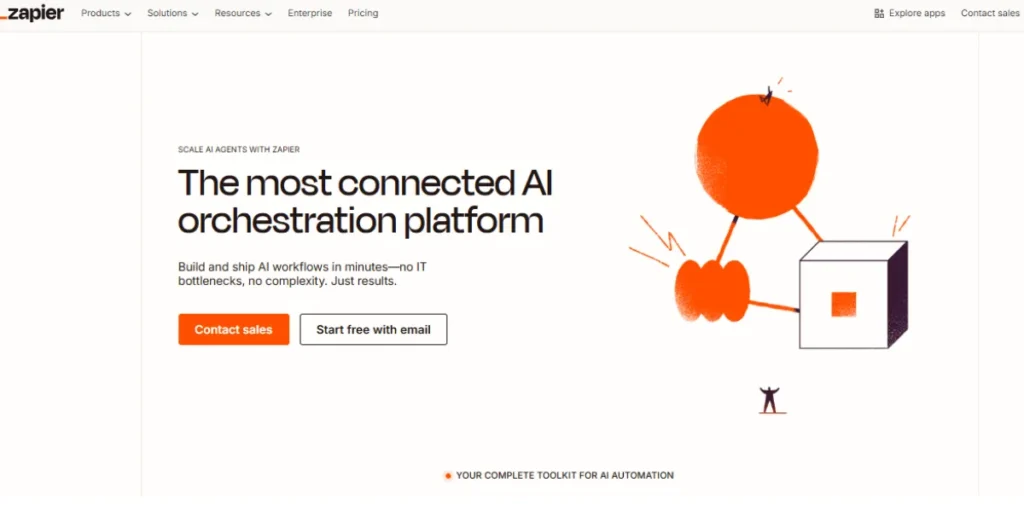
This is where you start, in case you have never done automation before. It is no surprise that Zapier is the most notorious Workato alternative. It integrates with almost all the apps you use (more than 6,000). There is no line of code to know how to use it. It is ideal in the case of individuals, marketing teams, and small businesses that require going quickly without IT waiting.
Key Features:
- Zaps: Basic linear processes.
- Massive Library: With 6,000+ apps, it connects to the largest number of applications of any tool.
- Reliability: It just works. It is seldom necessary to repair a broken Zap.
Pros:
- Scarcely convenient to operate, no training required.
- Massive app ecosystem.
- Superb free plan of test waters.
Cons:
- It may become costly when you conduct thousands of tasks.
- Not so good with highly complicated, multi-phase enterprise data processing.
Pricing: Free plan available. Paid plans start at $19.99/month.
Biggest Strengths: Small to Medium Businesses (SMBs) and non-technical users.
Website: zapier.com
2. Make (formerly Integromat)
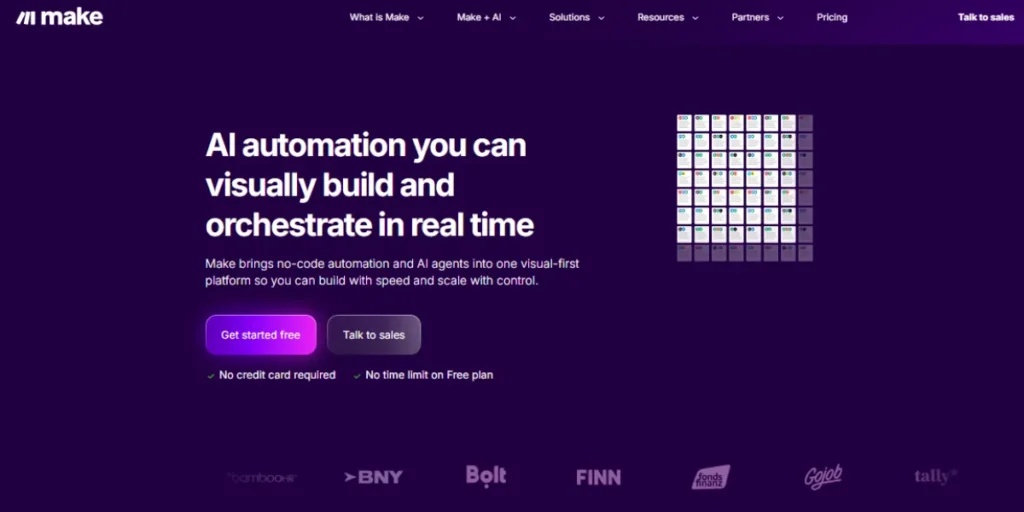
Make has been termed as the Zapier of smart people. It is a graphical site on which you can use drag and drop of bubbles in order to form a mind map as a workflow. In real-time, you can see the data stream between one bubble and another. It is extremely less expensive than Zapier and other Workato alternatives, and it can be used with much more intricate logic (such as loops and filters) without being cumbersome.
Key Features:
- Visual Editor: A gorgeous screen where you drag bubbles to create scenarios.
- Sophisticated Logic: In-built iterate, aggregate, and filter data tools.
- Schedule Settings: You decide the schedule on which your automation will run.
Pros:
- Extremely low cost compared to competitors.
- superb graphics interface that simplifies complicated logic.
- Large error correction (you do not have to restart to fix the mistakes).
Cons:
- Low learning curve- it is initially overwhelming.
- Slower than enterprise tools. Support may be slow.
Pricing: Generous Free plan. Paid plans start at $9/ 9/month.
Best: Visual thinkers, startups, and agencies that need to be powerful on a budget.
Website: make.com
3. MuleSoft (Anypoint Platform)

In case Workato is a Ferrari, MuleSoft is a freight train. This is a serious tool of serious companies owned by Salesforce. It is created to bridge large enterprise systems (such as hospital records or banking software). It follows an API-led strategy, that is, it transforms your business processes into building blocks. It is not child-friendly- you require programmers to run this.
Key Features:
- API Management: API building, management, and security.
- Data Transformation: Potent data format changers (e.g., XML to JSON).
- Salesforce integration: Best-in-class integration when you are a heavy user of Salesforce.
Pros:
- Highly potent and extensible.
- Leading security and governance.
- Supports so-called hybrid configurations (linking cloud applications with on-premise servers).
Cons:
- Highly costly (usually highly negotiated).
- Special developers are required to install and support.
Pricing: Quote-based (should be enterprise-priced).
Best Fit: Large businesses and IT teams that require the strength of API management.
Website: mulesoft.com
4. Boomi

Boomi (previously Dell Boomi) is an industry veteran. It is very good at hybrid integration. Lots of old-fashioned businesses have data stored in their basement servers (on-premise) and wish to access new applications such as cloud CRM. Boomi fits the bill for that. It is powerful with a drag-and-drop interface, but it appears a bit more industrial than contemporary tools, such as Make, and other Workato alternatives.
Key Features:
- AtomSphere: This is a special architecture in which you can put anywhere the so-called atoms (small runtimes).
- Master Data Hub: Assists in maintaining clean and consistent data within your apps.
- B2B/EDI Management: excellent in automating the supply chain.
Pros:
- Strong stability and uptime.
- Ideal for linking the old legacy systems to the cloud.
- Crowdsourced intelligence (suggests mappings of other users).
Cons:
- The interface is outdated in comparison to newer tools.
- It may be confusing with various modules with respect to the pricing structure.
Pricing: Pay-as-you-go is approximately $50/month, although enterprise plans vary.
Better Fit: Mid-large businesses that need a combination of old servers and new cloud applications.
Website: boomi.com
5. Tray.io
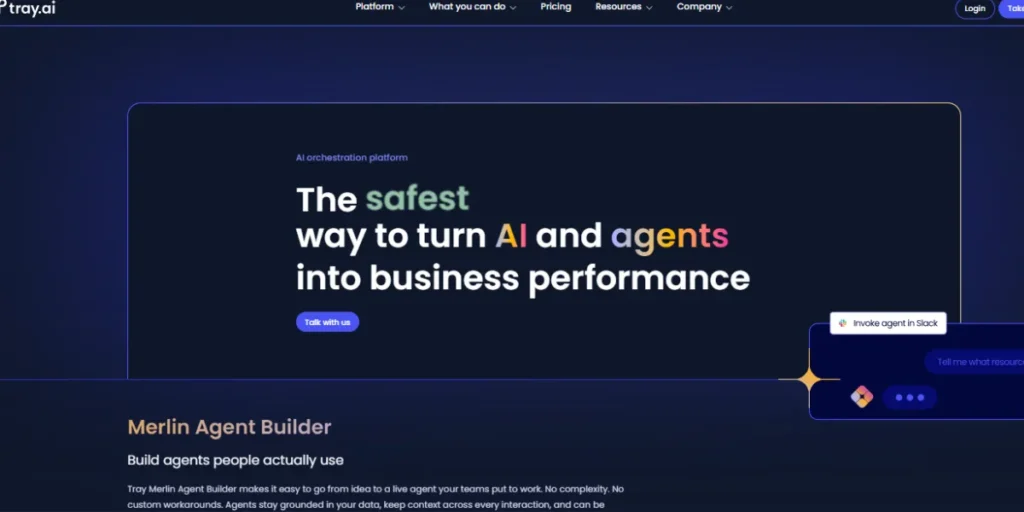
Tray.io is a contemporary, versatile platform that is between Zapier and other Workato alternatives. It is robust yet easy to use by those who are tech-savvy (people in Marketing or Sales Ops) and can be called citizen automators. It puts a high emphasis on General Automation, which will enable you to create highly specific, tailor-made workflows that other tools may not be capable of doing.
Key Features:
- Universal Connector: Supports any service with an API, even when they do not have a pre-built app to support such a service.
- Merlin AI: An AI assistant that assists in the creation of workflows through chatting.
- Scalable Architecture: It is developed around the serverless technology, which automatically scales up.
Pros:
- Extremely flexible; in the event of an API, Tray is able to connect to it.
- Excellent power and usability.
- Ideal as a marketing automation logic.
Cons:
- It can get pricey as you scale up.
- Still needs rational thinking; it’s not a plug-and-play game with complete beginners.
Pricing: Tiered Pricing (Pro, Team, Enterprise). An average of $600/month.
Best In: Revenue functions, marketing, and high-growth SaaS companies.
Website: tray.io
6. Celigo
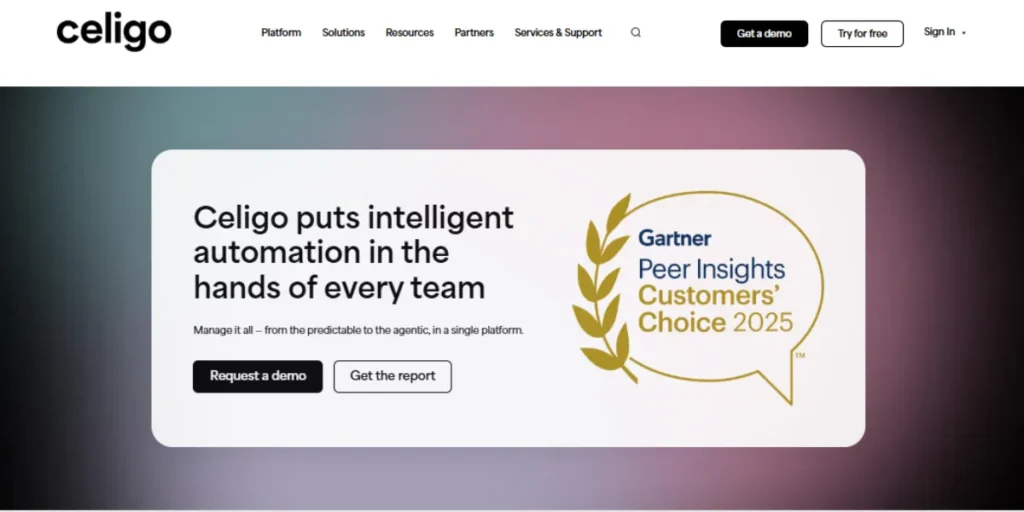
Celigo is a great one when you are in the business of selling. It focuses on the integration of e-commerce stores (such as Shopify or Magento) and the back-office finance systems (such as NetSuite or Acumatica). Whereas Workato is a generalist, Celigo offers ready-to-use recipes of typical business issues, such as Order to Cash, in the form of pre-built Integration Apps.
Key Features:
- Integration Apps: Complete, ready-to-use apps to connect big platforms ( e.g., Shopify to NetSuite ).
- integrator.io: It is their simple-to-use platform to create custom flows.
- Error Management: AI tools with which you identify and rectify data errors in introspection.
Pros:
- NetSuite users: the best in the class.
- Configurations are extremely quick due to the ready-to-use templates.
- Pricing is also more open compared to Workato.
Cons:
- Not as much concentrated on basic marketing work; it is an operations/finance-oriented one.
- Interface is practical rather than fun, like Make.
Pricing: A Free version is offered. It costs about 600/month (paid).
Best Fit: E-commerce companies and Finance departments that utilize ERPs.
Website: celigo.com
7. n8n
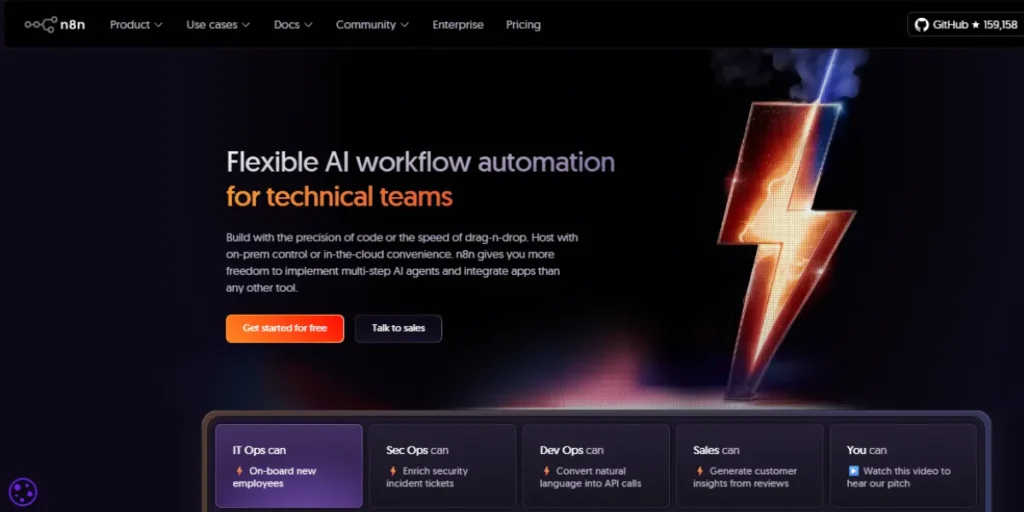
n8n is a market disruptor. It is a source-available tool, i.e., you can download the code and run it on your own server for free (or pay them to run it on their own server). It has a node-based interface, which is comparable to Make, and is considered one of the notable Workato alternatives, but with much more focus on developers and technical individuals desiring complete control over their data and privacy.
Key Features:
- Self-Hosted: You are able to host it yourself (perfect for GDPR/privacy).
- Workflow Editor: node-based, clean visual editor.
- JavaScript Support: You are able to write your custom JavaScript in any node to accomplish anything you please.
Pros:
- Very cheap (or no charge) when you self-host.
- There are no fears of task limits when you are hosting it yourself.
- Excellent neighborhood and seclusion.
Cons:
- Needs to be technical to install and operate (self-hosting).
- The number of those native integrations is lower than Zapier (but you can do generic API nodes).
Pricing: Free (self‑hosted). Cloud versions begin at $20/month.
Best On: CTOs, developers, and privacy-aware companies.
Website: n8n.io
8. SnapLogic
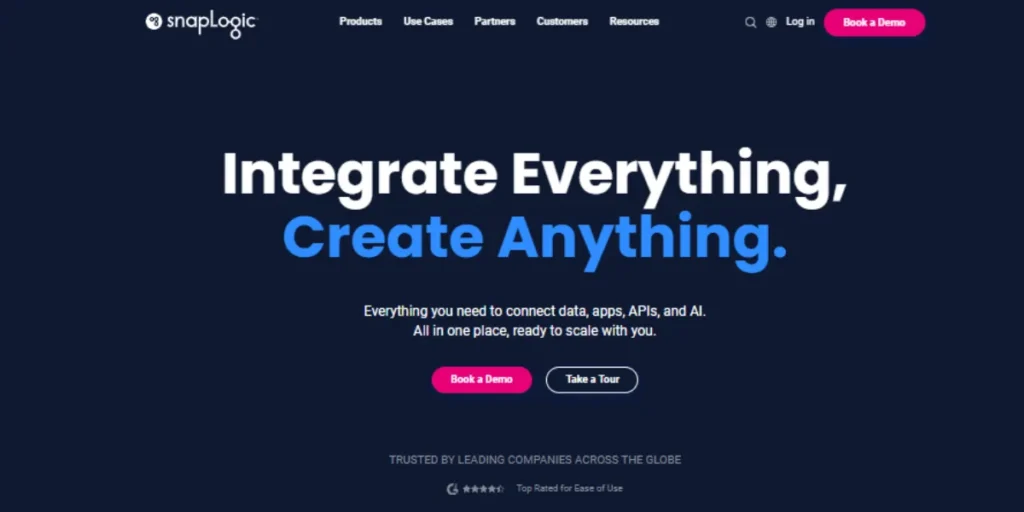
SnapLogic is known as an Intelligent Integration Platform. It emphasizes data transfer in data lakes such as Snowflake or Redshift (ETL/ELT). It has an AI assistant named Iris that recommends your next actions in the workflow. It is a good competitor if you are interested in analytics and big data, rather than merely automating tasks.
Key Features:
- Snaps: Snap-on connectors (such as Lego blocks), which are pre-assembled connectors.
- Iris AI: A machine learning that suggests common integration patterns.
- Data and apps Integration: supports real-time loads, as well as big-batch loads.
Pros:
- Very fast at heavy-lifting data.
- The graphical interface is clear and simple to read.
- Ideal for businesses that are cloud migrating.
Cons:
- Not cheap where small use is required.
- Occasionally experiences hiccups on huge files.
Pricing: Enterprise pricing, which is based on a quote.
Most Suited: Big Data and Analytics Enterprise IT teams.
Website: snaplogic.com
9. Jitterbit

Another competitor that directly competes with MuleSoft and is considered one of the notable Workato alternatives is Jitterbit, which is also a strong enterprise player. Its Harmony platform is known to generate APIs at a very fast rate. Assuming that you have an old database, and you need to develop a modern mobile application on top of it, Jitterbit can develop the API layer in days, not months.
Key Features:
- API Manager: the quick generation and management of APIs.
- App Builder: Low-code tools to develop basic internal applications.
- Cloud harmony: One place to do all the integration.
Pros:
- Compared to MuleSoft, it is quicker to implement.
- Excellent customer service and white-glove.
- Intense Salesforce and NetSuite connectors.
Cons:
- The interface (Studio) may seem somewhat disjointed (web vs desktop).
- There could be some improvements in reporting and logging.
Pricing: Quotations (Standard, Professional, Enterprise).
Most Suited: Companies that require internal data to be displayed as APIs in a short time.
Website: jitterbit.com
10. Microsoft Power Automate
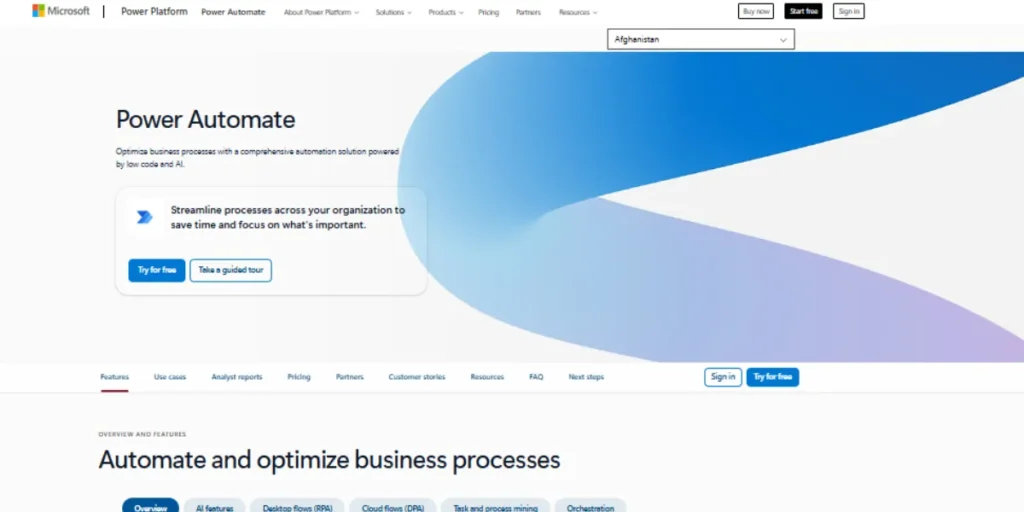
This is the giant that sleeps in your backyard and was formerly referred to as Microsoft Flow. You probably already have this if your company uses Office 365. It is interconnected with Excel, SharePoint, Teams, and Outlook. It can also be used to have a Desktop version that can literally click buttons on your screen (RPA) and automate older software that lacks an API.
Key Features:
- Intensive Microsoft Interoperability: Interoperable with the Office suite.
- RPA (Robotic Process Automation): Can log your mouse clicks to automate desktop activities.
- AI Builder: simple access to Microsoft AI tools to read forms/invoices.
Pros:
- Most of the time (included with your Office 365), it’s Free.
- Highly secure and corporate IT-approved.
- Excellent at automating individual productivity.
Cons:
- Does not connect well with non-Microsoft applications (such as Google or Salesforce).
- The licensing of Connector Premium can be confusing.
Pricing: Price starts at $15/user/month (it often comes with Enterprise packages).
Best For: Companies that are already within the Microsoft ecosystem.
Website: powerautomate.microsoft.com
Conclusion
Whether to use a Workato alternative depends on you and what you have to do. If you are a small business or marketing team, do not make it too complicated. Ease of use should go to Zapier, whereas Make should be chosen for cost savings and visualizing work.
n8n is a brilliant option that is affordable and gives anyone who wishes to be a developer control. If you are a business that needs to transfer large volumes of data or has an older system in place, solutions such as MuleSoft, Boomi, or Celigo will provide the scalability you need without committing you to the Workato platform.
The automation market is enormous, and you do not need to spend enterprise money to have enterprise-level power. Check out the free trials of the mentioned tools above, and your dream partner is there.
FAQs
Is a free substitute for Workato available?
Yes! Both Make (Integromat) and Zapier also offer free forever plans for simple tasks. n8n is also free, provided that you host it on your own server.
What is the most affordable Workato alternative?
Make is usually the most affordable when it comes to the features you receive. n8n can be the cheapest option for large volumes when you have the technical capacity to self-host.
Is Workato superior to Zapier?
Yes, Zapier is simpler and less expensive for small businesses and simple tasks. Nonetheless, Workato is superior in complicated and secure enterprise data management.
Is it easy to migrate from Workato to these tools?
Direct migration is not a one-click process. Your recipes will probably have to be recreated in the new tool, although the logic will be similar, so the transition will be faster than creating a new one.