YouTube reigns supreme in the video world in 2026, but for how much longer? With over 2.7 billion MAUs and an aggressive ad model featuring mandatory unskippable videos exceeding 60 seconds, millions of users have moved on. Additionally, countless creators seek greener pastures after realizing YouTube no longer pays well for content creation, and its revenue splits have stagnated at 55%. In comparison, some newer hosting solutions are paying upwards of 95% per view and stream.
Decentralization is another growing trend, with blockchain-based hosting platforms reporting a 40% YoY increase in MAU. Whether you are a movie director requiring the best possible quality for your films without any compression or an Android smartphone user who cannot stand watching videos in the background, the platform has come a long way since then and can now cater to almost every type of audience imaginable.
In this article, we have compiled a list of the 14 most popular YouTube Alternatives to date, which are expected to change the face of online video content creation and consumption in 2026.
Why People Want YouTube Alternatives
The main reasons for leaving the mainstream video platform and joining an alternative platform include economic factors and improvements in user experience. Some of the key factors currently include the following:
- Aggressive Advertising: Viewers cannot tolerate too many unskippable and mid-roll ads, prompting a mass migration to platforms with fewer intrusive advertisements.
- Content Moderation: Creators do not want to get shadow-banned or suddenly demonetized for unclear reasons, such as being marked as a “hater”.
- Algorithm Burnout: Viewers and creators alike are frustrated by recommendations that focus solely on Shorts rather than deep research into topics that took months to make.
- Privacy Fears: More tech-savvy users prefer decentralized platforms that collect little to no data, either from the platform or from third parties.
- Revenue Shares: Professional creators seek a bigger percentage of profits from ad-supported streams and subscribers.
What Makes a Good YouTube Alternative?
- Content Freedom: Each day a great number of users seek YouTube alternatives to avoid strict content censorship. The best alternative to YouTube is one that upholds the freedom of expression but has reasonable community standards, which is why such a video platform will suit creators of all niches.
- Improved Monetization Alternatives: Most creators are sick and tired of the patchy ad revenue system on YouTube. The best alternatives have flexible monetization options such as direct donations, paid subscriptions, brand sponsorships or crypto-based rewards- allowing content creators to earn in more ways.
- Reduced Reliance on Algorithms: YouTube relies on an algorithm that tends to prioritise trending or sensational content. Smaller creators can be discoverable with alternatives that have chronological feeds, human-curated suggestions, or algorithms that are transparent.
- Increased Community Dashboard: Services which enable deeper community access via forums, comments, and creator-fan interactions are better at fostering a strong following. A creator first platform facilitates more meaningful relationships.
- Data Privacy and Control: YouTube gathers huge amounts of user information to serve targeted advertisements. A prominent number of users have shifted to platforms that value user privacy more, those that are ad-free or allow the user more control over their personal information.
Key Features of a Good YouTube Alternative
- Video Quality Hosting: To be competitive to YouTube infrastructure, a good alternative should have high-quality video playback, support HD or 4K video, and have quick streaming speeds.
- Creator Tools and Analytics: Good substitutes will offer creators dashboards, video performance data, audience demographics, and SEO tools to maximise reach and engagement.
- Custom Branding and Channel Design: Platforms which enable creator to customize their channels, thumbnails, and layouts can go a long way towards making a recognizable brand.
- Live Streaming Support: With the rise of interest in live content, platforms that support live streaming and chat as well as replay were more appealing to both streamers and viewers.
- Mobile and Cross-Platform Access: The best alternative must be responsive, have mobile applications, and be available on smart TVs to cover all users.
- Ad Control and Revenue Sharing: Platforms which sell an ad-free experience or allow creators control over the placement of ads on their videos demonstrate a desire to share revenue fairly.
- Content Discovery and Search Tools: Powerful search engines, trending pages, and category browsing allow users to discover relevant content and increase creator visibility.
YouTube vs 14 Alternatives (2026)
| Platform | Primary Focus | Monetization | Ads | Privacy | Best For |
|---|---|---|---|---|---|
| YouTube | General videos | 55% ad revenue | Heavy | Low | Mass audience |
| Twitch | Live streaming | Subs, Bits | Medium | Moderate | Gamers, live creators |
| Odysee | Decentralized video | Crypto (LBC) | None | High | Privacy creators |
| Vimeo | Professional content | Paid plans | None | High | Filmmakers |
| Dailymotion | General videos | Ad revenue | High | Moderate | Casual creators |
| Vevo | Music videos | None (for users) | High | Moderate | Music lovers |
| Wistia | Business marketing | Subscription | None | High | Businesses |
| DTube | Decentralized | Crypto | None | High | Web3 users |
| Internet Archive | Public domain content | None | None | High | Researchers |
| Kick | Live streaming | 95% revenue share | Low | Moderate | Streamers (earnings) |
| Nebula | Educational content | Subscription | None | High | Learning |
| PeerTube | Federated video | None | None | Very High | Tech communities |
| Invidious | Private YouTube viewing | None | None | Very High | Privacy viewers |
| BitChute | Free speech video | Limited | None | Moderate | Alternative content |
| SproutVideo | Business hosting | Subscription | None | High | Enterprises |
Top 14 YouTube Alternatives to Explore in 2026
1. Twitch
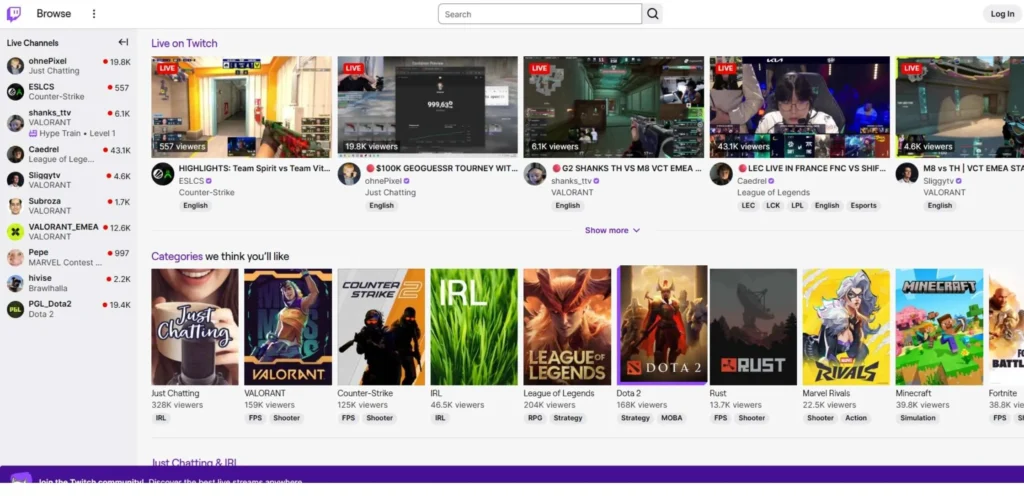
Twitch is a top video-sharing platform that especially caters to gamers. It came under Amazon’s management in 2016, which led to the introduction of Twitch Prime. Internet users can watch live esports and video games on the platform. Twitch also guarantees ad-free streaming and access to games and game loot for free. It operates like YouTube. You can watch videos, follow channels, send messages and comments, and add friends for free. All you have to do is create an account on the platform. Registration is the ticket to tap into the expansive content library and share moments with other users online.
Comparison With YouTube: Focused on real-time engagement rather than search-based video, features much deeper community interaction tools, higher emphasis on “live” vs “VOD,” and utilizes a unique “Bits” and “Sub” economy.
Key Features:
- Stream hours of live gameplay with low-latency technology for real-time interaction.
- Participate in live chat with custom emotes and community-driven moderation tools.
- Upload a live stream and monetize the channel through the Twitch Affiliate and Partner programs.
- Integrate with multiple devices and operating systems, including consoles, mobile, and desktop.
- Access Twitch Prime benefits including free monthly channel subscriptions and exclusive in-game loot.
Pros:
- The undisputed leader in live-streaming traffic and viewer discovery for gaming content.
- Instant monetization capabilities through viewer-purchased “Bits” and monthly channel subscriptions.
- Highly interactive community culture that fosters deep loyalty between creators and fans.
- Seamless integration with the Amazon ecosystem providing added value for Prime members.
- Professional-grade broadcasting tools and dashboard analytics for managing live sessions.
Cons:
- Extremely difficult for new, non-gaming creators to get discovered without an outside following.
- Strict DMCA and copyright strike policies can lead to sudden channel bans without much warning.
- The revenue share for top-tier creators is often less favorable compared to newer rivals like Kick.
- The “always-on” nature of live streaming can lead to significant creator burnout and mental fatigue.
- Heavy ad-load for non-Prime viewers can disrupt the viewing experience during crucial live moments.
Use Cases: Professional esports broadcasting, live “Just Chatting” sessions, music performances, and real-time art creation.
Best For: Live Content and Gameplay streaming.
Website: https://www.twitch.tv/
2. Odysee
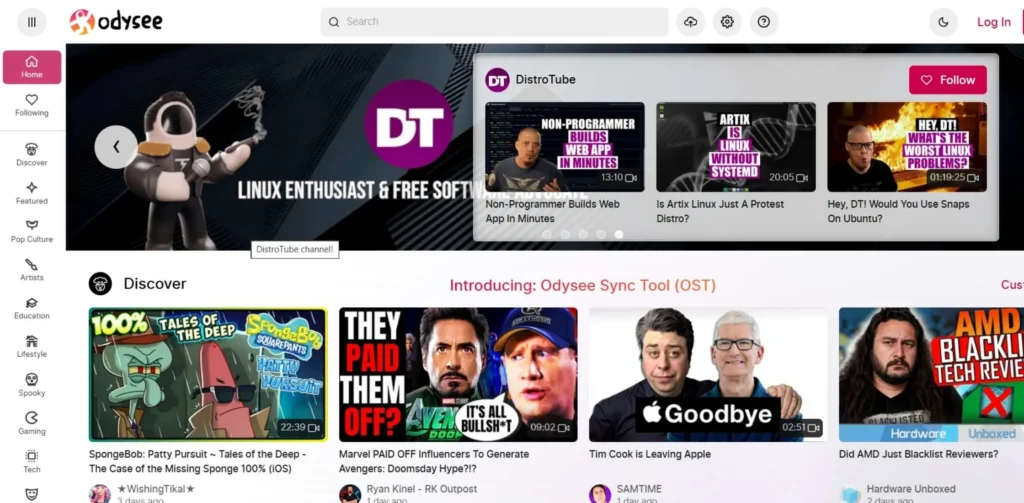
Odysee relies on a blockchain technology called LBRY. This protocol allows internet users to develop apps to access the digital content on the network. Content creators can create videos and upload them to the platform. These videos can be a strong marketing approach to the vast audience base. The platform allows content creators to make their videos accessible for free, set a price per stream or download, and upload audio and video documents and other types of files. Besides, they can receive revenue generated in cryptocurrency, utilising the LBRY Credit.
Comparison With YouTube: Decentralized; creator owns content, no central takedowns, no intrusive corporate tracking, and uses crypto rewards instead of traditional ad-sense.
Key Features:
- Blockchain-based decentralised hosting that ensures content cannot be deleted by a single entity.
- Crypto-based monetisation using LBRY Credits (LBC) for both creators and viewers.
- No centralised censorship allowing for a truly open and unfiltered digital town square.
- Supports various media formats including high-definition video, audio files, and PDF documents.
- YouTube Sync tool that automatically mirrors your YouTube content onto the Odysee platform.
Pros:
- Complete ownership of your digital footprint with no risk of corporate “shadowbanning.”
- Viewers can earn cryptocurrency just by watching and engaging with their favorite content.
- Minimalistic and ad-free interface that prioritizes the video viewing experience over marketing.
- Open-source protocol allows for high levels of transparency regarding how content is served.
- A fast-growing haven for tech enthusiasts, privacy advocates, and decentralized finance lovers.
Cons:
- The user base is substantially smaller compared to other platforms, making viral reach less likely.
- Since the currency used is cryptocurrencies, there are huge fluctuations on a daily basis.
- Slower upload times due to the nature of the blockchain technology behind the scenes.
- Occasionally, there might be some glitches with the user interface as compared to Google.
- A steep learning curve when it comes to using a crypto wallet and LBC for payments.
Use Cases: Tech tutorials, privacy-focused vlogs, decentralized finance news, and censorship-resistant journalism.
Best For: Independent creators and decentralised content.
Website: https://odysee.com/
3. Vimeo
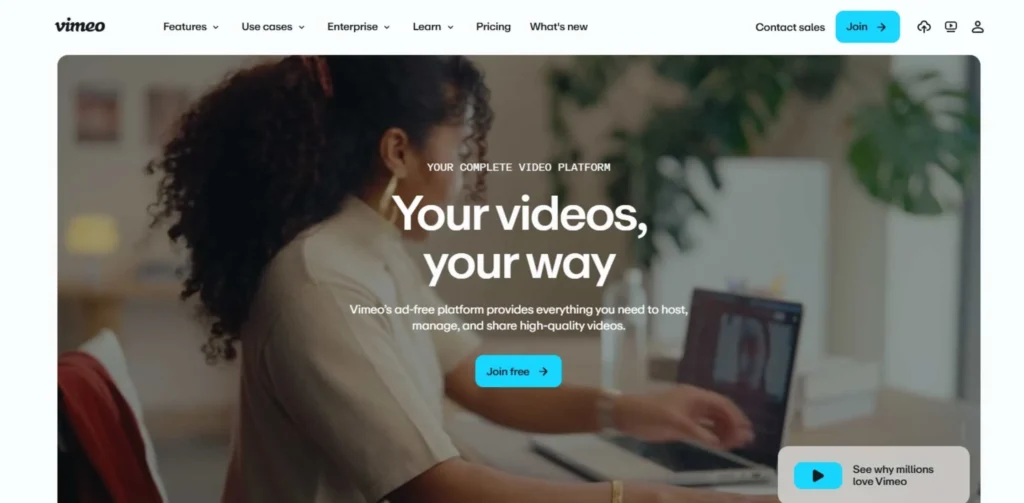
Vimeo offers software solutions that provide multiple videos to over 260 million internet users all around the world. Companies and other professionals use the service to create videos and interact with other professionals as well as internet users. The company focuses on providing high-quality content by creating and editing videos of HD resolution. Vimeo supports live stream broadcasts, which helps content creators to meet other professionals in their line of business and future customers.
Comparison With YouTube: No ads, high bitrate for 4K/8K resolution videos, and top-level privacy options for client work.
Key Features:
- High-fidelity live streaming, broadcasting to different social media platforms.
- Screen Recorder and video editing feature, making creation of professional videos easier and faster.
- Monetization via Vimeo on Demand service, enabling direct digital selling to fans.
- Creation of ready-to-use videos using predefined templates designed for social media promotion and corporation promotion.
- Privacy protection options including password protection and domain-specific embedding capabilities.
Pros:
- Industry leader among filmmakers and other artists because of excellent video compression and sharp resolution.
- Clean service, free of any advertisements, thus making portfolios look even more professional.
- Powerful collaboration tools that enable teams to leave time-coded comments on drafts of videos.
- In-depth analytics, tracking heatmap and user engagement information at micro-level.
- Flexible video player customization that perfectly matches company identity.
Cons:
- The free “Basic” plan is extremely limited in terms of weekly storage and total bandwidth.
- The social community is much smaller, so don’t expect “viral” traffic from within the platform.
- Professional features and higher storage tiers come with a relatively high monthly subscription cost.
- Not ideal for creators who rely on an algorithmic recommendation engine to find new viewers.
- The platform has a more “serious” tone, which may not suit casual or meme-driven content.
Use Cases: Creative portfolios, corporate communications, high-end wedding films, and premium educational courses.
Best For: Video-sharing and management.
Website: https://vimeo.com/
4. Dailymotion
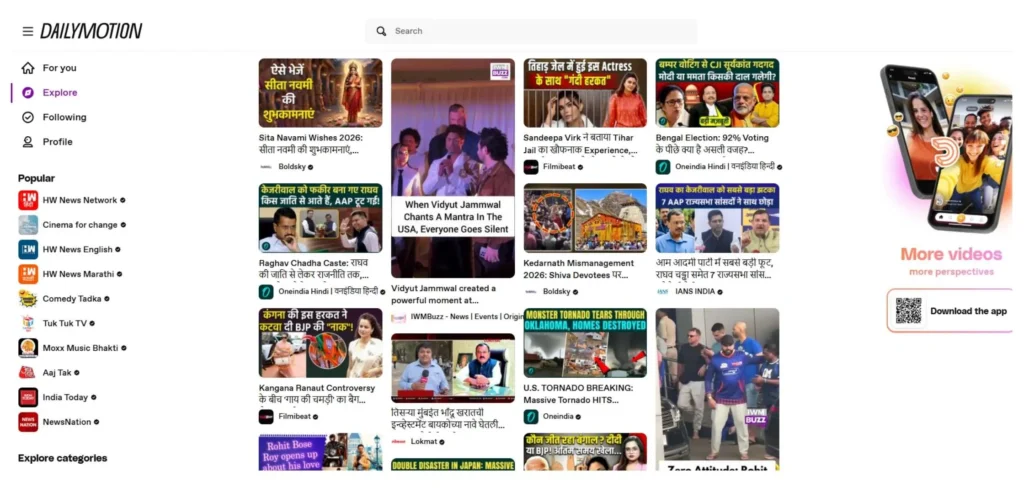
Dailymotion is one of those platforms that is also worth consideration in the context of video sharing. Users across the globe can create a video channel, gather a base of followers and earn money from it thanks to shared ad revenue. The difference between Dailymotion service and YouTube is negligible. Moreover, the service provides an intuitive interface with flexible content policy that allows newbies to join in without tough competition easily. Advanced analytics and monetization tools also come in handy.
Comparison With YouTube: Almost identical UI and navigation system with a slightly more focus on curated news and premium entertainment services and partnerships as compared to user-generated content.
Key Features:
- Attractive and convenient UI that allows quick access to trending news and music.
- Simple-to-use navigation menu with an intuitive search bar and content categorized by genre – sport, news, gaming.
- Possibility to share videos on other popular platforms using built-in social sharing buttons.
- Adjustment of video size and quality even up to 4K resolution for a premium viewing experience.
- Creation of a partner profile that will allow you to monetize your uploads with the help of shared ad revenue.
Pros:
- Globally distributed, especially strong in Europe and Asia.
- More flexible copyright and content policy as compared to YouTube and its strict “strike” system.
- Professional-grade player supporting 360-degree videos and professional broadcasting.
- A smaller number of total participants can be considered an advantage when trying to succeed in certain niche topics.
- Good integration for publishers that want to put news-like clips on their web sites.
Cons:
- The platform is highly commercialized, and ads can be even more irritating than on YouTube.
- The overall number of monthly visitors is substantially lower and thus limits your earning potential.
- The algorithms are somewhat less efficient than on YouTube and usually deliver irrelevant videos.
- Mobile applications work slower and consume more resources than competing solutions.
- The homepage of the site is overcrowded with “partner” content, leaving little chance for independent creators.
Use Cases: News broadcasting, premiere of music videos, sports news, entertainment vlogs.
Best For: HD Content in Any Genre.
Website: https://www.dailymotion.com/
5. Vevo
Vevo is one of those websites designed specifically for videos related to music only. Here you will be able to watch clips from concerts, interviews, behind-the-scenes footage and studio recordings. The number of videos reaches many thousands and satisfies the needs of the whole music-lovers community.
Comparison With YouTube: Curated platform for official music content in contrast to the open-uploading feature on YouTube.
Key Features:
- Huge database of high-quality music videos presented by the largest record labels in the world.
- Watching live performances and exclusive concerts by some of the world’s biggest stars.
- Watching Vevo videos from your Roku, Apple TV or Comcast devices.
- Behind-the-scenes clips and artist interviews available exclusively on Vevo.
- Curated playlist with fresh, trending artists introduced to the listening public.
Pros:
- Official videos in absolutely best quality for music lovers.
- Vevo is a trusted name meaning officially approved music.
- Absolutely no garbage in the form of fan covers and lyric videos.
- Great availability on different platforms including TVs making it the perfect place to lean back.
- Focus on artist discoveries thanks to the special Vevo DSCVR program.
Cons:
- This is not the universal platform, and you will be unable to upload your own videos unless you are already a signed artist.
- Very poor social interaction opportunities in comparison with YouTube.
- Lots of advertisements with long sequences of unskippable videos interrupting your listening.
- Limited to a particular niche (music) which makes it utterly useless for educational or game purposes.
- No monetization options for the independent creators.
Use Cases: Official music videos, discovery of new bands, exclusive concert streams.
Best For: Music videos and concerts.
Website: https://www.hq.vevo.com/
6. Wistia
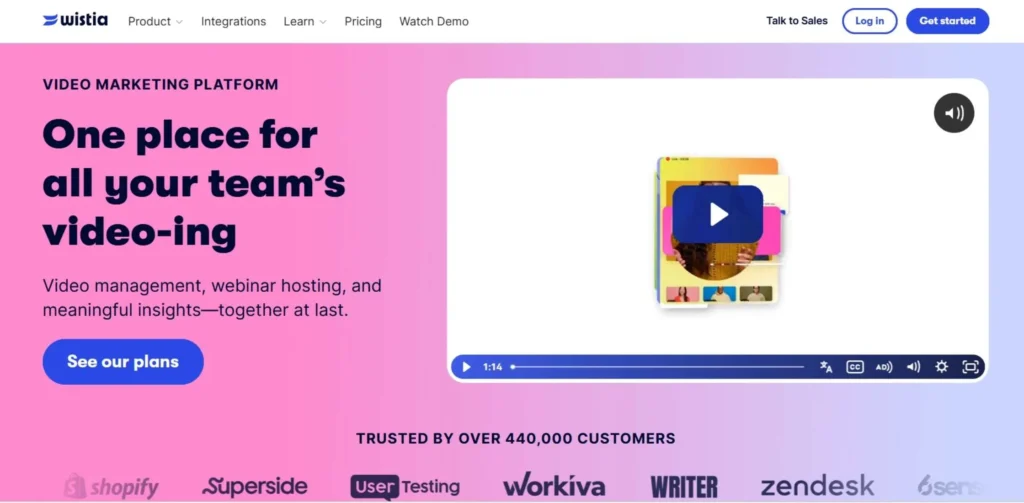
Wistia is another platform we should consider when discussing video content providers. This professional video hosting website has everything required to apply marketing strategies to the uploaded video content. Besides, there are many useful options related to video analytics and effective lead capture.
Comparison With YouTube: A completely business-oriented platform focused on marketing as opposed to entertainment.
Key Features:
- No advertisement during video playback, keeping your prospects on the same page.
- Detailed heatmaps with engagement analytics showing when people stop watching.
- Integration with popular CRM platforms like Hubspot and in-video lead capture options like Turnstile.
- Ability to change the color of the player’s background matching the look of your website logo.
- Embedding videos optimized for SEO and helping increase visibility of your website on Google.
Pros:
- Unique analytical data providing insight into your prospects’ behavior.
- Keeping your landing page professional by excluding “related videos” from your competitors.
- Reliable fast streaming from dedicated servers, keeping landing pages fast.
- Easy integration with various marketing platforms such as Hubspot, Mailchimp, and Marketo.
- “Soupbox” for creating professional webcam and screen recordings in seconds.
Cons:
- Substantially higher price plans compared to other platforms.
- Lack of organic viewers and dependence on external traffic to your videos.
- Limited functionality of the free version with extremely small storage space.
- Absolutely not suitable for personal projects or entertainment purposes.
- Need some marketing background to understand how to use analytics.
Use Cases: Product demos, corporate webinars, promotional videos, lead-generation videos.
Best For: Professional Video Marketing and Lead Generation.
Website: https://wistia.com/
7. D-Tube
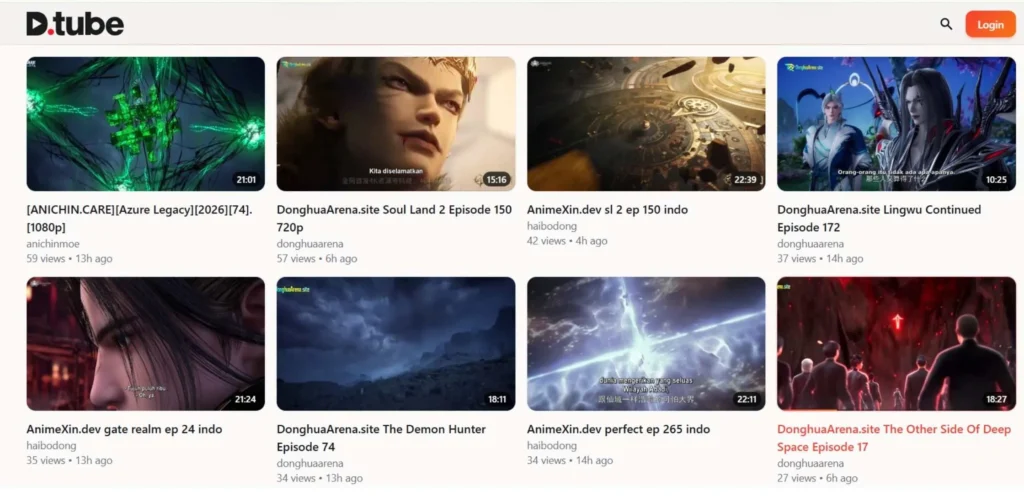
D-Tube is a powerful tool which prioritizes user privacy and encryption while storing video content. It uses blockchain technology which decreases server failure chances when you upload or watch any video. Moreover, such technology guarantees that users and content creators will not have general downtime issues while using D-Tube.
Comparison With YouTube: Runs on decentralized network (P2P), rewards participants with cryptocurrencies for interaction.
Key Features:
- Video playback control which includes adjusting speed and quality of the content (up to 1080p).
- Blockchain-based system of rewarding creators and curators with cryptocurrency tokens.
- Decentralized video storage (uses IPFS technology) resistant to any kind of government intervention.
- No censorship nor demonetization by algorithms favoring specific political opinions.
- Integrated crypto-wallet which allows users to manage the rewards.
Pros:
- Freedom of speech, as there will be no corporate board to scrub your content.
- No ads on the site because of the existence of internal crypto-economy.
- Great privacy of browsing and watching videos without leaving any personal information.
- Making money from the first view even with zero subscribers.
- Highly motivated community working for the promotion of Web3 ideas.
Cons:
- Variable load times as it depends on how many “nodes” host a particular file.
- Basic and not advanced search engines are often unable to locate old videos.
- Confusing UI if you are not familiar with blockchain and voting technology.
- Small content library compared to all others mainstream alternatives.
- There is no recovery of the account with lost or stolen private blockchain keys.
Use Cases: Announcing updates of crypto projects, vlogging while being concerned about privacy, decentralized journalism.
Best For: Video-Sharing and Watching.
Website: https://d.tube/
8. Internet Archive
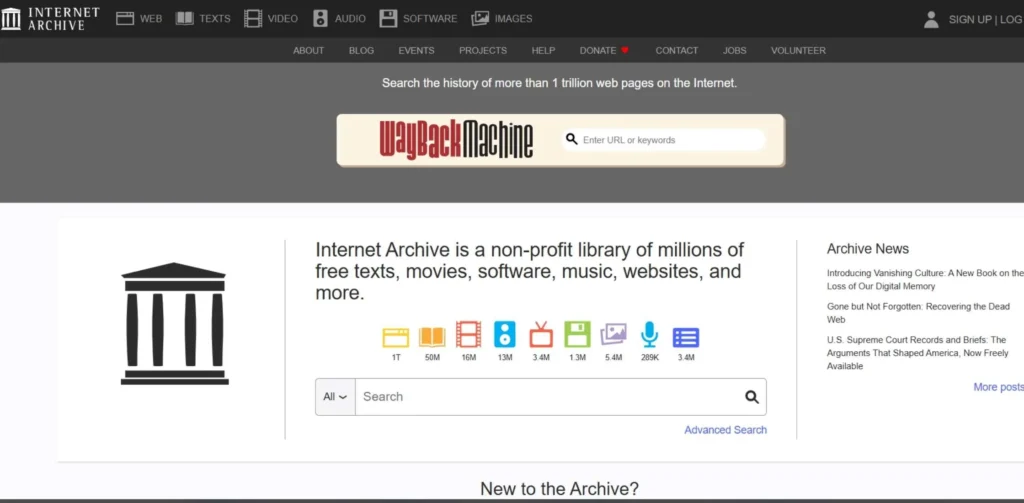
From the name itself, the Internet Archive serves as a resource for everything available on the Internet. It is an archive containing digital copies of documents such as movies, video clips, games, moving pictures, software applications, websites, music, and numerous books. Anyone around the globe can freely upload or download digitised files from this platform.
Comparison With YouTube: Not-for-profit library approach that focuses on preserving content rather than making profit through advertising or uploading videos.
Key Features:
- Thousands of items in the library that include rare silent movies and newsreels.
- Intuitive search bar where you can sort based on date, media type and creator.
- Ability to adjust video aspect ratios, playback speed, and quality.
- Open system where anyone can contribute to the digital heritage of the Internet.
- Integration of Wayback Machine that allows you to view the archive versions of video-hosting websites.
Pros:
- Entirely free service that has no advertisements whatsoever due to not-for-profit nature.
- Access to content that might be missing in other services like YouTube or Daily Motion.
- Searches are not limited to what algorithms think are popular but depend only on metadata and dates.
- Supports many “legacy” media types not compatible with other modern video players.
- Great resource for historians, filmmakers, and educators searching for freely usable media.
Cons:
- The website is really reminiscent of “Web 2.0” era with poor modern scroll support.
- The service has much lower upload/download speeds compared to modern cloud storage.
- There is no monetization for creators – this is a platform for contribution, not profit.
- Doesn’t provide any social features like subscribing or commenting.
- The volume of data stored makes it extremely hard to find anything of quality.
Use Cases: Conducting historical research, obtaining public domain footage for your films and watching archived TV shows.
Best For: Viewing Free Public Domain Movies and TV Shows.
Website: https://archive.org/
9. Kick
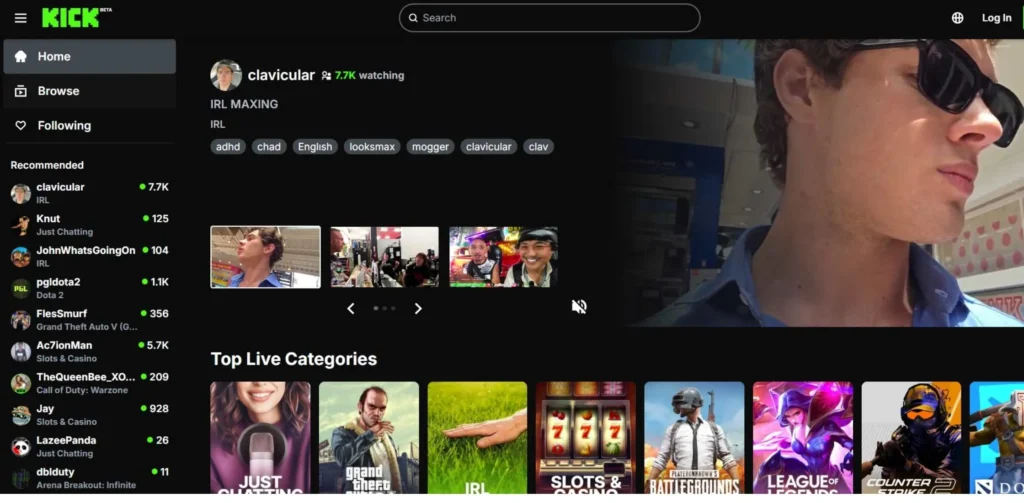
Kick is considered a disruptive force in the world of live streaming, aimed to compete with Twitch and YouTube’s revenue model. Launched with a creator first mindset, it attracted millions of fans with generous contract deals and highest percentage of revenue split for creators. This platform still has a vibe of the Wild West and offers fewer restrictions on video content compared to others.
Comparison With YouTube: Highest rate of revenue share – 95/5 compared to YouTube’s 55/45. Focuses on live interactions and has a much more flexible policy regarding video content.
Key Features:
- Allows creators to keep most of their subscription income.
- Promotes creators’ freedom and minimizes the chances of account suspension.
- Provides superior video quality even at higher bitrates.
- Special category for gambling and slots, a dedicated category for those interested in gambling.
- Simplest possible interface of creators’ dashboard providing basic tools only.
Pros:
- Highest revenue generator that offers great monetization potential for live streamers.
- Fast growth rates that reduce the level of competition and makes it easier for a newcomer.
- Laxity of rules encourages creators to try unique video styles.
- Acquisitions of prominent figures such as xQc help to attract a massive amount of traffic.
- Creator’s incentive program that pays out for the number of hours spent watching video.
Cons:
- Has a reputation as a controversial content provider with a toxic chat community.
- VOD (Video on Demand) capabilities are inferior compared to advanced YouTube features.
- Smaller user base leads to less search traffic compared to Google.
- Occasional enforcement of the rules creates uncertainty in the community.
- Not the safest platform for copyrighted videos because of insufficient copyright control tools.
Use Cases: Esports tournaments, professional gaming, IRL vlogs, and community podcasts.
Best For: High-earning live streamers.
Website: https://kick.com/
10. Nebula
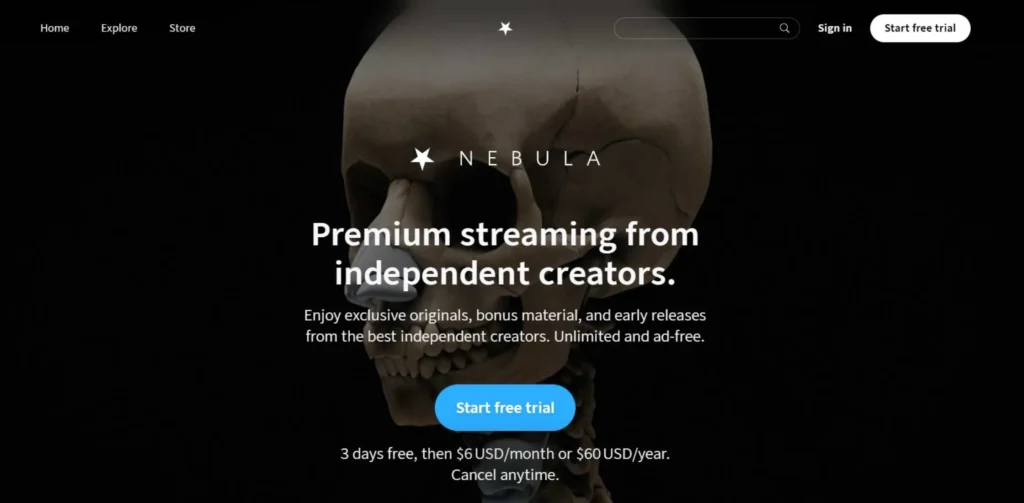
Nebula is a streaming service for creators, where they produce high-end videos for the smartest people in the world. Unlike other services, it is not monetized via advertisements, nor does it rely on algorithmic recommendations. Instead, it uses a subscription-only model for both CuriosityStream and Nebula itself. This way, its content library contains many educational videos and documentaries that cannot thrive on YouTube.
Comparison With YouTube: Completely ad-free, payment is made based on the watch time of paid subscribers, not advertisers, with zero “junk” videos.
Key Features:
- High-budget productions created by Nebula.
- Deep educational classes hosted by Nebula’s best influencers.
- A purely video platform without any promotional content.
- All content appears in the order of relevance, not clickbait.
- Creators actually own the platform where they upload videos.
Pros:
- The best platform for intellectually inclined viewers who prefer content devoid of noise.
- A safe place for creators whose content gets banned by YouTube’s AI.
- Very high production values across all the content.
- Subscribers fund content creators directly, unlike the minimal ad dollars.
- A distraction-free UI optimized for focused, in-depth learning.
Cons:
- It requires a monthly/annual fee to subscribe, limiting its availability somewhat.
- Smaller content library compared to YouTube’s endless selection of videos.
- No social aspects like commenting on the videos or discussion sections.
- This platform is not for discovery but for watching serious content.
- Only approved creators are allowed to upload content, so it’s not open to everyone.
Use Cases: Long form video essays and educational documentaries.
Best For: Educational content.
Website: https://nebula.tv/
11. PeerTube
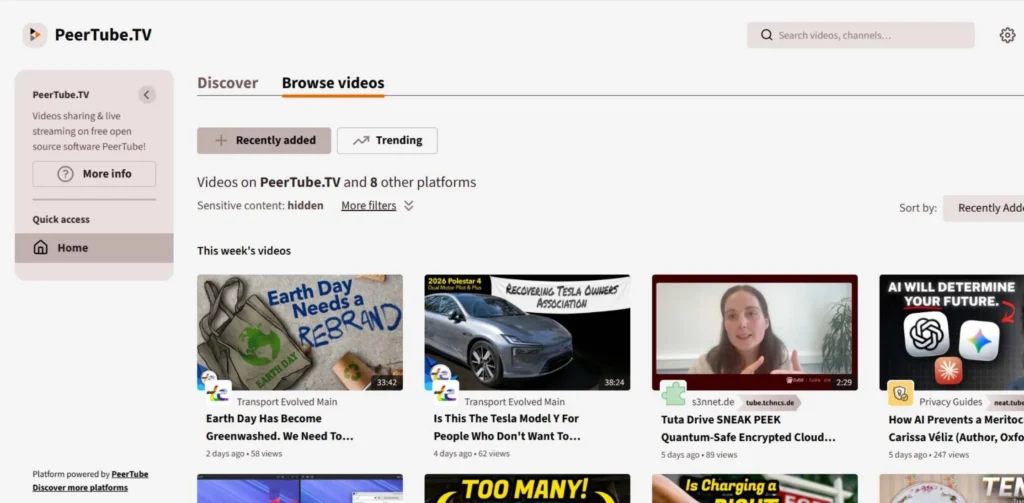
PeerTube is a video streaming platform that combines decentralization and federation to create the largest video streaming network. It works by connecting instances of videos hosted on different servers using the ActivityPub protocol. This makes it the most resistant to censorship among all the platforms in 2026 because no one owns all the videos at once.
Comparison With YouTube: No control whatsoever from any big companies since everyone hosts their own instances and there are no algorithms.
Key Features:
- Servers can follow and exchange videos with one another.
- Reduces strain on the server when traffic peaks occur.
- Users don’t see any ads when accessing a video.
- Each hoster can change themes and rules in their instances.
- Not even a single tracker or third-party API present.
Pros:
- Total freedom from corporate content policies and moderation procedures.
- A community-driven system where the culture is defined by the users themselves.
- Very efficient for small content creators wishing to start their own communities.
- It is very difficult to shut down the site or make it inaccessible.
- Encourages creation of highly specialized communities instead of mass appeal.
Cons:
- Difficult to host your own instance if you are not tech savvy.
- Users’ bases are dispersed across thousands of different small servers.
- Lower discoverability compared to YouTube or TikTok-like sites.
- Longer loading times for videos hosted by less powerful volunteer servers.
- There is no monetization system on the platform.
Use Cases: Hosting videos for tech or privacy activist communities and universities.
Best For: Privacy activists and tech communities.
Website: https://peertube.tv/
12. Invidious
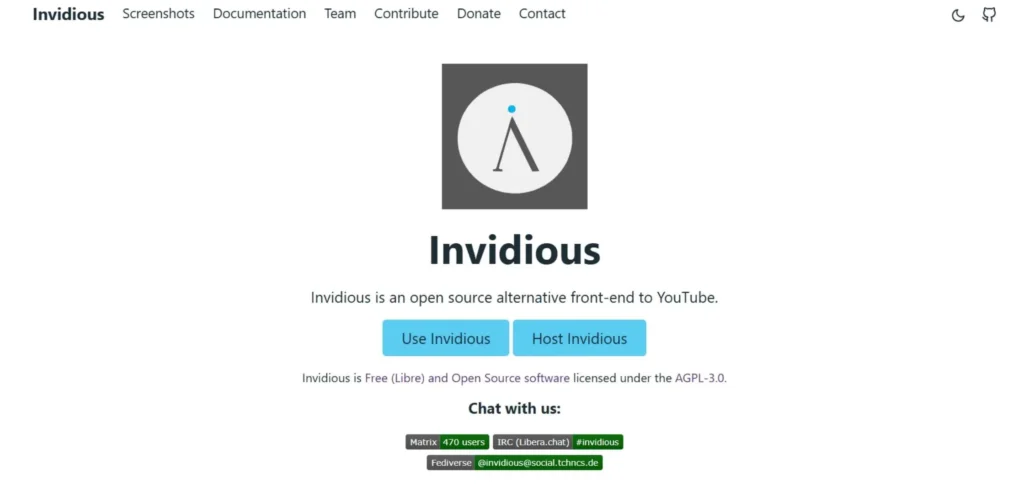
Invidious is an open-source, privacy-first alternative front-end to YouTube. Rather than being a separate video platform, it acts as a privacy layer that lets you watch YouTube content without interacting with Google directly. It became notable in privacy and open-source communities for stripping away tracking, ads, and algorithmic manipulation while keeping access to YouTube’s full library.
Comparison With YouTube: No Google tracking or data collection, no ads whatsoever, no account required to browse or subscribe, and a distraction-free interface designed around viewer focus rather than engagement metrics.
Key Features:
- Watch any YouTube video without Google knowing you watched it.
- Subscribe to channels and build playlists without a YouTube or Google account.
- Fully open-source and self-hostable — run your own instance if you want.
- SponsorBlock integration to skip sponsored segments automatically.
- REST API available for developers to build on top of.
- Available in multiple languages thanks to community translators.
Pros:
- Complete freedom from Google’s tracking and advertising ecosystem.
- No algorithmic rabbit holes or addictive design patterns.
- The self-hosting option gives you maximum control over your privacy.
- Lightweight and fast compared to YouTube’s bloated interface.
- Access the full YouTube library without a Google account.
Cons:
- Dependent on YouTube’s infrastructure — if YouTube blocks access, instances go down.
- No content creation or uploading — purely a consumption tool.
- Instance reliability varies; public instances can be slow or go offline.
- No mobile app; browser-based only (though third-party apps like Grayjay support it).
- The feature set can feel minimal compared to full platforms.
Use Cases: Private video browsing, ad-free YouTube access, degoogling your media habits.
Best For: Privacy-conscious viewers and open-source enthusiasts.
Website: https://invidious.io/
13. BitChute
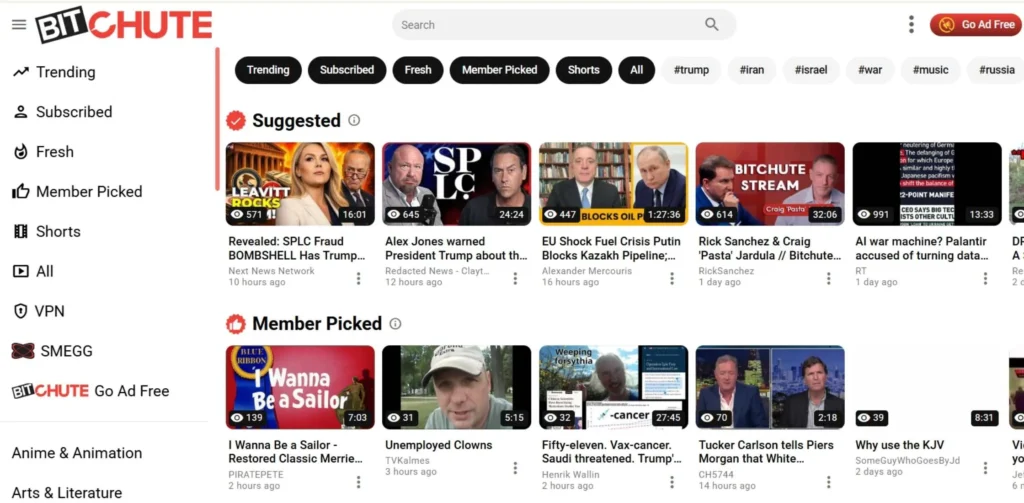
BitChute is yet another decentralized and peer-to-peer based site. This time, however, the main purpose of the site is to host free-speech videos. As one of the first real YouTube alternatives, it was created by dissatisfied creators and users. Therefore, it is completely uncensored and allows for hosting of almost anything.
Comparison With YouTube: Decentralized content, peer-to-peer delivery mechanism, and no moderation algorithm.
Key Features:
- Reduced costs thanks to BitChute’s network effect.
- Intuitive upload procedure for independent investigators.
- Built-in integration with SubscribeStar.
- View videos as they are uploaded, no watch time-based sorting.
Pros:
- Total freedom of expression for topics often banned elsewhere.
- Content is virtually “un-deletable” once it is shared across the P2P network.
- Very low barrier to entry; no complex monetization hurdles or requirements.
- A dedicated and loyal audience that actively seeks out “alternative” viewpoints.
- No intrusive advertising scripts tracking your movement across the web.
Cons:
- Infamous for hosting extremely fringe and highly controversial content.
- The user interface is very dated and lacks modern features like 4K support.
- Very limited monetization infrastructure compared to Kick or YouTube.
- Technical glitches and slow load times are common due to the P2P nature.
- Poor reputation among mainstream advertisers, limiting brand partnership potential.
Use Cases: Alternative news, political documentaries, and uncensored commentary.
Best For: Alternative news and controversial topics.
Website: https://bitchute.com/
14. SproutVideo
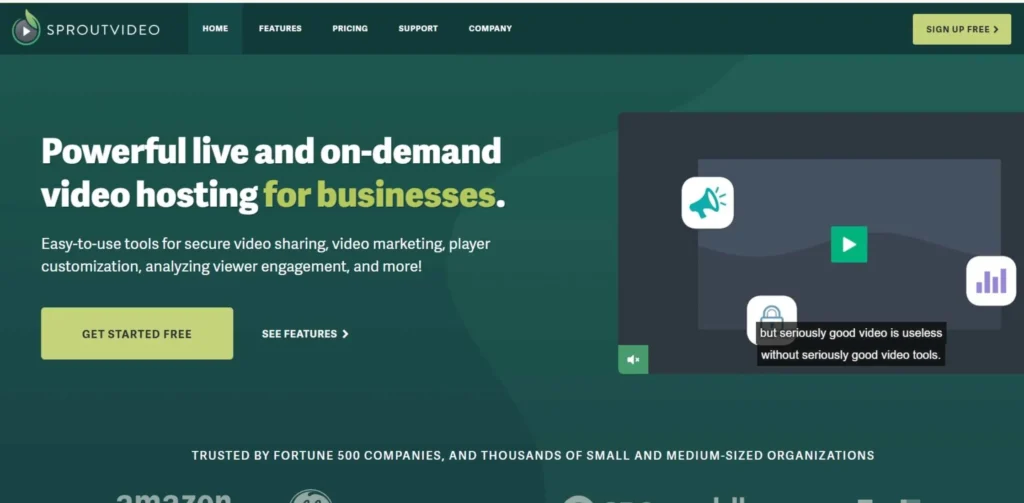
SproutVideo is a professional video hosting and live streaming platform built specifically for businesses. Unlike YouTube or consumer video sites, it is a B2B tool focused on secure, ad-free video delivery with deep analytics, marketing integrations, and privacy controls. It has earned trust from Fortune 500 companies and small-to-medium businesses alike since 2010.
Comparison With YouTube: No ads ever on hosted content, full ownership and control over your videos, enterprise-grade privacy and security tools, detailed viewer engagement analytics, and white-label player customization — none of which YouTube reliably offers for business use.
Key Features:
- UltraHD video hosting (up to 8K) with adaptive bitrate streaming and a global CDN.
- Extensive privacy controls for secure video sharing within or outside an organization.
- Viewer engagement heatmaps and detailed per-viewer analytics.
- Custom white-label video player with branded colors, thumbnails, and playlists.
- Built-in video website and landing page builder.
- Lead capture, marketing integrations, calls-to-action, and video SEO tools.
- Live streaming alongside on-demand video hosting.
Pros:
- Purpose-built for business use cases — training, marketing, e-commerce, and more.
- Industry-leading customer support with no bots or automated queues.
- Videos are completely ad-free with no third-party interference.
- Highly rated on Capterra and G2 for ease of use and setup.
- Flexible storage-based pricing rather than per-video charges.
Cons:
- Not a public-facing discovery platform — no built-in audience to tap into.
- Paid plans required for full feature access; pricing may be steep for solo creators.
- Overkill for casual or personal video sharing needs.
- No creator monetization or revenue-sharing model.
- Smaller community and ecosystem compared to YouTube or Vimeo.
Use Cases: Corporate training and L&D, video marketing, e-commerce product videos, secure internal communications, live webinars.
Best For: Businesses, marketing teams, and organizations needing secure and professional video infrastructure.
Website: https://sproutvideo.com/
Best YouTube Alternatives for Creators
Kick is the best YouTube alternative to make money, as Kick allows you to earn up to 95 percent revenue. For an easy start in monetizing and licensing content, Rumble is the second-best option after Kick. Vimeo still tops in case you are a professional filmmaker.
Best YouTube Alternatives Without Ads
Both Nebula and Odysee offer a clean video experience, whereas the ultimate tool for removing ads from YouTube videos is NewPipe on Android.
Best YouTube Alternatives in India
DailyMotion and MX Player are great for mainstream entertainment in India, whereas Odysee caters to the Indian tech/crypto community looking for a censorship-free place to discuss matters of tech.
YouTube vs Rumble
While YouTube dominates the global market with its massive infrastructure, Rumble has carved out a significant niche by appealing to those who feel marginalized by mainstream moderation. Below is a detailed look at how these two giants compare in the current 2026 landscape.
| Feature | YouTube (2026) | Rumble (2026) |
| Monetization | 1k Subs / 4k Hours required | Easier, instant monetization options |
| Moderation | Strict AI-driven filters | Minimal (Free Speech focused) |
| Ad Revenue Share | 55% to Creator | Up to 60% (Higher for licensing) |
| Content Focus | Entertainment/Mainstream | Politics/News/Unfiltered |
| Algorithm | Engagement/Ad-retention focus | Chronological/Trending focus |
What Is the Best Replacement for YouTube?
The best replacement largely depends on your priorities as a user. If you value monetization or privacy over the sheer scale of the platform’s user base, the following are among today’s alternatives that specialize in specific areas.
- Rumble: The best place for free speech on video, which is crucial for journalists and independent politicians who don’t want to be censored.
- Vimeo: The most popular video hosting solution for professionals focused on high-definition video and quality management tools.
- Odysee: The only solution that uses blockchain to make sure creators are always in control and are paid fairly for every view and subscriber.
- Twitch: A platform focused specifically on live interaction, where users can instantly chat with others, build communities, and earn money as easily as possible.
- NewPipe: An open-source client for playing videos on Android, which allows downloading clips and background play without needing a Google account.
How to Choose the Best Alternative for You?
- Advertisements: Nobody likes a video interrupted by ads. However, they are like the commercials on TV. Read comments and reviews from previous users to confirm if the ads on the platform would interfere with the experience.
- Privacy policy: Websites and other platforms typically take different approaches to privacy. While some are open to users’ data, others focus on privacy. Read the platform’s terms of use and guidelines to understand what you’re getting into.
- Community management: It is crucial for content creators seeking to connect and interact with viewers effectively. You must confirm if the platform can help foster interaction and collaboration to build and develop a vibrant and active community.
- Video quality: You wouldn’t want to watch a movie on a fuzzy old TV, right? Ensure the platforms you’re considering support the crystal-clear, high-definition content you love.
- Content variation: More categories mean more adventures. A platform with diverse content is like a library with books from every genre imaginable. You’re more likely to find something that surprises and delights you.
- Monetisation: Finally, content creators who aim to earn from their passion must ensure the platform offers a clear path to monetise their work.
Pros and Cons of Using YouTube Alternatives
Pros
- Increased Content Liberty: Most alternative platforms have more lenient content policies, letting creators share their opinions, nail niches, or dive into controversial subjects without fear of being demonetised or removed.
- Improved Monetization Options: Certain YouTube alternatives offer better variety of monetization options. Whether through tipping systems and crypto-rewards, paid memberships and sponsorship models, these platforms tend to put creators in a more direct control of their earnings.
- Enhanced Privacy: Most of these sites offer better privacy protection compared to YouTube, which generates user data to target advertisements, making them attractive to users who value their privacy and anonymity on the internet.
- Niche Community Support: YouTube alternatives also offer more niche-centric and involved communities. Maybe you are into technology, education, games, or art, and you will find more interested people on platforms that are specific to the type of content.
- Fewer Algorithm Bias: On smaller platforms, the algorithms tend to be simpler or transparent, so your content is more likely to be fairly considered without trying to game the system.
Cons
- Reduced Viewing Base: YouTube is the most popular video site in the world. The audience size of most alternatives is a fraction of the size, and this may restrict you, particularly when you want to go viral or amass a large following.
- Few Features and Tools: As it grows, most alternatives still do not match the more advanced features of YouTube, such as detailed analytics, powerful editing suites, or live streaming with studio quality.
- Decreased Advertisement Revenue: Despite the greater flexibility of monetization models, overall revenue can be smaller because of the lesser amount of users as well as advertisers on other platforms.
- Less Search Visibility: YouTube videos often rank high on Google Search. Videos on other platforms may not benefit from the same SEO visibility or indexing power.
- Platform Stability Risks: New or lesser-known platforms may struggle with funding, user retention, or technical issues, which could impact your content availability or long-term growth.
Conclusion on YouTube Alternatives
YouTube is undeniably one of the most popular video streaming platforms in the world. There is no chance of it being toppled from its top spot in the coming years. However, most have no idea what they are missing out on by not trying other content sites like YouTube that are different from it in several key areas.
If you’re thinking of moving away from YouTube, but you’re not sure which platform to choose, then we have added the top 15 YouTube alternatives to choose from. Make sure to choose the alternative that suits your needs the most—whether for video sharing or even tools like JumpCloud Alternatives for identity and access management—and enjoy!
FAQs
What Is YouTube’s Biggest Rival?
In 2026, TikTok will remain YouTube’s greatest rival. Whereas in the professional and creator-oriented domain, Kick and Rumble pose the biggest threat to YouTube’s monopoly on video monetization.
Why Gen Z Still Likes YouTube
Although specialized alternatives exist, Generation Z remains attached to YouTube because the platform feels like a “life operating system”. Here is how YouTube evolved into a life operating system for Gen Z:
- Educational Channel: It serves as a “how-to” guide for Gen Z where they seek help in everything ranging from tutorials to complex academic lectures.
- Background Videos: YouTube has dominated the market of background videos. People prefer watching four-hour-long video essays or listening to lo-fi while doing something.
- Longer Relationship With Creators: They maintain long-term parasocial relationships with those creators who have been posting content since 10+ years.
- Podcast Platform: YouTube has emerged as the world’s largest podcast platform. They watch their favorite podcasts rather than listening to them.
- Easy Access To Information: Linking to Google Search makes sure that only top-quality and relevant information is offered to viewers.
Who owns YouTube now?
Google bought YouTube back in 2006 for $1.6 billion. It is now officially a subsidiary of Google. Given people’s apprehension with Google regarding privacy, it is only logical for users to look for an alternative to YouTube.
What are YouTube alternatives?
YouTube ranks high in the video hosting and streaming industry, but there are several alternative platforms worth exploring to find the ones that suit your needs. There are lots of better YouTube alternatives available in the market, including GUDSHO, Vimeo, Patreon, Show, and Twitch. Each of these video platforms offers a unique selling point that includes features related to user demographics, marketing strategies, and analytical reporting, serving differently to the expectations of content creators and viewers.
Why are Creators choosing YouTube Alternatives?
Rather than gathering solely on one platform, creators are choosing YouTube alternatives for several reasons. These include dissatisfaction with YouTube’s privacy policies, problems with demonetization, a quest for more creative freedom and freedom of speech, and the chance to connect with niche audiences not easily reached on YouTube.