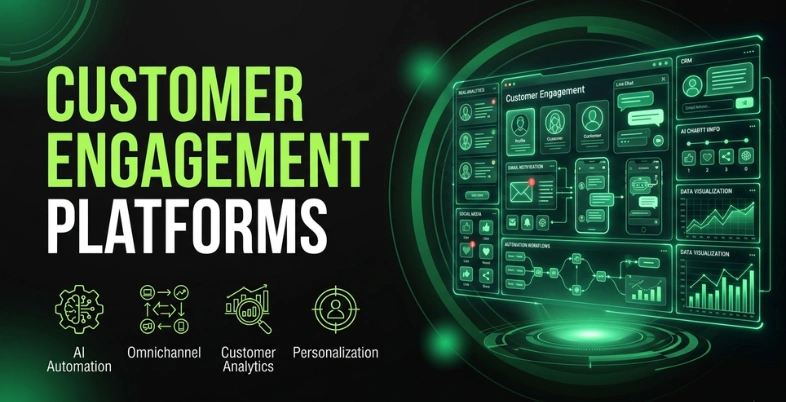
Building strong customer relationships has become more challenging than ever. Consumers now interact with brands across email, SMS, mobile apps, websites, social media, and messaging platforms, expecting personalized experiences at every touchpoint. However, many businesses still rely on disconnected tools and generic campaigns, resulting in poor engagement, lower retention, and missed revenue opportunities.
This is where customer engagement platforms make a significant difference. These solutions bring together multiple communication channels, customer data, automation, and analytics into a single system, enabling brands to deliver timely and highly personalized experiences throughout the customer journey. Whether you want to increase customer loyalty, reduce churn, boost conversions, or create seamless omnichannel experiences, the right platform can transform how you connect with your audience.
In this guide, we have reviewed the 15 best customer engagement platforms in 2026. We compare their key features, strengths, pricing, and ideal use cases to help you choose the solution that best fits your business needs.
What Is a Customer Engagement Platform?
A customer engagement platform is a centralized software system designed to help businesses manage and optimize their interactions with users. In the past, these tools were just simple email marketing software or basic text messaging services. Today, they have evolved into intelligent hubs that orchestrate personalized, multichannel communication across email, SMS, push notifications, in-app messages, WhatsApp, social media platforms, and CPaaS solutions.
Modern platforms go far beyond basic message delivery. They coordinate complex data streams, advanced automation, and deep analytics across the entire customer lifecycle. By gathering user behavior data in real time, these systems allow brands to build predictive customer journeys. This means you can deliver the exact right message on the best channel precisely when the user is most likely to engage. Ultimately, an omnichannel customer engagement system bridges the gap between marketing, sales, and support to create seamless experiences.
Why Customer Engagement Platforms Matter in 2026?
Having a strong customer communication strategy is vital for business survival today. These platforms deliver measurable results across all departments and directly impact your bottom line.
- Customer retention: Keeps users actively engaged and coming back for repeat purchases.
- Personalized experiences: Delivers highly relevant content based on individual user behavior and preferences.
- Omnichannel communication: Connects touchpoints seamlessly across all mobile devices and desktop web browsers.
- Customer lifecycle management: Guides users smoothly from their first interaction to becoming a loyal brand advocate.
- Revenue growth: Drives higher conversion rates and repeat purchases through highly targeted promotional campaigns.
- Automation: Saves valuable time by sending automated message triggers based on specific customer actions.
- Customer loyalty: Builds long term trust through consistent, helpful, and non intrusive brand interactions.
- Reduced churn: Identifies at risk users automatically before they cancel their subscriptions or leave.
- Better customer insights: Provides deep data analytics into what users actually want and how they behave.
How We Evaluated These Platforms (Our Methodology)?
Finding the right customer engagement solutions requires looking past the flashy marketing hype. We evaluated each tool based on a strict set of criteria.
- Ease of use: The platform features an intuitive dashboard interface designed for both beginners and experts to navigate smoothly.
- Features: The software offers all the necessary tools required to execute and track complex marketing campaigns efficiently.
- Automation capabilities: Marketers can easily build sophisticated, highly personalized user journeys that trigger automatically based on real actions.
- AI functionality: Smart built-in tools handle predictive send-time optimization and automated content generation to save time.
- Channel support: The system seamlessly covers critical communication channels including email, SMS, push notifications, WhatsApp, and social media.
- Analytics and reporting: The dashboard provides transparent tracking for direct campaign ROI and detailed user behavior metrics.
- Integrations: The infrastructure connects smoothly with your existing CRM and central marketing technology stack.
- Scalability: The underlying architecture expands effortlessly to handle higher data loads alongside your growing business needs.
- Pricing: The overall software cost remains fully transparent while providing fair value for the unlocked features.
- Customer reviews: The final rankings reflect feedback and scores from actual verified users on trusted third-party review websites.
Quick Comparison Table: Best Customer Engagement Platforms 2026
| Platform | Best For | Key Strength | Channels Supported | AI Capabilities | Pricing Model |
|---|---|---|---|---|---|
| Braze | Enterprise brands | Real-time personalization & journey orchestration | Email, SMS, Push, In-app | Strong predictive AI & send-time optimization | Custom (Premium) |
| MoEngage | Mobile-first brands | Behavior analytics & churn reduction | Email, SMS, Push, WhatsApp | Sherpa AI optimization engine | Custom (Usage-based) |
| Iterable | Mid–large companies | Flexible cross-channel campaigns | Email, SMS, Push, In-app, Web push | Dynamic personalization AI | Custom |
| CleverTap | Mobile apps | Lifecycle optimization & retention | Push, Email, SMS, WhatsApp | Strong predictive churn AI | Freemium + Custom |
| ActiveCampaign | SMBs & B2B | Email automation + CRM | Email, SMS, Site messaging | Basic AI automation | Starts ~$15/mo |
| Netcore Cloud | Global enterprises | Email deliverability & personalization | Email, SMS, WhatsApp, Push | AI-driven optimization | Custom |
| Insider | Enterprise omnichannel | AI-driven personalization | Web, App, Email, SMS, WhatsApp | Advanced predictive AI | Custom |
| Zendesk | Customer support teams | Ticketing + service engagement | Email, Chat, Social, Voice | AI chatbots | Starts ~$19/mo |
| HubSpot | Growth-stage businesses | All-in-one CRM + marketing | Email, Chat, Social, Ads | AI workflows | Freemium + Paid |
| Customer.io | SaaS companies | Event-based messaging | Email, SMS, Push, In-app | Logic-based automation AI | From ~$100/mo |
| Bloomreach | Large eCommerce | Product search + personalization | Email, Web, App, SMS | Strong predictive AI | Custom |
| Gupshup | Chat-first businesses | WhatsApp & chatbot automation | WhatsApp, SMS, Instagram | LLM chatbot AI | Usage-based |
| OneSignal | Startups & apps | Push notification delivery | Push, Email, SMS, In-app | Basic AI automation | Free + Paid |
| Klaviyo | eCommerce brands | Revenue-focused email & SMS | Email, SMS, Ads | Predictive CLV AI | Freemium + Scaling |
| Brevo | SMBs & startups | Affordable multi-channel marketing | Email, SMS, WhatsApp, Chat | Basic AI tools | Freemium + Low-cost plans |
List of 15 Best Customer Engagement Platforms in 2026
1. Braze

Website: www.braze.com
Braze is a leading customer engagement tool designed to power highly personalized interactions across multiple channels. It excels at real time data processing, allowing brands to trigger instant messages based on live user actions. The platform natively supports email, SMS, push notifications, and in app messaging. Businesses choose Braze because of its powerful Canvas tool, which makes visualizing and building complex customer journeys incredibly easy. It stands out significantly for its robust artificial intelligence capabilities that automatically predict the best time to send messages.
Key Features:
- Visual customer journey builder.
- Real time data processing.
- Predictive AI sending optimization.
- Cross channel message orchestration.
- Advanced audience segmentation tools.
Pros:
- Highly scalable software architecture.
- Excellent real time data.
- Intuitive visual journey builder.
- Strong omnichannel message delivery.
Cons:
- Expensive for small businesses.
- Steep initial learning curve.
- Requires technical setup assistance.
- Complex reporting dashboard interface.
Pricing:
- Free trial is available.
- Pricing available on request.
Who Should Use It:
Enterprise businesses and large consumer brands looking for highly scalable, real time omnichannel communication.
2. MoEngage

Website: www.moengage.com
MoEngage is an insights-led customer engagement platforms that helps brands analyze user behavior and act on it instantly. It provides strong support for email, SMS, push notifications, WhatsApp, and on-site messaging. The platform is highly regarded for its powerful AI engine, Sherpa, which optimizes delivery times and message variations automatically. Major consumer brands and e-Commerce companies choose MoEngage for its deep analytics capabilities and its proven ability to reduce customer churn through highly targeted, behavior-based campaigns.
Key Features:
- Insights led campaign builder.
- Predictive AI Sherpa engine.
- Advanced cohort analysis tools.
- Omnichannel marketing automation workflows.
- Location based message triggers.
Pros:
- Deep customer behavior insights.
- Excellent push notification delivery.
- Strong AI optimization engine.
- Reliable customer support solution.
Cons:
- Interface feels slightly cluttered.
- Custom pricing lacks transparency.
- Integration process takes time.
- Steep curve for beginners.
Pricing:
- Free trial is not offered.
- Pricing is completely custom.
- Billed by active users.
- Enterprise plans require quotes.
Who Should Use It:
Consumer brands and mobile first companies that need deep behavior analytics to drive customer retention.
3. Iterable

Website: www.iterable.com
Iterable is a powerful cross channel marketing platform that empowers brands to deliver unified customer experiences. It specializes in integrating massive amounts of data from different sources to trigger highly relevant messaging. Supported channels include email, SMS, push notifications, in app messages, and web push. Businesses favor Iterable for its flexible data model and its incredibly user friendly drag and drop journey builder. Its standout capability to personalize content dynamically ensures users always receive the most relevant offers.
Key Features:
- Flexible user data model.
- Drag and drop builder.
- Dynamic content personalization engine.
- Cross channel marketing automation.
- Advanced API integration options.
Pros:
- Highly flexible data architecture.
- Intuitive campaign building interface.
- Excellent email deliverability rates.
- Strong third party integrations.
Cons:
- Reporting features lack depth.
- High pricing for startups.
- Occasional platform speed issues.
- SMS features require add-ons.
Pricing:
- Demo available on request.
- Contact sales for quotes.
Who Should Use It:
Mid market and enterprise companies wanting a flexible, data driven platform for cross channel marketing.
4. CleverTap

Website: clevertap.com
CleverTap is an all in one customer retention software designed primarily for mobile apps. It perfectly combines real time analytics with omnichannel campaign management to help businesses maximize user lifetime value. The tool strongly supports push notifications, in app messages, email, SMS, and WhatsApp. CleverTap stands out due to its advanced lifecycle optimization features and robust segmentation tools. Mobile first businesses choose CleverTap because it bridges the gap between data analytics and fast campaign execution seamlessly.
Key Features:
- Real time user analytics.
- Automated customer lifecycle management.
- Advanced audience segmentation engine.
- Predictive churn modeling tools.
- Omnichannel mobile marketing automation.
Pros:
- Excellent mobile analytics features.
- Strong user retention tools.
- Easy predictive segmentation setup.
- Seamless WhatsApp integration capabilities.
Cons:
- Dashboard can be overwhelming.
- Email builder lacks flexibility.
- Customer support response times.
- Pricing scales up quickly.
Pricing:
- Free trial is available.
- Essential: ₹6000/month.
- Advanced: custom.
- Cutting edge: custom.
Who Should Use It:
Mobile app developers and digital businesses heavily focused on user retention and mobile marketing.
5. ActiveCampaign

Website: www.activecampaign.com
ActiveCampaign is a highly popular customer experience platform that beautifully blends email marketing, marketing automation, and CRM functionality. Widely regarded as one of the leading customer engagement platforms, it is recognized for its visual automation builder that lets users create complex workflows with ease. The platform supports email, SMS, site messaging, and custom social media integrations. Small to medium-sized businesses choose ActiveCampaign because it provides true enterprise-level automation at an accessible price point. It remains a top choice for B2B email marketing globally.
Key Features:
- Visual marketing automation builder.
- Built in CRM functionality.
- Dynamic email content delivery.
- Advanced lead scoring tools.
- Site tracking behavior triggers.
Pros:
- Powerful marketing automation workflows.
- Very affordable entry price.
- Great CRM integration features.
- High email deliverability rates.
Cons:
- CRM features are basic.
- Interface runs slow sometimes.
- Reporting lacks deep customization.
- Steep learning curve initially.
Pricing:
- Fourteen day free trial.
- Starter plan: $15 monthly.
- Plus plan: $49 monthly.
- Pro Plan: $79/mo.
- Enterprise pricing: $145/mo.
Who Should Use It:
Small to mid sized businesses looking for affordable, world class email marketing and workflow automation.
6. Netcore Cloud

Website: netcorecloud.com
Netcore Cloud is a customer engagement platform that helps businesses connect with people across email, SMS, WhatsApp, push notifications, and in-app messages. The platform is known for its strong email deliverability, ensuring 95%+ inbox placement. Netcore also makes personalization easy, whether it’s tailored product recommendations or interactive emails where people can browse and shop directly. Trusted by 6,500+ brands across 40 countries, Netcore Cloud is especially strong in Asia, the Middle East, and Africa, making it a reliable choice for businesses that want scalable engagement and smarter personalization.
Key Features:
- AI powered delivery optimization.
- Interactive AMP email support.
- Omnichannel customer journey builder.
- Predictive audience segmentation tools.
- Real time behavioral analytics.
Pros:
- Exceptional email deliverability rates.
- Strong AI optimization features.
- Cost effective enterprise pricing.
- Great interactive email support.
Cons:
- Dashboard UI feels outdated.
- Steep learning curve initially.
- Reporting requires manual exports.
- Integration library is limited.
Pricing:
- Free trial is not offered.
- Pricing is completely custom.
- Contact sales for details.
Who Should Use It:
Mid market and enterprise brands looking for high email deliverability and innovative interactive messaging formats.
6. Insider
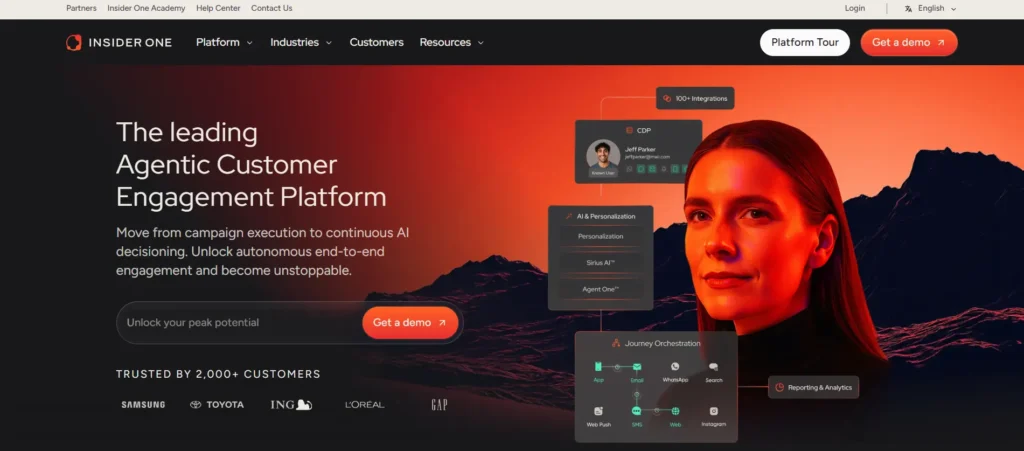
Insider is a comprehensive AI-driven customer engagement platform designed to help brands deliver personalized experiences at every stage of the customer journey. Recognized as a leader in customer experience by Gartner, Forrester, G2 and IDC, Insider enables businesses to engage customers across web, app, email, SMS, push, and WhatsApp, all from a single platform. With its AI-driven segmentation, predictive analytics, and next-best-action recommendations, Insider helps businesses anticipate customer needs, reduce churn, and maximize lifetime value.
Trusted by 1,500+ brands worldwide, Insider stands out for its ability to orchestrate real-time journeys at scale, ensuring every customer receives the right message at the right moment. Its dynamic personalization, seamless omnichannel integration, and actionable analytics make it a go-to platform for brands that want to create memorable, revenue-driving customer experiences.
Key Features
- Creating a 360° view of your customers to sharpen user profiles and activate the data across every stage of the customer journey.
- AI-powered segmentation and predictive analytics to anticipate customer needs.
- Omnichannel messaging including web, app, email, SMS, WhatsApp, and push notifications.
- Next-best-action recommendations to deliver personalized campaigns by targeting the ideal users on the right channel at the right time with the best message
- Real-time personalization for dynamic content and offers.
- Detailed analytics and reporting to optimize engagement strategies.
Pros
- Trusted by global brands for scalable, enterprise-ready engagement.
- Recognized as a leader in AI-driven personalization and journey orchestration across analyst reports and review platforms.
Cons
- Premium pricing is more suited for mid-market and enterprise businesses.
- Can be complex for teams without dedicated technical or marketing resources.
Pricing
Custom quote-based pricing tailored to business needs.
Who Should Use It?
E-commerce, retail, travel, and enterprise brands seeking omnichannel engagement, AI-driven personalization, and data-backed strategies to increase retention and long-term loyalty.
8. Zendesk
Website: www.zendesk.com
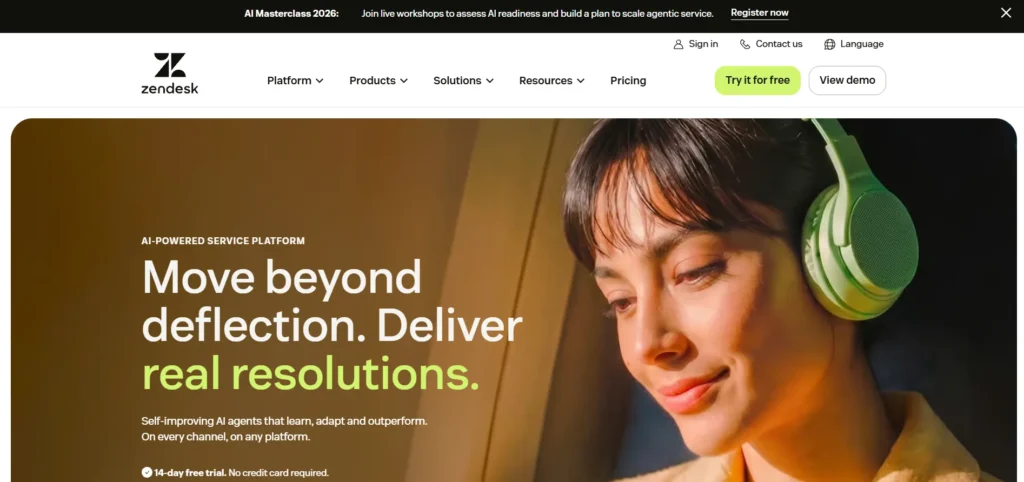
Zendesk is a globally recognized customer service platform that doubles as a powerful customer engagement solution. It focuses heavily on managing inbound customer interactions and support tickets across various digital channels. The software seamlessly handles email, live chat, social media, WhatsApp, and voice calls. Companies choose Zendesk to build stronger customer loyalty through faster, more organized support experiences. Its comprehensive help desk features make it an essential tool for providing consistently excellent customer service.
Key Features:
- Unified omnichannel ticketing system.
- Live chat messaging tools.
- Automated AI chatbot responses.
- Comprehensive knowledge base builder.
- Advanced support analytics dashboard.
Pros:
- Excellent ticket management system.
- Seamless multi channel support.
- Highly customizable user interface.
- Extensive app marketplace integrations.
Cons:
- Pricing becomes very expensive.
- Setup takes significant time.
- Support can be slow.
- Add-ons increase costs quickly.
Pricing:
- Enterprise pricing is custom.
- Fourteen day free trial.
- Support plan: $19 monthly.
- Suite plan: $55 monthly.
- Suite Professional: $115 monthly.
Who Should Use It:
Businesses of all sizes prioritizing inbound customer support software, ticketing, and live chat engagement.
9. HubSpot
Website: www.hubspot.com
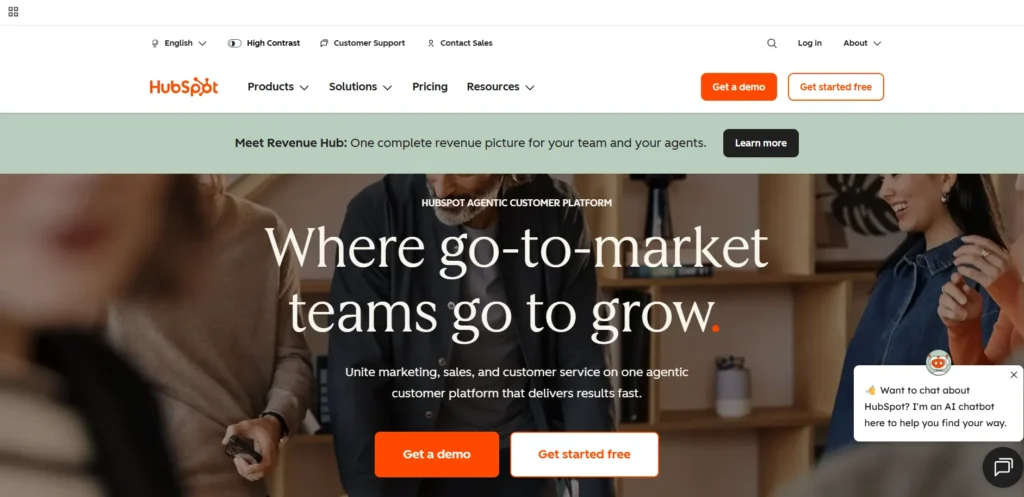
HubSpot is an industry leading inbound marketing and CRM software that helps businesses manage customer relationships, marketing, and sales from a single dashboard. Its Marketing Hub serves as a highly effective customer engagement software, allowing brands to manage marketing, sales, and service in one unified place. It supports email, social media, live chat, and advertising management natively. Businesses love HubSpot for its incredible ease of use and its unique ability to tie every marketing effort directly back to revenue. It is the ultimate growth platform.
Key Features:
- All in one CRM.
- Inbound marketing campaign builder.
- Automated email journey sequences.
- CRM with contact management
- Live chat engagement tools.
- Comprehensive revenue reporting dashboard.
Pros:
- Extremely user friendly interface.
- Unified marketing sales platform.
- Excellent training and resources.
- Seamless tech stack alignment.
Cons:
- Pricing scales very rapidly.
- Annual contracts are required.
- Customization can be limited.
- Onboarding fees are expensive.
Pricing:
- Free plan available.
- Starter plan: ₹585/mo/seat.
- Professional plan: ₹66,697/mo.
- Enterprise plan: ₹300,000/mo.
Who Should Use It:
B2B companies and growing businesses wanting an all in one CRM and inbound marketing solution.
10. Customer.io
Website: https://customer.io
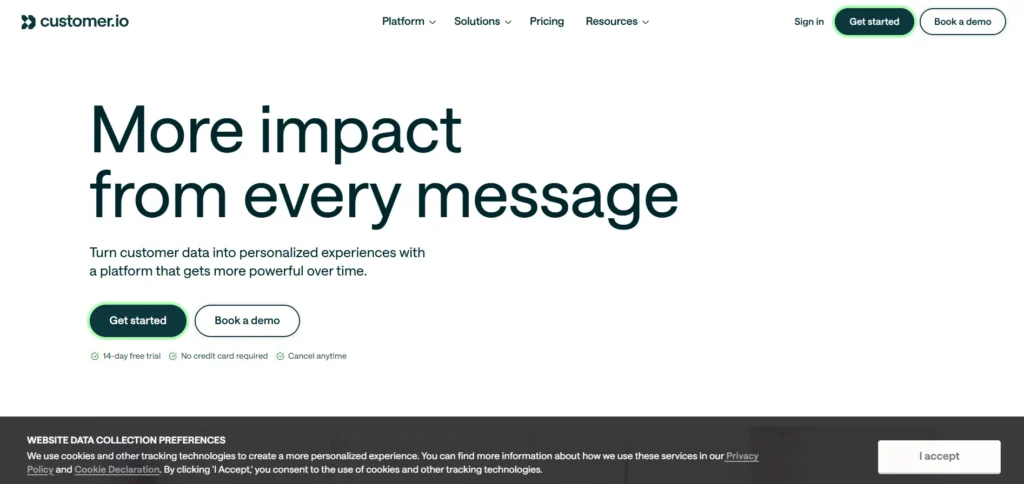
Customer.io is a specialized messaging platform designed specifically for SaaS and tech companies to send targeted, data-driven messages. Among modern customer engagement platforms, it stands out for leveraging real-time data from your app or website to trigger highly specific communication based on user behavior. The platform primarily supports email, push notifications, SMS, and in-app messages. Developers and marketers choose Customer.io for its powerful logic-based workflow builder, which enables highly complex messaging sequences based on exact user actions.
Key Features:
- Behavior based message triggers.
- Visual workflow sequence builder.
- Real time user data.
- Campaign A/B testing tools.
- Comprehensive liquid templating support.
Pros:
- Extremely flexible logic rules.
- Great developer friendly API.
- Clean user interface design.
- Reliable message delivery speeds.
Cons:
- Requires some technical knowledge.
- Limited native CRM integrations.
- Analytics are somewhat basic
- No native social media
Pricing:
- Fourteen day free trial.
- Essentials plan: $100/mo.
- Premium plan: $1000/mo.
- Enterprise: custom.
Who Should Use It:
SaaS businesses and tech companies wanting highly specific, behavior driven messaging workflows and automation.
11. Bloomreach
Website: www.bloomreach.com
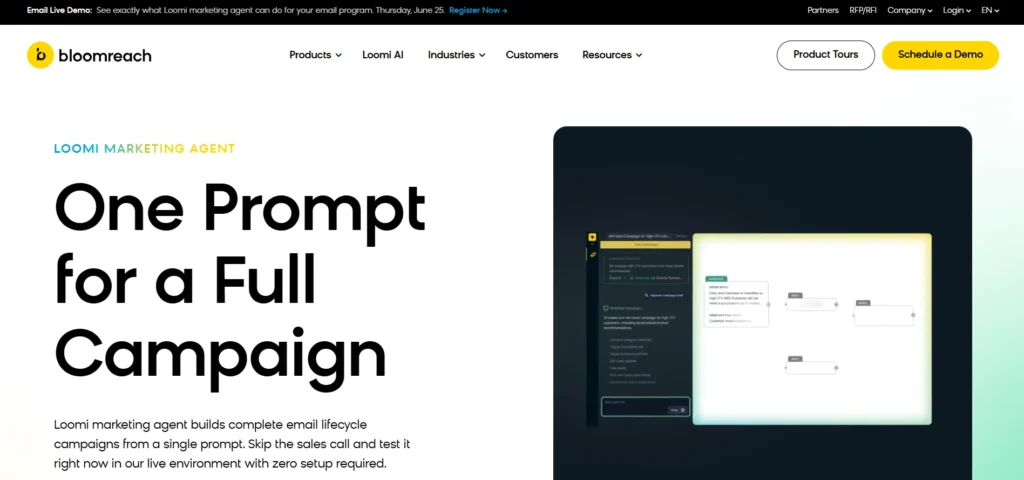
Bloomreach is a sophisticated commerce experience cloud designed to deliver highly personalized customer journeys for large retail brands. It combines a real time customer data platform with advanced marketing automation and intelligent site search functionality. The tool naturally supports email, SMS, push, in app, and web personalization. Major retailers choose Bloomreach because of its massive scalability and generative AI capabilities. It bridges the gap between raw customer data and immediate product discovery perfectly.
Key Features:
- Real time customer data.
- Omnichannel marketing automation builder.
- AI powered product search.
- Dynamic website personalization tools.
- Predictive product recommendation engine.
Pros:
- Excellent e-Commerce personalization features.
- Robust customer data platform.
- Strong AI search capabilities.
- Highly scalable enterprise architecture.
Cons:
- Very high cost barrier.
- Complex implementation process required.
- Steep learning curve involved.
- Requires dedicated technical resources.
Pricing:
- Contact sales to schedule demo.
- Pricing available on request.
Who Should Use It:
Large enterprise retailers and e-Commerce giants needing advanced website personalization and predictive omnichannel marketing.
12. Gupshup
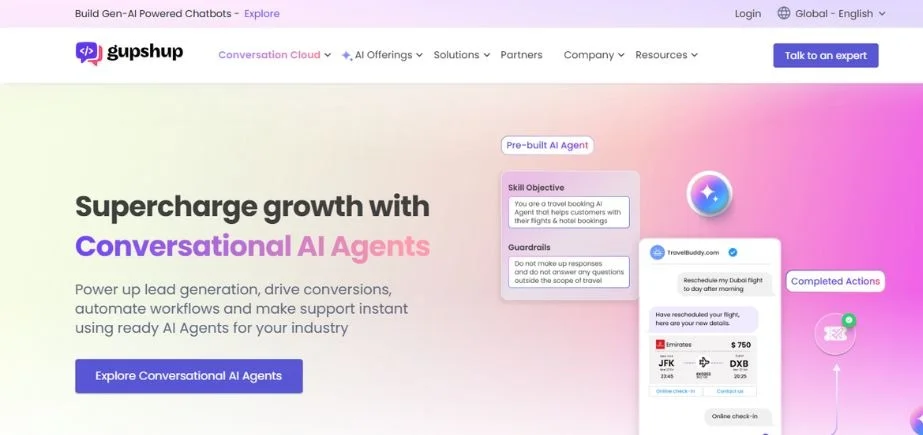
Gupshup is a chat engagement and CPaaS platform that enables businesses to automate conversations on channels such as WhatsApp, SMS, Instagram, and others. It includes chatbot creation, smart replies with the help of LLMs, and workflow automation to enable customer service, lead generation, and shopping. Gupshup is a high-volume messaging product, many times over, deployed in retail, banking, and government organizations.
Its builder is no-code and multilingual, resulting in quick and scalable bot deployment. It does not have built-in CRM and marketing analytics, though it is powerful in messaging, which is why it is commonly combined with other tools. Gupshup will be very effective with brands aiming to achieve chat-first or WhatsApp-based conversations.
Key Features
- WhatsApp, SMS, and bot messaging
- No-code chatbot builder
- LLM integration for smart responses
- Workflow automation
- Channel performance tracking
Pros
- Excellent for chat-first engagement
- Fast bot deployment
Cons
- Limited CRM features
- May require developer support
Pricing
Based on usage, custom quote available
Who Should Use It?
Retail, banking, and service brands using WhatsApp or conversational channels for engagement.
13. OneSignal

Website: onesignal.com
OneSignal is an incredibly popular customer communication platform best known globally for its industry leading push notification services. Over time, it has evolved significantly to support email, SMS, and in app messaging as well. Developers and marketers prefer OneSignal due to its extremely fast setup process and reliable message delivery architecture. It is an excellent choice for businesses looking for an easy, affordable way to re engage mobile app users and website visitors instantly.
Key Features:
- High volume push notifications.
- Automated messaging journey builder.
- Real time delivery analytics.
- Advanced customer segmentation tags.
- Campaign A/B testing tools.
Pros:
- Very easy to install.
- Excellent free tier available.
- Fast reliable message delivery.
- Great developer API documentation.
Cons:
- Email features are basic.
- Limited advanced automation logic.
- Support slow on free.
- Pricing jumps significantly later.
Pricing:
- Self-service plans: Free.
- Growth plan: $19 monthly.
- Professional plan: custom pricing.
- Enterprise: custom pricing.
Who Should Use It:
Startups, publishers, and mobile apps needing a fast, reliable push notification and multichannel messaging solution.
14. Klaviyo

Website: www.klaviyo.com
Klaviyo is a premier customer engagement software built specifically for e-Commerce brands. It directly integrates with online stores to pull in detailed purchase data and website browse history. Klaviyo supports email marketing, targeted SMS, and social media advertising. Online retailers prefer Klaviyo because it offers powerful predictive analytics, calculating expected next purchase dates automatically. It makes creating revenue generating email flows, like abandoned cart sequences, incredibly simple and highly effective for sales growth.
Key Features:
- Deep e-Commerce platform integrations.
- Predictive customer lifetime value.
- Automated email flow builder.
- Dynamic product recommendation engine.
- Targeted SMS marketing campaigns.
Pros:
- Best for e-Commerce brands.
- Excellent pre built templates.
- Highly actionable revenue data.
- Very intuitive user interface.
Cons:
- Expensive for large lists.
- Customer support can lag.
- Limited B2B marketing features.
- SMS geographically restricted capabilities.
Pricing:
- Free plan up to 250 contacts.
- Email plan costs $20 monthly.
- Email and SMS $35 monthly.
- Pricing scales with contacts.
Who Should Use It:
e-Commerce stores and online retailers looking to maximize their revenue through targeted email and SMS.
15. Brevo

Website: www.brevo.com
Brevo is an intuitive and highly affordable customer engagement tool that excels at multi channel marketing. It supports email, SMS, WhatsApp, and live chat within a unified dashboard. Businesses love Brevo because it charges based on email sending volume rather than total stored contacts, which saves money as subscriber lists grow. It stands out by offering robust marketing automation workflows alongside a built in sales CRM. This makes it an incredibly cost effective solution for growing brands wanting comprehensive engagement.
Key Features:
- Volume based email pricing.
- Built in sales CRM.
- Multi channel automation workflows.
- Native WhatsApp business integration.
- Drag and drop builder.
Pros:
- Highly transparent pricing structure.
- Unlimited contact storage allowed.
- Excellent transactional email reliability.
- Very easy learning curve.
Cons:
- Email templates feel basic.
- Limited advanced CRM features.
- Slower customer support responses.
- Clunky workflow duplication process.
Pricing:
- Enterprise: custom pricing.
- Free plan available (300 emails daily).
- Starter plan: ₹562.50 per month.
- Standard plan: ₹1,210.50 per month.
- Professional plan: ₹40,212.42 per month.
Who Should Use It:
Small to mid sized businesses and growing startups wanting a highly cost effective, transparently priced multi channel marketing platform.
How to Choose the Best Customer Engagement Tool For Your Business?
Choosing the right software can feel overwhelming with so many great options available. Consider these core factors carefully before making your final decision.
- Business size: Startups need agile and affordable tools, while enterprises require massive scalability and deep data processing.
- Customer communication channels: Ensure the software natively supports the exact places where your users actually spend their time.
- Automation requirements: Look for intuitive visual workflow builders if you plan on creating complex, multi step user journeys.
- AI capabilities: Check the platform for predictive send time optimization and smart generative content creation tools.
- Integration needs: The platform must connect seamlessly with your existing CRM, e-Commerce store, and current marketing tech stack.
- Budget: Factor in initial setup costs, mandatory onboarding fees, and future price scaling as your contact list grows.
- Scalability: Choose software that handles increased message volume effortlessly as your user base expands globally.
- Reporting requirements: Ensure the built in analytics dashboards match your team’s specific data tracking and visualization needs.
- Compliance and privacy: Verify strict adherence to global data protection laws like GDPR to keep your customer data safe.
Key Trends in Customer Engagement Platforms in 2026
The world of digital marketing software moves incredibly fast. Here are the biggest trends shaping the customer engagement industry right now.
1. AI-Powered Personalization
Artificial intelligence now analyzes massive amounts of user data instantly. It allows brands to deliver hyper personalized content to every individual user rather than sending generic blast campaigns.
2. Predictive Customer Journeys
Platforms no longer just react to past user behavior. They actively predict what a customer will do next and adjust the messaging automatically to secure the sale or prevent churn.
3. Conversational Messaging
Users expect two way conversations rather than one way promotional broadcasts. Brands are heavily using AI chatbots and SMS replies to facilitate real time, helpful dialogue.
4. WhatsApp Business Growth
WhatsApp has become a dominant channel for customer communication platforms worldwide. It offers much higher open rates and more interactive message formats compared to traditional SMS.
5. Real-Time Customer Data Platforms
Siloed customer data is a thing of the past. Modern software unifies data instantly from various sources to provide a single, highly accurate view of every customer.
6. First-Party Data Strategies
With privacy laws tightening globally, brands are relying heavily on data collected directly from their users rather than depending on unreliable third party tracking cookies.
7. Omnichannel Orchestration
It is no longer enough to simply send messages on multiple channels. They must be orchestrated perfectly so users do not receive annoying duplicate alerts across different devices.
8. Generative AI for Campaign Creation
Marketers are increasingly using generative AI tools built directly into their platforms. These tools draft emails, write text messages, and design attractive visual templates instantly.
FAQs
1. How Is A Customer Engagement Platform Different From A CRM?
A CRM stores customer data and tracks sales interactions. A customer engagement tool uses that data to actively send automated, targeted messages across multiple channels.
2. Which Customer Engagement Tool Is Best For Startups?
HubSpot and ActiveCampaign are excellent for their affordable entry-level pricing and code-free setups. OneSignal is a great free option for mobile apps needing instant push notifications.
3. Which Platform Is Best For Enterprise Businesses?
Salesforce Marketing Cloud and Braze are the top choices for large enterprises. They handle massive data volumes, process real-time interactions, and manage millions of users smoothly.
4. Do Customer Engagement Platforms Support WhatsApp?
Yes, modern platforms like MoEngage, CleverTap, and Zendesk natively support WhatsApp. It is widely used for its incredibly high open rates and interactive messaging options.
5. What Is Omnichannel Customer Engagement?
Omnichannel engagement connects all your communication touchpoints. It ensures a customer experiences consistent, personalized messaging whether they interact via email, mobile app, or social media.
6. Are Customer Engagement Platforms Worth The Investment?
Yes, they significantly lower customer churn and automate complex marketing tasks. The resulting increase in customer lifetime value easily covers the software subscription costs.
7. Which Platform Offers The Best AI Features?
Braze, Insider, and Salesforce Marketing Cloud offer top-tier AI. They provide automated send-time optimization, predictive behavior analytics, and next-best-action recommendations.
Conclusion
Choosing the right customer engagement platforms depends entirely on your specific business goals. Generic, fragmented communication no longer works. To succeed, brands must adopt a unified system that delivers timely, personalized experiences across every digital channel.
For small businesses and B2B companies, ActiveCampaign and HubSpot offer powerful, accessible tools. Klaviyo is the top choice for e-Commerce brands driving revenue growth, while Braze and MoEngage provide massive scalability for large enterprises. Evaluate your budget and channel needs carefully, then request a demo or start a free trial to upgrade your customer engagement strategy today.