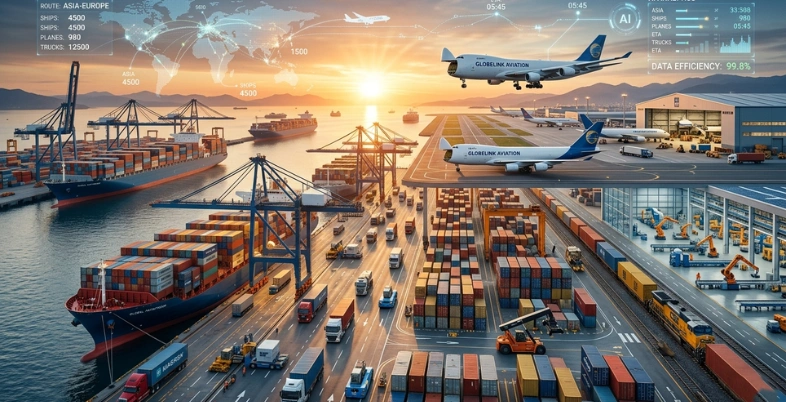
The global economy moves on a quiet but massive network of interconnected supply chains. Every consumer product, industrial component, and raw material depends on a highly coordinated journey across borders, oceans, and highways. At the center of this movement are global logistics giants. Far from being simple trucking or delivery providers, these businesses serve as the orchestrators of international trade, managing complex data networks, automated fulfillment hubs, and massive transport fleets to keep global commerce running smoothly.
The scale of this industry is immense. Recent market data shows the global logistics sector has reached a staggering evaluation of over $11.2 trillion. To put this into perspective, the container shipping industry alone moves more than 11 billion tons of cargo annually, which translates to roughly 1.5 tons of goods transported for every single person on the planet each year. Keeping pace with this demand requires rapid adaptation, and industry leaders are shifting away from traditional freight management to focus heavily on digital transformations. They are actively implementing warehouse robotics, warehouse stock management software, advanced predictive data models, and eco-friendly fleet strategies to handle volatile consumer demands.
To help you understand the major players driving this massive industry, in this article, we will look at the top 15 biggest logistics companies in the world. We will break down who these industry titans are, explore the specialized transport networks they command, and see how they leverage advanced technology to keep the global economy moving forward day after day.
About The Logistics Industry (Market Overview)
In simple terms, logistics is the practical process of planning, storing, and moving goods and services from their point of origin to where they are finally consumed. It is the invisible force that ensures a product manufactured on one side of the world safely reaches a retail shelf or a customer’s doorstep on the other. Without efficient logistics providers, international trade would completely stall, as these companies are responsible for navigating customs, optimizing transport routes, and bridging the geographical gaps between global manufacturers and everyday consumers.
The financial footprint of this sector underscores its vital role in global commerce. The global logistics market size was valued at $5.9 trillion in 2025 and is projected to scale up to $8.2 trillion by 2034. This steady expansion represents a compound annual growth rate (CAGR) of 3.71% during the 2026–2034 forecast period. This upward trajectory is primarily fueled by three major catalysts: the continuous e-commerce boom that demands faster last-mile deliveries, widespread AI adoption to optimize complex route planning, and rapid supply chain automation within modern fulfillment centers to handle unprecedented volumes of goods.
How We Selected The Biggest Logistics Companies (Ranking Criteria)
Ranking the world’s logistics titans requires looking far beyond the sheer size of their delivery fleets. To build an accurate and comprehensive picture of the industry’s true leaders, we relied on verifiable, objective data points gathered from trusted sources across the supply chain sector. This included analyzing recent annual public financial filings and official corporate disclosures, which we then cross-referenced with authoritative third-party industry reports, notably from Armstrong & Associates, S&P Global Market Intelligence, and Gartner.
Our final selection was determined by evaluating each organization across these six core operational pillars:
- Annual Revenue: We analyzed recent public filings to measure each company’s financial strength, fiscal health, and overall market share within the global trade ecosystem.
- Geographic Footprint: We tracked the exact number of countries and territories each company actively operates in, showcasing their infrastructure and capacity to execute seamless cross-border trade.
- Employee Count: We evaluated the total scale of the human workforce required to manage, execute, and support these massive, interconnected global supply chain networks day in and day out.
- Service Range: We assessed the breadth of operational capabilities, ensuring each selected company can seamlessly integrate air freight, ocean shipping, overland road transport, and complex contract logistics.
- Technology Integration: We examined direct corporate investments in modern supply chain innovations, such as automated fulfillment centers, AI-driven route optimization, and end-to-end digital tracking software.
- Industry Reputation: We cross-referenced independent industry reports to verify each company’s standing for operational reliability, supply chain resilience during major global disruptions, and commitment to regulatory compliance.
List Of Top 12+ Biggest Logistics Companies in the world
These companies dominate global supply chains by revenue, reach, and operational scale. By leveraging massive international transport fleets, cutting-edge automated fulfillment hubs, and advanced predictive data networks, these fifteen industry titans collectively dictate the pace and security of modern international trade.
1. DHL Group – World’s Largest Logistics Company
- Founded: 1969
- HQ: Bonn, Germany
- CEO: Tobias Meyer
- Website: group.dhl.com
DHL Group stands as the global powerhouse of modern third-party logistics, specializing heavily in cross-border trade and international express deliveries.The company operates a highly diversified corporate portfolio divided across international express shipping, global freight forwarding, supply chain management, logistics management software, and specialized e-commerce fulfillment networks, making it one of the leading logistics companies in the world. Over the past few years, DHL has funneled over €1 billion into automated warehouse systems, robotics, and advanced predictive data tools to maintain its edge. Their expansive operational network serves as the foundational backbone for complex global supply systems across highly demanding industrial sectors.
Key Services:
- Time-Definite International (TDI) express shipping
- Air, ocean, and overland freight forwarding
- Customized enterprise contract logistics and warehousing
- Cross-border e-commerce fulfillment solutions
- Revenue: €82.8 billion ($96.9 billion USD)
- Employees: 590,000+
- Countries Served: 220+
- Best For: Multinationals and enterprise-level brands that require seamless cross-border shipping, temperature-controlled life sciences transportation, and automated regional warehousing.
2. United Parcel Service (UPS) – Global Parcel Delivery Leader
- Founded: 1907
- HQ: Atlanta, Georgia, United States
- CEO: Carol Tomé
- Website: ups.com
United Parcel Service is an absolute titan in the global package delivery space, recognized globally for its massive integrated ground and air networks. Operating an expansive fleet of signature brown delivery vehicles and cargo planes, UPS handles the daily movement of over 20 million packages. The company has aggressively optimized its domestic and international shipping architecture by retiring older aircraft and accelerating digital network routing tools. Beyond traditional retail parcel deliveries, UPS has heavily scaled its high-margin supply chain solutions, establishing itself as an incredibly vital partner for industrial manufacturers and retail businesses worldwide.
Key Services:
- Guaranteed domestic and international express parcel delivery
- Less-than-truckload (LTL) and full-truckload (FTL) freight transportation
- UPS Healthcare specialized cold-chain and medical logistics
- Advanced e-commerce returns management and customs brokerage
- Revenue: $88.66 billion
- Employees: 490,000+
- Countries Served: 200+
- Best For: Small to large e-commerce businesses needing highly reliable ground delivery networks, complex domestic returns processing, and strict time-definite corporate shipping.
3. FedEx Corporation – Pioneer of Express Air Freight
- Founded: 1971
- HQ: Memphis, Tennessee, United States
- CEO: Raj Subramaniam
- Website: fedex.com
FedEx Corporation completely revolutionized the global logistics industry by pioneering overnight express delivery services. The company commands an immense aviation infrastructure, operating one of the largest cargo airline fleets in the world to connect distant markets within hours, reinforcing its position among the top logistics companies in the world. Currently, FedEx is executing a major corporate transformation called “Network 2.0,” which unifies its distinct express, ground, and freight divisions into a single, highly optimized, data-driven network. This comprehensive structural shift significantly lowers operational overhead while giving corporate clients a single, seamless point of contact for all global transportation needs.
Key Services:
- Overnight express time-critical air freight delivery
- Global time-definite international priority shipping
- Less-than-truckload (LTL) regional and national freight forwarding
- Automated cross-border trade documentation and customs clearance
- Revenue: $87.92 billion
- Employees: 440,000+
- Countries Served: 220+
- Best For: Businesses requiring rapid, time-sensitive overnight shipping, high-value cargo transport, and highly urgent international air freight solutions.
4. Kuehne+Nagel International AG – Global Freight Forwarding Titan
- Founded: 1890
- HQ: Schindellegi, Switzerland
- CEO: Stefan Paul
- Website: kuehne-nagel.com
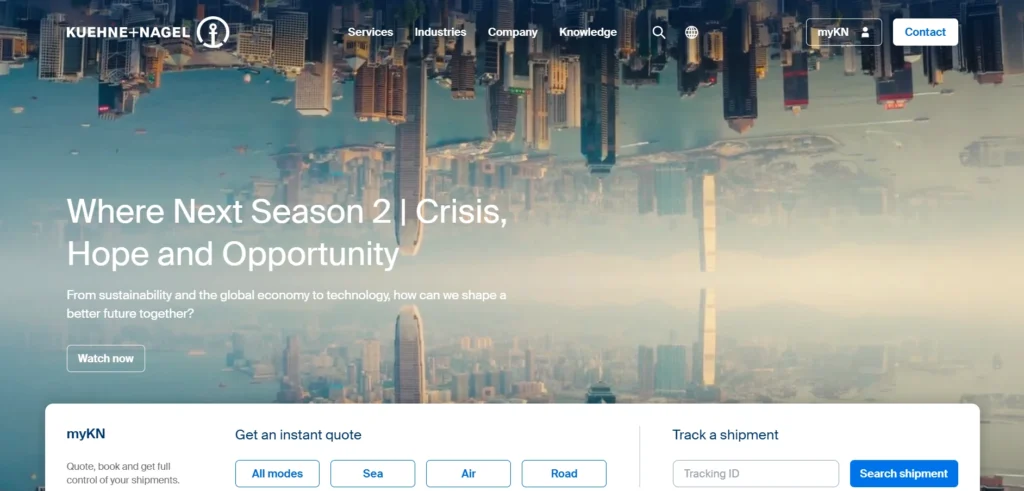
Kuehne+Nagel holds the undisputed global number one position in both ocean and air freight forwarding based on total cargo volumes moved. Operating primarily as an asset-light logistics provider, the company coordinates massive maritime container shipments and commercial air freight space rather than owning fleets. Kuehne+Nagel has recently achieved historic market growth by acting as the main logistics partner for enterprise cloud and server infrastructure providers globally. By embedding artificial intelligence deeply into their route optimization and customs clearance software, they deliver unmatched visibility and supply chain agility across highly volatile trade lanes.
Key Services:
- Global sea logistics (FCL and LCL container management)
- High-volume air logistics and charter solutions
- AI-supported international customs clearance and tracking
- Specialized contract logistics for tech, aerospace, and data centers
- Revenue: CHF 24.5 billion ($29.54 billion USD)
- Employees: 80,000+
- Countries Served: 100+
- Best For: Mid-market and large enterprise companies requiring high-volume international ocean container shipping, global air freight, and highly complex customs navigation.
5. Maersk (A.P. Møller – Mærsk A/S) – Leader in Integrated Ocean Logistics

- Founded: 1904
- HQ: Copenhagen, Denmark
- CEO: Vincent Clerc
- Website: maersk.com
Maersk is a historic maritime icon that has completely transformed itself from a traditional ocean liner company into an integrated end-to-end container logistics provider. While they still command a massive share of the world’s container ships, their core business model now spans the entire supply chain, making Maersk one of the most influential logistics companies in the world. Maersk manages ports, operates inland rail and trucking links, and runs massive fulfillment warehouses globally. This allows them to offer corporate clients a completely unified journey for their cargo from the factory floor straight to the final warehouse, bypassing traditional middleman freight forwarders entirely.
Key Services:
- Integrated ocean container shipping and port terminal operations
- Inland intermodal rail and trucking transport solutions
- End-to-end digital supply chain management and booking platforms
- Global landside warehousing and e-commerce fulfillment
- Revenue: $51 billion
- Employees: 100,000+
- Countries Served: 130+
- Best For: Industrial manufacturers and massive retail brands looking for a single partner to control their entire global supply chain from maritime shipping to landside distribution.
6. DSV A/S – Global Freight Forwarding and M&A Powerhouse
- Founded: 1976
- HQ: Hedehusene, Denmark
- CEO: Jens H. Lund
- Website: dsv.com
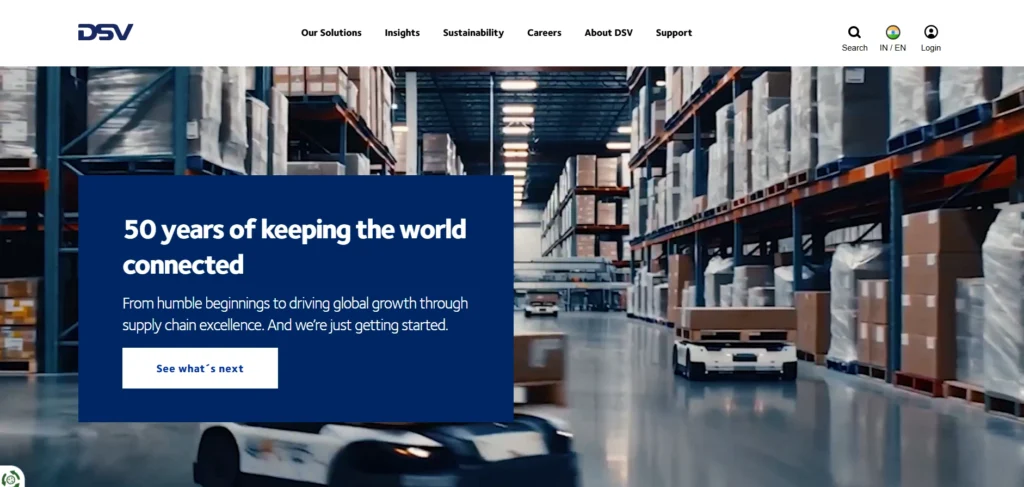
DSV has rapidly scaled into one of the world’s absolute top-tier freight forwarders through an aggressive and highly successful mergers and acquisitions strategy. Following its massive acquisition of DB Schenker, DSV has significantly expanded its ocean, air, and road cargo capacity across Europe and global corridors. The company operates on an asset-light business model, choosing to manage and orchestrate the movement of freight through third-party carriers rather than owning its own ships or airplanes. This flexible operational structure allows them to react quickly to shifting global trade volumes and macroeconomic market conditions.
Key Services:
- Global air and sea freight forwarding and consolidation
- DSV Road comprehensive European overland transport network
- DSV Solutions scalable contract logistics and warehousing
- Automated customs clearance and compliance management
- Revenue: DKK 247.3 billion (~$35.4 billion USD)
- Employees: 140,000+
- Countries Served: 150+
- Best For: Medium to large enterprises requiring highly flexible freight forwarding partners, complex multi-modal European shipping routes, and scalable third-party contract logistics.
7. DB Schenker – European Overland and Industrial Contract Titan
- Founded: 1872
- HQ: Essen, Germany
- CEO: Jochen Thewes
- Website: dbschenker.com
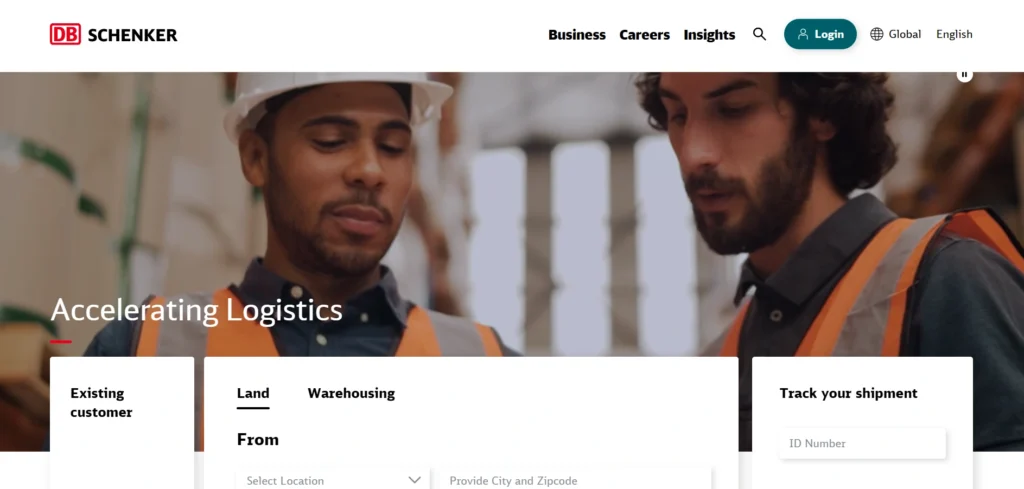
Originally founded as the historic logistics arm of the German rail operator Deutsche Bahn, DB Schenker is a massive player in international freight forwarding. Following its acquisition by DSV, the company continues to run extensive operations across land transport, air freight, and ocean shipping lanes, strengthening its presence among major logistics companies in the world. DB Schenker manages massive land networks across Europe and has built an exceptional reputation for managing large-scale automotive, industrial, and high-tech supply chains. Their deep integration of advanced supply chain tracking software helps corporate clients monitor high-value components seamlessly across international transit corridors.
Key Services:
- Pan-European land transport and full-truckload (FTL) networks
- Global air and ocean freight routing and tracking
- Specialized automotive, aerospace, and high-tech logistics
- Comprehensive global contract logistics and supply chain design
- Revenue: €27 billion (~$29 billion USD)
- Employees: 71,000+
- Countries Served: 130+
- Best For: Automotive manufacturers, aerospace firms, and technology brands that rely on tight just-in-time manufacturing schedules and heavy European overland transport.
8. C.H. Robinson Worldwide, Inc. – North American Digital Freight Brokerage Leader
- Founded: 1905
- HQ: Eden Prairie, Minnesota, United States
- CEO: Jodee Kozlak
- Website: chrobinson.com
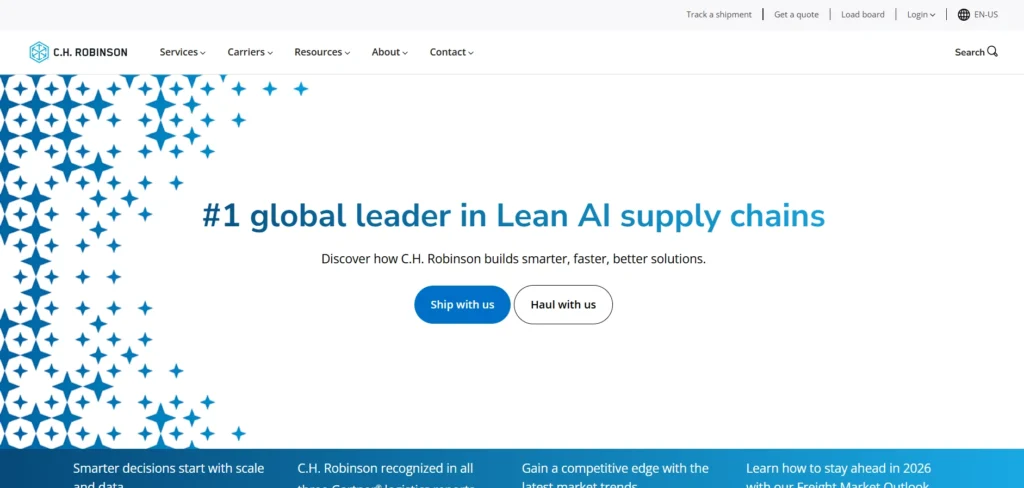
C.H. Robinson is the largest third-party logistics (3PL) provider and freight broker in North America, specializing primarily in domestic overland transport. The company commands no truck fleets of its own; instead, it leverages its proprietary Navisphere digital platform to connect shippers with a massive network of independent truck carriers. This highly automated matching system allows them to optimize shipping capacities, minimize empty miles, and secure highly competitive freight pricing. Beyond domestic trucking, C.H. Robinson has successfully expanded its capabilities into international ocean freight forwarding and customs brokerage.
Key Services:
- North American truckload (FTL) and less-than-truckload (LTL) brokerage
- Navisphere proprietary digital freight matching and tracking platform
- Global ocean and air freight forwarding services
- Managed supply chain services and customs consultation
- Revenue: $16.23 billion
- Employees: 12,000+
- Countries Served: 100+
- Best For: North American consumer goods brands, retail suppliers, and agricultural businesses requiring highly scalable freight brokerage and real-time domestic shipping visibility.
9. GEODIS – Global Supply Chain Optimization and Contract Logistics Leader
- Founded: 1904
- HQ: Levallois-Perret, France
- CEO: Marie-Christine Lombard
- Website: geodis.com
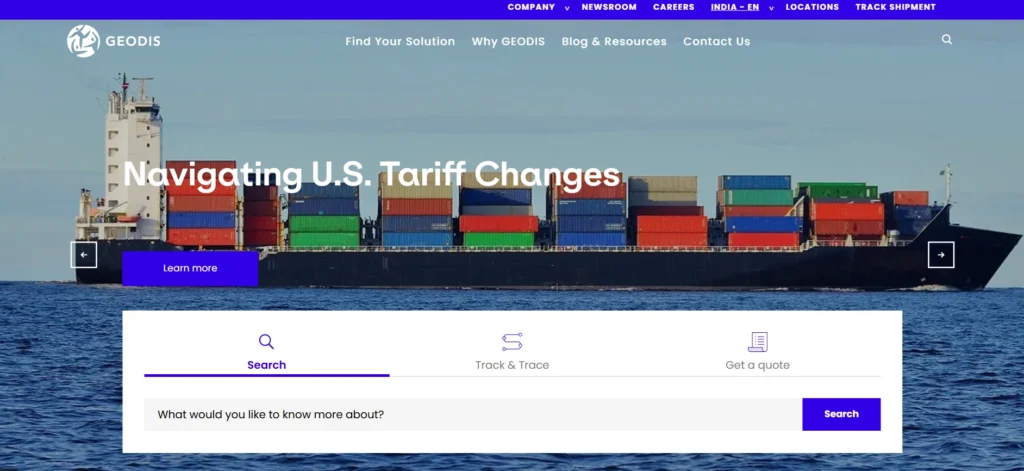
GEODIS operates as a powerhouse in the European and global third-party logistics market, driven heavily by its capacity for end-to-end supply chain optimization. Owned by the French national rail operator SNCF, the company splits its vast operations across five core lines: supply chain optimization, freight forwarding, contract logistics, distribution/express, and road transport, securing its place among leading logistics companies in the world. GEODIS has established a massive footprint in the retail and industrial e-commerce sectors by implementing large-scale, automated multi-user warehouses. Their ability to bundle international freight forwarding with hyper-localized last-mile distribution networks makes them a highly efficient corporate partner.
Key Services:
- Multi-modal international air, ocean, and land freight forwarding
- High-density e-commerce warehousing and automated fulfillment
- Specialized industrial project logistics and oversized cargo transport
- End-to-end supply chain diagnostics and network design
- Revenue: €11.7 billion (~$12.7 billion USD)
- Employees: 50,000+
- Countries Served: 170+
- Best For: Fast-moving consumer goods (FMCG) brands, high-end retail sectors, and automotive manufacturers seeking a single operator to handle both international freight and deep local distribution.
10. J.B. Hunt Transport Services, Inc. – Intermodal and Domestic Ground Transportation
- Founded: 1961
- HQ: Lowell, Arkansas, United States
- CEO: Shelley Simpson
- Website: jbhunt.com
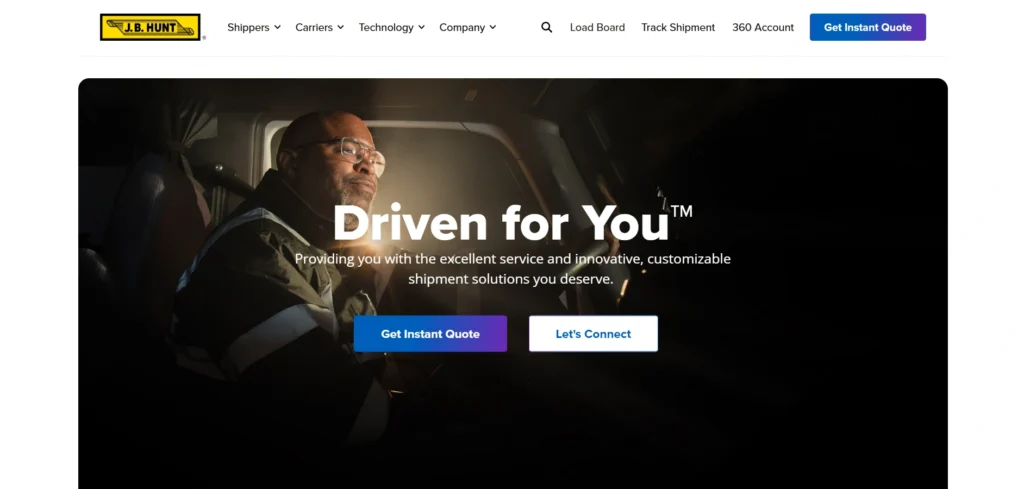
J.B. Hunt is a foundational cornerstone of North American surface transportation, holding the title of one of the largest intermodal shipping providers on the continent. The company specializes heavily in shifting freight seamlessly between rail networks and highway trucking fleets, optimizing long-haul logistics for peak efficiency. J.B. Hunt operates a massive fleet of company-owned chassis and containers, while utilizing its proprietary “J.B. Hunt 360” digital marketplace to dynamically source external carrier capacity. Their heavily integrated service model completely eliminates traditional shipping friction between rail corridors and final-mile retail delivery destinations.
Key Services:
- High-volume domestic intermodal rail and truck freight transport
- Dedicated contract services for customized private fleet replacement
- Final-mile home delivery for heavy, oversized consumer goods
- J.B. Hunt 360 automated digital freight matching and brokerage
- Revenue: $11.28 billion
- Employees: 34,000+
- Countries Served: 3 (United States, Canada, Mexico)
- Best For: Major North American retail chains, industrial manufacturers, and home-goods distributors requiring heavy domestic container capacity, dedicated trucking fleets, or specialized final-mile delivery.
11. Expeditors International of Washington, Inc. – Asset-Light Global Customs and Forwarding Specialist
- Founded: 1979
- HQ: Seattle, Washington, United States
- CEO: Jeffrey S. Musser
- Website: expeditors.com
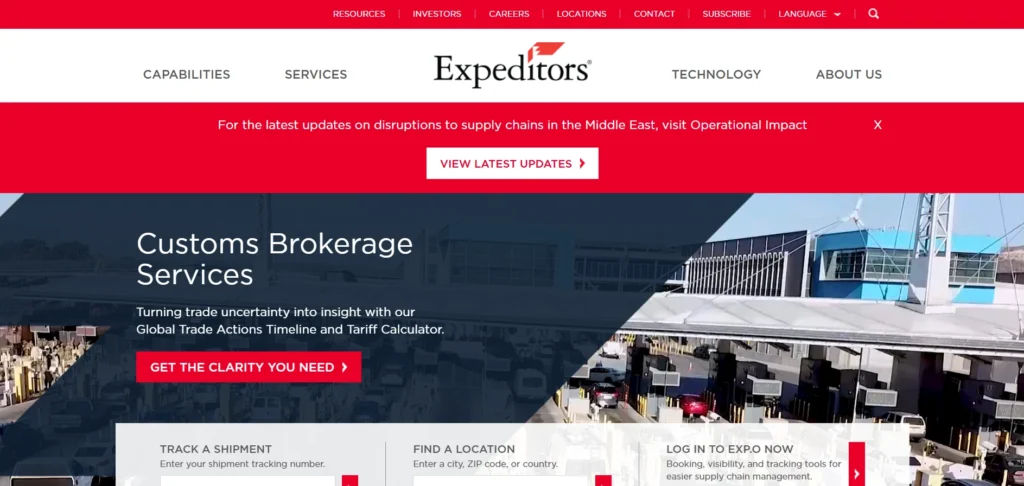
Expeditors is a premier, strictly asset-light global logistics organization that focuses entirely on international freight forwarding and complex customs brokerage. Because they do not own airplanes, ships, or long-haul trucks, the company maintains maximum flexibility, purchasing cargo space dynamically based on real-time market rates and client demand, which helps position Expeditors among the most efficient logistics companies in the world. Expeditors has built an elite reputation for its strict, centralized compliance frameworks and highly sophisticated supply chain management software systems. This technical and legal expertise allows them to smoothly shepherd high-value, highly regulated goods through intricate international customs checkpoints without transit delays.
Key Services:
- Global air and ocean freight forwarding and space consolidation
- Comprehensive international customs brokerage and trade compliance consulting
- Vendor management and supply chain visibility software solutions
- Specialized distribution, cold-chain, and marine insurance services
- Revenue: $11.06 billion
- Employees: 18,000+
- Countries Served: 100+
- Best For: High-tech electronics firms, aerospace corporations, and life-sciences businesses that demand flawless trade compliance, premium cargo security, and flexible air-to-ocean transport routing.
12. DP World Logistics – Global Port Infrastructure and Smart Trade Enabler
- Founded: 2005
- HQ: Dubai, United Arab Emirates
- CEO: Sultan Ahmed bin Sulayem
- Website: dpworld.com
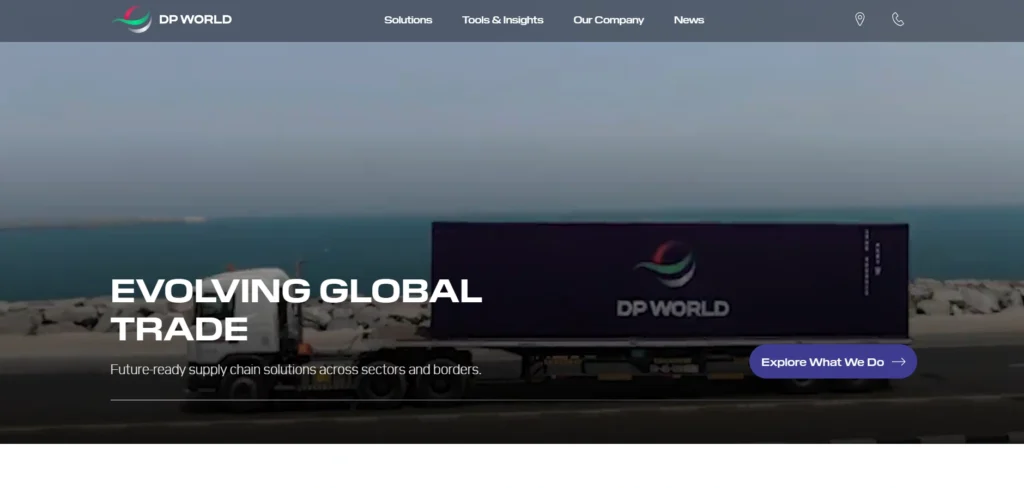
DP World has rapidly evolved from a regional marine terminal operator into an aggressive, technology-driven global logistics giant. The company commands a massive infrastructure network that includes marine and inland terminals, industrial parks, economic zones, and feeder shipping lines worldwide. By bridging physical port infrastructure with newly scaled third-party logistics and contract warehousing services, DP World allows cargo to bypass traditional port-to-landside distribution barriers. They invest heavily in smart trade tech, including automated container stacking systems and advanced digital booking platforms, to drastically accelerate cargo velocity across international borders.
Key Services:
- End-to-end container terminal operations and stevedoring
- Integrated free-zone management and port-centric logistics hubs
- Global maritime feeder shipping and intermodal rail connections
- Digital supply chain visibility and customs compliance architecture
- Revenue: $10.5 billion
- Employees: 100,000+
- Countries Served: 75+
- Best For: International commodity traders, massive automotive exporters, and enterprise manufacturing companies looking for a partner that controls both deep-water port infrastructure and landside distribution networks.
13. CEVA Logistics – Automotive and Industrial Contract Logistics Powerhouse
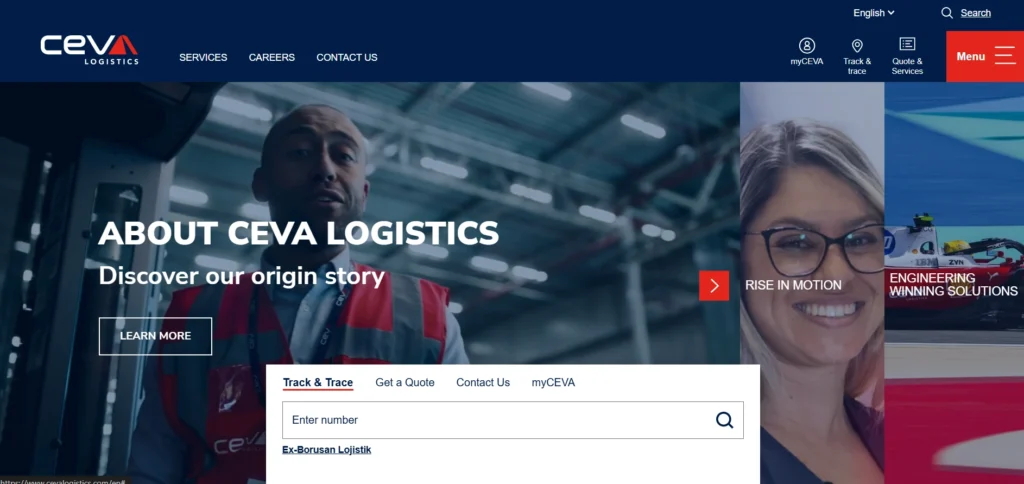
- Founded: 2007
- HQ: Marseille, France
- CEO: Mathieu Friedberg
- Website: cevalogistics.com
CEVA Logistics is a top-tier global supply chain provider operating as a core subsidiary of the maritime shipping titan CMA CGM Group. The company delivers highly customized, end-to-end contract logistics and freight management solutions for complex industrial sectors, making it one of the fastest-growing logistics companies in the world. CEVA is highly regarded for its deep technical expertise in automotive supply chains, managing incoming production parts, inbound manufacturing runs, and finished vehicle distribution. Backed by the massive ocean liner capacity of its parent company, CEVA seamlessly integrates high-volume ocean transport with vast landside warehouse fulfillment operations, keeping complex manufacturing plants running efficiently.
Key Services:
- Global air, ocean, and domestic overland freight management
- Inbound-to-manufacturing logistics and line-side assembly feeding
- Finished vehicle transportation and specialized automotive supply chains
- High-velocity retail, healthcare, and technology fulfillment services
- Revenue: $18.3 billion (Gross Logistics Turnover)
- Employees: 110,000+
- Countries Served: 170+
- Best For: Tier-1 automotive suppliers, heavy industrial manufacturers, and large-scale consumer electronics brands requiring intricate contract logistics and tightly synchronized inbound-to-factory freight.
Factors Contributing To Their Success
The sustained dominance of these global logistics giants is built on a foundation of strategic scale, operational adaptability, and massive financial investments. While market conditions constantly shift, these industry leaders maintain their positions by mastering a few critical operational capabilities.
The following core factors directly contribute to their ongoing global success:
- Technological Innovation: These companies lead the industry by embedding artificial intelligence deeply into their route optimization engines, deploying advanced warehouse robotics inside fulfillment centers, and utilizing IoT (Internet of Things) tracking devices to provide customers with real-time, end-to-end supply chain visibility.
- Massive Infrastructure and Scale: Operating extensive, company-owned networks of cargo aircraft, maritime container ships, sorting hubs, and distribution vehicles allows these titans to lower per-mile transport costs and handle massive cargo volumes that smaller regional players simply cannot accommodate.
- Strategic Mergers and Acquisitions (M&A): Rather than relying solely on organic expansion, industry leaders consistently acquire established regional freight forwarders, specialized tech platforms, and local delivery networks to instantly capture new market share and absorb built-in international infrastructure.
- Deep Regulatory and Customs Expertise: Navigating the complex world of international trade requires a flawless understanding of cross-border customs compliance, maritime laws, and local tariff structures, a capability these firms master by maintaining large teams of dedicated compliance experts worldwide.
- Supply Chain Diversification: Success in modern logistics depends heavily on the ability to survive disruption, and these organizations excel by offering multi-modal transport options allowing them to rapidly pivot and reroute high-priority cargo from air to sea or road during global bottlenecks or geopolitical conflicts.
Challenges Facing The Logistics Sector
Despite their immense scale and operational capabilities, global logistics leaders must constantly navigate a highly volatile and unpredictable operating environment. To protect their margins and maintain consistent transit times, these organizations are forced to adapt to rapidly evolving macroeconomic pressures and structural industry hurdles.
The most pressing challenges currently facing the global logistics sector include:
- Geopolitical Instability and Route Disruptions: Ongoing political conflicts, regional trade tensions, and security threats along major maritime shipping lanes force companies to frequently reroute cargo. These changes lead to significantly longer transit times, increased fuel consumption, and sudden spikes in international freight insurance costs.
- Decarbonization and Strict Sustainability Mandates: Logistics providers face intense regulatory pressure to drastically cut their greenhouse gas emissions. Transitioning massive transportation networks toward carbon neutrality requires incredibly capital-intensive investments in alternative-fuel fleets, eco-friendly cargo vessels, and sustainable warehouse infrastructures.
- Labor Shortages and Rising Workforce Costs: The industry suffers from a chronic, global shortage of qualified commercial truck drivers, marine crews, and warehouse personnel. Competing for limited talent forces companies to raise wages and expand benefits, significantly increasing operational overhead across their entire supply chain network.
- Escalating Cybersecurity Threats: As logistics networks become completely reliant on integrated cloud platforms, AI routing engines, and automated tracking systems, they become prime targets for sophisticated ransomware and cyberattacks. A single digital breach can lock up port terminals, paralyze distribution hubs, and cause severe, costly delays across multiple continents.
- Extreme Weather and Climate Vulnerabilities: The increasing frequency of severe weather events ranging from severe droughts that limit canal transit capacities to intense storms that shutter major air and sea ports poses a constant threat to predictable scheduling, requiring firms to invest heavily in predictive climate modeling and emergency contingency plans.
Key Trends Shaping The Logistics Industry
The global supply chain landscape is undergoing a massive structural shift as companies balance the need for rapid delivery against unpredictable macroeconomic pressures. As a result, traditional operational models are being replaced by highly digitized, responsive, and regionalized networks that prioritize visibility and flexibility above all else.
Hyper-Regionalization and Nearshoring Strategy
The era of relying entirely on single-source, distant manufacturing hubs has rapidly come to a close. To mitigate the risks of prolonged maritime delays and geopolitical bottlenecks, businesses are aggressively shifting toward nearshoring moving production facilities closer to their primary consumer markets. Logistics providers are adapting to this trend by rapidly building out cross-border trucking networks, expanding regional fulfillment centers, and optimizing short-sea shipping lanes to support decentralized, highly localized supply chains.
Real-Time Predictive Visibility via IoT and AI
Static tracking numbers that only update when a package reaches a major sorting facility are no longer sufficient for modern enterprise commerce. Today, industry leaders are embedding advanced IoT sensors directly into cargo containers to monitor precise location, internal temperature, humidity levels, and shock impacts in real time. Advanced artificial intelligence engines then analyze this stream of live data alongside global weather patterns and port congestion metrics to predict potential transit delays days before they happen, allowing operators to automatically reroute shipments.
Widespread Autonomous and Robotic Automation
To combat chronic labor shortages and handle unprecedented e-commerce order volumes, logistics companies have moved automation from an experimental phase to core infrastructure. Modern fulfillment centers now rely heavily on fleets of autonomous mobile robots (AMRs) that handle picking, sorting, and inventory management with minimal human intervention. On the transportation side, autonomous middle-mile trucking corridors and automated drone deliveries for remote, last-mile destinations are seeing widespread regulatory approval and commercial deployment.
Fleet Electrification and Alternative Fuel Adoption
With strict international carbon mandates now legally binding, the race to green the supply chain has reached a critical turning point. Major logistics providers are aggressively phasing out diesel vehicles in favor of commercial electric vehicle (EV) fleets for urban last-mile delivery routes. For long-haul freight and maritime shipping, companies are making massive, capital-intensive investments in alternative fuels, such as green hydrogen, renewable natural gas, and sustainable aviation fuel (SAF), to meaningfully reduce their scope 1 emissions.
Sovereign Digital Supply Chains and Blockchain Compliance
As digital ecosystems become increasingly interconnected, securing trade data against sophisticated cyber threats has become a top priority for multinational corporations. Logistics giants are increasingly deploying private, decentralized blockchain ledgers to secure customs documentation, verify bills of lading, and provide an unalterable audit trail for high-value or highly regulated goods. This shift ensures flawless regulatory compliance across international borders while protecting sensitive supply chain intelligence from corporate espionage and ransomware disruptions.
How To Choose The Right Logistics Partner For Your Business
Selecting a logistics provider is a major strategic decision that directly impacts your operational costs, delivery speeds, and customer retention. The right partner should not feel like an outsourced vendor; instead, they should operate as a seamless extension of your business infrastructure.
When evaluating potential providers, analyze these five critical areas to ensure a perfect operational fit:
Core Strategic and Industry Alignment: You must ensure the provider has a proven track record within your specific industry vertical. A company that excels at heavy industrial B2B freight forwarding may struggle with the rapid turnaround times required for D2C e-commerce, multi-channel retail, or cold-chain pharmaceutical distribution. Look for a partner whose existing facility network, handling procedures, and carrier relationships directly match your product type and customer base.
Geographic Reach and Network Infrastructure: Evaluate the provider’s physical footprint against your current distribution needs and future expansion plans. Ensure they have established transit networks, strategic hub locations, and reliable last-mile delivery capabilities in the exact regions where your customers are located. If you engage in international trade, the partner must also possess deep local customs expertise to smoothly navigate cross-border regulatory compliance and maritime laws.
Advanced Technological and Software Integration: In modern supply chains, a logistics provider without robust tech capabilities is an active liability. The partner must offer seamless API or EDI integrations that sync directly with your existing Enterprise Resource Planning (ERP), Warehouse Management Systems (WMS), and Transportation Management Systems (TMS). This technical compatibility is non-negotiable for securing real-time inventory visibility, automated order dispatch, and customer-facing tracking updates.
Operational Flexibility and Written Commitments: Supply chains are inherently unpredictable, making contract flexibility a major competitive advantage. Your partner must demonstrate the structural agility to scale operations up or down seamlessly during peak seasonal surges, festive sales, or sudden economic shifts without requiring endless manual renegotiations. Crucially, ensure all delivery speed promises, turnaround times, and performance metrics are locked into clear Service Level Agreements (SLAs) with established penalties or credits for missed targets.
Vetting Questions and Critical Risk Management: Before signing a contract, protect your business margins by screening providers for hidden risks and operational vulnerabilities.
- Essential Questions to Ask: What is your average Non-Delivery Report (NDR) management workflow? Can you share your verified data security protocols and proof of GDPR compliance? How do you handle and reconcile Cash on Delivery (COD) remittance cycles?
- Dangerous Red Flags to Watch Out For: Be highly wary of the low-cost trap, where significantly below-market rates hide poor customer service, high return-to-origin (RTO) failure rates, and hidden surcharges. Additionally, walk away from providers that offer rigid, long-term lock-in contracts, slow lost-shipment claim settlements, or fail to provide detailed, real-time data tracking down to the regional level.
Conclusion
Wrapping things up, it is easy to see that global logistics is much more than just moving boxes from one place to another. The fifteen massive companies we looked at are the actual engine driving international trade and keeping businesses around the world alive, which is why they are recognized among the Biggest Logistics Companies in the World. By combining massive fleets of planes and ships with smart tech like artificial intelligence and robotics, they make sure the products we rely on every single day arrive safely and on time. As shopping habits change and technology keeps moving forward, these giants will continue to reshape how the entire world does business.
For your own business, choosing the right logistics partner can completely change how you grow and serve your customers. You do not necessarily need to work with the biggest name on this list, but you do need a partner who understands your industry, uses modern tracking tech, and can adapt when your shipping volumes change. By avoiding cheap pricing traps and looking for a reliable, flexible provider, you can build a strong supply chain that keeps your business running smoothly and your customers happy for years to come.