Businesses today face many financial, operational, compliance, and cybersecurity risks. Without the right tools, these threats can cause severe financial losses and damage a brand. Financial risk management software helps organizations identify, assess, and reduce these risks easily. It improves compliance with legal rules, ensures data security, and enhances overall decision making. Teams can automate manual tasks with office automation tools, track vendor performance, and predict future issues before they happen.
Whether you need a compliance management tool or an enterprise risk management software, the right platform makes your daily operations much safer. In this guide, you will learn about the top risk analytics tools to protect your growing business.
What Is Financial Risk Management Software?
Financial risk management software is a digital tool that protects your company from financial harm. It spots money problems before they grow into disasters. It replaces messy spreadsheets with a clear dashboard to monitor cash flow, credit, and market risks in real time.
Many platforms act as enterprise risk management software. They connect your finance, IT, and HR management software workflows to protect the entire business. They also include operational risk software modules to catch daily human errors or machine failures.
Think of it as an alarm system for your money. It sends instant alerts when threats appear, creates simple reports, and turns complex data into clear action plans for your team.
Key Features Of Financial Risk Management Software
A good risk management platform needs specific features to control different business threats. The key features are mentioned below:
- Custom Risk Dashboards: View your risk score instantly. Clear visuals highlight urgent problems so you can act fast.
- Real Time Alerts: Get instant notifications for sudden changes, like a dropping bank balance or a failing vendor.
- Compliance Tracking: GRC software modules track new laws and ensure your company meets government rules without manual checks.
- Automated Workflows: Reduce mistakes by automating repetitive tasks, like sending staff reminders to complete risk assessments.
- Advanced Analytics: Risk analytics tools and data analytics software use past data to predict future trends, helping you prepare for economic shifts.
- Third Party Risk Scoring: Vendor risk management software grades your suppliers based on their financial health and overall security.
- Cyber Threat Integration: Cybersecurity risk management software blocks hacker attacks and protects your client billing details.
Financial Risk Management Software: Comparison Table
| Software | Best For | Key Features | Deployment | Free Trial | Starting Price |
| ClickUp | Small to medium teams | Task tracking, Risk templates | Cloud | Yes | $10 per user |
| MetricStream | Large enterprises | Audit tools, Compliance tracking | Cloud | No | Custom pricing |
| Vendor360 | Procurement teams | Vendor scoring, Risk alerts | Cloud | No | Custom pricing |
| Lendflow | Fintech companies | Credit checks, API tools | Cloud | No | Custom pricing |
| Resolver | Corporate security teams | Incident tracking, Threat reports | Cloud | No | Custom pricing |
| OneTrust | Global privacy teams | Privacy controls, ESG tracking | Cloud | Yes | Custom pricing |
| Project Risk Manager | Project managers | Risk matrix, Budget tracking | Cloud | Yes | Custom pricing |
| LogicManager | Midsize businesses | Control mapping, Custom reports | Cloud | No | Custom pricing |
| CURA | Custom business needs | Custom frameworks, Dashboards | Cloud | No | Custom pricing |
| TimeCamp | Agencies and freelancers | Budget tracking, Time reports | Cloud | Yes | $3.99 per user |
| Qualys | IT security teams | Network scans, Threat alerts | Cloud | Yes | Custom pricing |
| ServiceNow | Massive global companies | Automated tests, Deep analytics | Cloud | No | Custom pricing |
| Riskonnect | Insurance and finance teams | Financial analytics, Claims tools | Cloud | No | Custom pricing |
| nTask | Small project teams | Task tracking, Risk boards | Cloud | Yes | $4 per user |
| A1 Tracker | Contract managers | Contract tools, Policy tracking | Cloud | No | Custom pricing |
List Of Best Financial Risk Management Software
1. ClickUp
Website: clickup.com
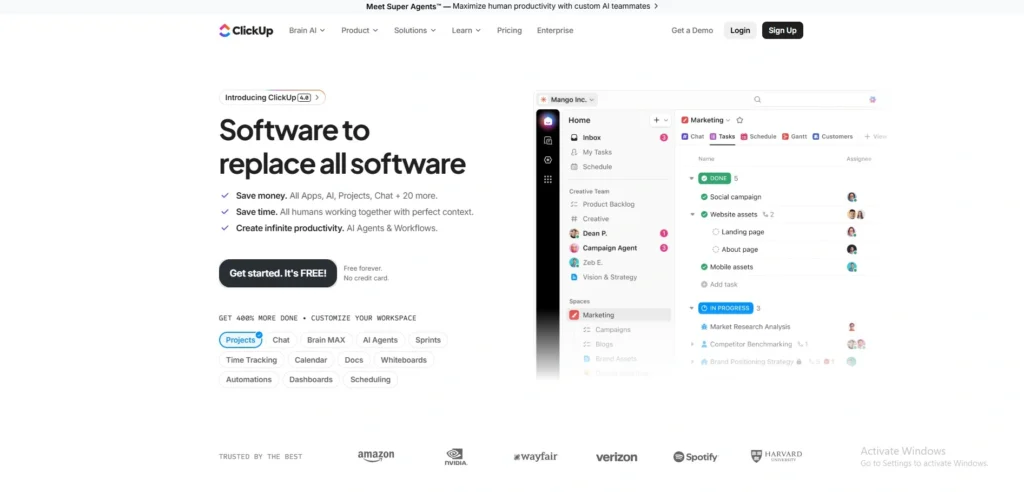
ClickUp is a highly flexible, cloud based productivity platform equipped with strong project and operational risk management tools. It allows teams to easily track financial milestones, monitor project budgets, map out risks, and assign mitigation tasks. While it is not a dedicated enterprise GRC system, its heavily customizable dashboards and risk templates make it excellent for teams that want to manage daily operational and financial project hazards alongside their regular work workflows.
Features:
- Custom task statuses
- Real time dashboards
- Goal tracking tools
- Risk assessment templates
- Automated team workflows
Pros:
- Very easy to use
- Highly customizable interface
- Great team collaboration
- Affordable starting price
- Excellent native task automation
Cons:
- Can feel quite overwhelming
- Not dedicated risk software
- Steep initial learning curve
- Mobile application is limited
Best For: Small to medium teams needing flexible project and operational risk tracking.
Pricing:
- Free Forever Plan: Available
- Unlimited: $7 /user /month
- Business: $12 /user/month
- Enterprise: Custom pricing available on request
2. MetricStream
Website: metricstream.com
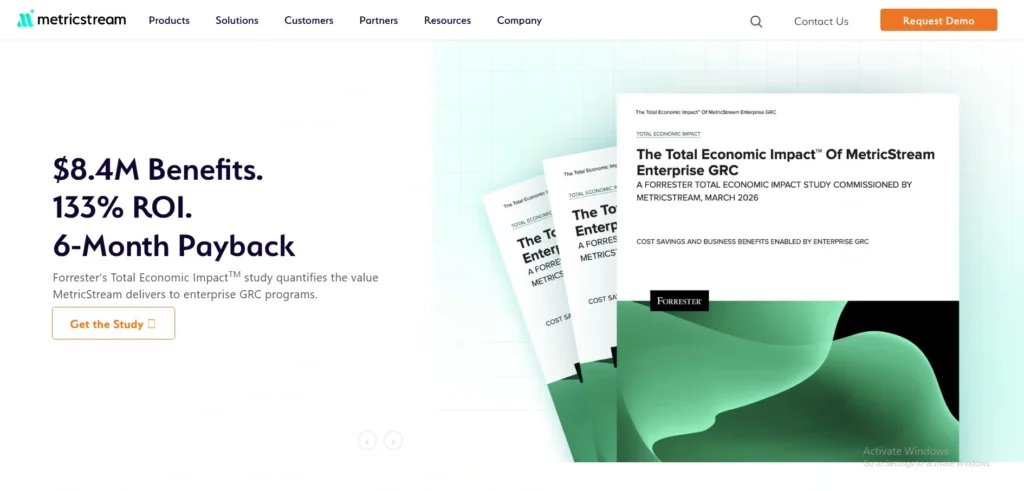
MetricStream is an industry leading, cloud based enterprise risk management software built for large global organizations. The platform unifies financial risk, regulatory compliance, and internal audits into a single cloud ecosystem. By eliminating data silos, it empowers executives to safely assess risks, track third party vendors, and ensure absolute compliance with changing global rules. It provides deep predictive capabilities using advanced built in risk analytics tools.
Features:
- Enterprise risk tracking
- Internal audit management
- IT compliance tools
- Third party risk tracking
- Advanced reporting dashboards
Pros:
- Deep enterprise capabilities
- Strong regulatory compliance features
- Highly scalable platform architecture
- Excellent internal audit mapping
- Robust risk data intelligence
Cons:
- High initial setup cost
- Complex software implementation process
- Requires extensive user training
- Interface can load slowly
Best For: Large enterprises needing strict regulatory compliance and integrated risk management.
Pricing: custom pricing available on request
3. Vendor360
Website: https://www.centrl.ai/
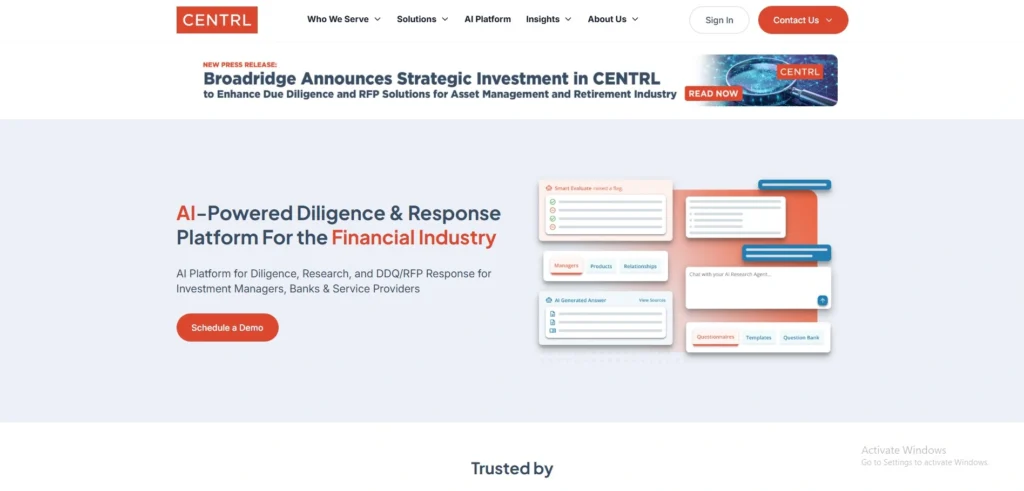
Vendor360 is a specialized, cloud based vendor risk management software solution created by CENTRL. The platform focuses entirely on helping procurement and finance teams identify, evaluate, and mitigate financial or operational threats coming from external partners and third party suppliers. It allows users to fully automate complex risk questionnaires, continuously score vendor health, and receive instant alerts if a supplier faces financial issues, ensuring supply chain security.
Features:
- Automated vendor questionnaires
- Risk scoring models
- Compliance tracking tools
- Centralized vendor directory
- Real time alerts
Pros:
- Saves massive manual effort
- Clear detailed vendor profiles
- Very easy to deploy
- Streamlined questionnaire automation features
- Highly accurate risk scoring
Cons:
- Limited enterprise software integrations
- Very narrow focus area
- Basic custom reporting options
- Interface lacks deep visualization
Best For: Procurement teams needing to track and score third party vendor risks.
Pricing: Custom pricing available on request
4. Lendflow
Website: lendflow.com
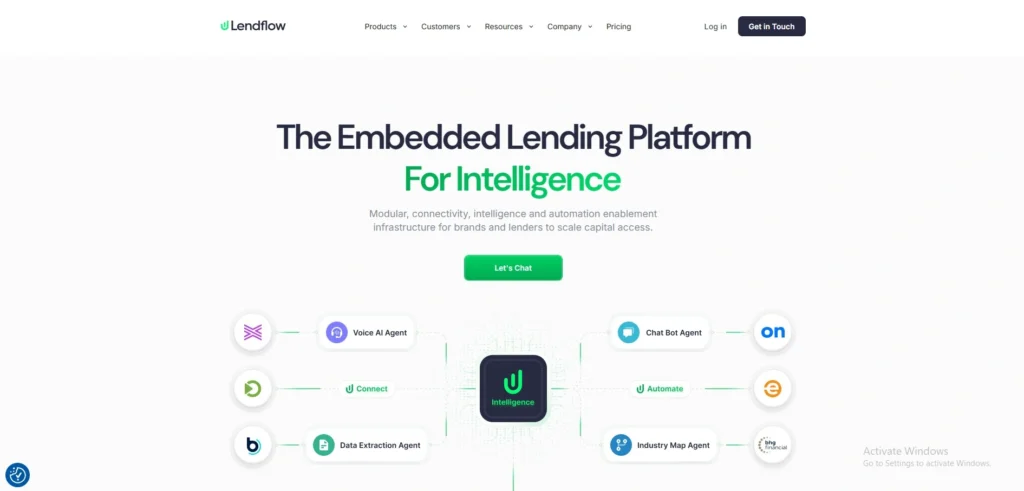
Lendflow is a highly specialized financial risk management software built specifically for fintech startups and modern software companies using AI-powered business solutions. The cloud based platform allows businesses to build and launch embedded lending products quickly while automatically handling credit risk assessments. By connecting directly with top tier credit data sources, Lendflow uses automated decision engines to judge financial health and secure modern digital lenders from bad credit debts.
Features:
- Credit data access
- Automated decision engines
- Embedded finance tools
- Risk assessment models
- API integration support
Pros:
- Fast reliable credit decisions
- Powerful automated API features
- Great for modern fintechs
- Simplifies complex underwriting tasks
- Excellent partner data access
Cons:
- Niche financial product focus
- Requires heavy technical setup
- Not general enterprise ERM
- Documentation can be confusing
Best For: Fintech companies and platforms wanting to embed safe lending services.
Pricing: Custom pricing available on request
5. Resolver

Website: resolver.com
Resolver is an advanced cloud based risk intelligence platform that was recently acquired by Kroll. The software bridges the gap between physical corporate security, incident management, and enterprise financial risk tracking. By turning raw operational threat data into clear financial impact reports, Resolver helps security and compliance leaders protect assets, track ongoing incidents, map regulatory requirements, and actively prevent corporate financial losses before they strike.
Features:
- Incident management tools
- Risk assessment workflows
- Regulatory compliance tracking
- Custom threat reports
- Data analytics dashboard
Pros:
- Clear intuitive user interface
- Strong automated incident tracking
- Backed by Kroll expertise
- Excellent threat trend data
- Flexible custom workflow builders
Cons:
- Deep reporting takes time
- Initial system setup heavy
- Pricing is not public
- Minor software loading lags
Best For: Organizations needing to connect corporate security with financial risk data.
Pricing: Custom pricing available on request
6. OneTrust
Website: onetrust.com
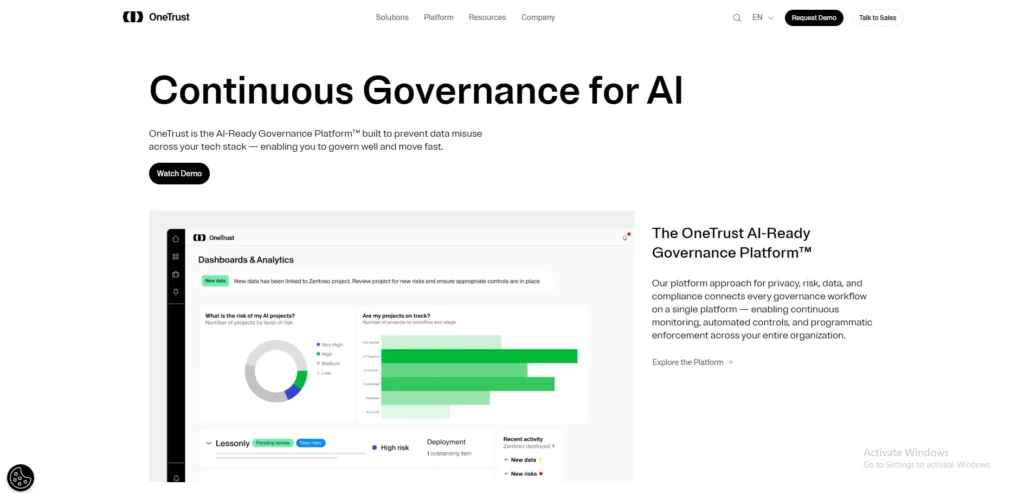
OneTrust is a global, cloud based trust intelligence platform that functions as top tier GRC software and vendor risk management software. It helps scale compliance operations by automating data privacy rules, tracking governance, and monitoring third party operational risks. The system connects security, privacy, and financial compliance factors to ensure large companies remain completely safe from severe legal fines and global data leaks.
Features:
- Data privacy automation
- Third party risk tracking
- IT security tracking
- ESG reporting tools
- Policy management system
Pros:
- Industry leading privacy tools
- Huge native integration library
- Highly comprehensive software suite
- Excellent regulatory compliance updates
- Strong vendor tracking tools
Cons:
- Can be very expensive
- Complex for software beginners
- Heavy computer resource usage
- Configuration takes significant time
Best For: Large companies needing strict data privacy and comprehensive trust management.
Pricing:
- Free Trial: Available for some modules
- Custom pricing available on request
7. Pirani
Website: https://www.piranirisk.com/
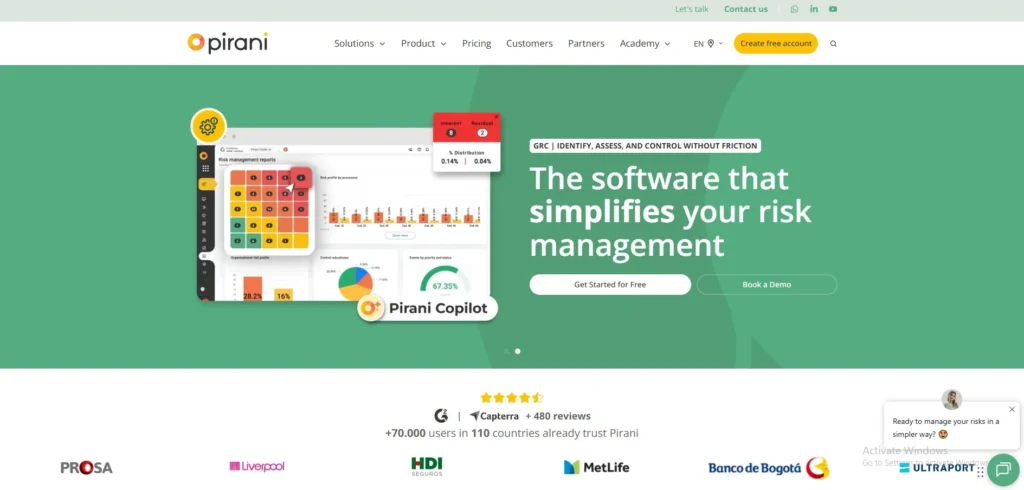
Pirani is a highly accessible cloud based risk management software designed for growing businesses. It helps organizations identify, measure, and control operational risks, regulatory compliance, and information security threats. The platform simplifies complex financial risk mapping into clear visual dashboards. It serves perfectly as an operational risk software to prevent daily business financial losses and streamline compliance.
Features:
- Operational risk tracking
- Incident reporting tools
- Automated workflow processes
- Customizable risk matrices
- Regulatory compliance mapping
Pros:
- Very user friendly interface
- Highly responsive customer support
- Great visual heat maps
- Dedicated free plan available
- Fast and easy deployment
Cons:
- Advanced reporting costs more
- Mobile application is limited
- Customizing fields takes time
- External integration options limited
Best For: Small to medium businesses wanting an affordable operational risk platform.
Pricing:
- Free Plan: Available
- Starter: pricing available on request
- Basic: pricing available on request
- Enterprise: Custom pricing available on request
8. LogicManager
Website: logicmanager.com
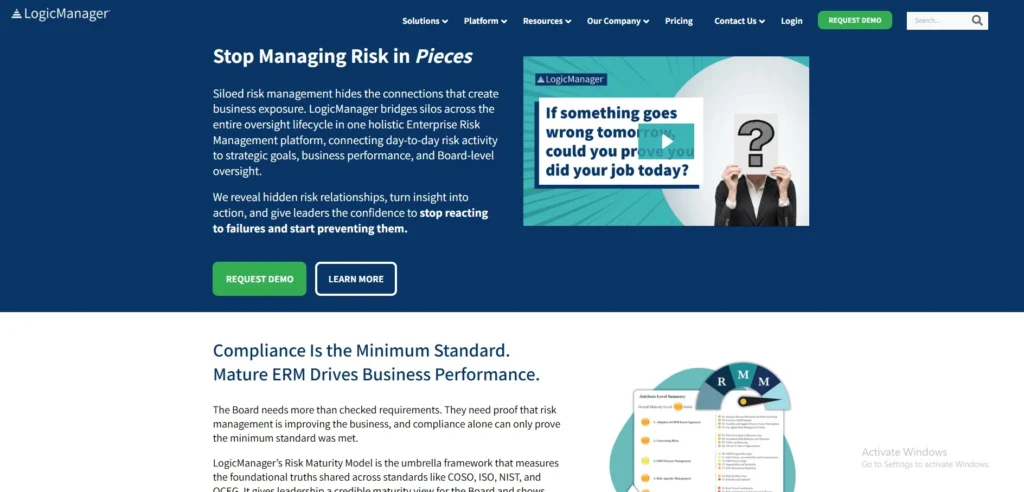
LogicManager is a comprehensive enterprise risk management software that provides cloud based tools to predict and control financial threats. The software stands out because it uses an integrated taxonomy to link related operational, compliance, and financial risks across different business departments. This central ecosystem acts as a strong compliance management tool, helping midmarket companies eliminate silos and improve financial risk reporting.
Features:
- Enterprise risk tracking
- Incident management system
- Compliance control mapping
- Custom reporting tools
- Automated task reminders
Pros:
- Excellent ongoing customer support
- Extremely flexible software platform
- Strong risk linking logic
- Clear department workflow automation
- Dependable audit tracking features
Cons:
- Interface design feels dated
- Steep user learning curve
- Custom report building complex
- Occasional slow dashboard loading
Best For: Midsize to large businesses wanting strongly linked cross departmental risk data.
Pricing: Custom pricing available on request
9. CURA
Website: curasoftware.com
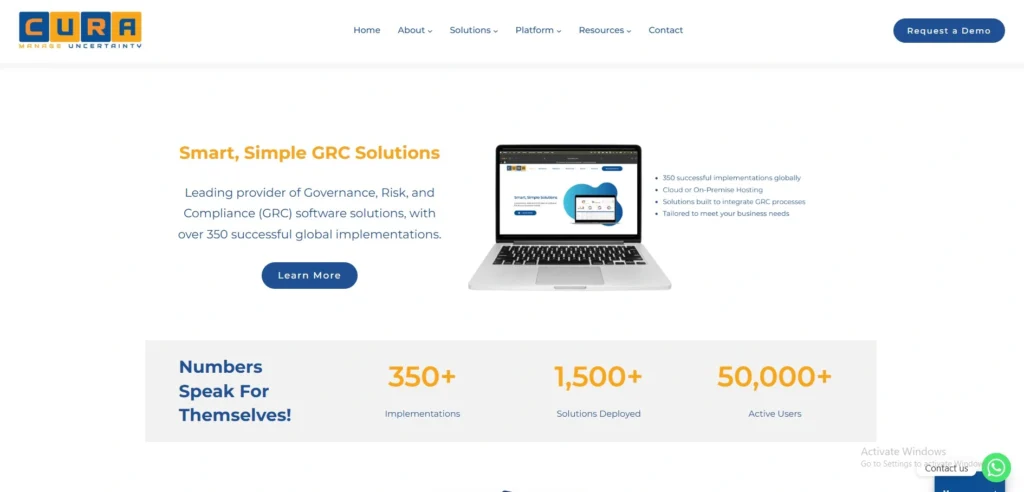
CURA is a flexible, enterprise grade GRC software solution designed to help companies manage operational risks and financial compliance. The cloud platform is completely configurable, allowing risk managers to design custom assessment frameworks and interactive threat models that fit their exact business structure. It converts complex financial hazard numbers into clean, visual dashboards that executive boards can use for strategic planning.
Features:
- Custom risk frameworks
- Interactive management dashboards
- Regulatory compliance tools
- Incident tracking forms
- Threat modeling tools
Pros:
- Highly configurable platform architecture
- Great executive management reports
- Strong regulatory compliance focus
- Excellent custom framework tools
- Good data visualization dashboards
Cons:
- Requires expert software setup
- Older looking user interface
- System training takes time
- Documentation lacks detailed steps
Best For: Businesses needing a highly customized approach to governance and risk.
Pricing: Custom pricing available on request
10. TimeCamp
Website: timecamp.com
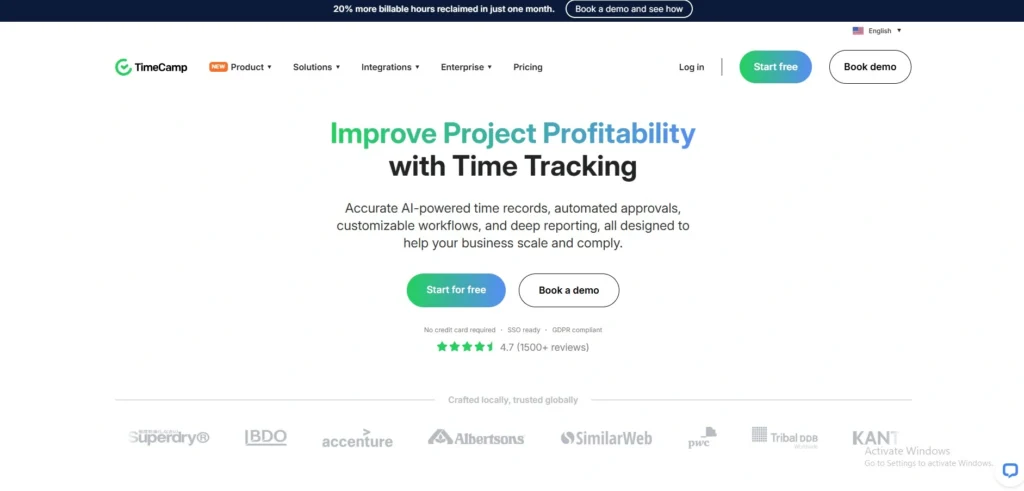
TimeCamp is a cloud based time tracking and productivity tool equipped with helpful project budgeting features. While it is not traditional financial risk management software, it serves as practical operational risk software by preventing massive budget overruns. By automatically tracking billable employee hours against specific project limits, it directly protects professional agencies and freelancers from unprofitable client engagements and revenue loss.
Features:
- Automatic time tracking
- Project budget monitoring
- Billable hours calculation
- Financial profit reports
- Invoicing software integrations
Pros:
- Very simple system setup
- Highly accurate project budgeting
- Functional free version available
- Seamless invoicing software links
- Clear employee tracking metrics
Cons:
- Not dedicated risk software
- No compliance management tools
- Basic general financial reporting
- Lacks complex risk analytics
Best For: Agencies and freelancers wanting to reduce project budget overrun risks.
Pricing:
- Free Forever Plan: Available
- Starter: $2.49 per user per month
- Premium: $3.99 per user per month
- Ultimate: $4.99 per user per month
- Enterprise: Custom pricing available on request
11. Qualys
Website: qualys.com
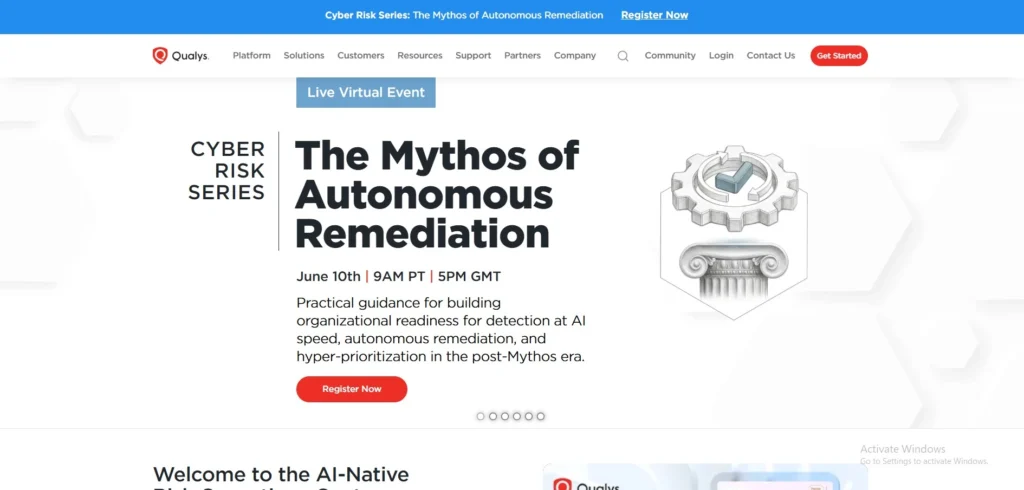
Qualys is an enterprise grade cybersecurity risk management software delivered securely via the cloud. Modern financial risks are deeply tied to IT infrastructure, as data breaches cause massive monetary losses. Qualys continuously monitors corporate networks, runs automated vulnerability scans, and catches IT security threats before hackers can exploit them, ensuring financial records and sensitive client transaction details remain completely safe.
Features:
- Continuous network monitoring
- Vulnerability scanning tools
- Compliance reporting features
- Asset inventory tracking
- Threat protection alerts
Pros:
- Industry leading threat detection
- Highly accurate security scans
- Trusted by large enterprises
- Rapid global asset discovery
- Robust regulatory compliance mapping
Cons:
- Very technical user interface
- Expensive for small teams
- Heavy system computer resources
- Setup requires security experts
Best For: IT teams needing to protect financial networks from severe cyber threats.
Pricing:
- Free Trial: Available
- Custom pricing available on request
12. ServiceNow
Website: servicenow.com
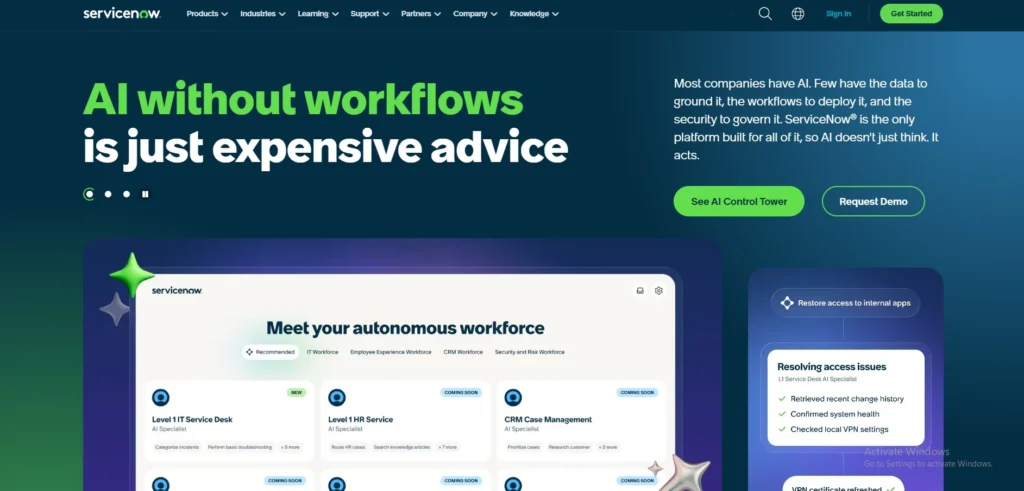
ServiceNow is a massive cloud platform that provides market leading enterprise risk management software capabilities. Its integrated risk management module links IT systems, operational data, and financial risks into a single, highly automated workspace. Large companies can use ServiceNow to automate manual compliance testing, continuously track vendor threats, remove human data errors, and create highly detailed corporate risk analytics dashboards.
Features:
- Integrated risk workflows
- Automated compliance testing
- Vendor risk tracking
- Business continuity planning
- Advanced analytics dashboards
Pros:
- Massive global enterprise scale
- Deep corporate workflow automation
- Single unified software platform
- Incredible integration options ecosystem
- Powerful live data reporting
Cons:
- Very high software cost
- Requires dedicated platform administrators
- Exceptionally long deployment time
- Overwhelming for basic needs
Best For: Massive global enterprises wanting to automate all IT and financial workflows.
Pricing: Custom pricing available on request
13. Riskonnect
Website: riskonnect.com
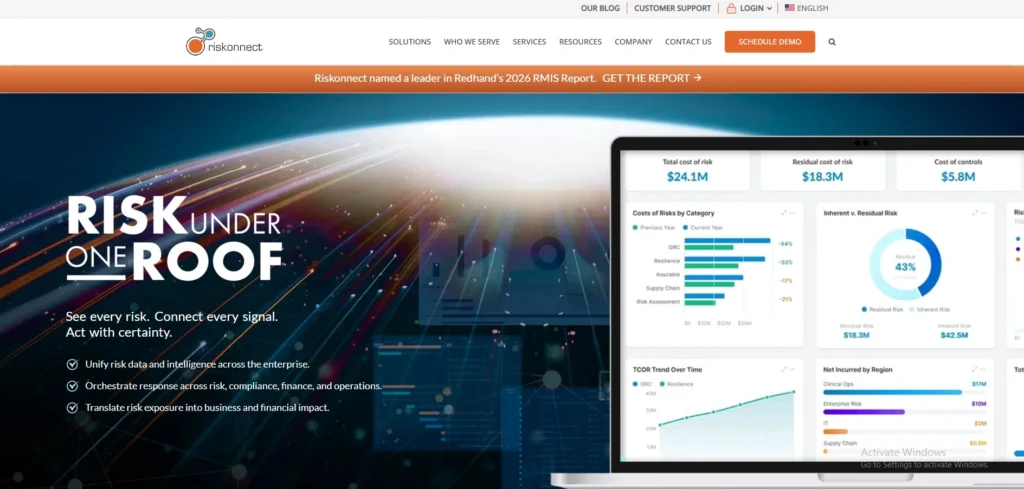
Riskonnect is an integrated, cloud based risk management platform designed specifically to connect enterprise, compliance, and insurable financial risks. The platform gives finance teams full visibility into how different corporate threats overlap and affect the bottom line. With its deep risk analytics tools, Riskonnect simplifies claims tracking, manages workplace safety records, and gives leaders the data needed to reduce premium costs.
Features:
- Integrated risk management
- Financial impact analytics
- Health and safety tracking
- Claims administration tools
- Compliance tracking dashboards
Pros:
- Connects all risk types
- Strong financial analytical tools
- Great visual executive reports
- Deep insurance tracking capabilities
- Eliminates internal corporate silos
Cons:
- Software interface is complex
- System implementation is slow
- Very high learning curve
- Customization requires vendor help
Best For: Organizations needing to connect insurable risks with overall enterprise risks.
Pricing: Custom pricing available on request
14. nTask
Website: ntaskmanager.com
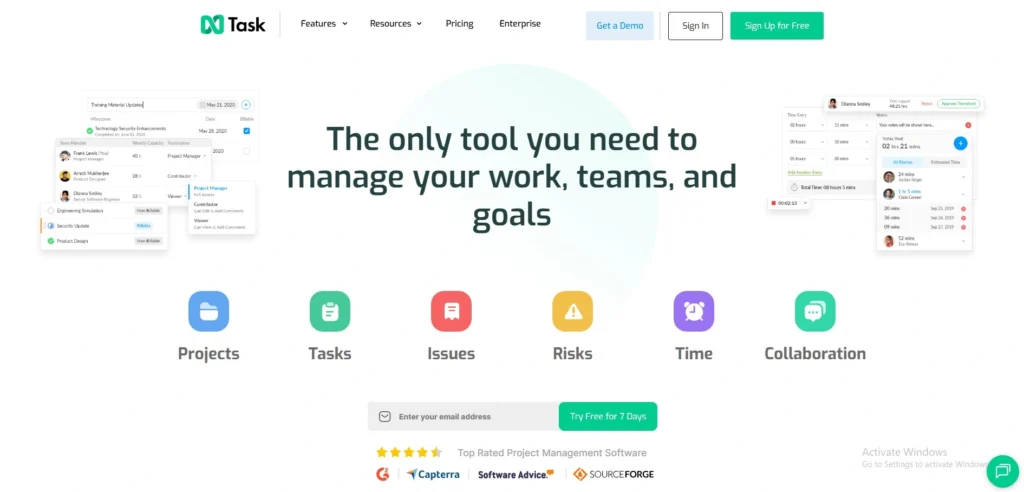
nTask is an affordable, cloud based project management application featuring a dedicated module for handling operational and financial risks. Small business teams can use it to log project threats, create clear risk matrices, assign specific owners, and plan mitigation steps. Its budget friendly pricing and simple layout make it a fantastic entry point for growing teams wanting basic risk tracking without enterprise complexity.
Features:
- Risk matrix creation
- Mitigation task tracking
- Issue management tools
- Project budget tracking
- Team collaboration boards
Pros:
- Very budget friendly software
- Simple functional risk matrix
- Extremely easy team adoption
- Good basic task tracking
- Clean modern layout design
Cons:
- No enterprise GRC compliance
- Basic financial reporting tools
- Limited third party integrations
- Lacks complex data analytics
Best For: Small teams needing a simple way to log and track project risks.
Pricing:
- Free Basic Plan: Available
- Premium: $3 per user per month
- Business: $8 per user per month
- Enterprise: Custom pricing available on request
15. A1 Tracker
Website: a1tracker.com
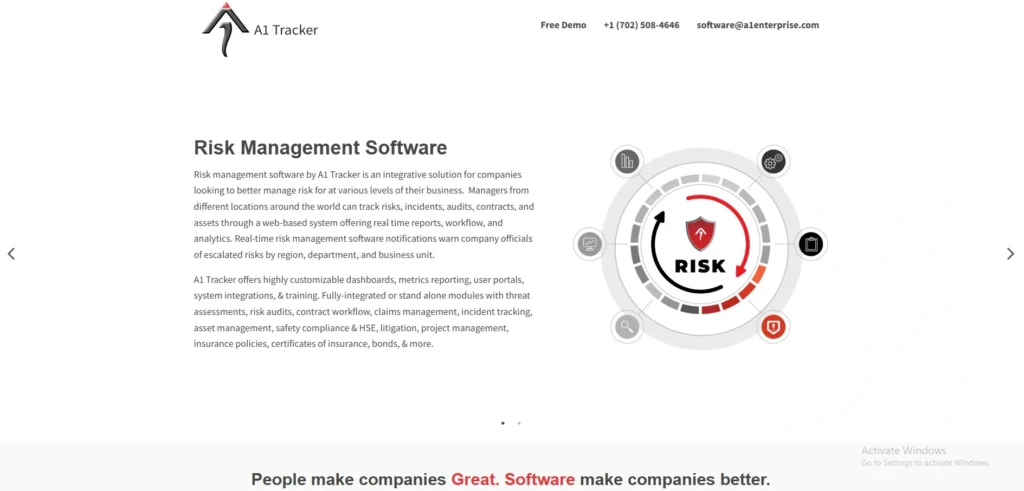
A1 Tracker is a robust and flexible cloud based risk management platform that combines insurance tracking, contract management, and financial risk control. The software is highly tailorable, letting organizations adjust dashboards to track vendor compliance, monitor policy expiration dates, and process commercial claims. It helps asset and contract managers lower operational liabilities by automating approval workflows across the entire company
Features:
- Contract risk management
- Insurance policy tracking
- Claim management tools
- Automated workflow approvals
- Custom portal access
Pros:
- Extremely flexible customizable system
- Good detailed contract tracking
- Very helpful customer support
- Excellent internal notification tools
- Centralizes multiple commercial liabilities
Cons:
- Interface design looks dated
- Heavy customization takes time
- System navigation feels clunky
- Initial user onboarding slow
Best For: Businesses looking to combine contract, insurance, and financial risk tracking.
Pricing: Custom pricing available on request
Benefits Of Financial Risk Management Software
The right tools help you prepare for problems before they happen. Here are the main advantages of using these systems:
- Protects Company Profits: Financial risk management software spots risky clients and bad investments early, preventing heavy losses and keeping your cash safe.
- Improves Legal Compliance: GRC software tracks changing laws and internal policies automatically. This ensures you meet standards and avoid expensive fines.
- Speeds Up Decision Making: Risk analytics tools gather scattered data into clear dashboards, allowing leaders to make fast and confident choices.
- Secures Sensitive Data: Cybersecurity risk management software encrypts records and blocks unauthorized access, keeping client information completely safe.
- Reduces Manual Workloads: Operational risk software automates data entry and calculations. This reduces human error and saves your team hundreds of hours.
- Strengthens Vendor Relationships: Vendor risk management software monitors supplier stability and performance, helping you build a highly reliable supply chain.
How To Choose The Best Financial Risk Management Software
Finding the right platform can feel confusing. There are many options available today. You must look at your own business needs first. Use this simple checklist to choose the perfect system.
- Business size: A small startup does not need massive enterprise risk management software. Choose a tool that fits your current team size.
- Compliance requirements: Check your industry rules. If you handle healthcare or banking data, you need strict compliance management tools.
- Integration support: The new software must talk to your old tools. Ensure it connects easily with your existing accounting and payroll software systems.
- Reporting and analytics: Data is useless if you cannot read it. Look for platforms that offer clear visual charts and risk analytics tools.
- Deployment preference: Decide if you want a cloud based tool or a local server setup. Cloud tools are generally easier to update and access remotely.
- Scalability: Your business will grow. The software should grow with you. Make sure you can add new users and features later.
- Automation capabilities: You want to save time. Choose a platform that automates reminders, reports, and data collection.
- Ease of use: If the tool is too hard, your team will not use it. Pick software with a clean, beginner friendly interface.
- Budget: Costs can add up quickly. Look closely at monthly fees, setup costs, and training prices. Always ask for a free trial first.
Conclusion
Managing business threats does not have to be a nightmare. Using the best financial risk management software protects your assets and ensures smooth daily operations. These digital tools remove the guesswork from your strategy. They give you clear data, automate boring tasks, and keep you legally compliant. Whether you need to track vendor contracts or stop cyber attacks, there is a tool ready to help.
Modern businesses cannot survive using outdated manual spreadsheets. You must improve your visibility and risk control to beat the competition. Upgrading to a modern platform makes your entire team faster and smarter. Review the websites and tools on this list, check your budget, and request a free trial today. Secure your company’s financial future right now.