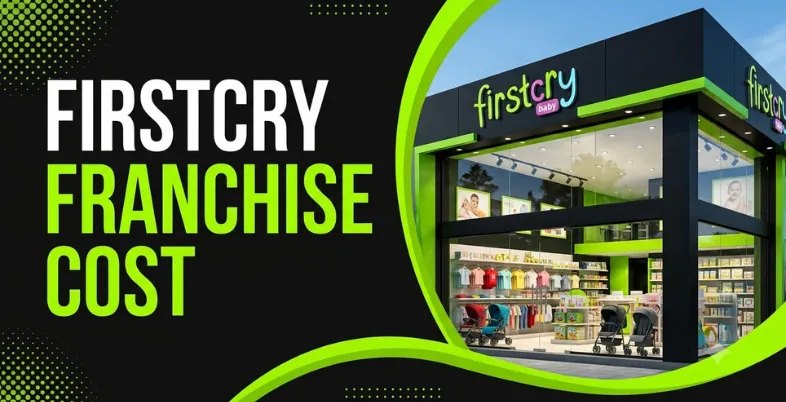
The FirstCry Franchise Cost is one of the most searched topics among entrepreneurs looking to enter India’s fast-growing baby products retail market. Founded in 2010, FirstCry has grown into one of India’s largest omnichannel retailers for baby, kids, and maternity products. The brand offers more than 2 lakh products from over 7,000 brands, serving millions of customers across the country through its online platform and extensive offline store network.
India’s baby care market is projected to exceed USD 35 billion by 2030, driven by rising disposable incomes, urbanization, and increasing spending on children’s products. This strong market demand has made investing in a FirstCry franchise an attractive business opportunity. Understanding the FirstCry Franchise Cost, investment requirements, profit potential, store setup, eligibility criteria, and return on investment is essential before getting started. This guide covers everything you need to know to make an informed franchise investment decision.
About FirstCry? (Brand Overview)
FirstCry is India’s leading omnichannel retailer specializing in baby, kids, and maternity products. Founded in 2010 by Supam Maheshwari and Amitava Saha, the company started as an online store and has since expanded into a nationwide retail chain with a strong offline presence. Today, FirstCry serves millions of parents by offering everything from newborn essentials and toys to clothing, footwear, school supplies, and maternity products.
As of 2026, FirstCry offers over 2 lakh products from 7,000+ national and international brands, along with its own private labels. The company combines a user-friendly e-commerce platform with 900+ stores across India, giving customers the flexibility to shop both online and in physical outlets.
FirstCry’s success is driven by India’s growing demand for premium baby care products, increasing disposable incomes, and rising awareness among parents about quality childcare essentials. The brand has built a strong reputation by providing a wide product selection, competitive pricing, regular discounts, and reliable customer service.
For entrepreneurs, FirstCry is an attractive franchise opportunity because of its established brand recognition, proven business model, marketing support, and loyal customer base. These factors make the brand a popular choice for investors looking to enter India’s fast-growing baby and kids retail market.
Why Is the Baby Care Retail Market a Smart Investment in 2026?
The baby care retail market in India continues to grow steadily, making it one of the most promising sectors for entrepreneurs in 2026. Rising disposable incomes, increasing urbanization, and greater awareness of child health and safety have encouraged parents to spend more on high-quality baby products. Instead of purchasing only basic necessities, families are now investing in premium clothing, diapers, toys, skincare products, feeding accessories, and educational items.
India’s large birth rate and expanding middle-class population also create consistent demand for baby and children’s products. Unlike many retail categories that are influenced by seasonal trends, baby essentials are everyday necessities, ensuring regular customer visits and repeat purchases. This makes the industry more stable and less vulnerable to sudden changes in consumer demand.
Another major growth driver is the increasing preference for branded products. Modern parents prioritize quality, safety, and trusted brands when shopping for their children, giving established retailers a competitive advantage. The rapid growth of omnichannel retail, where customers shop both online and in physical stores, has further strengthened the market by offering greater convenience and product availability.
Government reports and industry research also point to strong long-term growth for India’s baby care industry, supported by rising digital adoption and changing consumer lifestyles. As more families seek reliable brands with a wide product range, retailers that combine trusted products with a strong customer experience are well positioned for sustained growth.
For investors, these market trends translate into a business with recurring demand, strong brand loyalty, and long-term expansion potential, making the baby care retail sector a smart investment opportunity in 2026.
FirstCry Franchise Models Available in 2026
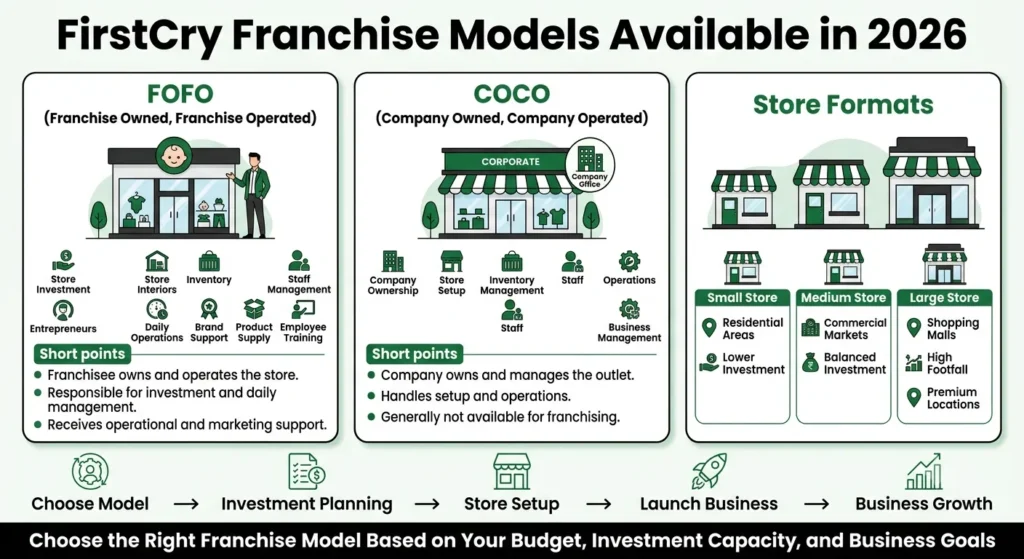
FirstCry offers different franchise models to accommodate various business requirements, investment capacities, and store locations. The available model determines who owns the store, who manages daily operations, and the level of responsibility assigned to the investor. Understanding these options can help you choose the right franchise model based on your budget and business goals.
FOFO (Franchise Owned, Franchise Operated)
The FOFO (Franchise Owned, Franchise Operated) model is the primary franchise option available to entrepreneurs. Under this model, the franchisee invests in the store by arranging the retail space, interiors, inventory, staff, and other operational requirements. The franchise owner is also responsible for managing the store’s day-to-day operations.
FirstCry supports its franchise partners by providing access to its established brand, product supply, store design guidelines, employee training, marketing support, and operational assistance. This model allows investors to run their own business while benefiting from FirstCry’s proven retail system and customer trust.
COCO (Company Owned, Company Operated)
In the COCO (Company Owned, Company Operated) model, the entire store is owned, funded, and managed by FirstCry. The company takes care of everything, including store setup, inventory management, staffing, and daily operations. Since these outlets are operated directly by FirstCry, they are generally not available for franchising and are mainly established in strategic retail locations.
Store Formats
FirstCry stores are available in different sizes to match the demand of a particular location. Smaller stores are often suitable for residential areas and emerging markets, while larger outlets are typically opened in shopping malls, high streets, and busy commercial hubs. The store format you choose affects the overall investment, inventory requirements, and operating expenses.
Which Model Is Best for Investors?
For most entrepreneurs, the FOFO model is the ideal choice because it provides the opportunity to own and operate a FirstCry store while leveraging the company’s established brand reputation, extensive product range, and ongoing business support. Before investing, consider factors such as your budget, store location, available space, and long-term business objectives to determine whether the franchise aligns with your goals.
FirstCry Franchise Cost and Investment Breakdown in 2026
The FirstCry franchise cost in 2026 depends on several factors, including the store location, city tier, retail space, interior specifications, inventory requirements, and operational expenses. While the exact investment varies from one outlet to another, entrepreneurs should be prepared for a total investment ranging between ₹25 lakh and ₹50 lakh.
Stores in metro cities generally require a higher investment due to expensive commercial rentals, premium interiors, and higher operating costs. On the other hand, Tier 2 and Tier 3 cities often allow entrepreneurs to start with a comparatively lower investment while still benefiting from the brand’s growing customer base.
The standard franchise agreement is valid for 5 years and can be renewed based on the company’s terms and performance. Franchise partners are also required to pay a royalty fee of 5% to 6% of gross sales, which covers ongoing brand support, operational assistance, and other franchise services.
| Investment Component | Estimated Cost (2026) |
|---|---|
| Franchise Fee | ₹2 lakh – ₹7 lakh |
| Store Setup & Interiors | ₹8 lakh – ₹20 lakh |
| Initial Inventory | ₹8 lakh – ₹18 lakh |
| Working Capital | ₹3 lakh – ₹10 lakh |
| Total Investment | ₹25 lakh – ₹50 lakh |
Franchise Fee
The franchise fee is the amount paid to obtain the rights to operate a FirstCry store under its brand name. This fee generally ranges between ₹2 lakh and ₹7 lakh, depending on the store format and location. It gives franchisees access to FirstCry’s business model, brand identity, training, and operational support.
Store Setup and Interiors
Setting up a FirstCry outlet involves expenses related to store interiors, branding, display fixtures, lighting, flooring, billing counters, shelving, and signage. The estimated cost ranges from ₹8 lakh to ₹20 lakh, with metro cities typically requiring a larger investment because of higher design standards and commercial space costs.
Initial Inventory
A significant portion of the investment goes toward purchasing the initial stock. FirstCry stores carry a wide range of baby products, clothing, toys, footwear, maternity essentials, and accessories. Depending on the size of the outlet, the initial inventory investment usually falls between ₹8 lakh and ₹18 lakh to ensure customers have access to a comprehensive product selection from day one.
Working Capital
Working capital covers the day-to-day operating expenses during the first few months of business. This includes employee salaries, rent, electricity bills, local marketing, internet services, maintenance, and other recurring costs. Entrepreneurs should keep ₹3 lakh to ₹10 lakh available as working capital to maintain smooth business operations until the store reaches stable monthly revenue.
Total Investment
Considering all the above expenses, the total FirstCry franchise cost generally ranges between ₹25 lakh and ₹50 lakh. The final investment depends on the city, store size, rental costs, and the level of inventory required. Entrepreneurs planning to open a store in a premium metro location should expect higher setup costs, while those investing in Tier 2 or Tier 3 cities may be able to launch their business with a comparatively lower budget.
Space and Location Requirements for a FirstCry Franchise
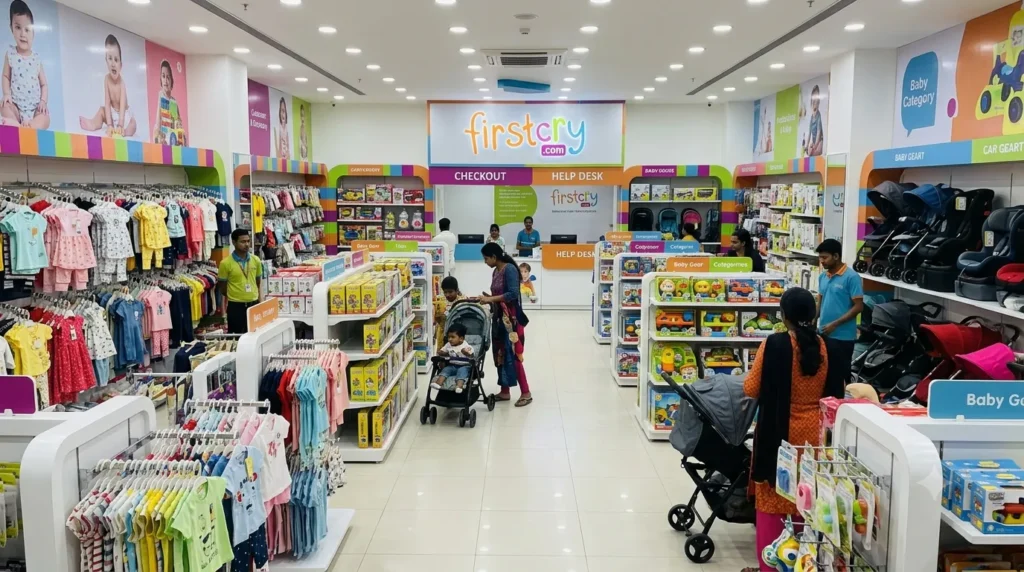
Choosing the right location is one of the most important factors in the success of a FirstCry franchise. Since the brand primarily caters to families with infants and young children, the store should be located in an area with high visibility, steady customer footfall, and easy accessibility. A well-selected location can significantly improve sales and attract repeat customers.
Below are the typical space and location requirements for a FirstCry franchise in 2026:
- Retail Space: Approximately 1,000 to 2,000 sq. ft. of carpet area is generally recommended, depending on the store format and city.
- Ground Floor Preference: A ground-floor store with a wide storefront is preferred to maximize visibility and make it convenient for parents with strollers and young children.
- High-Footfall Areas: Locations in shopping malls, high streets, commercial complexes, or busy retail markets are ideal for attracting consistent customer traffic.
- Residential Catchment: The store should be close to residential neighborhoods with a large population of young families, as they form the brand’s primary customer base.
- Easy Accessibility: The outlet should be easily accessible by road and public transport, with convenient entry and exit points for customers.
- Parking Availability: Adequate parking space is highly recommended, especially in metro cities, to provide a hassle-free shopping experience for families.
- Good Store Visibility: The storefront should be clearly visible from the main road or shopping area, allowing customers to easily identify the brand.
- Growing Market Potential: Tier 2 and Tier 3 cities with increasing disposable incomes and expanding residential developments can offer excellent growth opportunities at a lower investment cost.
- Compliance with Brand Standards: The store layout, interiors, branding, lighting, product displays, and signage must comply with FirstCry’s design and operational guidelines.
Selecting the right location not only helps attract more customers but also improves the long-term profitability of the franchise. Before finalizing a property, entrepreneurs should evaluate local competition, population demographics, rental costs, and overall business potential to ensure the location supports sustainable growth.
Eligibility and Requirements to Get a FirstCry Franchise
Before applying for a FirstCry franchise, you should ensure that you meet the company’s basic eligibility criteria. While the exact requirements may vary depending on the location and store format, the following are the common qualifications and resources expected from franchise applicants.
- Minimum Investment Capacity: You should have the financial ability to invest ₹25 lakh to ₹50 lakh, including the franchise fee, store setup, inventory, and working capital.
- Suitable Retail Space: A commercial property of approximately 1,000 to 2,000 sq. ft. in a high-footfall location is generally preferred.
- Business Registration: The business should be registered as a sole proprietorship, partnership, LLP, or private limited company, depending on your preferred business structure.
- Valid KYC Documents: Applicants should provide identity and address proof, such as an Aadhaar Card, PAN Card, Passport, or Voter ID, along with recent photographs.
- PAN Card and GST Registration: A valid PAN Card is required, and GST registration is necessary for operating the retail business in compliance with tax regulations.
- Financial Documents: Bank statements, income tax returns (ITRs), or other financial records may be required to verify your investment capacity.
- Commercial Property Documents: If you own the property, you’ll need ownership documents. If the premises are rented, a valid lease or rental agreement is typically required.
- Commitment to Brand Standards: Franchise partners must follow FirstCry’s guidelines for store design, product displays, customer service, pricing policies, and operational procedures.
- Willingness to Hire and Manage Staff: Franchise owners are responsible for recruiting, training, and managing employees to ensure smooth day-to-day store operations.
- Basic Business and Retail Management Skills: Previous retail experience is beneficial but not always mandatory. Strong management, customer service, and operational skills can help improve the store’s performance.
Meeting these eligibility requirements improves your chances of franchise approval and helps ensure that your store operates according to FirstCry’s quality and service standards.
FirstCry Franchise Profit Margin and ROI in 2026
The FirstCry franchise offers attractive earning potential due to the consistent demand for baby and kids’ products. However, actual profits depend on factors such as store location, customer footfall, product mix, operating costs, and how efficiently the business is managed. Stores in prime commercial locations generally generate higher revenue but also incur higher expenses, while outlets in Tier 2 and Tier 3 cities may have lower operating costs and healthier profit margins.
The table below provides a realistic estimate of the financial performance of a standard FirstCry franchise in 2026.
| Metric | Estimated Figures (2026) |
|---|---|
| Average Monthly Revenue | ₹8 lakh – ₹20 lakh |
| Gross Product Margin | 30% – 42% |
| Royalty Fee | 5% – 6% of gross sales |
| Net Profit Margin | 15% – 25% |
| Monthly Net Profit | ₹2 lakh – ₹4 lakh |
| Break-even Period | 18 – 24 months |
| Estimated Annual ROI | 25% – 35% |
Average Monthly Revenue
A well-performing FirstCry store can generate ₹8 lakh to ₹20 lakh in monthly revenue, depending on its location, store size, customer traffic, and local demand. Stores located in shopping malls or high-footfall commercial areas generally achieve higher sales than those in smaller markets.
Gross Product Margin
The average gross margin on FirstCry products ranges between 30% and 42%. Products sold under FirstCry’s private labels, such as BabyHug, often deliver even better margins. In fact, BabyHug now contributes more than 55% of FirstCry’s total sales, making it an important driver of franchise profitability.
Operating Expenses and Net Profit
Although gross margins are healthy, franchise owners must account for expenses such as the royalty fee (5%–6% of gross sales), rent, employee salaries, electricity, maintenance, local marketing, and other operating costs. After deducting these expenses, the net profit margin typically ranges from 15% to 25%.
Monthly Net Profit
Based on average sales and operating expenses, a well-managed FirstCry franchise can earn approximately ₹2 lakh to ₹4 lakh in monthly net profit. Actual earnings may vary depending on sales performance, inventory management, and overall business efficiency.
Break-even Period
Most FirstCry franchises recover their initial investment within 18 to 24 months. Stores that maintain strong sales, control operating costs, and build a loyal customer base may achieve break-even sooner, while stores in highly competitive markets could take slightly longer.
Return on Investment (ROI)
The estimated annual ROI ranges between 25% and 35%, making FirstCry one of the more attractive franchise opportunities in India’s organized retail sector. Consistent demand for baby products, repeat purchases from existing customers, and the brand’s established market presence contribute to its long-term earning potential.
It is also important to note that sales are not uniform throughout the year. Revenue typically increases during major festivals, the wedding season, newborn shopping periods, and back-to-school months, when parents spend more on clothing, toys, footwear, and children’s essentials. During off-season months, customer footfall may be comparatively lower, so franchise owners should plan inventory and cash flow accordingly.
Step-by-Step Process to Apply for a FirstCry Franchise in 2026
Applying for a FirstCry franchise is a straightforward process, but applicants should ensure they meet the investment and location requirements before submitting their application. After reviewing your business profile and proposed store location, FirstCry evaluates whether the opportunity aligns with its expansion plans. Below is the typical application process followed in 2026.
Step 1: Visit the Official FirstCry Website
Go to the official FirstCry website and navigate to the Franchise or Business Enquiry section. Read the eligibility criteria, investment requirements, and franchise details before proceeding with your application.
Step 2: Complete the Franchise Application Form
Fill out the online application form with accurate information, including your name, contact details, preferred city, investment budget, business experience, and details of the proposed retail space, if available.
Step 3: Submit the Required Documents
You may be asked to provide documents to verify your identity, financial capability, and business details. Commonly required documents include:
- PAN Card
- Aadhaar Card or other identity proof
- Address proof
- Passport-size photographs
- GST registration (if applicable)
- Business registration documents
- Bank statements or financial records
- Property ownership papers or lease agreement
Step 4: Initial Review and Discussion
Once your application is submitted, the FirstCry franchise team reviews your profile. If your application meets the company’s requirements, a representative will contact you to discuss your investment capacity, preferred location, and business plans.
Step 5: Location Evaluation
FirstCry evaluates the proposed store location based on factors such as customer demographics, visibility, accessibility, competition, and expected footfall. If the location does not meet the company’s standards, you may be asked to suggest an alternative site.
Step 6: Approval and Franchise Agreement
After the location and applicant are approved, both parties finalize the commercial terms and sign the franchise agreement. The agreement generally has a 5-year validity and can be renewed based on mutual agreement and business performance.
Step 7: Store Setup and Staff Training
After signing the agreement, the store setup begins. This includes interior design, branding, fixture installation, inventory planning, billing system setup, and recruitment of staff. FirstCry also provides operational guidance and employee training to help maintain brand standards.
Step 8: Store Launch
Once the store is fully prepared and stocked with inventory, FirstCry conducts the final checks before the official launch. Franchise owners can also organize local promotional activities and marketing campaigns to attract customers during the opening period and build initial sales.
Support and Benefits FirstCry Provides to Franchise Partners
FirstCry provides comprehensive support to help franchise partners establish, manage, and grow their stores successfully. From the initial setup to day-to-day operations, the company offers guidance in multiple areas to ensure a consistent customer experience and smooth business operations.
Some of the key support and benefits offered to FirstCry franchise partners include:
- Established Brand Recognition: Operate under one of India’s most trusted baby and kids retail brands, helping attract customers from the very beginning.
- Proven Business Model: Benefit from an established retail model that has been tested across hundreds of stores throughout the country.
- Store Design and Layout Assistance: Receive guidance on store interiors, branding, product displays, shelving, signage, and overall store layout to maintain brand standards.
- Wide Product Portfolio: Access a large catalog of 2 lakh+ products from 7,000+ brands, including FirstCry’s popular private labels such as BabyHug.
- Inventory Supply and Management: Enjoy a reliable supply chain with regular inventory replenishment to keep products available for customers.
- Employee Training: FirstCry provides training for store owners and staff on sales, customer service, billing systems, inventory management, and daily operations.
- Marketing and Promotional Support: Benefit from national advertising campaigns, digital marketing initiatives, seasonal promotions, and promotional materials to drive customer traffic.
- Technology and Billing Systems: Gain access to billing software, inventory management tools, and other technology solutions that simplify store operations.
- Operational Guidance: Receive ongoing assistance with store management, merchandising, pricing policies, and operational best practices.
- Omnichannel Business Advantage: Leverage FirstCry’s strong online and offline presence, allowing customers to interact with the brand across multiple shopping channels.
- Business Expansion Opportunities: Successful franchise partners may have the opportunity to expand by opening additional stores in suitable markets.
These support services enable franchise owners to focus on growing their business while benefiting from FirstCry’s established brand, operational expertise, and nationwide retail network.
FirstCry Franchise vs. Competitors: How Does It Compare?
If you’re planning to invest in the baby and kids retail sector, it’s important to compare FirstCry with other leading franchise opportunities. Factors such as investment, product range, brand recognition, profit potential, and target customers can help you determine which business best suits your budget and long-term goals.
| Feature | FirstCry | Mom & Me | LuvLap Exclusive Store | MiniKlub |
|---|---|---|---|---|
| Business Category | Baby & Kids Retail | Baby & Kids Retail | Baby Gear & Baby Products | Kids Apparel & Baby Products |
| Estimated Investment | ₹25 lakh – ₹50 lakh | ₹20 lakh – ₹40 lakh | ₹20 lakh – ₹35 lakh | ₹15 lakh – ₹30 lakh |
| Product Range | 2 lakh+ products from 7,000+ brands | Baby care, toys, clothing | Strollers, car seats, feeding products, baby gear | Kids clothing, footwear, accessories |
| Brand Recognition | Very High | High | High | Moderate to High |
| Average Profit Margin | 15%–25% (Net) | 12%–20% | 12%–18% | 12%–20% |
| Ideal Location | Malls, High Streets, Residential Hubs | Commercial Markets | Premium Retail Locations | Shopping Malls & High Streets |
| Best For | Investors seeking a comprehensive baby & kids retail business | Mid-sized retail investors | Entrepreneurs focused on baby gear | Apparel-focused retail investors |
Why FirstCry Stands Out
FirstCry has a competitive advantage because it combines a strong online presence with an extensive offline retail network. Its wide product selection, trusted brand image, and popular private-label brands such as BabyHug help franchise owners attract repeat customers and improve profitability.
Compared to many competitors, FirstCry also offers one of the largest product portfolios in the industry, allowing customers to purchase everything from newborn essentials and toys to clothing, footwear, school supplies, and maternity products under one roof. This broad product mix, combined with steady demand in the baby care segment, makes FirstCry a strong franchise option for entrepreneurs looking for long-term growth.
Challenges and Risks of Running a FirstCry Franchise
Like any retail business, a FirstCry franchise comes with both opportunities and challenges. While the brand has a strong reputation and growing customer demand, franchise owners should be aware of the potential risks before making an investment. Understanding these challenges can help you plan effectively and improve your chances of long-term success.
1. High Initial Investment
Opening a FirstCry franchise requires a significant investment of ₹25 lakh to ₹50 lakh. In addition to the franchise fee, you’ll need to budget for store interiors, inventory, rent, staff salaries, and working capital. This may be a barrier for entrepreneurs with limited capital.
2. Location Plays a Critical Role
The success of a FirstCry store largely depends on its location. A store in a low-footfall area may struggle to attract customers, while premium commercial locations often involve higher rental costs. Choosing the right location is essential for achieving consistent sales.
3. Competition from Online Shopping
Although FirstCry has a strong online presence, franchise stores still compete with e-commerce platforms, including discounts offered through online marketplaces. Customers may compare prices before making a purchase, which can affect in-store sales.
4. Ongoing Operating Expenses
Running a retail store involves recurring expenses such as rent, employee salaries, electricity, maintenance, local marketing, and the 5%–6% royalty fee. These costs can reduce profit margins if sales do not meet expectations.
5. Inventory Management
Maintaining the right inventory is crucial. Overstocking can block working capital, while understocking may result in missed sales opportunities. Effective inventory planning is necessary to meet customer demand without increasing unnecessary costs.
6. Seasonal Sales Fluctuations
Sales are not always consistent throughout the year. Business usually increases during festivals, newborn shopping periods, and back-to-school seasons, while off-season months may experience lower customer footfall. Proper financial planning helps manage these fluctuations.
7. Compliance with Brand Standards
Franchise owners must follow FirstCry’s operational guidelines, including store layout, branding, product displays, pricing policies, and customer service standards. Failure to maintain these standards could affect the franchise relationship and overall customer experience.
8. Staff Recruitment and Retention
Hiring trained and customer-friendly employees is important for delivering quality service. High staff turnover or inadequate training can negatively impact customer satisfaction and daily store operations.
9. Local Market Competition
In many cities, FirstCry stores compete with local baby stores, supermarkets, children’s apparel brands, and other organized retailers. Franchise owners must focus on customer service, product availability, and effective local marketing to remain competitive.
Despite these challenges, a FirstCry franchise can be a rewarding business for investors who choose the right location, manage operating costs efficiently, maintain excellent customer service, and build strong relationships with their local community. Proper planning and consistent business management are key to achieving sustainable growth and profitability.
Is FirstCry Franchise Worth It in 2026? Honest Verdict
The FirstCry franchise is a worthwhile investment in 2026 for entrepreneurs looking to enter India’s growing baby and kids retail market. The brand has established a strong reputation through its omnichannel business model, offering over 2 lakh products from 7,000+ brands and serving millions of customers across the country. Its trusted name and loyal customer base provide franchise owners with a competitive advantage over independent retailers.
From a financial perspective, the FirstCry franchise cost of ₹25 lakh to ₹50 lakh is significant, but the business also offers promising returns. A well-managed store can generate ₹8 lakh to ₹20 lakh in monthly revenue, achieve a 15% to 25% net profit margin, and recover the initial investment within 18 to 24 months. However, profitability depends on choosing the right location, controlling operating costs, and maintaining excellent customer service.
Overall, FirstCry is a strong franchise opportunity for investors with adequate capital and a long-term business outlook. If you have access to a high-footfall location and are committed to actively managing the store, a FirstCry franchise can offer steady growth, recurring demand, and attractive returns in 2026.
Explore more franchise options:
- Pizza Hut Franchise Cost in India
- Tropical Smoothie Franchise Cost
- Mio Amore Franchise Cost
- Tanishq Franchise Cost
Conclusion
The FirstCry franchise cost ranges from ₹25 lakh to ₹50 lakh, making it a medium-to-high investment opportunity in India’s rapidly growing baby and kids retail industry. With a trusted brand name, an extensive portfolio of 2 lakh+ products from 7,000+ brands, and strong omnichannel support, FirstCry offers franchise partners a proven business model and long-term growth potential.
A well-managed store can generate ₹8 lakh to ₹20 lakh in monthly revenue, earn a 15% to 25% net profit margin, and recover its investment within 18 to 24 months. However, success depends on selecting the right location, maintaining efficient operations, controlling costs, and delivering excellent customer service.
If you have the required investment, access to a suitable retail space, and a long-term business mindset, investing in a FirstCry franchise can be a rewarding decision. Before applying, carefully evaluate the total investment, expected returns, local market demand, and franchise terms to determine whether this opportunity aligns with your financial goals.
FAQs
1. What Is the FirstCry Franchise Cost in India in 2026?
The FirstCry franchise cost typically ranges between ₹25 lakh and ₹50 lakh. This includes the franchise fee, store setup, interiors, initial inventory, and working capital. The total investment varies depending on the store size and location.
2. How Much Profit Can a FirstCry Franchise Earn?
A well-performing FirstCry franchise can generate ₹8 lakh to ₹20 lakh in monthly revenue and earn a net profit margin of 15% to 25%. Monthly net profits generally range from ₹2 lakh to ₹4 lakh, depending on sales and operating expenses.
3. How Much Retail Space Is Required for a FirstCry Franchise?
FirstCry generally recommends a commercial space of 1,000 to 2,000 sq. ft. in a high-footfall location such as a shopping mall, high street, or busy commercial market.
4. Does FirstCry Charge a Royalty Fee?
Yes. Franchise partners are required to pay a royalty fee of 5% to 6% of gross sales. This fee covers ongoing brand support, operational guidance, and other franchise services.
5. How Long Does It Take to Recover the Investment?
Most FirstCry franchise owners achieve break-even within 18 to 24 months, although the timeline may vary depending on the store’s location, customer demand, and overall business performance.
6. Is the FirstCry Franchise Worth Investing In?
For entrepreneurs with the required investment and a suitable retail location, the FirstCry franchise can be a worthwhile opportunity. The brand’s strong market presence, recurring demand for baby products, and established business model make it an attractive long-term retail investment.