
Starting a nonprofit is one of the most meaningful ways to make a real difference in the world. It allows you to turn your passion for helping others into a lasting positive impact. Whether your goal is to support education, protect nature, or improve community life, a nonprofit gives your idea a clear purpose and direction. Many people dream of starting one but often feel unsure about where to begin.
If you’ve ever wondered how to start a nonprofit and turn your vision into action, this guide will walk you through every step of the process — from shaping your mission and building a team to registering legally and finding funds. You will learn how to plan, manage, and grow your nonprofit with confidence and clarity. Every step is explained in simple language so anyone can follow and start making a difference today.
Understanding What a Nonprofit Is
Before starting, it’s important to know what makes a nonprofit different from a regular business.
A nonprofit organization (often called an NGO, charity, or foundation) exists to serve a cause, not to make profits for owners or shareholders. Any money it earns or receives goes back into its mission, such as helping the poor, supporting education, or providing medical aid.
In short:
- A business focuses on making profits.
- A nonprofit focuses on making a difference.
Common Types of Nonprofits:
- Charitable organizations: Provide food, shelter, or financial help.
- Educational nonprofits: Offer scholarships or promote learning.
- Environmental groups: Protect nature and wildlife.
- Health organizations: Support medical aid or awareness programs.
- Community-based nonprofits: Work on local development or equality.
Understanding your type helps you plan everything, from your goals to your funding.
Step-by-Step Guide: How to Start a Nonprofit
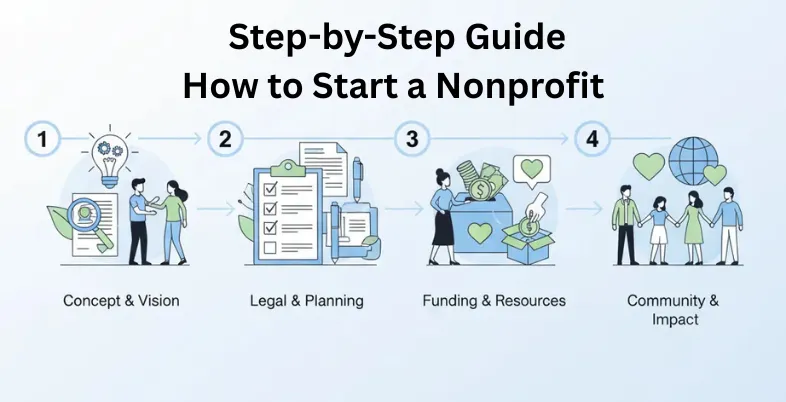
Step 1: Define Your Mission and Vision
Every great nonprofit starts with a clear purpose. Ask yourself:
- What problem am I trying to solve?
- Who will benefit from my work?
- How will I measure success?
Write down a short and clear mission statement that explains what your organization does and why it matters.
For example:
“Our mission is to provide free education and skill training to underprivileged children.”
Your vision statement should describe the long-term change you want to see your big picture goal.
Example:
“A world where every child has equal access to education and opportunity.”
Keep it simple, inspiring, and true to your values. This statement will guide every decision you make later.
Step 2: Research Before You Start
Many people skip this step, but research is what separates a strong nonprofit from one that struggles.
Here’s what to look into:
- Existing organizations: Check if similar nonprofits already exist. Learn from what they do well and where there are gaps you can fill.
- Community needs: Talk to the people you want to help. Ask what kind of support they really need.
- Funding possibilities: Explore grants, donors, and partners who might support your cause.
- Legal requirements: Each country has its own rules for registering a nonprofit. Research the basic documents and procedures needed in your region.
By doing this groundwork, you’ll be better prepared and more confident about your direction.
Step 3: Choose a Name and Structure
Your nonprofit’s name is more than just a label, it’s your identity.
Tips for choosing a name:
- Make it simple and easy to remember.
- Reflect your mission or cause.
- Check that it’s not already used by another organization.
- Make sure a domain name is available if you plan to build a website.
Organizational structure:
Most nonprofits have a board of directors — people who guide decisions, approve budgets, and ensure everything stays aligned with the mission. When learning how to start a nonprofit, begin with a small, committed group who share your vision and are ready to volunteer their time.
Step 4: Write Your Bylaws
Bylaws are the internal rules of your nonprofit. They explain how the organization will operate, things like how often you’ll meet, how you’ll elect board members, and how decisions will be made.
Typical sections in bylaws include:
- The purpose of the organization
- Roles of board members
- Voting rights
- Meeting schedules
- Financial policies
Writing clear bylaws helps avoid confusion later and keeps your nonprofit transparent.
Step 5: Register Your Nonprofit
To be recognized legally when learning how to start a nonprofit, you need to register your organization with your government or relevant authority. The process varies depending on your country but usually includes:
- Submitting your organization name and mission.
- Filing articles of incorporation or similar documents.
- Paying a registration fee (often small for nonprofits).
- Providing details of board members and bylaws.
Once registered, you’ll get a certificate or registration number that proves your nonprofit is officially recognized. This is also essential for applying for grants or opening a bank account.
Step 6: Open a Nonprofit Bank Account
You’ll need a separate bank account to handle donations, grants, and expenses. This keeps your finances transparent and helps you avoid mixing personal and organizational funds.
Prepare these before visiting the bank:
- Registration certificate
- Bylaws or governing documents
- Identification of board members
- Tax exemption certificate (if available)
Transparency builds trust and donors appreciate that.
Step 7: Apply for Tax-Exempt Status (If Available)
Many countries offer tax benefits for registered nonprofits. These exemptions allow:
- Donors to receive tax deductions for contributions.
- The organization to avoid paying certain taxes.
- Easier access to government or international grants.
The process might include submitting your mission, financial plan, and bylaws to your country’s tax authority. It can take time, but it’s worth it.
Also Read:-
Step 8: Create a Budget and Fundraising Plan
Every nonprofit needs money to operate for programs, materials, or salaries.
Start by creating a simple budget that lists your expected expenses and possible income sources.
Common funding sources:
- Donations from individuals
- Crowdfunding campaigns
- Grants from governments or foundations
- Fundraising events
- Corporate sponsorships
Also, plan how you’ll communicate your needs. A clear story about your cause inspires people to give.
Step 9: Build Your Brand and Online Presence
Even the best causes need visibility. Your brand helps people understand who you are and why your work matters.
Focus on:
- Logo and colors: Keep them simple and memorable.
- Website: Create a site that shares your mission, team, projects, and ways to donate.
- Social media: Use platforms like Instagram, Facebook, and LinkedIn to share updates, photos, and stories using effective social media marketing tools to boost engagement and reach.
- Content: Post regularly blog articles, testimonials, and progress reports help you stay connected with supporters.
Good branding builds credibility and helps attract volunteers and donors. Step 10: Build a Strong Team and Volunteer Network
You can’t run a nonprofit alone. Surround yourself with people who believe in your mission.
Types of supporters:
- Core team: Handles daily operations and decisions.
- Volunteers: Help with events, outreach, or logistics.
- Advisors: Provide legal, financial, or technical guidance.
- Partners: Other organizations or companies that share your goals.
Treat your volunteers with respect, recognize their contributions, and keep communication open. People stay loyal when they feel valued.
Step 11: Plan Your First Project or Program
Start small but make it impactful. Choose a project that clearly reflects your mission and can show measurable results.
For example:
- A food drive for low-income families.
- A tree-planting campaign in local communities.
- Free health check-ups in rural areas.
Document everything: photos, stories, and outcomes. Sharing success stories attracts more support.
Step 12: Keep Records and Stay Transparent
Transparency is the heart of trust in any nonprofit. Keep clear records of:
- Donations and expenses
- Meeting minutes
- Volunteer hours
- Program results
Share annual reports with donors and the public. It not only builds credibility but also helps with audits and grant applications.
Step 13: Build Partnerships and Collaborations
No nonprofit grows in isolation. Partnering with other groups, local authorities, or businesses can multiply your impact.
Ways to collaborate:
- Joint campaigns or events
- Shared training programs
- Resource exchange (like space, materials, or expertise)
Partnerships bring new ideas and open doors to more funding and visibility.
Step 14: Evaluate and Grow
After your first few programs, take time to reflect:
- What worked well?
- What challenges did you face?
- What feedback did you get from the community?
Use this to improve your next plan. Growth in a nonprofit isn’t just about size, it’s about deeper impact and stronger relationships with those you serve
Step 15: Keep Your Passion Alive
Running a nonprofit can be hard; there will be financial and emotional challenges. But remember why you started. Stay connected to your mission, celebrate small wins, and take care of your team. Passion and persistence will keep your organization alive even when funds are tight.
Conclusion
Starting a nonprofit is not just about paperwork and planning — it’s about purpose. You’re creating something that can truly change lives.
If you’re wondering how to start a nonprofit, this guide will walk you through every step — from defining your mission to building your first project — so you’ll have a solid foundation to grow your organization the right way. It might take time, but every small step counts. The world needs more people who care enough to take action. If that’s you, you’re already halfway there.
FAQs
1. Do I Need Money to Start a Nonprofit?
You don’t need a lot of money. Start small — with your idea, your team, and basic registration. Funding can grow through donations, grants, and events.
2. Can One Person Start a Nonprofit?
You can start the process, but most countries require at least a few board members to register officially.
3. How Long does it Take to Start a Nonprofit?
It depends on your country. Some get registered in a few weeks, while others may take several months due to documentation and approvals.
4. Can a Nonprofit Make Money?
Yes, but all income must go toward the organization’s mission, not personal profit.
5. How do I Find Donors?
Start with your local community, friends, and social networks. Then explore online crowdfunding and grant programs once your nonprofit is registered.