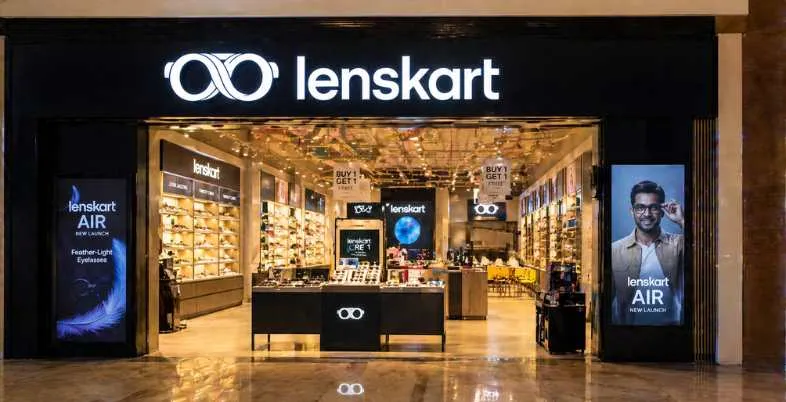
The Indian spectacle industry is thriving and leading the way is Lenskart – the nation’s fastest-growing and most trusted eyewear brand. As India’s most trusted eyewear brand, Lenskart operates more than 2,500+ stores across 175+ cities, transforming the way we purchase spectacles, sunglasses and contact lenses.
If you’re an entrepreneur looking for a promising business opportunity in 2026, a Lenskart franchise is a great choice. But before you start, the only question is: what is the Lenskart Franchise Cost? Whether it’s shopfitting, stock, rent or royalty – this article covers all the costs associated with opening a Lenskart store, the returns you can expect and how to apply. Whether you are from Delhi, Lucknow or a Tier-2 city, here’s your definitive guide.
Why Lenskart Is India’s #1 Eyewear Franchise Opportunity in 2026
- Market Leader – Lenskart has more than 40% share of the organised retail eyewear market in India
- Rapid Growth – India’s eyewear market will reach more than Rs. 18,000 crore by 2027
- 2500+ Stores – Asia’s largest optical retailer
- Good Brand Equity – Millions of loyal customers, high retention rate
- Omnichannel Strategy – Integration of online + offline retail environment makes franchisees stand out
- Diverse Product Portfolio – Eyewear, sunglasses, lenses, blue cut lenses, children’s eyewear and more
- Store-based Eye Testing – Free eye test attracts large number of customers
- Backed by Strong Supply Chain – Central manufacturing ensures quality and timely supply
- Strong Return on Investment – Franchisees will typically pay back their investment in 2-3 years
- Backed by Global Investors – SoftBank, Temasek and other high profile investors
Lenskart Franchise Cost in India: Complete Breakdown (2026)
| Cost Component | Estimated Amount (Rs.) |
| Franchise Fee | Rs. 1,50,000 – Rs. 2,00,000 |
| Store Setup & Interior | Rs. 15,00,000 – Rs. 20,00,000 |
| Technology & Equipment | Rs. 5,00,000 – Rs. 8,00,000 |
| Initial Inventory | Rs. 8,00,000 – Rs. 12,00,000 |
| Working Capital | Rs. 3,00,000 – Rs. 5,00,000 |
| Security Deposit (Rent) | Rs. 2,00,000 – Rs. 5,00,000 |
| Total Estimated Investment | Rs. 35,00,000 – Rs. 50,00,000 |
Total Lenskart Franchise Cost in India 2026: Approximately Rs. 35 Lakhs to Rs. 50 Lakhs
Total Capital Expenditure
- Minimum Capital Required: Rs. 35 Lakhs (Tier-2/3 cities)
- Metro City Investment: Rs. 45 Lakhs – Rs. 50 Lakhs (Delhi, Mumbai, Bengaluru)
- Franchise Fee: Rs. 1.5 – Rs. 2 Lakhs to Lenskart
- Agreement Valid For: 3-5 years (extendable)
- Funding: Bank loans and MUDRA scheme (for eligible borrowers)
- Lenskart Support: The company helps franchisees in financial planning and tie-ups
- Transparency: Lenskart gives a cost break-up at the time of signing the agreement
Store Setup Cost, Interior Fit-out & Technology Installation
- Store Setup Cost: Rs. 15 Lakhs – Rs. 20 Lakhs (depends on location and size of the store)
- Store Fit-out: Interiors will be done as per Lenskart’s brand and design standards
- Technology Setup: POS hardware and software, digital screens, billing software – Rs. 3 Lakhs – Rs. 5 Lakhs
- Eye Testing Equipment: Auto-refractometer, trial frame sets, slit lamp – Rs. 2 Lakhs – Rs. 3 Lakhs
- Branding & Signage: Outdoor boards, LED screens, branding in store – part of fit-out cost
- Furniture & Fixtures: Shelving, counters, furniture – included in interior cost
- Furniture & Fixtures: Display racks, counters, seating – covered in interior cost
Initial Inventory Cost & Working Capital Requirements
- Initial Inventory Cost: Rs. 8 Lakhs – Rs. 12 Lakhs (optical and sunglasses)
- Inventory Management: Done by Lenskart – no need to find a supplier
- Working Capital: Rs. 3 Lakhs – Rs. 5 Lakhs ideal for the first 3 months of business
- Product Range: Offers affordable, mid and premium quality eyewear to suit all customers
- Exclusive Products: Lenskart’s exclusive products sold only at Lenskart stores
- Inventory Management System: Lenskart’s tech-driven real-time inventory tracking
- Return Policy: Lenskart facilitates return or exchange of slow moving stock under favourable circumstances
Monthly Operating Expenses (OpEx): Rent, Salaries, Utilities
- Rent: Rs. 60,000 – Rs. 2,50,000/month (depending on the city and location)
- Salaries for Staff: 3-5 employees needed; Rs. 60,000 – Rs. 1,20,000
- Electricity & Internet: Rs. 10,000 – Rs. 20,000/month
- Local Marketing: Rs. 10,000 – Rs. 25,000/month (recommended)
- Maintenance & Miscellaneous: Rs. 5,000 – Rs. 15,000/month
- Total OpEx/month: Rs. 1.5 Lakhs – Rs. 4.5 Lakhs (depending on the city)
- Royalty/Commission to Lenskart: Monthly percentage of sales as per Franchise Agreement
Lenskart Franchise Cost in Delhi: City-Specific Investment Guide
Lenskart Franchise Cost in Delhi vs Tier-2 Cities
- Delhi Investment: Rs. 45 Lakhs – Rs. 55 Lakhs (higher real estate and operational costs)
- Tier-2 Cities (e.g., Lucknow, Jaipur, Kanpur): Rs. 35 Lakhs – Rs. 42 Lakhs
- Delhi Revenue: More people = More revenue (Rs. 8–Rs. 15 Lakhs/month possible)
- Tier-2 Revenue: Rs. 4–Rs. 8 Lakhs/month on average
- Cost vs Revenue: Delhi is more expensive but has a higher revenue potential
- Breakeven: Delhi stores take 24-30 months to break even; Tier-2 takes 18-24 months
High-Footfall Locations in Delhi for a Lenskart Store
- Lajpat Nagar Market – Localised high density shopping area, walk-ins
- Saket Select Citywalk Mall – Upmarket mall with wealthy customers
- Connaught Place – City Centre’s prime shopping hub
- Dwarka – High demand, up & coming residential suburb
- Rohini & Pitampura: North Delhi’s densely populated areas
- Rajouri Garden – West Delhi’s fashionable shopping hub
- Tip- Best to be on a main road with parking space available
Rent & Real Estate Cost Impact on Delhi Franchise Investment
- Prime Location Rent: Rs. 1.5 Lakhs – Rs. 2.5 Lakhs/month in South and Central Delhi
- Suburban Delhi Rent: Rs. 60,000 – Rs. 1.2 Lakhs/month in Dwarka, Rohini
- Security Deposit: 3-6 months of the rent (Rs. 3 Lakhs – Rs. 12 Lakhs)
- Lease Agreement: Recommended commercial lease is a minimum of 3 years
- Risk: Prime locations in Delhi have high rent, affecting revenues
- Alternative: High traffic semi-prime locations are more profitable
Space Requirement
- Minimum Area Required: 300 sq. ft.
- Optimal Store Size: 400-600 sq. ft. for a comfortable shopping experience
- Space Needed: Display, eye testing and billing counter space
- Ground Floor Recommended: Lenskart favours ground-floor locations to maximise walk-ins
- Parking Preference: 25-30% more traffic for stores with parking nearby
- Mall or High Street: Mall or high street both supported; mall units require 350-500 sq. ft.
Lenskart Franchise Profit Margin & Monthly Income
Gross Profit Margin
- Gross Margin on Frames: 40-60% (depending on brand and type of frame)
- Gross Margin on Lenses: 50-65% (higher margin lenses)
- Gross Margin on Sunglasses: 35-50%
- Contact Lenses Margin: 25–35%
- Overall Gross Margin: 40-50% of total sales
- Net Margin after OpEx: 15- 25% net profit margin after OpEx
Average Monthly Revenue Estimate
- Metro City Store (Delhi/Mumbai): Rs. 8 Lakhs – Rs. 15 Lakhs/month
- Tier 2 Store: Rs. 4 Lakhs – Rs. 8 Lakhs/month
- Department Store: Can be more than Rs. 15 Lakhs/month in festivals
- High Season Sales: October – February (wedding + winter = high demand for eyewear)
- Returning Customer: 35-40% of revenue every month from repeat customers
- Click and Collect: Lenskart app orders (click and collect) to local stores generate additional revenue
Revenue Streams
- Eyeglasses – Main revenue source (50-60% of revenue)
- Sunglasses – Lucrative seasonal item (10-15% of sales)
- Contact Lenses & Solutions – Regular consumables (10-15%)
- Optometry Services – Generates traffic; indirectly increases sales
- Kids’ Eyewear – Rapidly growing segment; has Lenskart range
- Blue-Cut & Computer Lenses – In-demand post COVID-19
- Gift Cards & Accessories – Extra income during the holidays
ROI Timeline
- Break Even: 18-30 months after opening shop
- Year 1: Sales are now stable; expect net margins 10-15%
- Year 2: Increased customer loyalty; net margins 18-22%
- Year 3+: Established store with solid loyalty; complete ROI achieved
- Delhi Stores: Longer break-even period, higher profits
- Second Store: Most successful franchisees have second store by Year 3
Lenskart Franchise Business Model: FOFO Explained
Lenskart adopts mostly the FOFO (Franchise Owned, Franchise Operated) model. This means that you, as the franchisee, own the store, provide the capital and manage the store. Lenskart owns the brand, supplies the products, offers a technology platform, training and marketing assistance.
You pay an up-front franchise fee and a percentage of revenue to Lenskart. This is a great model for entrepreneurs, as they can own and run a business with Lenskart’s strong brand equity and supply chain. This is a great model for entrepreneurs starting out with a business, and looking for the security of an established brand but also the independence of owning a business.
Investors comparing franchise opportunities such as the Zudio Franchise Cost in India can also consider Lenskart’s FOFO business model for its strong brand recognition and operational support.
Support Provided by Lenskart to Franchise Owners
- Training: Comprehensive training for staff on products, eye examination and customer service
- Information Technology: POS, inventory and CRM system
- National Marketing: TV, digital and social media advertising by Lenskart benefits all stores
- Location Support: Lenskart team will help locate your store
- Store Design: Lenskart’s team helps with the design and fit-out of the store
- Centralised Supply chain: No need to source products; Lenskart will do it all
- Business Analytics: Business metrics/dashboard to monitor sales
- Relationship Manager: Have a contact at Lenskart HQ to answer your queries
- App Integration: Your store is listed on the Lenskart app and digital customers will find your store
How to Apply for a Lenskart Franchise (Step-by-Step)
- Step 1 – Go to the Web Site: Navigate to www.lenskart.com and click on “Franchise” at the bottom of the page
- Step 2 – Enquiry Form: Provide your name, city/location, contact number and investment amount on the franchise enquiry form
- Step 3 – Preliminary Call: Lenskart’s franchising team will contact you in 5-7 days for an initial call
- Step 4 – Location Screening: You provide suggestions for the store locations; Lenskart franchise team approves the best one
- Step 5 – Background & Financial Check: Initial financial check-up and background check
- Step 6 – Franchise Agreement: Signing of the franchise agreement; franchise fee paid
- Step 7 – Store Readiness: Store design, fitting out and technology installation (45-60 days)
- Step 8 – Recruit & Train Employees: Lenskart will train your employees
- Step 9 – Store Soft Launch & Grand Opening: Lenskart will help you with marketing
Is a Lenskart Franchise Worth It? Pros, Cons & Comparison
Pros
- Nationally-recognized and trusted brand – no need to develop brand awareness
- Efficient and effective marketing and online presence to attract customers
- Centralised stock control – no more sourcing issues
- Free eye test to bring in traffic every day
- Eyewear market is growing with increasing awareness and affordability
- Efficient processes with technology to minimise errors
- Diverse sources of income from frame, lens, contact lens and accessories
Cons
- Large Lenskart Franchise Cost can be prohibitive to small businesses
- High rentals in key locations of metro cities affect earnings
- Lenskart’s revenue share decreases your bottom-line
- Pricing, product and branding is dictated by Lenskart
- You are reliant on Lenskart’s supply chain – which delays impact you
Lenskart Franchise vs Titan Eye+ Franchise: Cost & Profit Comparison
| Parameter | Lenskart Franchise | Titan Eye+ Franchise |
| Total Investment | Rs. 35 – Rs. 50 Lakhs | Rs. 30 – Rs. 50 Lakhs |
| Franchise Fee | Rs. 1.5 – Rs. 2 Lakhs | Rs. 2 – Rs. 5 Lakhs |
| Space Required | 300 – 600 sq. ft. | 300 – 500 sq. ft. |
| Gross Profit Margin | 40 – 50% | 35 – 45% |
| Monthly Revenue (Metro) | Rs. 8 – Rs. 15 Lakhs | Rs. 6 – Rs. 12 Lakhs |
| ROI Timeline | 18 – 30 months | 24 – 36 months |
| Brand Recognition | Very High (Digital-First) | High (Tata Brand) |
| Technology Support | Excellent (App + POS) | Good |
| Training Support | Comprehensive | Moderate |
| Marketing Support | Strong (National + Digital) | Strong (Tata backing) |
Explore details about Amul Franchise Cost in India.
Risks & Challenges
- Steep Rental Charges: Poor location can severely impact profits, particularly in Delhi
- Market Competition: Local vs online players for the low-price market
- Franchisee Payback: Franchisees need to account for Lenskart’s share of revenue for their net profits
- Employee Turnover: Frequent staff turnover is a frequent issue
- Mall Location: Lenskart’s mall-based stores might face off-peak or post-festival periods
- Stock Shortages: Centralized supply chain means less control over stock
- Break-even Point: If your store doesn’t hit the sales targets quickly, you may lose money
- In-Store vs Online: Lenskart online may cannibalise your local business
Is Lenskart a Good Investment for 2026 Investors?
Yes—for investors with the right capital and location strategy, Lenskart remains one of the most promising retail franchise opportunities in India in 2026.
Strong Market Demand
India’s growing urban population, increased screen time, and rising awareness about eye health are driving consistent demand for eyewear. This makes the optical retail segment highly stable and recession-resistant.
Location Still Drives Success
Prime and semi-prime locations—especially in metro cities and high-footfall Tier-2 markets—play a critical role. Areas near offices, colleges, malls, and residential hubs tend to generate the highest walk-ins and conversions.
High Revenue Potential
A well-performing store can generate ₹8–15 Lakhs per month in revenue, making the overall Lenskart franchise cost justifiable for serious investors.
Brand Power & Marketing Support
Lenskart’s strong brand recall, omnichannel presence, and aggressive digital + offline (BTL) marketing campaigns significantly reduce customer acquisition challenges for franchise owners.
Faster ROI Timeline
Compared to many retail franchises, Lenskart offers a relatively faster break-even period. Most stores achieve ROI within 2–3 years, depending on location and operational efficiency.
Expansion Opportunities
With Lenskart continuously expanding into new cities and micro-markets, investors still have opportunities to capture high-growth locations—especially in emerging urban zones.
Conclusion
The Lenskart Franchise Cost in India in 2016 is Rs. 35 Lakhs and Rs. 55 Lakhs (depending on location and store size). The initial investment is high, but so too is the potential return: brand support, foot traffic, diverse revenue streams, and a burgeoning eyewear market make this a very lucrative franchise opportunity in India.
With the right location, Delhi entrepreneurs in particular can expect to rake in substantial monthly earnings with a 2-3 year return on investment. If you’re seeking a venture that offers brand recognition, technology, and profitability, the Lenskart Franchise ticks all the right boxes. Do it now: visit Lenskart’s homepage and fill out the franchise form to take the first step toward your entrepreneurial dream.
Explore:
FAQs
How much does it cost to open a Lenskart franchise in India in 2026?
The investment is between Rs. 35 Lakhs to Rs. 55 Lakhs for setup, inventory, equipment, and working capital.
To take a Lenskart franchise, do you need experience in the optical industry?
No, it is not required. Lenskart offers complete training to franchisees and the staff.
What is the Monthly Profit of a Lenskart franchise?
The net profit per month is Rs. 1 Lakh – Rs. 3.5 Lakhs, depending on location, foot traffic and efficiency of the store.
How to become a Lenskart franchise?
Go to www.lenskart.com, click on Franchise and complete the online Franchise Inquiry form. The Lenskart team will reach out to you in 5-7 days.
What is the return on the Lenskart Franchise Cost?
For most stores, the investment is recovered in 18-30 months, while in Delhi, stores recover it in 24-30 months.