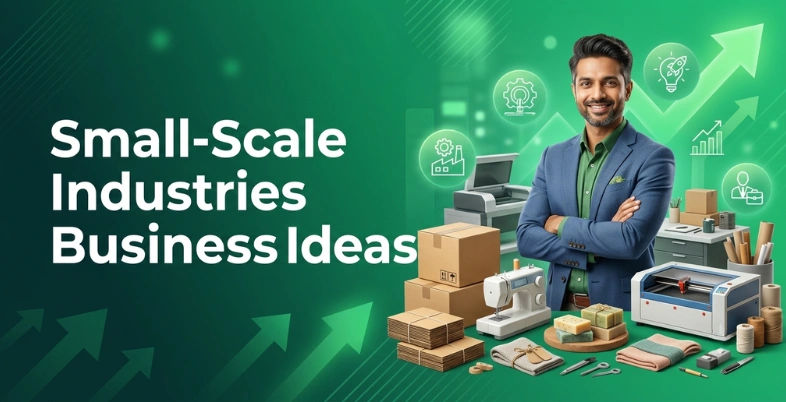
Small-scale industries (SSIs) continue to play a vital role in India’s economy by creating employment, encouraging entrepreneurship, and supporting local manufacturing. With increasing government support, rising demand for Made-in-India products, and easier access to online marketplaces, starting a small-scale manufacturing business has become more attractive than ever.
One of the biggest advantages of small-scale industries is their flexibility. Many businesses can be started from home or a small workshop, while others can gradually expand into large manufacturing units as demand grows.
In this guide, you’ll discover 30+ best small-scale industries business ideas in India for 2026, along with investment requirements, earning potential, market demand, and practical guidance to help you choose the right manufacturing business based on your budget and goals.
What Are Small-Scale Industries in India?
Small-scale industries (SSIs) are manufacturing or production businesses that operate on a relatively small scale with limited investment, machinery, and workforce compared to large industrial units. These businesses produce goods for local, regional, national, or international markets while contributing significantly to employment generation and economic development.
Some common examples of small-scale industries include Paper bag manufacturing, Candle making, Spice processing, Soap manufacturing, Bakery production, Incense stick manufacturing, Furniture manufacturing etc. Today, many small-scale industries also sell through e-commerce platforms such as Amazon, Flipkart, and their own websites, enabling them to reach customers across India and even international markets.
Why Small-Scale Manufacturing Is Booming in India in 2026
India’s manufacturing sector is growing rapidly due to favourable government policies, increasing domestic consumption, and rising global demand for Indian-made products. These factors have created excellent opportunities for entrepreneurs interested in starting small-scale industries.
Initiatives such as Make in India, Startup India, MSME development programmes, and various state-level incentives encourage entrepreneurs to establish manufacturing businesses by providing easier access to loans, subsidies, and skill development programmes.
India’s expanding middle class and increasing purchasing power have significantly boosted demand for everyday consumer products, household goods, food products, packaging materials, and eco-friendly alternatives. This trend also creates opportunities for entrepreneurs starting with zero-investment business ideas before scaling up. This creates a steady market for small manufacturers.
Which Small-Scale Business Is Most Profitable in India?
There is no single small-scale business that is the most profitable, as profitability depends on factors such as investment capacity, market demand, competition, production costs, operational efficiency, and marketing strategy.
However, businesses that manufacture essential everyday products or supply goods to other businesses (B2B) often generate steady sales, repeat customers, and attractive profit margins. Entrepreneurs can also consider trading business ideas to complement their manufacturing business and create additional revenue streams. Choosing a business with consistent demand and opportunities for value addition can significantly improve long-term returns. Some of the most profitable small-scale manufacturing businesses in India include:
- Paper Bag Manufacturing: Growing environmental awareness and restrictions on single-use plastics have increased demand for eco-friendly paper bags.
- Spice Processing and Packaging: Branded spices and spice blends enjoy year-round demand in both domestic and export markets.
- Detergent Powder Manufacturing: Detergents are essential household products with consistent demand and strong opportunities for local distribution.
- Organic Soap Manufacturing: Rising consumer preference for natural and chemical-free personal care products has boosted the organic soap market.
- Disposable Paper Products Manufacturing: Products such as paper cups, plates, bowls, and food containers are widely used by restaurants, caterers, and food delivery businesses.
- Corrugated Box Manufacturing: The rapid growth of e-commerce and logistics has significantly increased demand for packaging materials.
- Furniture Manufacturing: Residential, commercial, and office furniture continue to see strong demand due to urbanisation and infrastructure development.
Investment and Earning Comparison Table (2026)
| Business Category | Estimated Investment | Monthly Earning Potential | Profit Margin |
| Paper Bag Manufacturing | ₹30,000–₹3 lakh | ₹40,000–₹2 lakh | 25–40% |
| Candle Manufacturing | ₹20,000–₹2 lakh | ₹30,000–₹1.5 lakh | 30–45% |
| Agarbatti Manufacturing | ₹40,000–₹2 lakh | ₹40,000–₹2 lakh | 25–40% |
| Handmade Soap Manufacturing | ₹50,000–₹3 lakh | ₹50,000–₹2.5 lakh | 35–50% |
| Customised T-Shirt Printing | ₹75,000–₹5 lakh | ₹60,000–₹3 lakh | 30–50% |
| Detergent Powder Manufacturing | ₹1 lakh–₹8 lakh | ₹80,000–₹5 lakh | 20–35% |
| Spice Processing & Packaging | ₹2 lakh–₹10 lakh | ₹1 lakh–₹6 lakh | 25–40% |
| Disposable Paper Cup & Plate Manufacturing | ₹3 lakh–₹15 lakh | ₹1.5 lakh–₹8 lakh | 25–40% |
| LED Bulb Assembly | ₹2 lakh–₹8 lakh | ₹1 lakh–₹5 lakh | 25–40% |
| Corrugated Box Manufacturing | ₹5 lakh–₹20 lakh | ₹2 lakh–₹10 lakh | 20–35% |
| Handmade Chocolate Manufacturing | ₹50,000–₹3 lakh | ₹50,000–₹3 lakh | 35–55% |
| Pickle Manufacturing | ₹40,000–₹2 lakh | ₹40,000–₹2 lakh | 30–50% |
| Organic Herbal Powder Manufacturing | ₹75,000–₹5 lakh | ₹60,000–₹4 lakh | 35–60% |
| Decorative Candle Manufacturing | ₹30,000–₹2 lakh | ₹40,000–₹2 lakh | 40–60% |
| Papad Manufacturing | ₹50,000–₹2 lakh | ₹50,000–₹2 lakh | 30–45% |
| Packaging Tape Manufacturing | ₹5 lakh–₹15 lakh | ₹2 lakh–₹8 lakh | 20–35% |
| Corrugated Carton Box Manufacturing | ₹8 lakh–₹25 lakh | ₹3 lakh–₹12 lakh | 20–35% |
| Plastic Injection Moulding Products | ₹10 lakh–₹50 lakh | ₹4 lakh–₹20 lakh | 25–40% |
| Printed Label & Sticker Manufacturing | ₹3 lakh–₹12 lakh | ₹1.5 lakh–₹8 lakh | 30–45% |
| Industrial Cleaning Chemicals | ₹2 lakh–₹10 lakh | ₹1 lakh–₹6 lakh | 25–40% |
| Biodegradable Cutlery Manufacturing | ₹5 lakh–₹20 lakh | ₹2 lakh–₹10 lakh | 30–45% |
| 3D Printed Custom Products | ₹2 lakh–₹8 lakh | ₹1 lakh–₹6 lakh | 40–60% |
| Organic Fertiliser Manufacturing | ₹2 lakh–₹10 lakh | ₹1 lakh–₹5 lakh | 30–50% |
| Smart Home Décor Manufacturing | ₹3 lakh–₹12 lakh | ₹1.5 lakh–₹8 lakh | 35–55% |
| Eco-Friendly Packaging Products | ₹5 lakh–₹20 lakh | ₹2 lakh–₹10 lakh | 25–45% |
| Smart LED Mirror Manufacturing | ₹3 lakh–₹15 lakh | ₹1.5 lakh–₹8 lakh | 30–50% |
| Pet Products Manufacturing | ₹2 lakh–₹10 lakh | ₹1 lakh–₹6 lakh | 35–55% |
| Reusable Silicone Kitchen Products | ₹5 lakh–₹20 lakh | ₹2 lakh–₹10 lakh | 30–45% |
| Modular Furniture Manufacturing | ₹5 lakh–₹30 lakh | ₹2 lakh–₹12 lakh | 25–40% |
| EV Charging Accessories Manufacturing | ₹5 lakh–₹20 lakh | ₹2 lakh–₹10 lakh | 30–45% |
| Eco-Friendly Products (General) | ₹1 lakh–₹10 lakh | ₹80,000–₹6 lakh | 30–50% |
List of 30+ Best Small-Scale Industries Business Ideas in India (2026)
A. Low Investment Small-Scale Business Ideas (Under ₹50,000)

1. Paper Bag Manufacturing Business
Paper bag manufacturing is one of the most profitable small business ideas because of the growing demand for eco-friendly packaging. The business involves producing paper bags in different sizes and designs for grocery stores, clothing shops, pharmacies, bakeries, restaurants, gift stores, and supermarkets. As governments continue to restrict the use of single-use plastic, businesses are actively switching to paper packaging to comply with regulations and meet customer expectations. Entrepreneurs can also manufacture customised paper bags with printed logos for businesses, allowing them to charge higher prices and improve profit margins.
Raw Materials & Equipment Needed
- Kraft paper or recycled paper
- Paper rolls or sheets
- Adhesive (glue)
- Paper cutting tools
- Printing machine (optional)
- Eyelets and handles
- Manual or semi-automatic paper bag making machine
Market Demand
The Indian paper packaging industry is expanding rapidly due to environmental regulations and increasing consumer awareness. Retail stores, food delivery businesses, restaurants, pharmacies, and shopping malls require paper bags every day. The growth of e-commerce has also increased demand for sustainable packaging solutions, making this business a reliable long-term opportunity.
Profit Margin
25%–40%, depending on production efficiency, order volume, and custom printing services. Businesses supplying wholesale orders generally achieve higher profitability.
How to Start
- Research local demand and identify potential buyers.
- Purchase basic paper bag making equipment.
- Source quality kraft paper from reliable suppliers.
- Register your business if required.
- Offer customised printing services to attract commercial clients.
- Promote your products through local distributors and online platforms.
Where to Sell
Sell directly to retail stores, supermarkets, bakeries, restaurants, pharmacies, gift shops, wholesalers, packaging distributors, Amazon, Flipkart, IndiaMART, and your own website.
2. Candle Manufacturing Business
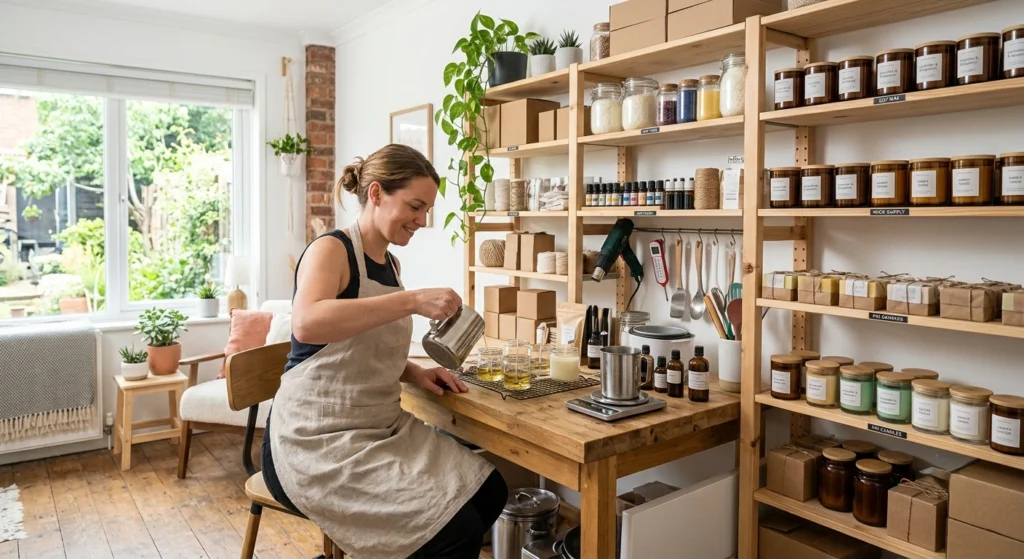
Candle manufacturing is a simple and profitable business that can be started with a very small investment. It is also one of the most practical business ideas for teens who want to learn entrepreneurship and earn extra income.While candles were traditionally used during power cuts, today’s market includes decorative candles, scented candles, soy candles, floating candles, festive candles, religious candles, and luxury gift products. The increasing popularity of home décor, aromatherapy, wellness products, and personalised gifting has significantly expanded the candle market in India.
Raw Materials & Equipment Needed
- Paraffin wax, soy wax, or beeswax
- Candle moulds
- Cotton wicks
- Colours and fragrances
- Melting pot
- Thermometer
- Packaging materials
Market Demand
Demand for candles has increased significantly because of festive celebrations, weddings, home decoration, religious ceremonies, hospitality businesses, and luxury gifting. Premium scented candles are especially popular among urban consumers and online shoppers.
Profit Margin
30%–45%, with customised and premium candles often generating even higher margins due to branding and packaging.
How to Start
- Learn basic candle-making techniques.
- Purchase essential equipment and raw materials.
- Develop different candle designs and fragrances.
- Create attractive packaging.
- Sell through local retailers, exhibitions, social media, and e-commerce platforms.
Where to Sell
Home décor stores, gift shops, supermarkets, hotels, spas, online marketplaces, Instagram, Facebook Marketplace, Amazon, Flipkart, and your own website.
3. Incense Stick (Agarbatti) Manufacturing Business
Incense stick manufacturing is one of India’s oldest and most stable small-scale industries business ideas. Agarbattis are used daily in homes, temples, offices, hotels, and religious institutions for prayers, meditation, and fragrance. Besides domestic demand, Indian incense sticks are exported to several countries, creating additional business opportunities. The manufacturing process is relatively simple and can be started from home with manual machines before expanding into automated production.
Raw Materials & Equipment Needed
- Bamboo sticks
- Charcoal powder
- Jigat powder
- Wood powder
- Essential oils and fragrances
- Mixing machine
- Agarbatti making machine
- Drying racks
- Packaging materials
Market Demand
India has one of the world’s largest incense stick markets due to its cultural and religious traditions. Demand remains consistent throughout the year, with sales increasing during festivals and religious events. Export demand also continues to grow.
Profit Margin
25%–40%, depending on production capacity, fragrance quality, and branding.
How to Start
- Purchase a manual or semi-automatic agarbatti machine.
- Source quality raw materials.
- Develop different fragrance options.
- Package products attractively.
- Supply wholesalers and retailers while building your own brand.
Where to Sell
Wholesale markets, supermarkets, temples, grocery stores, puja item shops, export traders, Amazon, Flipkart, IndiaMART, and your own online store.
4. Handmade Soap Manufacturing Business
Handmade soap manufacturing has become increasingly popular as consumers move towards natural, herbal, and chemical-free skincare products. It is also one of the most popular business ideas for women interested in starting a home-based manufacturing business.The business involves producing soaps using ingredients such as glycerine, coconut oil, olive oil, shea butter, essential oils, herbs, and natural colours. Entrepreneurs can create specialised soaps for skincare, acne treatment, baby care, sensitive skin, luxury gifting, and aromatherapy. The rising demand for organic personal care products has created excellent opportunities for small manufacturers to build premium brands.
Raw Materials & Equipment Needed
- Soap base
- Essential oils
- Natural colours
- Herbal extracts
- Soap moulds
- Mixing equipment
- Measuring tools
- Packaging materials
Market Demand
Consumers increasingly prefer natural skincare products that are free from harsh chemicals. Handmade soaps are widely purchased through online stores, gift shops, supermarkets, salons, spas, and wellness stores, making this a growing market.
Profit Margin
35%–50%, especially for premium, customised, and organic soap brands.
How to Start
- Learn soap-making techniques.
- Purchase quality raw materials.
- Develop unique product formulations.
- Design attractive packaging.
- Market your products online and through local retailers.
Where to Sell
Cosmetic stores, pharmacies, supermarkets, salons, spas, gift shops, exhibitions, Amazon, Flipkart, Etsy, Instagram, and your own website.
5. Customised T-Shirt Printing Business
A customised T-shirt printing business creates personalised apparel for individuals, businesses, schools, colleges, sports teams, events, and corporate organisations. Customers can print logos, slogans, photographs, artwork, promotional messages, or custom designs on T-shirts, hoodies, and other garments. The growing popularity of personalised fashion, influencer merchandise, startup branding, and corporate gifting has made this business highly profitable.
Raw Materials & Equipment Needed
- Plain cotton or polyester T-shirts
- Heat press machine
- Sublimation printer or vinyl cutter
- Transfer paper
- Printing inks
- Computer with design software
- Packaging materials
Market Demand
Demand for customised apparel continues to grow because of online businesses, educational institutions, sports clubs, corporate events, influencer merchandise, promotional campaigns, and personalised gifting. Small businesses and startups also frequently order branded T-shirts for marketing.
Profit Margin
30%–50%, depending on order quantity, design complexity, and printing method.
How to Start
- Invest in a heat press and printing equipment.
- Source quality blank T-shirts.
- Create sample designs and an online catalogue.
- Accept custom orders through social media and your website.
- Partner with schools, companies, and event organisers.
Where to Sell
Amazon, Flipkart, Meesho, Etsy, Instagram, Facebook, corporate clients, colleges, schools, event organisers, local garment stores, and your own e-commerce website.
B. Small-Scale Manufacturing Business Ideas Under ₹10 Lakh
6. Detergent Powder Manufacturing Business
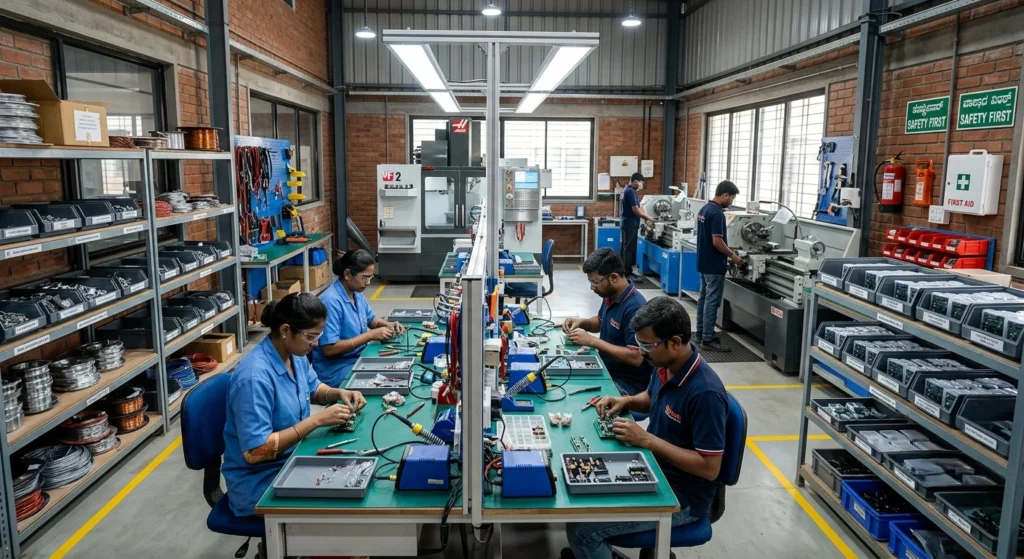
Detergent powder manufacturing is one of the most profitable small-scale industries business ideas because detergent is an essential household product with year-round demand. The business involves producing washing powder for household use, commercial laundries, hotels, hospitals, and cleaning service providers. Entrepreneurs can manufacture economy, premium, herbal, or high-performance detergent powders depending on their target market. Since consumers purchase detergents regularly, repeat sales are common, making this a stable manufacturing business ideas .
Raw Materials & Equipment Needed
- Soda ash
- LABSA (Linear Alkyl Benzene Sulphonic Acid)
- Sodium sulphate
- Fragrances and colours
- Mixing machine
- Pulveriser
- Sieving machine
- Packaging machine
- Weighing scale
Market Demand
The detergent market in India continues to grow because of rising hygiene awareness, increasing urbanisation, and a growing population. Every household, hotel, hospital, restaurant, and laundry service requires detergent products, creating continuous demand throughout the year.
Profit Margin
20%–35%, depending on production cost, branding, packaging quality, and distribution network.
How to Start
- Learn the detergent manufacturing process.
- Purchase mixing and packaging machinery.
- Source raw materials from certified suppliers.
- Obtain necessary registrations and licences.
- Build relationships with distributors and retailers.
- Promote your brand locally and online.
Where to Sell
Supermarkets, grocery stores, wholesalers, cleaning supply distributors, hotels, hospitals, Amazon, Flipkart, IndiaMART, and your own website.
7. Spice Processing and Packaging Business
A spice processing business purchases whole spices such as turmeric, chilli, coriander, cumin, black pepper, and garam masala ingredients, cleans them, grinds them into powder, and packages them for retail or wholesale sale. India is one of the world’s largest producers and consumers of spices, making this business a highly profitable opportunity. Consumers increasingly prefer hygienically packed branded spices over loose products sold in local markets.
Raw Materials & Equipment Needed
- Whole spices
- Spice grinder
- Pulveriser
- Cleaning and grading equipment
- Packaging machine
- Digital weighing scale
- Moisture-proof packaging materials
Market Demand
Demand for packaged spices continues to increase because every household, restaurant, hotel, catering service, and food manufacturer uses spices daily. The export market for Indian spices also provides additional growth opportunities.
Profit Margin
25%–40%, with branded and premium spice products often generating higher returns.
How to Start
- Source fresh, high-quality spices directly from farmers or wholesalers.
- Invest in grinding and packaging machinery.
- Maintain strict hygiene and food safety standards.
- Obtain FSSAI registration.
- Build a retail network and establish your own brand.
Where to Sell
Retail stores, supermarkets, wholesalers, restaurants, hotels, online grocery platforms, Amazon, Flipkart, IndiaMART, and export buyers.
8. Disposable Paper Cup and Plate Manufacturing Business
Disposable paper cups and plates are widely used in tea stalls, cafés, restaurants, offices, schools, hospitals, food courts, weddings, and public events. As businesses move away from plastic disposables, paper-based alternatives have become increasingly popular, making this one of the most profitable small-scale industries business ideas. This manufacturing business involves producing paper cups, plates, bowls, and food containers using automatic or semi-automatic machines. Since these products are inexpensive, lightweight, and used in large quantities every day, they offer excellent sales volume.
Raw Materials & Equipment Needed
- PE-coated paper rolls
- Paper sheets
- Paper cup making machine
- Paper plate making machine
- Printing machine (optional)
- Packaging materials
Market Demand
Demand for disposable paper products continues to grow because of environmental regulations, food delivery services, catering businesses, and increasing takeaway culture. Commercial customers regularly place bulk orders, ensuring recurring business.
Profit Margin
25%–40%, depending on production efficiency, order size, and custom printing services.
How to Start
- Select the products you want to manufacture.
- Purchase suitable production machinery.
- Source food-grade paper materials.
- Obtain required licences.
- Build relationships with distributors and food businesses.
Where to Sell
Restaurants, tea stalls, cafés, caterers, wholesalers, supermarkets, food packaging distributors, Amazon, Flipkart, IndiaMART, and institutional buyers.
9. LED Bulb Assembly Business
The LED bulb assembly business involves assembling LED bulbs, tube lights, panel lights, and other energy-efficient lighting products using pre-manufactured electronic components. With rising electricity costs and government initiatives promoting energy conservation, LED lighting has become the preferred choice for homes, offices, industries, schools, and commercial buildings. Compared to manufacturing electronic components from scratch, assembling LED products requires lower investment while still offering attractive profit margins.
Raw Materials & Equipment Needed
- LED chips
- Drivers
- PCB boards
- Bulb housings
- Soldering station
- Testing equipment
- Screwdrivers
- Packaging materials
Market Demand
The Indian LED lighting market continues to expand due to infrastructure development, smart city projects, residential construction, and increasing awareness of energy-efficient products.
Profit Margin
25%–40%, depending on product quality, component sourcing, and brand positioning.
How to Start
- Learn LED assembly techniques.
- Purchase assembly tools and testing equipment.
- Source certified electronic components.
- Ensure proper product testing and quality control.
- Build a dealer and distributor network.
Where to Sell
Electrical shops, hardware stores, construction companies, wholesalers, government contractors, Amazon, Flipkart, IndiaMART, and your own website.
10. Corrugated Box Manufacturing Business
Corrugated boxes are used for packaging, storage, transportation, and shipping across almost every industry, including e-commerce, FMCG, pharmaceuticals, electronics, food processing, textiles, and manufacturing. This business involves converting corrugated sheets into boxes of different sizes and strengths based on customer requirements. As online shopping and logistics continue to grow rapidly, the demand for durable packaging solutions is increasing every year.
Raw Materials & Equipment Needed
- Corrugated paper sheets
- Kraft paper
- Adhesives
- Cutting machine
- Creasing machine
- Printing machine
- Die-cutting machine
- Packaging equipment
Market Demand
The rapid expansion of e-commerce, manufacturing, exports, and logistics has made corrugated packaging one of the fastest-growing sectors in India. Nearly every product shipped requires protective packaging, creating consistent demand from businesses.
Profit Margin
20%–35%, with customised packaging solutions generally offering higher profit margins than standard boxes.
How to Start
- Study the packaging requirements of local industries.
- Invest in cutting, creasing, and printing machinery.
- Source quality kraft paper from reliable suppliers.
- Offer customised packaging solutions.
- Build long-term relationships with commercial buyers.
Where to Sell
E-commerce sellers, manufacturers, exporters, wholesalers, logistics companies, packaging distributors, IndiaMART, trade fairs, and direct B2B contracts.
C. Home-Based Small-Scale Manufacturing Business Ideas
11. Handmade Chocolate Manufacturing Business
Handmade chocolate manufacturing is a profitable home-based business that involves producing chocolates in different flavours, shapes, and packaging styles for retail customers, gift shops, bakeries, cafés, and corporate clients. Unlike mass-produced chocolates, handmade chocolates are valued for their premium ingredients, customised designs, and unique flavours. The demand for artisanal chocolates has grown significantly due to festivals, weddings, birthdays, corporate gifting, and online gifting platforms.
Raw Materials & Equipment Needed
- Chocolate compound or couverture chocolate
- Dry fruits and flavouring ingredients
- Chocolate moulds
- Melting machine or double boiler
- Refrigerator
- Packaging boxes and wrapping materials
Market Demand
The premium chocolate market in India continues to expand because of increasing disposable income, gifting culture, and demand for customised products. Businesses also purchase chocolates in bulk for employee gifts, promotional campaigns, and festive hampers.
Profit Margin
35%–55%, depending on ingredient quality, packaging, branding, and product customisation.
How to Start
- Learn chocolate-making techniques.
- Purchase quality raw materials and moulds.
- Develop unique flavours and gift collections.
- Design attractive packaging.
- Promote your products through social media and local retailers.
Where to Sell
Gift shops, bakeries, cafés, supermarkets, corporate clients, Instagram, Amazon, Flipkart, Etsy, exhibitions, and your own website.
12. Pickle Manufacturing Business
Pickle manufacturing is a traditional food business that remains highly profitable because pickles are a staple in Indian households. The business involves preparing pickles using fruits and vegetables such as mango, lemon, chilli, garlic, mixed vegetables, and gooseberries with spices and edible oils. Consumers increasingly prefer hygienically prepared homemade pickles that offer authentic flavours without excessive preservatives, making it one of the most successful small-scale industries business ideas for aspiring entrepreneurs.
Raw Materials & Equipment Needed
- Fresh fruits and vegetables
- Cooking oil
- Salt and spices
- Mixing utensils
- Food-grade containers
- Glass or plastic jars
- Labelling and packaging materials
Market Demand
Packaged pickles enjoy strong demand from households, restaurants, hotels, grocery stores, and export markets. Regional flavours and homemade varieties are especially popular among consumers looking for authentic tastes.
Profit Margin
30%–50%, depending on ingredient costs, production scale, and brand positioning.
How to Start
- Finalise your recipes and product range.
- Source fresh ingredients from local farmers.
- Maintain hygiene during preparation.
- Obtain FSSAI registration.
- Build your brand and market your products locally and online.
Where to Sell
Supermarkets, grocery stores, restaurants, hotels, Amazon, Flipkart, BigBasket, local distributors, and your own website.
13. Organic Herbal Powder Manufacturing Business
Organic herbal powder manufacturing involves producing natural powders such as neem powder, moringa powder, tulsi powder, hibiscus powder, aloe vera powder, amla powder, and multani mitti blends for skincare, haircare, health supplements, and Ayurvedic applications. As consumers become more health-conscious and shift towards natural products, demand for herbal powders has increased across India. This business can be started from home using basic grinding and packaging equipment.
Raw Materials & Equipment Needed
- Dried herbs and leaves
- Pulveriser or grinding machine
- Sieving equipment
- Weighing scale
- Airtight packaging materials
- Labelling machine (optional)
Market Demand
The herbal wellness market continues to grow because consumers increasingly prefer chemical-free beauty and health products. Ayurvedic clinics, cosmetic manufacturers, pharmacies, and health stores regularly purchase herbal powders.
Profit Margin
35%–60%, particularly for certified organic and premium-quality products.
How to Start
- Source quality herbs from trusted suppliers.
- Dry and grind the raw materials hygienically.
- Package products in moisture-proof containers.
- Obtain necessary food or cosmetic licences where applicable.
- Market through health stores and online platforms.
Where to Sell
Ayurvedic stores, pharmacies, cosmetic retailers, wellness centres, Amazon, Flipkart, IndiaMART, and your own e-commerce website.
14. Handmade Decorative Candles Business
Decorative candle manufacturing focuses on creating designer candles for home décor, gifting, weddings, hotels, spas, restaurants, and festive celebrations. Unlike standard utility candles, decorative candles are available in different shapes, colours, fragrances, and artistic designs. Consumers increasingly purchase premium candles for interior decoration, aromatherapy, luxury gifting, and special occasions.
Raw Materials & Equipment Needed
- Soy wax, paraffin wax, or beeswax
- Candle moulds
- Cotton wicks
- Essential oils
- Candle dyes
- Decorative accessories
- Packaging boxes
Market Demand
Demand for decorative candles continues to rise because of gifting culture, home decoration trends, luxury hospitality, and wellness businesses. Premium scented candles are particularly popular among urban consumers.
Profit Margin
40%–60%, especially for customised luxury candles and premium gift collections.
How to Start
- Learn decorative candle-making techniques.
- Purchase quality wax and fragrance oils.
- Develop unique product collections.
- Create premium packaging.
- Promote your brand through social media and exhibitions.
Where to Sell
Gift shops, home décor stores, spas, hotels, wedding planners, Amazon, Flipkart, Etsy, Instagram, and your own website.
15. Papad Manufacturing Business
Papad manufacturing is one of India’s most established home-based food businesses with consistent demand throughout the year, making it one of the most reliable small-scale industries business ideas. The business involves preparing papads using ingredients such as urad dal, rice flour, moong dal, spices, and seasonings before drying and packaging them for sale. Consumers purchase papads regularly as a side dish with meals, while restaurants, hotels, catering companies, and grocery stores buy them in bulk.
Raw Materials & Equipment Needed
- Urad dal flour or rice flour
- Spices and seasonings
- Mixing equipment
- Rolling machine (optional)
- Drying trays
- Sealing machine
- Packaging materials
Market Demand
Papads are consumed across India and enjoy stable demand from households, restaurants, hotels, catering businesses, and supermarkets. Ready-to-cook packaged food products continue to gain popularity among consumers.
Profit Margin
30%–45%, depending on ingredient quality, production efficiency, and branding.
How to Start
- Select your recipes and product range.
- Purchase quality ingredients.
- Maintain hygiene and food safety standards.
- Obtain FSSAI registration.
- Build a distributor network and promote your products online.
Where to Sell
Supermarkets, grocery stores, wholesalers, restaurants, hotels, catering companies, Amazon, Flipkart, BigBasket, and your own website.
D. B2B Small-Scale Manufacturing Business Ideas in India
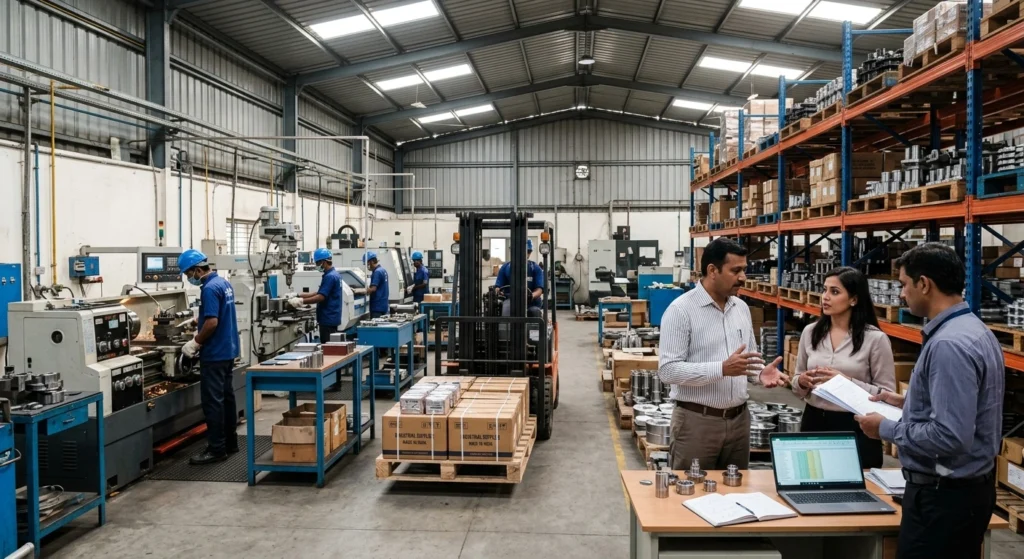
16. Packaging Tape Manufacturing Business
A packaging tape manufacturing business produces adhesive tapes used for sealing cartons, packaging products, shipping parcels, and industrial applications. These tapes are essential for e-commerce companies, logistics providers, manufacturers, warehouses, wholesalers, retailers, and exporters. With the rapid growth of online shopping and organised retail, the demand for high-quality packaging tapes continues to increase every year.
Raw Materials & Equipment Needed
- BOPP film rolls
- Adhesive chemicals
- Paper cores
- Slitting machine
- Rewinding machine
- Printing machine (optional)
- Packaging materials
Market Demand
India’s booming e-commerce, logistics, FMCG, pharmaceutical, and manufacturing sectors have significantly increased the demand for packaging tapes. Every business involved in shipping products requires reliable sealing materials, making this a recession-resistant industry.
Profit Margin
20%–35%, with customised printed tapes and bulk B2B orders offering better profitability.
How to Start
- Purchase tape slitting and rewinding machinery.
- Source quality BOPP film and adhesives.
- Develop standard and customised tape sizes.
- Build relationships with industrial buyers and distributors.
- Offer competitive pricing for long-term supply contracts.
Where to Sell
Packaging distributors, e-commerce sellers, warehouses, manufacturers, logistics companies, wholesalers, IndiaMART, TradeIndia, and direct B2B sales.
17. Corrugated Carton Box Manufacturing Business
Corrugated carton boxes are among the most widely used packaging products across industries such as e-commerce, electronics, pharmaceuticals, FMCG, food processing, textiles, and exports. This business involves manufacturing durable cartons in different sizes and strengths according to customer specifications. Since businesses constantly require packaging materials for shipping and storage, carton manufacturers benefit from regular bulk orders and repeat customers.
Raw Materials & Equipment Needed
- Kraft paper
- Corrugated sheets
- Adhesives
- Die-cutting machine
- Creasing machine
- Printing machine
- Stitching machine
- Packaging equipment
Market Demand
The continued growth of e-commerce, exports, manufacturing, and retail has made corrugated packaging one of the fastest-growing industrial sectors. Every product shipped requires protective packaging, ensuring consistent demand throughout the year.
Profit Margin
20%–35%, with customised cartons and large commercial orders generating higher returns.
How to Start
- Study packaging requirements across industries.
- Invest in quality box manufacturing machinery.
- Source kraft paper from reliable suppliers.
- Develop custom packaging solutions.
- Build long-term relationships with industrial clients.
Where to Sell
Manufacturers, exporters, logistics companies, wholesalers, packaging distributors, e-commerce sellers, IndiaMART, TradeIndia, and direct corporate contracts.
18. Plastic Injection Moulding Products Business
Plastic injection moulding is a manufacturing process used to produce plastic components by injecting molten plastic into specially designed moulds. Products manufactured through this process include electrical fittings, household items, automotive parts, medical components, packaging products, industrial accessories, toys, and consumer goods. Instead of selling directly to consumers, most manufacturers supply these products to larger companies that use them in their own manufacturing processes.
Raw Materials & Equipment Needed
- Plastic granules
- Injection moulding machine
- Product moulds
- Cooling equipment
- Air compressor
- Quality testing tools
- Packaging materials
Market Demand
Almost every manufacturing sector uses injection-moulded plastic components. The automotive, electronics, healthcare, appliance, and consumer goods industries continue to create strong demand for reliable suppliers.
Profit Margin
25%–40%, depending on production volume, product complexity, and long-term contracts.
How to Start
- Select a product category with steady industrial demand.
- Invest in suitable injection moulding machinery.
- Develop high-quality moulds.
- Implement quality control processes.
- Approach manufacturers requiring OEM components.
Where to Sell
OEM manufacturers, industrial suppliers, automotive companies, appliance manufacturers, electronics companies, IndiaMART, TradeIndia, and industrial exhibitions.
19. Printed Label and Sticker Manufacturing Business
Printed labels and stickers are used on almost every consumer product sold in the market. They display branding, pricing, ingredients, barcodes, usage instructions, and regulatory information. This business manufactures paper labels, vinyl stickers, QR code labels, barcode labels, waterproof labels, and customised packaging stickers for businesses across multiple industries. Since companies regularly launch new products and require updated packaging, there is continuous demand for high-quality labels.
Raw Materials & Equipment Needed
- Self-adhesive label paper
- Vinyl sheets
- Printing machine
- Die-cutting machine
- Lamination machine
- Design software
- Packaging materials
Market Demand
FMCG brands, cosmetic companies, pharmaceutical manufacturers, food processors, chemical industries, and e-commerce sellers all require printed labels for their products. The demand continues to increase with the growth of branded products.
Profit Margin
30%–45%, especially for customised labels and short-run printing jobs.
How to Start
- Invest in commercial printing equipment.
- Offer customised label designs.
- Source quality printing materials.
- Build relationships with local manufacturers.
- Deliver quick turnaround times for repeat orders.
Where to Sell
Food manufacturers, cosmetic brands, pharmaceutical companies, packaging firms, printers, IndiaMART, TradeIndia, and direct B2B clients.
20. Industrial Cleaning Chemicals Manufacturing Business
Industrial cleaning chemical manufacturing involves producing products such as floor cleaners, degreasers, glass cleaners, toilet cleaners, industrial disinfectants, machine cleaning solutions, and specialised cleaning chemicals for factories, hospitals, hotels, restaurants, offices, and commercial buildings. Businesses purchase these products regularly to maintain hygiene, comply with safety regulations, and improve workplace cleanliness. As hygiene standards continue to become stricter across industries, the demand for industrial cleaning products has grown significantly, making this one of the most promising small-scale industries business ideas for long-term growth.
Raw Materials & Equipment Needed
- Chemical raw materials
- Mixing tanks
- Measuring equipment
- Storage containers
- Filling machine
- Packaging bottles
- Labelling equipment
- Safety gear
Market Demand
Commercial buildings, hospitals, educational institutions, hotels, factories, restaurants, and cleaning service providers require industrial cleaning chemicals on a regular basis. This creates consistent repeat business throughout the year.
Profit Margin
25%–40%, depending on formulation quality, production efficiency, and distribution network.
How to Start
- Learn safe chemical formulation techniques.
- Purchase mixing and filling equipment.
- Obtain required licences and safety approvals.
- Develop commercial-grade cleaning products.
- Build relationships with distributors and institutional buyers.
Where to Sell
Cleaning product distributors, hospitals, hotels, factories, commercial offices, educational institutions, IndiaMART, TradeIndia, and direct corporate supply contracts.
E. Unique and Innovative Small-Scale Business Ideas for 2026

21. Biodegradable Cutlery Manufacturing Business
Biodegradable cutlery manufacturing is one of the fastest-growing small-scale industries business ideas because businesses and consumers are actively replacing single-use plastic products with eco-friendly alternatives. This business involves manufacturing spoons, forks, knives, plates, bowls, and food containers using materials such as bagasse (sugarcane fibre), cornstarch, bamboo, wheat bran, rice husk, or areca leaves. These products are widely used by restaurants, cafés, food delivery companies, caterers, hotels, and event organisers. As environmental regulations become stricter and consumers become more environmentally conscious, demand for biodegradable products continues to rise.
Raw Materials & Equipment Needed
- Bagasse, bamboo, cornstarch, or areca leaves
- Moulding machine
- Hydraulic press
- Drying equipment
- Trimming machine
- Packaging materials
Market Demand
The eco-friendly packaging market is expanding rapidly because of government restrictions on plastic products and increasing demand from the food service industry. Restaurants, cloud kitchens, and catering businesses are shifting towards biodegradable alternatives, creating strong long-term demand.
Profit Margin
30%–45%, with customised products and bulk commercial orders offering higher returns.
How to Start
- Select eco-friendly raw materials.
- Purchase moulding and finishing machinery.
- Obtain necessary manufacturing registrations.
- Approach food businesses and distributors.
- Build an eco-friendly brand through digital marketing.
Where to Sell
Restaurants, cafés, catering companies, wholesalers, supermarkets, Amazon, Flipkart, IndiaMART, food packaging distributors, and export markets.
22. 3D Printed Custom Products Business
A 3D printing business manufactures customised products using additive manufacturing technology. Entrepreneurs can produce prototypes, home décor items, personalised gifts, architectural models, educational models, jewellery, replacement parts, mobile accessories, and industrial components. Unlike traditional manufacturing, 3D printing allows businesses to produce customised products without investing in expensive moulds or mass production equipment. As more businesses and individuals demand personalised products and rapid prototyping services, the market for 3D printing continues to grow..
Raw Materials & Equipment Needed
- 3D printer
- PLA, ABS, or PETG filament
- Design software
- Computer
- Finishing tools
- Packaging materials
Market Demand
The demand for customised manufacturing, rapid prototyping, educational models, and personalised gifts is increasing across industries. Startups, engineers, architects, schools, and hobbyists regularly require 3D printing services.
Profit Margin
40%–60%, particularly for customised and low-volume production jobs.
How to Start
- Purchase a commercial-grade 3D printer.
- Learn CAD design software.
- Create sample products.
- List services on online marketplaces.
- Network with businesses requiring prototype development.
Where to Sell
Amazon, Etsy, Flipkart, IndiaMART, architects, engineering firms, educational institutions, startups, and your own website.
23. Organic Fertiliser Manufacturing Business
Organic fertiliser manufacturing involves producing natural fertilisers using agricultural waste, cow dung, compost, vermicompost, plant residues, and other biodegradable materials. With farmers increasingly adopting organic and sustainable farming practices, the demand for chemical-free fertilisers has grown considerably, making it one of the most eco-friendly small-scale industries business ideas. The business can produce products for home gardeners, nurseries, landscaping companies, organic farms, and commercial agriculture. Besides supporting sustainable farming, this business also helps recycle organic waste into valuable agricultural products.
Raw Materials & Equipment Needed
- Organic waste
- Cow dung
- Compost materials
- Vermiculture units (optional)
- Composting bins
- Sieving machine
- Packaging bags
Market Demand
Organic farming is expanding across India, increasing the need for eco-friendly fertilisers. Government support for sustainable agriculture and growing consumer preference for organic food are further driving market demand.
Profit Margin
30%–50%, depending on production scale, certification, and branding.
How to Start
- Source organic waste from reliable suppliers.
- Establish a composting process.
- Maintain quality standards.
- Package products professionally.
- Market to farmers, nurseries, and gardening stores.
Where to Sell
Agricultural supply stores, nurseries, organic farms, landscaping companies, Amazon, Flipkart, IndiaMART, and government agricultural programmes.
24. Smart Home Décor Manufacturing Business
Smart home décor combines traditional decorative products with modern functionality. Entrepreneurs can manufacture LED decorative lights, smart mirrors, customised wall clocks, decorative lamps, floating shelves, indoor planters, wooden décor, and Bluetooth-enabled home accessories. The growing popularity of modern interiors and smart homes has increased demand for stylish, functional, and affordable décor products.
Raw Materials & Equipment Needed
- Wood, acrylic, metal, or MDF
- LED components
- Cutting tools
- Drilling equipment
- Painting materials
- Packaging supplies
Market Demand
The Indian home décor market continues to grow because of increasing home ownership, interior renovation projects, and online furniture shopping. Consumers actively seek customised and unique decorative products.
Profit Margin
35%–55%, especially for designer and customised home décor collections.
How to Start
- Research current home décor trends.
- Develop unique product designs.
- Purchase basic woodworking and finishing equipment.
- Build an online catalogue.
- Collaborate with interior designers and furniture stores.
Where to Sell
Furniture stores, home décor retailers, Amazon, Flipkart, Pepperfry, Instagram, interior designers, and your own website.
25. Eco-Friendly Packaging Products Manufacturing Business
Eco-friendly packaging manufacturing focuses on producing sustainable alternatives to plastic packaging using paper, recycled cardboard, biodegradable materials, plant fibres, and compostable polymers. Products include courier bags, food packaging, shopping bags, cartons, wrapping paper, and protective packaging materials. Businesses across e-commerce, food delivery, cosmetics, and retail sectors are actively switching to environmentally friendly packaging to meet consumer expectations and comply with sustainability goals. As demand continues to increase, this business offers excellent opportunities for long-term growth and repeat commercial orders.
Raw Materials & Equipment Needed
- Kraft paper
- Recycled cardboard
- Biodegradable films
- Paper cutting machine
- Printing machine
- Die-cutting equipment
- Packaging materials
Market Demand
The rapid expansion of e-commerce and increasing environmental awareness have created significant demand for sustainable packaging products. Many companies are replacing plastic packaging with recyclable alternatives to improve their brand image.
Profit Margin
25%–45%, depending on product type, production efficiency, and customisation.
How to Start
- Identify packaging products with strong demand.
- Invest in suitable manufacturing equipment.
- Source eco-friendly raw materials.
- Obtain required certifications.
- Build relationships with commercial buyers.
Where to Sell
E-commerce companies, retailers, food delivery businesses, packaging distributors, manufacturers, Amazon, IndiaMART, TradeIndia, and export markets.
F. New-Age Small-Scale Business Ideas for 2026 (Added to Beat Competitors)

26. Smart LED Mirror Manufacturing Business
Smart LED mirrors have become increasingly popular in modern homes, hotels, salons, gyms, and luxury bathrooms. These mirrors feature built-in LED lighting and can include advanced features such as touch controls, anti-fog technology, Bluetooth speakers, digital clocks, and temperature displays. With the growth of smart homes and premium interior design, demand for these products is rising steadily.
Raw Materials & Equipment Needed
- Mirror glass
- LED strips
- Touch sensors
- Power adapters
- Aluminium or wooden frames
- Glass cutting tools
- Assembly equipment
- Packaging materials
Market Demand
The Indian home improvement and smart home market is growing rapidly. Interior designers, hotels, salons, and premium homeowners are increasingly investing in modern bathroom and dressing room accessories.
Profit Margin
30%–50%, depending on product features, customisation, and branding.
How to Start
- Source quality mirror glass and LED components.
- Learn the assembly process.
- Develop different product designs.
- Build relationships with interior designers and retailers.
- Promote your products through digital marketing.
Where to Sell
Furniture stores, home décor retailers, interior designers, hotels, salons, Amazon, Flipkart, IndiaMART, and your own website.
27. Pet Products Manufacturing Business
The pet care industry in India has experienced remarkable growth as more families adopt dogs, cats, and other companion animals. A pet products manufacturing business can produce pet beds, feeding bowls, collars, leashes, toys, scratching posts, grooming accessories, travel carriers, and pet clothing. As pet owners increasingly spend on premium products that improve their pets’ comfort and well-being, the market offers excellent opportunities for small manufacturers.
Raw Materials & Equipment Needed
- Fabric
- Foam
- Plastic and metal accessories
- Sewing machines
- Cutting tools
- Printing equipment
- Packaging materials
Market Demand
India’s pet ownership is increasing every year, leading to higher spending on pet accessories and care products. Pet stores, veterinary clinics, grooming centres, and online marketplaces create a strong and expanding customer base.
Profit Margin
35%–55%, particularly for premium and customised pet products.
How to Start
- Research trending pet products.
- Purchase basic manufacturing equipment.
- Develop durable and safe products.
- Build relationships with pet retailers.
- Promote through social media and pet communities.
Where to Sell
Pet stores, veterinary clinics, grooming centres, Amazon, Flipkart, Meesho, Instagram, and your own website.
28. Reusable Silicone Kitchen Products Manufacturing Business
Consumers are increasingly replacing disposable plastic kitchen products with reusable silicone alternatives because they are durable, food-safe, and environmentally friendly. This business manufactures products such as silicone food storage bags, baking moulds, spatulas, lunch box accessories, ice trays, and reusable food covers. Growing awareness of sustainable living and plastic waste reduction has created strong demand for these products.
Raw Materials & Equipment Needed
- Food-grade silicone
- Product moulds
- Moulding machine
- Finishing tools
- Packaging materials
- Quality testing equipment
Market Demand
Demand for reusable kitchen products is increasing due to eco-conscious consumers, modern households, and premium kitchenware retailers. The market is expected to continue expanding as sustainability becomes a key purchasing factor.
Profit Margin
30%–45%, depending on product quality, branding, and distribution.
How to Start
- Identify high-demand kitchen products.
- Purchase moulding equipment.
- Use certified food-grade silicone.
- Create modern product designs.
- Sell through both online and offline channels.
Where to Sell
Kitchenware stores, supermarkets, Amazon, Flipkart, home décor retailers, IndiaMART, and your own e-commerce website.
29. Modular Furniture Manufacturing Business
Modular furniture is designed to maximise space while offering flexibility and modern aesthetics. Products such as modular wardrobes, office desks, kitchen cabinets, TV units, bookshelves, and storage solutions are increasingly popular in urban homes and commercial spaces. As apartments become smaller and consumers seek multifunctional furniture, demand for modular products continues to rise.
Raw Materials & Equipment Needed
- Plywood or MDF boards
- Laminates
- Hardware fittings
- CNC cutting machine
- Edge banding machine
- Drilling tools
- Finishing equipment
Market Demand
The furniture market in India is expanding due to rapid urbanisation, residential construction, office spaces, and home renovation projects. Consumers increasingly prefer customised furniture over mass-produced alternatives.
Profit Margin
25%–40%, with customised furniture projects generally offering higher profitability.
How to Start
- Learn furniture design and production.
- Invest in woodworking machinery.
- Build a catalogue of modular designs.
- Partner with interior designers.
- Showcase completed projects online.
Where to Sell
Furniture showrooms, interior designers, builders, offices, Amazon, Flipkart, Pepperfry, IndiaMART, and your own website.
30. Electric Vehicle (EV) Charging Accessories Manufacturing Business
The rapid adoption of electric vehicles in India has created demand for supporting infrastructure and accessories. This business focuses on manufacturing products such as EV charging cable holders, wall-mounted charging brackets, protective charging covers, cable organisers, charging station accessories, and mounting equipment. As more residential societies, offices, shopping malls, and commercial buildings install EV charging stations, the demand for these accessories is expected to grow significantly.
Raw Materials & Equipment Needed
- Metal sheets
- Plastic components
- Fasteners
- Fabrication tools
- Welding machine
- Powder coating equipment
- Packaging materials
Market Demand
India’s EV market is expanding rapidly with strong government support, increasing vehicle sales, and rising investment in charging infrastructure. This creates long-term opportunities for manufacturers supplying supporting accessories.
Profit Margin
30%–45%, depending on product quality, production volume, and commercial contracts.
How to Start
- Research the EV accessory market.
- Design products compatible with common charging systems.
- Invest in fabrication equipment.
- Ensure high product quality and durability.
- Partner with EV charger installers and distributors.
Where to Sell
EV charging companies, automobile accessory dealers, electrical distributors, builders, IndiaMART, TradeIndia, Amazon, and direct B2B customers.
How to Start a Small-Scale Manufacturing Business in India: Step-by-Step
Step 1: Choose the Right Business Idea
Select a manufacturing business that matches your budget, skills, experience, and local market demand. Focus on products with consistent demand and opportunities for future growth.
Step 2: Conduct Market Research
Study your competitors, identify target customers, understand pricing trends, and analyse market demand before investing. This will help you choose the right products and pricing strategy.
Step 3: Prepare a Business Plan
Create a detailed business plan covering:
- Products to manufacture
- Investment required
- Machinery and equipment
- Raw material suppliers
- Marketing strategy
- Sales channels
- Estimated costs and profits
Step 4: Arrange Funding
Arrange capital through personal savings, bank loans, MSME financing, government schemes, or private investors, depending on the size of your business.
Step 5: Register Your Business
Complete the necessary registrations, such as:
- Udyam (MSME) Registration
- GST Registration (if applicable)
- FSSAI Licence (for food businesses)
- Shop and Establishment Registration
- Trademark Registration (optional)
- Factory Licence (if required)
Step 6: Purchase Machinery and Raw Materials
Buy reliable machinery from trusted manufacturers and source quality raw materials to ensure consistent product quality.
Step 7: Start Production and Maintain Quality
Develop standard operating procedures, maintain quality control, and test products regularly to build customer trust.
Step 8: Build Your Sales Network
Sell through wholesalers, distributors, retailers, e-commerce platforms, IndiaMART, TradeIndia, your own website, and direct B2B partnerships.
Step 9: Invest in Marketing
Promote your business through SEO, social media marketing, Google Business Profile, exhibitions, trade fairs, and digital advertising to attract more customers.
Government Schemes for Small-Scale Industries in India (2026)
The Government of India offers several schemes to support entrepreneurs, promote manufacturing, and strengthen Micro, Small, and Medium Enterprises (MSMEs).
1. Prime Minister’s Employment Generation Programme (PMEGP)
PMEGP is one of the most popular government schemes for entrepreneurs looking to start a manufacturing or service business. It provides financial assistance through bank loans and government subsidies, making it easier for first-time business owners to establish their ventures.
2. Credit Guarantee Fund Trust for Micro and Small Enterprises (CGTMSE)
CGTMSE helps MSMEs secure collateral-free business loans through participating banks and financial institutions. It is especially beneficial for entrepreneurs who lack assets to offer as loan security and need easier access to funding.
3. Udyam Registration
Udyam Registration provides official MSME recognition, allowing businesses to access a wide range of government benefits. Registered enterprises receive easier loan approvals, preference in government procurement, reduced patent and trademark fees, and better access to financial assistance programmes.
Common Mistakes to Avoid When Starting a Small-Scale Business
Many manufacturing businesses struggle because of poor planning rather than a lack of opportunity. Avoiding these common mistakes can improve your chances of long-term success.
1. Starting Without Market Research
Investing in machinery or production without analysing market demand can lead to poor sales. Before launching your business, research customer needs, competitors, pricing strategies, and industry trends to ensure there is sufficient demand for your product.
2. Choosing the Wrong Product
Selecting a product with limited demand or excessive competition can make it difficult to achieve consistent sales. Focus on products that have stable market demand, good growth potential, and opportunities for differentiation.
3. Underestimating Working Capital
Many entrepreneurs only calculate the cost of machinery and overlook ongoing expenses such as raw materials, employee salaries, electricity, packaging, transportation, and marketing. Maintaining sufficient working capital is essential for uninterrupted business operations.
4. Ignoring Product Quality
Compromising on product quality can damage your reputation and reduce repeat business. Using quality raw materials, maintaining production standards, and conducting regular quality checks help build customer trust and strengthen your brand.
5. Weak Marketing Strategy
Even high-quality products need effective promotion to reach customers. Building a professional online presence, optimising your website for search engines, listing products on B2B marketplaces, and investing in digital marketing can significantly improve your visibility and sales.
Conclusion
Small-scale industries continue to be one of the best ways to build a profitable business in India with relatively low investment. Rising consumer demand, government support for MSMEs, expanding e-commerce platforms, and the growing preference for locally manufactured products have created excellent opportunities for aspiring entrepreneurs in 2026.
Whether you choose a home-based manufacturing business, a B2B production unit, or an innovative new-age manufacturing venture, success depends on selecting the right business idea, maintaining product quality, understanding your target market, and building strong sales channels.
The 30+ small-scale industries business ideas covered in this guide offer opportunities for entrepreneurs with different budgets and experience levels. With proper planning, consistent quality, and effective marketing, your small-scale manufacturing business can grow into a sustainable and profitable enterprise in the years ahead.