Every single day, millions of smartphones across India pull up a camera app to do the exact same thing: scan a black-and-white grid to pay for something. In fact, according to recent data from the National Payments Corporation of India (NPCI), UPI processed an astonishing 23.2 billion transactions in May 2026 alone, moving nearly ₹29.9 lakh crore in a single month. For businesses, creators, and freelancers, having a reliable, instant way to collect these payments isn’t just a convenience anymore, it is the lifeblood of daily operations.
While everyday apps like PhonePe and Google Pay are great for personal peer-to-peer transfers, they aren’t always the best fit for managing business sales at scale. Relying on a single, static personal QR code can lead to messy bookkeeping, transaction limits, and missed data. That is where dedicated UPI QR code generator tools come in. These platforms allow you to create dynamic codes embedded with specific amounts, generate bulk codes for different products, and seamlessly track incoming funds without guessing who paid for what.
Finding the right tool, however, can be tricky. Some platforms charge hidden merchant fees, others require complex API integration, and a few are built strictly for large-scale e-commerce stores. To save you the guesswork, we have analyzed and compiled the top 15 UPI QR code maker tools available right now. Whether you need a simple, free link for your freelance invoices or a high-volume API system for an online storefront, this breakdown will help you find the exact fit for your workflow.
What is a UPI QR Code?
A UPI QR (Quick Response) code is a two-dimensional barcode that embeds a user’s or business’s Unified Payments Interface (UPI) credentials, such as their Virtual Payment Address (VPA) or UPI ID. Instead of manually typing in a phone number or a lengthy bank account number and IFSC code, a customer simply scans this visual grid using any UPI-enabled application. The app instantly decodes the secure information, automatically filling in the recipient’s details to initiate a direct, bank-to-bank fund transfer.
These codes generally come in two formats: static and dynamic. A static QR code is a permanent image that contains only the merchant’s payment address, requiring the customer to manually enter the transaction amount before paying. A dynamic QR code, on the other hand, is generated in real-time for a specific transaction; it embeds both the recipient’s details and the exact purchase amount, eliminating manual input errors and making payment reconciliation entirely automated for businesses.
How Does a UPI QR Code Maker Work?
At its core, a UPI QR code generator takes a standard string of payment data and translates it into a machine-readable visual format. When you input your UPI ID (VPA), account name, and optional details like a specific amount or a transaction note, the generator compiles this data into a standardized syntax regulated by the National Payments Corporation of India (NPCI). This data string typically begins with a unique identifier protocol upi://pay? followed by key-value pairs that define the merchant’s parameters, ensuring that any UPI app can universally interpret the exact destination of the funds.
Once the payment string is structured, the software applies an error-correcting algorithm to convert that text into the familiar grid of black and white squares. When a customer scans this generated code with a smartphone camera, their UPI app unpacks the embedded string, verifies the security parameters with the NPCI backend, and routes the transaction securely through the Immediate Payment Service (IMPS) or Unified Payments Interface network. Because the data is hardcoded into the graphic, the entire handoff from the visual scan to the secure bank authentication happens in just a matter of milliseconds.
Static vs Dynamic UPI QR Codes: Key Differences
While both formats achieve the same goal of transferring funds via a quick smartphone scan, they serve completely different operational needs. Static codes act as permanent digital billboards for a single payment address, whereas dynamic codes function as unique, single-use digital receipts generated on the spot.
| Feature | Static UPI QR Code | Dynamic UPI QR Code |
| Amount Specification | Fixed to a blank value; the customer must manually enter the amount. | Embedded automatically into the code for a specific transaction. |
| Reconciliation | Difficult; requires checking bank statements against manual customer inputs. | Automated; each code maps to a unique order ID or transaction reference. |
| Lifespan | Permanent; can be printed out and used indefinitely. | Temporary; usually expires within a few minutes or after a single use. |
| Security | Susceptible to tampering if printed copies are replaced or altered physically. | Highly secure; unique payloads make replication or redirection virtually impossible. |
| Best Used For | Small street vendors, physical retail counters, and personal transfers. | E-commerce checkouts, billing software, and high-volume delivery apps. |
Requirements for Generating a UPI QR Code
Setting up your own UPI QR code requires no complex coding or expensive hardware infrastructure. To generate a functional code that can legally and securely accept customer payments, you only need a few foundational pieces of information ready.
- Active UPI ID (VPA): The primary requirement is a valid Virtual Payment Address (like name@bank or name@okhdfc) linked to your operational account.
- Registered Bank Account: A savings or business current bank account in India that supports UPI infrastructure to clear and settle the incoming funds.
- Merchant or Account Name: The exact legal name or business trading name registered with the bank, which displays on the customer’s screen upon scanning to verify the recipient.
- Merchant Category Code (MCC): For business-grade generators or APIs, a standard 4-digit classification code assigned by your bank to define your business type (e.g., retail, education, utilities).
- Valid IFSC Code: For certain advanced generator tools or direct bank-hosted platforms, the Indian Financial System Code of your specific bank branch is required to verify routing parameters.
List of Top 15 Best UPI QR Code Generator Tools in 2026
1. Razorpay
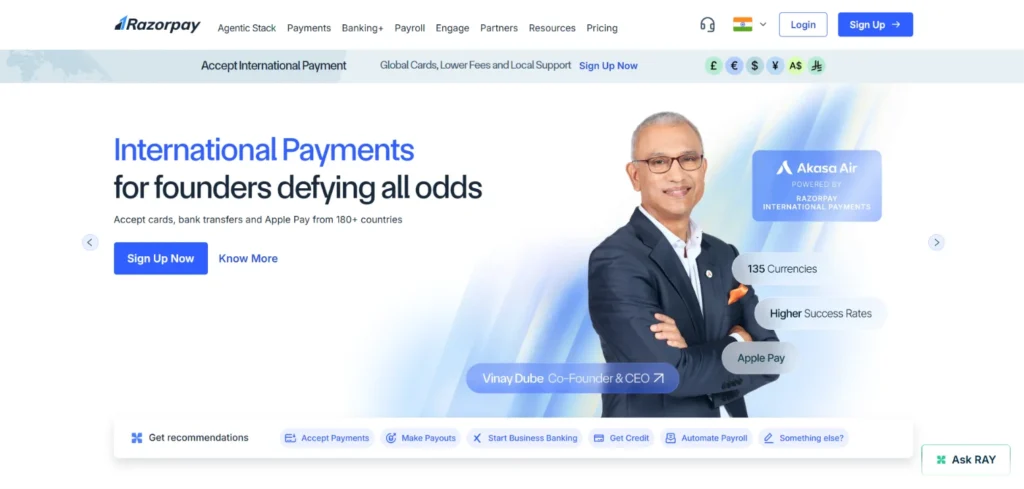
Razorpay works by allowing merchants to generate both static and dynamic UPI QR codes directly through a web-based merchant dashboard or automated API integrations. When a customer scans the code, Razorpay identifies the unique transaction parameters, processes the payment, and automatically routes the funds directly to the merchant’s linked business current or savings account. It provides instant, automated webhook updates to help businesses instantly confirm successful client transactions.
- Website: https://razorpay.com/
- Best For: E-commerce platforms and high-volume digital startups.
Key features:
- Real-time generation of custom dynamic QR codes with exact billing amounts.
- Comprehensive developer-friendly REST APIs for seamless billing software and mobile app integration.
- Automated instant webhook alerts and unified multi-channel payment dashboard tracking.
- Built-in support for accepting credit card payments directly via UPI apps.
Pros:
- Industry-leading transaction success rates and highly reliable server infrastructure.
- Clean, intuitive user dashboard that simplifies bookkeeping and tracking.
- No hidden setup fees or annual platform maintenance charges.
Cons:
- Mandatory operational compliance checks require full corporate business documentation.
- The standard onboarding and verification process can take a few business days.
Pricing:
- Free for the first 90 days; standard transaction fees apply at 2% + GST per successful transaction thereafter.
2. Paytm for Business
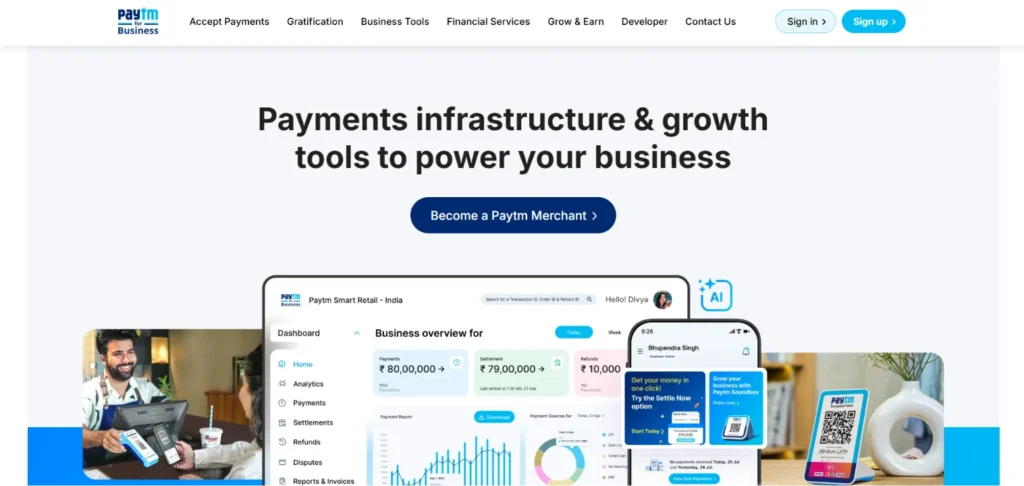
Paytm for Business works by providing an all-in-one unified merchant QR code that natively accepts transactions from the Paytm app along with any other third-party UPI platform. Acting as a reliable UPI QR code generator, merchants can download a permanent static code from the app or generate individual dynamic billing codes through their Point-of-Sale (POS) counter systems. The integrated backend system consolidates every single inbound payment into a singular business ledger for effortless financial tracking.
- Website: https://business.paytm.com
- Best For: Local retail counters and small physical storefronts.
Key features:
- All-in-one unified QR structure accepting all third-party banking apps.
- Direct integration options for self-ordering kiosks and retail vending machines.
- Live audio payment confirmations available via external smart speaker accessories.
- Automated next-day bank settlements directly to your primary linked account.
Pros:
- Zero transaction fees for standard wallet and peer-to-peer UPI transfers.
- Instant, straightforward setup process using just basic business credentials.
- Clean and accessible separate smartphone application built specifically for merchants.
Cons:
- High-volume business features occasionally experience minor app interface loading lag.
- Premium hardware add-ons like the physical audio Soundbox require a monthly rental fee.
Pricing:
- Free basic UPI and Wallet acceptance; specific credit card or commercial transactions may incur standard processing fees.
3. PhonePe Business
PhonePe Business functions by creating a versatile commercial payment terminal using a single, secure QR code graphic. Merchants can configure their storefront identity on the digital platform, print a reusable static counter display, or trigger dynamic billing requests on demand. The system processes payments seamlessly across the network, notifying the shop owner immediately via mobile push alerts and detailed daily summary ledgers.
- Website: https://www.phonepe.com/business-solutions/
- Best For: Independent retail merchants and doorstep delivery businesses.
Key features:
- High-speed QR scanning infrastructure optimized for quick checkout counters.
- Direct support for linking and receiving payments from RuPay credit cards on UPI.
- Multi-staff management access allowing employees to verify customer payments safely.
- Automated daily settlement windows with instant on-demand settlement options.
Pros:
- Exceptionally rapid scan-and-pay user journey for everyday customers.
- Complete visual transparency for reviewing daily payout breaks.
- Zero onboarding fees for new independent commercial setups.
Cons:
- Advanced API parameters are less extensive compared to developer-first gateways.
- Customer support responses can sometimes face high-volume delays.
Pricing:
- Free standard UPI transactions; specific enterprise rate configurations vary by commercial tier.
4. Cashfree Payments
Cashfree Payments works by embedding advanced automated payment routing logic inside its customizable UPI QR generation engine. Businesses use Cashfree’s robust developer portal or low-code tools to instantly print physical sheets or embed live dynamic screens during online checkout processes. The system actively monitors incoming banking pings, matches them against open customer order profiles, and triggers rapid data reconciliations behind the scenes.
- Website: https://www.cashfree.com/
- Best For: SaaS platforms, D2C brands, and subscription-based online services.
Key features:
- Advanced automated reconciliation matching specific customer order IDs.
- Native web plug-ins for popular platforms including Shopify and WooCommerce.
- Comprehensive international multi-currency conversion options for global transactions.
- High-volume bulk generation tools for instant invoice production.
Pros:
- Fast settlement cycles completing payment transfers within 24 hours.
- Highly robust fraud detection systems monitoring transaction anomalies.
- Exceptionally detailed developer documentation and quick sandbox testing environment.
Cons:
- Dashboard analytics interface has a learning curve for complete beginners.
- Standard activation processes require verified business tax registration papers.
Pricing:
- No annual maintenance or setup fees; standard payment processing charges average around 1.95% per transaction.
Suggested Read:
5. Setu (by Pine Labs)
Setu works as a direct, specialized UPI switch infrastructure that connects a business’s application directly to the National Payments Corporation of India (NPCI) architecture. Instead of routing through typical middle-tier aggregator layers, Setu’s dedicated API pipeline generates secure static or dynamic codes instantly on demand, making it a reliable UPI QR code generator solution for businesses. This clean, direct network connection ensures faster communication speeds, immediate status updates, and comprehensive error analysis reporting for every single transaction attempted by customers.
- Website: https://setu.co/
- Best For: Large enterprise operations, fintech platforms, and lending businesses.
Key features:
- Dedicated high-performance switch handling over 10,000 transactions per second.
- Deep-link payment routing capabilities optimized for custom mobile applications.
- Advanced programmable mandates for managing automated recurring collections.
- Granular API status codes defining explicit reasons for any failed payments.
Pros:
- Superior system uptime due to a direct multi-cloud banking architecture.
- Immediate, real-time transaction processing and instant customer refund triggers.
- Highly secure, enterprise-grade data handling protocols.
Cons:
- Requires intermediate to advanced technical development expertise to deploy correctly.
- Not intended for casual users or standalone physical retail storefronts.
Pricing:
- Custom enterprise-grade volume pricing based on specific technical architecture requirements.
6. BharatPe
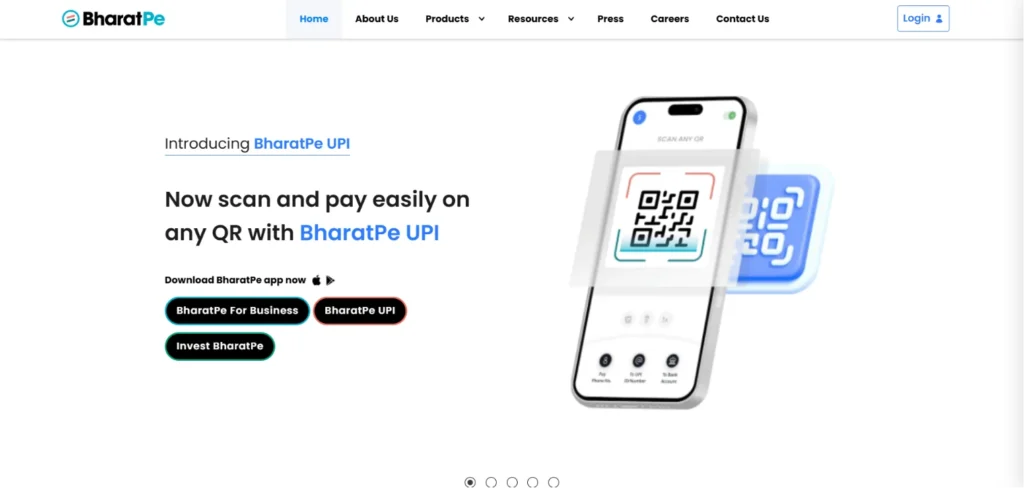
BharatPe operates by providing offline retail merchants with an interoperable, zero-fee static or dynamic UPI QR code that aggregates funds from all major third-party application channels. By scanning the unified code, customer payments are systematically routed through the immediate settlement system into a centralized business balance sheet. It tracks real-time ledger entries via a connected app ecosystem and offers automated options to transition day-to-day transaction processing history directly into eligibility checkpoints for collateral-free operational business credit.
- Website: https://bharatpe.com/
- Best For: Small physical retail storefronts and Kirana shops.
Key features:
- Interoperable single QR matrix handling more than 150 diverse commercial banking apps.
- Seamless automated night-time clearing windows delivering earnings by the next morning.
- Built-in business financial ledger tracking individual storefront employee performance metrics.
- Direct integration options with intelligent physical speaker boxes for live audio confirmation alerts.
Pros:
- Completely zero platform processing fees for all standard baseline customer UPI transactions.
- Extremely easy onboarding pipeline that enables quick activation for physical store owners.
- Direct access to micro-investment options and low-interest credit lines through partner NBFCs.
Cons:
- Freelancer and pure digital service business categories frequently encounter onboarding hurdles.
- App syncing intervals can occasionally experience latency cycles during peak traffic hours.
Pricing:
- Free for all standard consumer-to-merchant UPI transactions; additional hardware or terminal rentals are billed at separate monthly intervals.
7. Instamojo
Instamojo works by offering a low-code payment link and QR generation platform engineered specifically for independent digital sellers, educators, and creative professionals. When setting up a request, the tool creates a custom payment gateway window containing embedded UPI codes paired with the exact billing information. Once the scanner sequence completes, Instamojo holds the transaction records safely within a comprehensive seller dashboard and handles structural digital resource distribution instantly if the payment was tied to a downloadable product file.
- Website: https://www.instamojo.com/payment-gateway/
- Best For: Digital creators, independent freelancers, and solo entrepreneurs.
Key features:
- Instant generation of unique multi-channel payment links with integrated vector codes.
- Fully automated system triggers for dispatching secure digital file downloads post-checkout.
- Built-in deployment of simple e-commerce storefront landing pages with zero coding required.
- Smart Page modules allowing creators to seamlessly bundle multi-tier pricing plans together.
Pros:
- Fast setup architecture enabling a completely functional checkout system inside 30 minutes.
- Exceptional structure for handling single-item digital downloads without complex engineering.
- Straightforward documentation dashboard minimizing operational management friction for small operations.
Cons:
- Processing micro-transactions incurs a high effective cost due to flat transaction fees.
- Lacks comprehensive advanced system API controls required by enterprise-level web architectures.
Pricing:
- Free basic layout options; premium plans start at ₹2,999 per year alongside a flat transaction processing fee of 2% + ₹3 per transaction.
8. Easebuzz
Easebuzz works as a comprehensive B2B software-enabled transaction ecosystem designed to automate payment management workflows for sectors like EdTech, hospitality, and retail. Through its electronic point-of-sale app or scalable API plug-ins, it creates secure BharatQR codes that securely settle funds into split merchant categories. The engine allows complex multi-party businesses to segment an incoming customer UPI scan immediately upon receipt, separating base manufacturing margins from franchise commissions before routing payouts to external operational banks.
- Website: https://easebuzz.in/
- Best For: Educational institutions, multi-vendor marketplaces, and franchise businesses.
Key features:
- Specialized split transaction engines to automate programmatic distribution of incoming funds.
- Custom plug-ins tailored for quick deployment across WooCommerce and Shopify architectures.
- Dynamic electronic point-of-sale portal configuration for instantaneous counter checkout processing.
- Built-in billing modules supporting smart retry logic and custom coupon mechanics.
Pros:
- Highly responsive 24/7 technical engineering group assigned to guide custom integration phases.
- Industry-grade data security running on fully compliant PCI DSS Level 1 systems.
- Fast, flexible settlement windows including automated immediate clearing settings.
Cons:
- High-tier dashboard feature suites present a steep learning curve for basic users.
- Custom domain configurations are restricted strictly to premium enterprise registration accounts.
Pricing:
- The basic point-of-sale setup features no recurring account maintenance fees; standard digital gateway processing cycles average approximately 1.5% per successful transaction.
9. Google Pay for Business
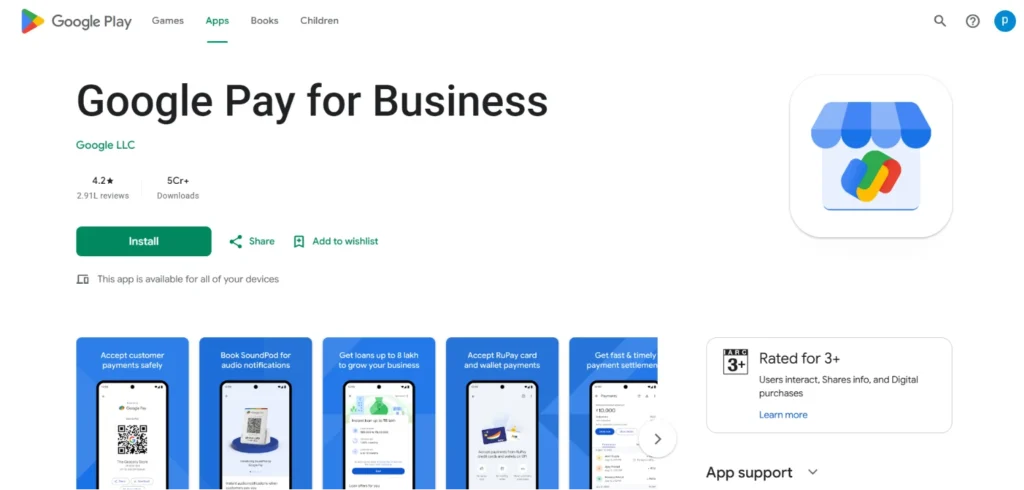
Google Pay for Business works by leveraging the extensive security infrastructure of the Google Ecosystem to deploy automated merchant-to-consumer payment connections. By downloading the system, merchants configure their unique digital business page profile and generate secure payment graphics through its built-in UPI QR code generator, which links customers directly into the secure cloud routing framework. The application handles tracking metrics across a clean mobile app, enabling operations to automatically update their customer database while funds clear natively through their primary external bank account.
- Website: https://business.google/getpay/
- Best For: Independent contractors, service professionals, and micro-retail counters.
Key features:
- Direct integration options within Google Maps search results to drive local business discoverability.
- Instant visual transaction tracking ledgers accessible directly on standard consumer smartphones.
- Multi-terminal structural setup supporting unique sub-merchant identities for floor managers.
- Intelligent security filters running background fraud threat mitigation arrays on every scan.
Pros:
- Completely free core framework requiring no upfront capital investments to start accepting payments.
- Exceptionally high brand familiarity reduces checkout friction for everyday consumers.
- Direct, frictionless link creation makes sharing remote payment codes across chat apps fast.
Cons:
- Custom backend API automation frameworks are limited compared to traditional commercial gateways.
- Customer support is routed primarily through automated online help forums.
Pricing:
- Free structure for all standard merchant-to-consumer UPI transactions with zero ongoing server platform costs.
10. BHIM (Bharat Interface for Money)
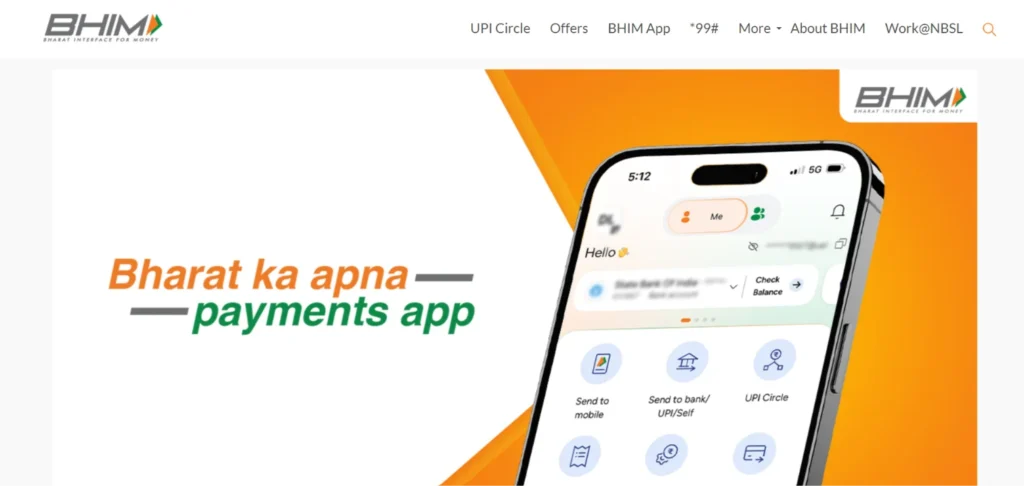
BHIM works as the definitive, sovereign digital application architecture developed directly by the National Payments Corporation of India (NPCI) to enable direct peer-to-merchant payments. By linking your registered bank account via a secure, single-factor mobile validation process, the platform outputs clean, standard static and dynamic QR strings that align 100% with national financial communication codes. Because it operates entirely as an open-access public utility, it cuts out third-party middle-tier processing networks to move funds from bank to bank via the cleanest path.
- Website: https://www.bhimupi.org.in/
- Best For: Government institutions, non-profit organizations, and budget-conscious micro-enterprises.
Key features:
- Native, reference-grade alignment with the newest structural NPCI UPI core guidelines.
- Multi-lingual support accommodating operations across a wide range of regional Indian languages.
- Direct split-payment calculator features embedded natively within the core user framework.
- Direct authorization paths for validating transaction mandates with zero third-party visibility.
Pros:
- The absolute highest tier of regulatory compliance and data privacy protection.
- Clean interface devoid of commercial advertisements, popups, or irrelevant rewards programs.
- Instant balance verification across multiple separate linked financial bank accounts.
Cons:
- User interface design lacks the modern, fluid styling of private commercial alternatives.
- Completely lacks automated marketing plug-ins or advanced business analytics dashboard panels.
Pricing:
- Free to use across all categories; features no transaction fees or ongoing hidden maintenance costs.
11. PayU India
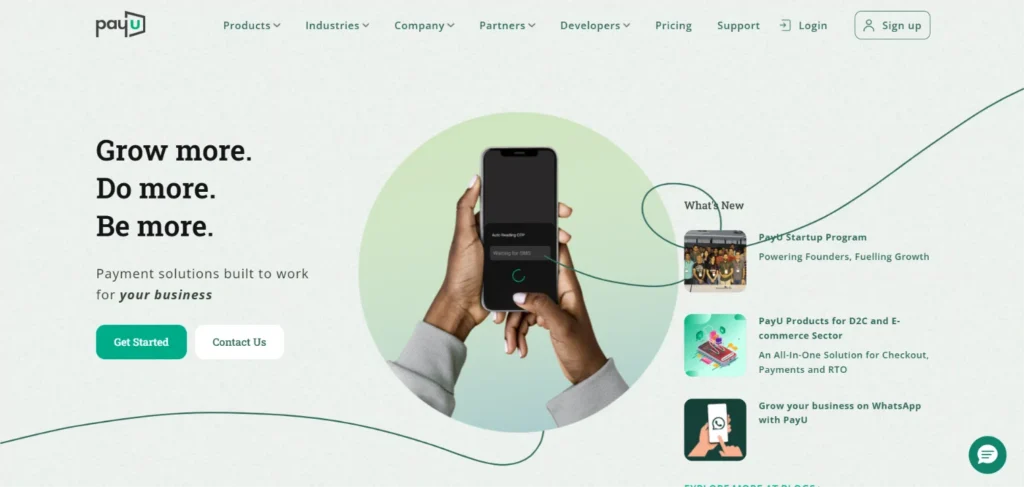
PayU India works by equipping medium-to-large corporate organizations with an enterprise-grade UPI QR code generation suite accessible via advanced REST APIs and their primary merchant dashboard. Merchants use the portal to generate unlimited custom-branded vector graphics containing specific transaction nodes or open parameters. The system processes these requests securely through its highly certified cloud architecture, immediately pushing transaction completion data via instant SMS and email notifications while settling funds directly to the merchant’s corporate bank network.
- Website: https://payu.in/
- Best For: High-volume digital enterprises and corporate retail chains.
Key features:
- Unlimited multi QR code generation for diverse customer tiers or business locations.
- Direct integration options supporting custom company logos inside the QR graphic.
- ISO 27001 certified data pipelines protecting high-volume electronic payment routing.
- Advanced multi-terminal payment splitting and granular internal account tracking panels.
Pros:
- Superior security framework trusted by major government entities and blue-chip firms.
- Direct settlements into connected bank accounts bypass intermediate digital wallet layers.
- Excellent transaction processing stability even during heavy seasonal sales surges.
Cons:
- Onboarding protocols involve stringent KYC checks that can delay live activation.
- The system interface can feel overly complex for early-stage solo entrepreneurs.
Pricing:
- Free to generate codes; standard online transaction processing rates apply at approximately 2% plus applicable GST.
12. CCAvenue
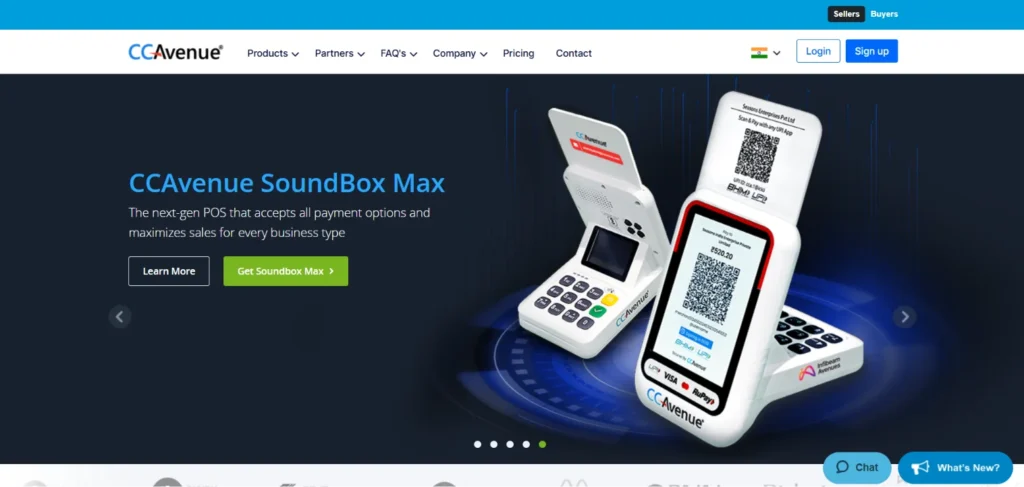
CCAvenue operates by offering an omni-channel commerce solution that integrates physical and digital QR payment infrastructure under a singular management backend. Merchants can deploy dynamic payment collection frames using API integrations or utilize their newly updated hardware terminals to generate on-the-spot checkout vectors. The engine processes incoming customer scans through intelligent dynamic bank routing algorithms, which automatically shift transaction pathways in real-time to circumvent localized banking outages and sustain high success margins.
- Website: https://www.ccavenue.com/
- Best For: Large e-commerce marketplaces and established multi-state enterprises.
Key features:
- Smart dynamic routing engine that optimizes active payment pathways automatically.
- Unified dashboard aggregating insights across more than 200 distinct payment pathways.
- Built-in multi-lingual customer interfaces supporting comprehensive localized checkout options.
- Secure multi-tier analytical reports evaluating daily sales metrics by channel.
Pros:
- Unrivaled historical platform stability backed by decades of digital transaction experience.
- Highly responsive developer kit supporting immediate deployment across multiple web frameworks.
- Comprehensive structural options for managing complex automated refund flows safely.
Cons:
- Administrative dashboard styling feels noticeably older compared to modern fintech tools.
- The standard verification pipeline requires complete corporate registration documentation.
Pricing:
- No initial installation or setup fees; baseline domestic digital payment processing scales at a standard 2%.
13. Vyapar App
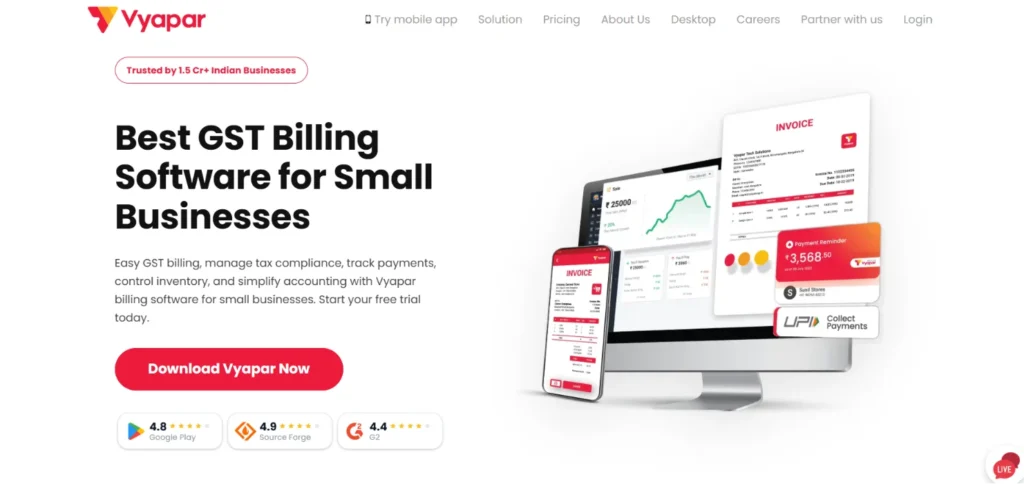
Vyapar App functions as a specialized, offline-first business accounting and invoicing ecosystem that features a native UPI QR generation engine. Businesses use the application on mobile or desktop to create comprehensive GST-compliant invoices that automatically embed a dynamic transaction QR code containing the exact bill amount. When the customer completes their smartphone scan, Vyapar’s internal tracking architecture automatically updates the accounting ledger, marks the specific invoice as paid, and recalculates corresponding stock inventory balances instantly.
- Website: https://www.vyaparapp.in/
- Best For: Small business owners, wholesale distributors, and manufacturing units.
Key features:
- Automatic calculation of precise dynamic QR codes mapped to custom GST invoices.
- Fully functional offline accounting engine that queues ledger updates without active internet.
- Automated WhatsApp and SMS invoice delivery options embedded with digital payment links.
- Real-time automated inventory tracking linked directly to incoming client transaction histories.
Pros:
- Eliminates calculation errors by locking the exact bill value inside the generated image.
- Simplifies tax filing by consolidating payment logs into structured GSTR reports.
- Highly intuitive design requiring absolutely zero prior professional accounting training to run.
Cons:
- Desktop platform versions require purchasing an upgrade to unlock continuous multi-device sync.
- Lacks automated developer-centric API integrations for advanced custom website checkout pages.
Pricing:
- Basic mobile smartphone version is free; premium multi-device business tiers start at ₹2,399 per year.
14. NiceUPI
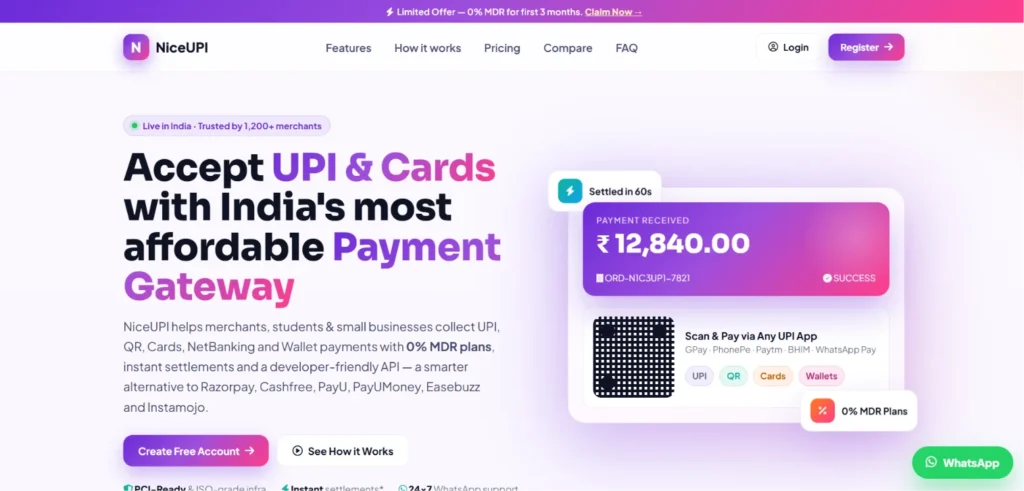
NiceUPI works by serving as a dedicated, low-cost subscription-based API bridge built explicitly to circumvent standard percentage-based transactional merchant deductions. Developers integrate NiceUPI’s simple webhooks and API nodes directly into custom mobile applications, websites, or e-commerce modules to trigger immediate dynamic QR payloads on checkout pages, making it a practical UPI QR code generator solution for businesses that need seamless payment integration.
The platform acts as a non-custodial digital pass-through system that allows incoming smartphone payment scans to settle directly into the business’s current account without being processed or delayed by intermediate escrow holding pools.
- Website: https://niceupi.com/
- Best For: Freelance web developers, SaaS platforms, and independent digital service providers.
Key features:
- Pure subscription-based infrastructure completely devoid of percentage payment skimming.
- Zero-cooldown webhook triggers delivering instant confirmation pings to external servers.
- Lightweight REST API architecture optimized for clean integration inside fifteen minutes.
- Built-in direct plugins for popular content management systems like WooCommerce and Shopify.
Pros:
- Allows scaling businesses to retain 100% of their gross transaction revenue via 0% MDR plans.
- Eliminates traditional settlement delays by routing money bank-to-bank instantly (under 60 seconds).
- Extremely rapid sandbox configuration enables testing cycles with an accessible starter tier for students and creators.
Cons:
- Entirely focused on UPI and domestic methods; lacks native international credit card support.
- Requires basic software development knowledge or webmaster access to successfully deploy.
Pricing:
- The starter plan is free forever for students and small projects; Growth tiers for commercial online stores start at a flat ₹499 per month with 0% MDR on UPI.
15. Mswipe
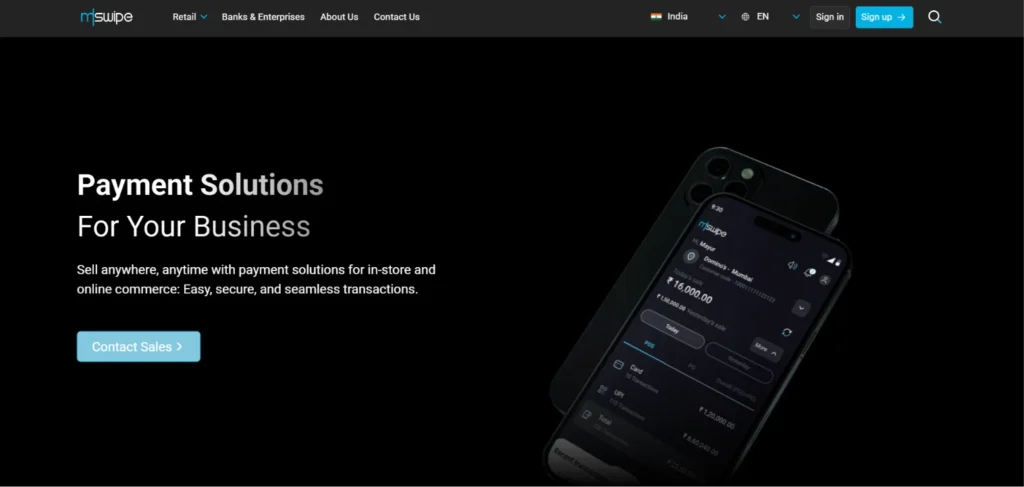
Mswipe works by bridging physical on-site retail counters with digital mobile payments through an integrated smart application ecosystem and unified QR codes. Merchants use the Mswipe platform to display static counter signage or generate real-time transactional QR codes directly through their existing commercial mobile phones or smart POS devices. The secure platform registers the incoming consumer scan through its centralized processing engine, pushes instant sound or screen confirmations to the shop floor staff, and handles organized next-day clearing balances directly to the primary company ledger.
- Website: https://www.mswipe.com/
- Best For: Physical retail outlets, supermarkets, and mobile delivery fleets.
Key features:
- Unified multi-channel QR network processing payments across all customer banking platforms.
- Live multi-terminal tracking features allowing businesses to oversee multiple checkout counters.
- Direct integration options with proprietary automated billing and inventory software.
- Secure merchant application delivering complete visibility over daily commercial settlements.
Pros:
- Highly optimized for fast-paced physical brick-and-mortar storefront environments.
- Clear visual dashboard removes layout confusion when auditing daily operational tallies.
- Straightforward hardware setup allows staff to begin accepting payments without training.
Cons:
- Advanced digital analytical dashboards carry a slight learning curve for novice users.
- Custom merchant setups require full structural business registration credentials to process.
Pricing:
- Free to deploy basic QR acceptance apps; specialized enterprise hardware options carry custom rental fees.
Step-by-Step Guide: How to Create a UPI QR Code
Generating a personalized payment code takes less than five minutes if you follow the right sequence. Whether you are using a basic web-based generator or setting up a merchant app, the foundational process remains completely streamlined.
- Choose a Reliable Generator: Select a trusted payment gateway dashboard, billing app, or direct banking platform from our vetted list based on your specific feature needs.
- Input Your Core UPI Details: Carefully enter your active Virtual Payment Address (VPA) or UPI ID and ensure your exact registered merchant name matches your bank records.
- Specify the Transaction Amount (Optional): Leave the field blank to generate a reusable static code, or type in a precise bill value to create a transaction-specific dynamic code.
- Customize and Preview the Code: Add optional parameters like an invoice number or a brief payment note, then review the live preview on your screen to verify accuracy.
- Download or Print Your Visual Code: Save the final output as a high-resolution PNG or vector file for clear digital embedding, or print it out cleanly for physical display counters.
Best Practices to Get More Scans on Your UPI QR Code
Simply deploying a code isn’t enough; you need to make the payment path completely frictionless for your customers. Optimizing the visibility and placement of your visual payment touchpoints can drastically increase conversion rates and decrease cart abandonment.
- Position Code at Eye Level: Place your physical counter displays exactly where customers stand to pay, keeping the space free of cluttered marketing materials or product boxes.
- Ensure High Visual Contrast: Print your codes using bright, crisp white backgrounds and deep black grids to prevent smartphone camera lenses from failing to autofocus.
- Include Explicit Call-to-Actions: Add bold text near or around the image like “Scan Here to Pay with Any UPI App” to guide users who are less tech-savvy.
- Optimize for Mobile Layouts: When embedding codes on websites, make sure the visual grid adjusts properly to screen resolutions without requiring horizontal scrolling or pinch-zooming.
- Regularly Test Image Scanning: Routinely open various smartphone payment apps to scan your own codes, ensuring the embedded data lines up perfectly and registers without technical delays.
UPI QR Code Generator Free vs Paid: Which One to Choose?
Selecting between a free utility and a premium enterprise platform depends entirely on your daily sales volume and operational setup. While free options are excellent for direct over-the-counter payments, paid tools provide the heavy-duty infrastructure needed to automate digital business workflows.
| Feature | Free UPI QR Code Tools | Paid / Subscription-Based Platforms |
| Ideal User Profile | Small retail shops, freelancers, and micro-vendors. | High-volume online stores, SaaS platforms, and enterprise chains. |
| MDR / Transaction Fees | Strictly 0% Merchant Discount Rate (MDR) for standard peer-to-peer codes. | Either a flat percentage per transaction (1.5% – 2%) or a fixed monthly subscription. |
| Automation & APIs | Manual generation only; no automated website checkout integrations. | Developer-friendly REST APIs and webhooks for real-time app integration. |
| Payment Reconciliation | Manual tracking required via phone notifications or text messages. | Automated ledger reconciliation mapped to unique order IDs and customer data. |
| Additional Options | Limited strictly to standard domestic consumer-to-merchant UPI scans. | Supports RuPay credit cards on UPI, automated recurring mandates, and split payments. |
Security Tips for Using UPI QR Codes
As digital transactions continue to hit record volumes, ensuring the physical and digital integrity of your payment touchpoints is vital to protecting your revenue. Implementing basic security measures helps safeguard your business against malicious tampering and unauthorized routing changes.
- Regularly Inspect Physical Displays: Check your counter placards daily to ensure fraudsters haven’t pasted a malicious sticker containing a different QR code over your original graphic.
- Verify Customer Pay Screens: Instruct your staff to visually cross-check the successful transaction confirmation screen on the customer’s phone, confirming your exact merchant name and the matching bill amount.
- Enable Direct Audio Alerts: Utilize an electronic smart speaker accessory (like a soundbox) to receive instant, audible verification of incoming funds, preventing spoofing via fake payment screen apps.
- Lock Down Account API Keys: If you use developer-first gateways, restrict your API webhooks to verified IP addresses and change your production secret keys routinely to prevent unauthorized code generation.
- Monitor Linked Device Access: Ensure the primary phone number tied to your merchant bank account is secured behind multi-factor authentication, and limit employee sub-accounts strictly to “view-only” ledger permissions.
UPI QR Code maker vs POS Machine: Which Is Better for Small Businesses?
Choosing between a digital UPI QR code system and a physical card swipe machine is a critical decision that impacts your profit margins and customer checkout speeds. While QR codes leverage the customer’s smartphone, traditional POS Billing Software and hardware setups rely on dedicated physical cards and cellular bank terminals.
| Feature | UPI QR Code Generator | Traditional POS Machine |
| Upfront Setup Cost | ₹0 (Can be generated for free or via cheap subscription apps). | High; requires hardware purchasing costs or monthly device rentals. |
| Transaction Fees (MDR) | 0% for standard UPI (Fixed flat plans or low-cost monthly subscriptions for premium gateways). | 1% to 2.5% on debit and credit card swipes, cutting directly into profit margins. |
| Hardware Dependencies | None; requires only a printed paper display or a regular smartphone screen. | High; depends on terminal battery life, paper roll refills, and sim card connectivity. |
| Accepted Payment Methods | All third-party UPI apps (GPay, PhonePe, Paytm) and RuPay credit cards. | Visa, Mastercard, Amex credit/debit cards, and contactless NFC taps. |
| Settlement Speed | Real-time or instant bank-to-bank settlement (usually under 60 seconds). | Batch-processed settlements, often taking 24 to 48 hours to clear into bank accounts. |
For most small businesses, early-stage startups, and independent creators, a UPI QR Code maker is the superior choice. It eliminates recurring monthly rental bills, avoids heavy transaction processing fees, and clears cash into your bank account instantly. However, if your business serves a premium customer demographic that relies heavily on corporate Visa/Mastercard credit cards or international payment methods, maintaining a hybrid setup with a low-cost POS terminal alongside your QR code display is the safest way to ensure you never miss a sale.
Conclusion
In conclusion, picking the right UPI QR code generator comes down to how your business handles daily operations. If you run a local retail stall or work as a solo freelancer, free tools from platforms like Google Pay or PhonePe give you a simple, cost-effective way to get paid instantly. On the flip side, if you manage an expanding e-commerce storefront or a subscription platform, moving to a developer-friendly API tool or a flat-rate subscription gateway will save you hours of administrative work by automating your order tracking and bookkeeping.
Taking a few minutes to choose and secure your payment setup keeps your hard-earned revenue safe and gives your customers a seamless checkout experience. Take a close look at your weekly sales volumes, check your technical integration needs against our list, and deploy the QR code platform that fits perfectly into your business workflow.