More teams are adding voice automation into their daily operations simply because the call volume keeps growing. Modern tools can answer the phone, figure out what the caller wants, and push updates into internal systems on their own. In a lot of cases, the workflow keeps moving without anyone needing to step in. As the technology becomes more practical, picking the right development partner matters a lot more than it did even a year ago.
Below is a look at five Voice AI Agent Development Companies that have earned attention for their work in this space.
List of Top Voice AI Agent Development Companies
1. Zentegrio
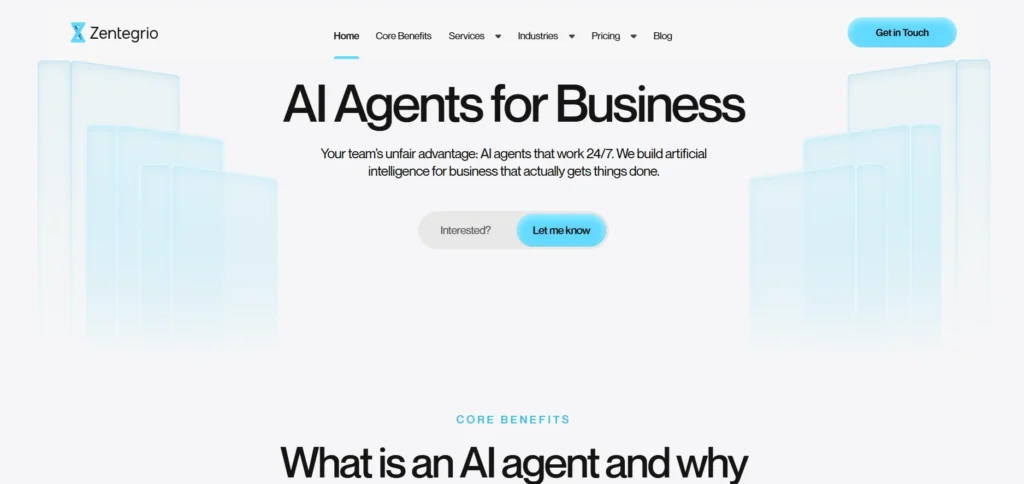
Zentegrio builds AI voice agents that plug directly into real business workflows. Their systems don’t just answer questions – they carry out tasks across CRMs, ERPs, HR tools, and whatever else a company uses. A typical setup handles scheduling, system alerts, internal routing, reminders, and various parts of workflow management that usually fall on support teams.
Where Zentegrio stands out is in AI agents for customer service, especially for businesses dealing with large volumes of calls or constant back-and-forth across multiple tools. The agents identify intent, act inside connected apps, and escalate issues to humans when needed. Companies that want voice automation tightly integrated with their existing systems tend to gravitate toward them.
2. Vapi
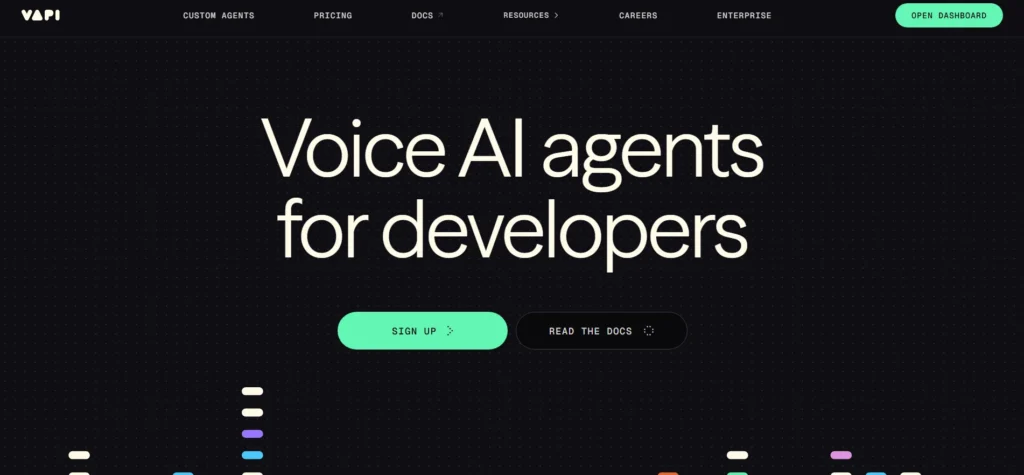
Vapi provides a flexible platform for building voice AI agents without requiring heavy engineering work. Developers like it because most of the core components – call handling, transcription, routing, language model connections – are already in place. Teams can focus on shaping the logic instead of stitching infrastructure together.
Vapi’s strength is speed. A company can prototype an inbound support agent or an appointment-handling bot in a matter of hours. It’s often used for:
- customer service triage
- booking calls
- answering account-related questions
- assisting sales teams with repetitive follow-ups
For businesses that want something functional quickly and don’t need deep customization at the start, Vapi is one of the easier ways to get there.
3. Retell AI
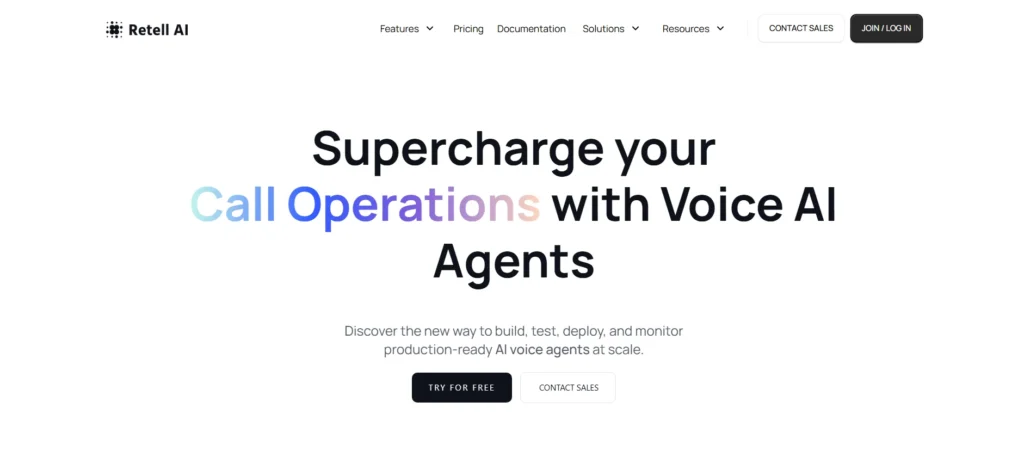
Retell AI focuses on voice agents that can handle more natural, open-ended conversations. Their big selling point is how smooth and human the dialogue feels, especially in long interactions where many AI tools still break down.
Common use cases:
- support lines that require more conversational flow
- benefit of voice AI agents for sales qualification
- patient intake and appointment coordination
- service businesses with dynamic scheduling needs
Retell AI works well when a company wants voice automation but doesn’t want it to sound robotic or rigid. The platform handles interruptions, clarifications, hesitations – the messy parts of real conversations that most scripted systems can’t manage well.
4. Yellow.ai
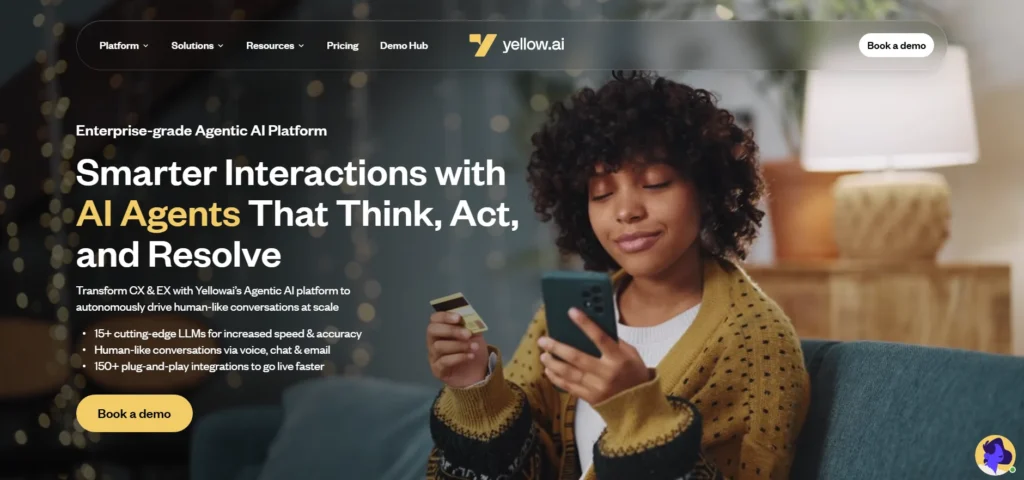
when they want a single vendor to handle both conversational interfaces and the surrounding automation.
Typical strengths:
- global customer service operations
- multilingual voice bots
- combining chat + voice in unified flows
- handling large-scale call volumes
Yellow.ai also works for businesses that already rely on structured workflows and now want to add voice automation on top. The benefits of voice AI agents here usually come from consistency: no peak-hour slowdowns and no gaps between departments.
5. Synthflow
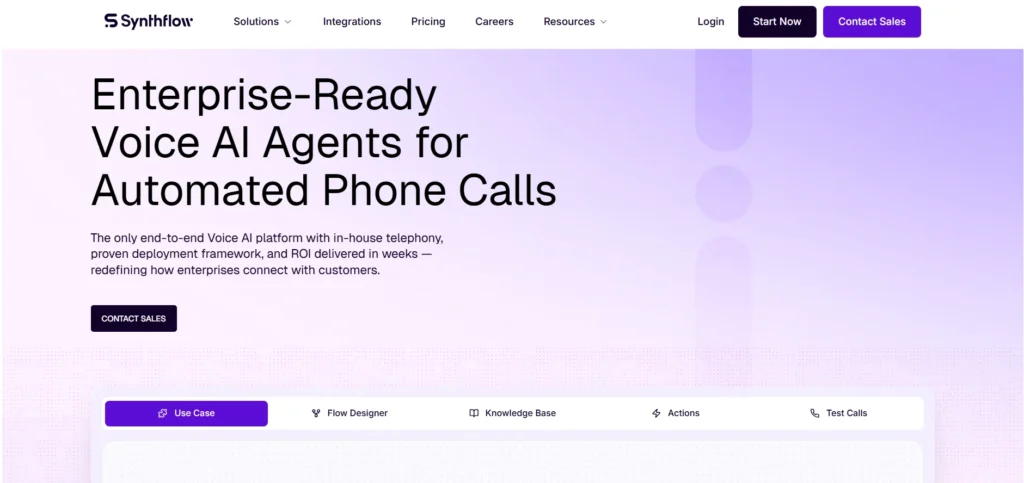
Synthflow gives teams tools to create highly task-oriented voice agents. These agents can call customers, follow scripts that adapt to real responses, confirm appointments, collect missing information, and push everything back into the company’s systems.
Many companies use Synthflow for:
- outbound reminders
- account updates
- payment follow-ups
- reactivation campaigns
- sales coordination tasks
The platform focuses less on “chat” and more on letting voice agents do things. For businesses with a lot of repetitive outbound communication, Synthflow cuts down on manual dialing and frees employees from work that doesn’t actually require a person.
Why Voice AI Agents Matter Right Now
Voice automation has moved past the experimental phase. Businesses use these agents to handle a range of work:
- triaging support requests
- routing urgent issues
- capturing customer details
- updating records instantly
- reminding teams about deadlines or pending approvals
- handling routine back-and-forth that slows operations down
The real benefit of voice AI agents is stability – they pick up every call, never get overloaded, and always follow the workflow. When paired with text-based AI agents, businesses cover almost the entire communication layer of their operations.
Voice agents also reduce context switching. Instead of staff bouncing between tools, an agent can update information, fetch data, or schedule follow-ups while the employee keeps working.
Choosing the Right Partner
The choice depends on what the business needs:
Deeply integrated agents that actually move work forward? → Zentegrio
Simple, fast-to-launch voice bots? → Vapi
Agents that focus on conversational quality? → Retell AI
Large organizations with global workflows? → Yellow.ai
Outbound reminders and task automation? → Synthflow
All five companies take different approaches, but each of them solves a real operational problem that used to require large support teams and manual work.