Tea tradition in India is strong, and chai is not only a drink but also a tradition and a necessity for millions of people. Truly meaning tea, chai cuts across almost all sections of society — from hawkers selling from roadside joints to modern coffee shops. In recent years, the cafe culture has received a massive boost in India, and one of the most successful brands to ride this wave is Chai Sutta Bar.
Considering chai as something original and modern, and modernizing it to incorporate a cafe ambiance, the Chai Sutta Bar franchise has revolutionized tea drinking nationwide. As of 2026, the brand operates 600+ outlets across 370+ Indian cities and has gone international with presence in Dubai, Oman, Nepal, and select locations in the US, UK, and Canada.
If you are planning to start your own tea business, a Chai Sutta Bar franchise is a very good starting point. This guide will walk you through every aspect — from the exact Chai Sutta Bar franchise cost breakdown to profit margins, ROI timelines, outlet models, required documents, and the step-by-step application process — so you can make a fully informed decision in 2026.
About Chai Sutta Bar
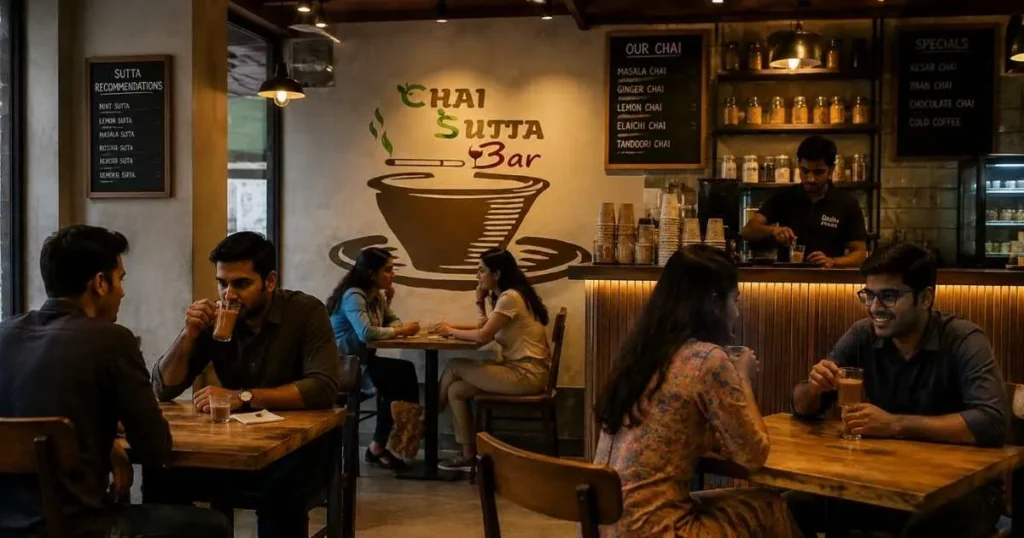
Chai Sutta Bar (CSB) was started in 2016 by Anubhav Dubey and Anand Nayak, with the very first outlet launched in Indore, Madhya Pradesh. The brand was built around a simple but powerful idea: serve good-quality chai in traditional kulhads (clay cups) at affordable prices, inside a youthful, bar-like ambiance. Later on, Rahul Patidar also joined the founding team.
The brand focuses on innovation — popular chai is served in kulhads that are traditional to India, combining the old and the new. From their menu that extends across different varieties of chai to the contemporary environment it creates, CSB is clearly in the business of delivering both the product and the experience.
Beyond selling chai, the brand has provided employment to thousands of underprivileged people, especially the potters who make the kulhads by hand. This social impact has given CSB genuine customer loyalty and a competitive edge over other brands in the market. The brand’s tagline, “Desh Ki Mitti Ka Swaad” (the taste of India’s soil), reflects this philosophy perfectly.
CSB Growth Timeline
| Year | Milestone |
| 2016 | First 3 outlets launched in Indore, MP |
| 2017–2018 | Expansion across major cities of Madhya Pradesh |
| 2019 | Increased visibility and popularity, especially among youth |
| 2020 | Expanded to 85+ outlets even through the pandemic; entered international markets |
| 2022 | Crossed 600+ outlets; entered Dubai and Oman |
| 2024 | 600+ outlets across 370+ Indian cities; international expansion accelerated |
| 2025 | Annual turnover reached Rs. 150 crores; 600+ outlets operational |
| 2026 | Target of 800+ outlets; franchise expansion into US, UK, and Canada underway |
Explore the top Tea Manufacturers in Assam.
Why Choose the Chai Sutta Bar Franchise in 2026?
For entrepreneurs looking to start their own business in the food and beverage industry, the CSB franchise model offers numerous benefits hard to ignore in today’s market.
- Established Brand: CSB is already well-established and preferred by millions of consumers in India. This brand recognition goes a long way toward reducing the marketing effort needed to attract new customers, since the audience is already familiar with the product.
- Eco-Friendly Business Model: The brand’s iconic kulhad chai, served in eco-friendly clay cups, appeals strongly to environmentally conscious customers and supports rural artisans. This gives CSB a unique, socially responsible positioning.
- High-Profit Margin: Tea products have relatively higher margins than most other food and beverage products. Tea, milk, and spices are cheap, while the selling price enables a much higher profit margin after cutting expenses.
- Quick ROI: The strong demand for chai and the brand name makes it possible for franchisees to recover their investment in a short time. Most franchisees break even within 12 to 18 months.
- Strong Franchisor Support: CSB gives franchisees adequate training and support to help them perform well — from how to run daily operations to how to advertise products and treat customers.
- Pure Vegetarian & No-Smoking Model: Despite the name ‘sutta’, CSB does not sell cigarettes or alcohol. It is a 100% vegetarian cafe, which makes it acceptable to a very wide customer base across India.
- Tier 2 & Tier 3 Market Dominance: Unlike most premium cafe chains that concentrate in metros, CSB has a huge presence in smaller cities where it often serves as the only organised QSR outlet. This gives franchisees in smaller cities near-monopoly advantages in their locality.
Chai Sutta Bar Franchise Models in 2026
CSB operates under two primary business models: FOFO (Franchise-Owned, Franchise-Operated) and COCO (Company-Owned, Company-Operated). For investors, the relevant model is FOFO, under which the company rents out the brand name to the franchisee for a non-refundable franchise fee for an agreed duration.
Under the FOFO model, three types of outlet formats are available depending on space, budget, and location:
| Outlet Type | Space Required | Format | Best For |
| Kiosk | 100–200 sq ft | Compact, takeaway-only, limited menu | Malls, airports, railway stations, transit hubs |
| Medium / Cafe | 300–500 sq ft | Small seating area, moderately extensive menu | College areas, office hubs, high streets |
| Mega / Lounge | 500–1,200 sq ft | Spacious seating, full menu, dine-in experience | Shopping malls, premium high streets, metro areas |
Chai Sutta Bar Franchise Cost 2026 — Complete Breakdown
So when getting into this business, it is vital to know all the costs involved. The investment required to start a CSB outlet depends on the location, size, and outlet type. Here is a detailed breakdown of all cost components:
| Cost Component | Estimated Amount (INR) | Notes |
| Franchise Fee | Rs. 6 Lakhs – Rs. 8 Lakhs | One-time, non-refundable; grants right to use brand name and business model |
| Store Interior & Design | Rs. 3 Lakhs – Rs. 5 Lakhs | Brand-guided design; consistent look maintained across all outlets |
| Equipment & Kitchen Setup | Rs. 3 Lakhs | Tea-making machines, appliances, counter infrastructure |
| Furniture & Fixtures | Rs. 2 Lakhs – Rs. 3 Lakhs | Seating, tables, display elements |
| Initial Raw Material / Inventory | Rs. 1 Lakh – Rs. 2 Lakhs | First batch of tea, kulhads, spices, snack ingredients |
| Working Capital (3 months) | Rs. 1.5 Lakhs – Rs. 2 Lakhs | Covers rent, salaries, utilities until break-even |
| Branding & Marketing Setup | Rs. 0.5 Lakh – Rs. 1 Lakh | Signage, local launch promotions |
| TOTAL INVESTMENT | Rs. 16 Lakhs – Rs. 25 Lakhs | Varies based on location, outlet type, and city tier |
Royalty Fee: Franchisees are required to remit a royalty fee of 4% to 5% of monthly sales to CSB. This fee covers ongoing brand support, marketing, and operational assistance from the franchisor.
It is important to note that the total investment can vary meaningfully depending on city tier and outlet format. A kiosk in a Tier 2 city may be set up for closer to Rs. 16 Lakhs, while a mega outlet in a metro city could push the investment towards Rs. 25 Lakhs or slightly beyond.
Eligibility Criteria — Who Can Apply?
One of the most frequently asked questions is whether prior experience in the food industry is mandatory. CSB has a relatively open eligibility framework:
- Area Requirement: You must have a suitable location that meets CSB’s specifications. The choice of location is critical and is evaluated by the brand’s team.
- Financial Capability: You should have a solid financial backup capable of investing Rs. 16 to Rs. 25 Lakhs and sustaining operations for the first 3 to 6 months.
- Experience: Prior experience in the food and beverage industry is beneficial but not mandatory. Familiarity with the basics of running a small business, managing staff, and handling customer service is expected.
- Entrepreneurial Spirit: CSB seeks self-motivated individuals aligned with the brand’s values and able to lead teams effectively.
- No Degree Required: You do not need any specific academic qualification to apply for a CSB franchise.
Space and Location Requirements
The place of business is very crucial in any food and beverage setup, and this is especially true for CSB. The preferred place should be busy and well-exposed. Getting this decision right can mean the difference between breaking even in 10 months versus 18 months.
Best Locations for a CSB Franchise
- Educational Institutions: Areas near colleges, universities, coaching centers, and schools have large student populations who find chai an affordable and social beverage.
- Commercial Areas: Offices, business districts, and tech parks are ideal, as employees look for quick and affordable snacks and chai during working hours.
- Malls and Shopping Complexes: These locations experience heavy weekend and weekday traffic, which significantly increases overall sales volume.
- Railway Stations & Transit Hubs: High footfall, quick-service demand, and impulse purchases make these excellent kiosk locations.
- Residential Areas: Busy, densely populated residential colonies tend to offer consistent evening and weekend traffic, especially for regular chai drinkers.
- Tier 2 & Tier 3 Cities: This is where CSB genuinely stands apart. In smaller cities, CSB often becomes the go-to hangout spot, operating without significant organized competition.
Space Requirements by Outlet Type
| Outlet Type | Minimum Space | Seating | Counter / Kitchen |
| Kiosk | 100–200 sq ft | None (takeaway only) | Compact counter setup |
| Medium Cafe | 300–500 sq ft | 8–20 seats | Standard counter + small kitchen |
| Mega Lounge | 500–1,200 sq ft | 30–60 seats | Full kitchen + spacious counter |
Documents Required for Chai Sutta Bar Franchise
Before getting into the application process, keep the following documents ready. This makes the approval process faster and smoother:
- Valid photo ID (Aadhaar Card, PAN Card, Passport)
- Address proof (electricity bill, bank statement, or rental agreement)
- Property documents or rental agreement for the proposed outlet space
- GST registration certificate
- FSSAI food licence
- Shop and Establishment Act licence (as per state rules)
- Bank account details and financial statements
- NOC from landlord (if the space is rented)
Profit Margin Analysis — How Much Can You Actually Earn?
The Chai Sutta Bar franchise cost is reasonable, but the return on the investment is what makes this opportunity truly attractive for new entrepreneurs. An average outlet can generate monthly revenue of Rs. 2 Lakh to Rs. 4 Lakh, depending on footfall and the city’s tier.
The profit margins on tea, milk, and spices are relatively strong compared to other raw materials used in F&B. This makes the CSB franchise highly profitable, with gross profit margins of 40% to 60% on every cup of chai sold, after accounting for raw material costs.
| Scenario | Monthly Revenue | Gross Margin % | Net Profit (after royalty & ops) |
| Low Footfall (Tier 2/3) | Rs. 1.5 – Rs. 2 Lakhs | 40%–45% | Rs. 50K – Rs. 75K |
| Moderate Footfall (Standard) | Rs. 2 – Rs. 3 Lakhs | 45%–50% | Rs. 80K – Rs. 1.2 Lakhs |
| High Footfall (Mall / College Hub) | Rs. 3 – Rs. 4 Lakhs | 50%–55% | Rs. 1.2 – Rs. 1.8 Lakhs |
The 4%–5% royalty is a small price to pay for the brand name, marketing assistance, and ongoing support you receive in return. After deducting royalty fees and expenses, if you have revenue of just Rs. 3 Lakhs per month, the net profit generally falls in the range of Rs. 1.2 to Rs. 1.5 Lakhs per month.
ROI Timeline — When Will You Break Even?
The Chai Sutta Bar franchise model is extremely lucrative and recovers its costs quite quickly by F&B standards. Most franchisees report breaking even within 12 to 18 months. The brand reports an average ROI of 108%, making it one of the highest returns in the tea franchise space in India.
Training and Support from Chai Sutta Bar
Another important benefit of acquiring this franchise is the proper preparation provided by the franchisor. This allows even someone new to the food and beverage industry to effectively manage and operate the franchise.
Initial Training
- Product Preparation: Detailed training on the brand’s chai recipes and snack preparation that must be strictly followed at all outlets to maintain consistency.
- Customer Service: Training to enable the franchisee and their team to provide quality service that meets the expectations of the brand’s customers.
- Operations: Orientation on stock management, store operations, order processing, and daily reconciliation.
Ongoing Support
- Marketing Assistance: Franchisees are regularly supported in developing and implementing promotional strategies to capture and grow their local market.
- Operational Support: The brand’s support team provides problem-solving assistance whenever needed after launch.
- New Product Launches: Franchisees are kept informed of new products and trends, helping them remain relevant and attract repeat customers.
- Supply Chain Access: CSB provides a reliable raw material sourcing network that supports smooth logistics operations and maintains consistent product quality.
Step-by-Step Application Process for Chai Sutta Bar Franchise (2026)
The application process for the CSB franchise in 2026 is straightforward and the time from application to launch is typically 45 to 60 days. Here is how to proceed:
- Apply Online: Go to chaisuttabarindia.com, fill out the franchise enquiry form with personal, location, and financial details.
- Location Survey: The CSB team checks out the proposed space and analyses the potential profitability of the location. Submit photographs and relevant details of the proposed outlet site.
- Area Manager Meeting: A meeting with an area manager to discuss feasibility, layout expectations, and next steps for approval.
- Agreement & Payment: Once approved, sign the franchise agreement and make the franchise fee payment. Read all terms and conditions before signing.
- Setup & Training: CSB helps with interior setup, equipment sourcing, staff training. You can opt for CSB-designed interiors or customise within brand guidelines.
- Outlet Launch: Open your Chai Sutta Bar outlet to the public with marketing support and official launch promotions, typically within 45 to 60 days of signing the agreement.
Who Are the Competitors of Chai Sutta Bar?
CSB competes in a volatile and rapidly growing market with several other major players in the chai and tea cafe segment. Understanding competitors is essential before committing your investment.
| Brand | Investment Required | Royalty Fee | Outlets (2026) | USP / Differentiator |
| Chai Sutta Bar | Rs. 16 – Rs. 25 Lakhs | 4%–5% | 550+ | Kulhad chai, youth-focused bar ambience, Tier 2/3 dominance |
| MBA Chai Wala | Rs. 10 – Rs. 15 Lakhs | 5% | 200+ | Story-driven brand, kiosk model, founder-led marketing |
| Chaayos | Rs. 30 – Rs. 50 Lakhs | 6%–8% | 200+ | Customisable chai, premium cafe format, tech-enabled ordering |
| Chai Point | Rs. 25 – Rs. 40 Lakhs | 6% | 300+ | Corporate delivery focus, strong tech platform |
| Tpot Cafe | Rs. 15 – Rs. 25 Lakhs | 5% | 100+ | Diverse tea collection, cafe vibe, Delhi NCR focus |
Local Marketing Tips for CSB Franchise Owners
One thing the original blog does not cover is what you can do yourself to accelerate ROI after launch. Here are practical, proven strategies that successful CSB franchisees across India have used:
- Instagram & Facebook Local Ads: Run hyper-local ads targeting people within 3 to 5 km of your outlet. Show the kulhad chai being poured — it is one of the most engaging food visuals on social media.
- Student Discounts & Loyalty Cards: A simple loyalty card (10 chai = 1 free) builds daily repeat visits from students who are the brand’s core audience.
- Swiggy & Zomato Integration: Even for a predominantly dine-in or kiosk setup, being listed on delivery apps significantly increases visibility and average order value.
- College & Office Tie-Ups: Partner with nearby colleges or office parks for bulk chai supply during events, exams season, or morning corporate orders.
- Seasonal Specials: Introduce limited-time flavours during winters (like Badam Kesar Chai) or festive periods to drive incremental visits and social media buzz.
Pros & Cons
Pros:
- Established Brand: High brand familiarity and customer loyalty make it easy to reach customers with minimal effort and time required to market the foods.
- High-Profit Margins: Tea and spices are inexpensive raw materials; they are sold at high prices, enabling franchisees to earn high profits and build strong pockets.
- Comprehensive Support: A franchise business is well managed through franchisee training and full support, especially in operations, marketing, and personnel management.
- Affordable Investment: With a low initial investment and a large number of development opportunities, it is suitable for beginning businessmen.
- Fast ROI: Franchisees are usually able to get their money back within the first 12 to 18 months because customers are always steady and consistent, while operation costs are easily manageable.
Cons:
- Limited Menu: The idea of chai is a good one, but it limits the menu and may offend customers who seek product diversity.
- Intense Competition: The Chai franchise market is already crowded, with many new brands targeting the same audience; hence, standing out is vital.
- Royalty Fees: Weekly or monthly royalty fees of 4-5% of revenue can significantly decrease the overall profitability of franchises located in less profitable areas.
- Dependent on Location: Highly dependent on location; incorrect locations may lead to slow sales growth and, therefore, the success of an outlet.
- Strict Franchise Guidelines: Franchisees have to work under strict operational procedures and guidelines coupled with brand requirements, which limit the extent to which the franchised business may be modified.
Is Chai Sutta Bar Franchise Worth It in 2026?
In short — yes, for the right person and the right location. The Chai Sutta Bar franchise investment of Rs. 16 to Rs. 25 Lakhs is one of the most competitive entry points in India’s booming Rs. 3,500 crore-plus organised tea cafe market.
The brand already has 550+ outlets in operation and is gaining serious traction in international markets. The monthly turnover, estimated based on industry averages, is between Rs. 2 and Rs. 4 Lakhs, and the gross profit margin sits between 40% and 55%. These are numbers that are genuinely difficult to ignore for any small business investor.
Conclusion
Therefore, this concept is the best business model for persons interested in the tea industry of India. When coupled with its already established brand image in the market and having a product that has the potential to appeal to just about anyone, it forms a very good platform for a brand to build its success on. These investment requirements are low while the return on investment is high, factors that make the franchise perfect for experienced businessmen and novices in the business world.
Business model scalability also means that expansion is possible, and the support that the franchisor provides for the franchisee prepares him for the difficulties of operating the business. Marketing support to day-to-day operations, Chai Sutta Bar franchise cost, and business model to their partners for the long haul.
Since the tea market continues to expand in India and due to the concept of it, opening a franchise means earning good profits and being in the right business and market.
FAQs
1. What is the total investment required for a Chai Sutta Bar franchise in 2026?
The total investment required for a Chai Sutta Bar franchise in 2026 ranges from Rs. 16 Lakhs to Rs. 25 Lakhs, depending on the outlet type (kiosk, medium cafe, or mega lounge), the city tier, and the specific location. This includes the franchise fee, store setup, equipment, raw material stock, and initial working capital.
2. What is the royalty fee for the Chai Sutta Bar franchise?
CSB charges a royalty fee of 4% to 5% of monthly sales. This fee goes towards ongoing brand support, national marketing, and operational assistance from the franchisor.
3. How long does it take to break even after investing in a CSB franchise?
It typically takes 12 to 18 months to break even, based on location, footfall, and operational consistency. High-footfall outlets near colleges or malls have been known to recover costs in as little as 10 to 12 months.
4. Do I need prior experience in the food industry to get a Chai Sutta Bar franchise?
Prior experience in the food and beverage industry is beneficial but not mandatory. CSB provides comprehensive initial training and ongoing support to prepare franchisees for all aspects of running the outlet. However, basic business management skills and the ability to manage a small team are expected.
5. What documents are required to apply for a CSB franchise?
You will need a valid photo ID, address proof, property documents or rental agreement for the outlet space, GST registration, FSSAI food licence, Shop and Establishment Act licence, and basic financial documents.
6. What are the three types of CSB franchise outlet models available?
CSB offers three outlet formats: Kiosk (100–200 sq ft, takeaway-only), Medium Cafe (300–500 sq ft, small seating area), and Mega Lounge (500–1,200 sq ft, full menu and large seating capacity). Investment and revenue potential vary accordingly.
7. Is Chai Sutta Bar profitable for franchisees in Tier 2 and Tier 3 cities?
Yes — in fact, CSB’s Tier 2 and Tier 3 city strategy is one of its biggest competitive advantages. In many smaller cities, CSB operates as the only organised QSR chai outlet in the area, giving franchisees near-monopoly positioning and strong customer loyalty.
8. Who is the founder of Chai Sutta Bar?
Chai Sutta Bar was co-founded by Anubhav Dubey and Anand Nayak in 2016, with Rahul Patidar later joining the founding team. Anubhav Dubey serves as the CEO of the brand and has been the primary public face and spokesperson for CSB.