Every online decision leaves a digital footprint, making privacy a strategic business asset rather than a personal preference. In 2026, organizations and professionals exchange confidential data across cloud platforms, public Wi-Fi, and global networks daily, increasing exposure to cyber threats and unwanted monitoring.
This year is especially critical because internet service providers continue collecting connection metadata, governments in many regions enforce stricter data retention requirements, and advertisers rely on increasingly sophisticated tracking technologies to profile users. A trustworthy VPN helps reduce these risks by encrypting internet traffic and masking your IP address without disrupting productivity.
This blog ranks and explains the 10 best VPN for anonymous surfing in 2026, comparing features, strengths, and ideal use cases for business professionals, everyday users, journalists, travelers, activists, and anyone prioritizing online privacy.
What Is Anonymous Surfing and Why Does It Matter in 2026?
Anonymous surfing is the practice of browsing the internet without revealing your real identity, location, browsing habits, or personal information to websites, advertisers, internet service providers, and potential cybercriminals. It typically involves tools such as virtual private networks (VPNs), privacy-focused browsers, encrypted DNS services, and tracker blockers that work together to reduce your digital footprint. While complete anonymity is difficult to achieve, these technologies significantly improve online privacy and security.
In 2026, anonymous surfing has become increasingly important as online tracking technologies continue to evolve. Businesses, advertisers, social media platforms, and data brokers collect vast amounts of user information to build detailed behavioral profiles. At the same time, cyber threats, phishing attacks, identity theft, and public Wi-Fi vulnerabilities remain major concerns for everyday internet users.
By browsing anonymously, users can better protect sensitive information, reduce targeted tracking, bypass unnecessary geographic restrictions, and enjoy greater control over their digital privacy in an increasingly connected world.
VPN Anonymity vs Privacy vs Security — What Is the Difference?
| Aspect | Anonymity | Privacy | Security |
| Primary Goal | Hide your identity | Keep your data confidential | Protect against attacks and interception |
| Protects | Your IP address and location | Browsing activity and personal information | Internet traffic and devices |
| Main Threat | Tracking and identification | Data collection and surveillance | Hackers, malware, and cybercriminals |
| How a VPN Helps | Masks your real IP address | Encrypts internet traffic and reduces ISP tracking | Secures data using strong encryption and secure VPN protocols |
| Limitations | Doesn’t make you completely anonymous | Websites can still identify you if you log in | Doesn’t stop phishing or malware by itself |
What Does a VPN Actually Hide? (And What It Cannot)
A VPN is an excellent privacy tool, but it does not make you invisible online. It encrypts your internet traffic and hides certain identifying information while leaving other data visible depending on how you use the internet. Understanding what a VPN can and cannot hide helps you set realistic expectations and build stronger online privacy habits.
- Your IP Address: A VPN replaces your real IP address with the VPN server’s address, preventing websites and advertisers from identifying your actual location.
- Your Physical Location: Most websites only see the VPN server’s location instead of your approximate city or region derived from your original IP.
- Your Browsing Activity from Your ISP: Encryption prevents your internet service provider from viewing the websites you visit or monitoring your online activities directly.
- Your Data on Public Wi-Fi: VPN encryption protects sensitive information from hackers attempting to intercept passwords, messages, or financial details on unsecured networks.
- Your Download and Upload Traffic: Files transferred through the VPN tunnel remain encrypted, making them difficult for third parties to inspect or capture.
- Your DNS Requests: Quality VPNs route DNS queries through encrypted servers, preventing ISPs from seeing which domains you are trying to access.
- It Cannot Hide Logged-In Accounts: If you sign into Google, Facebook, or other services, those platforms still know your identity and activity.
- It Cannot Block All Tracking Cookies: Websites can still use cookies and browser technologies to recognize returning visitors unless additional privacy tools are enabled.
- It Cannot Prevent Phishing or Malware: A VPN encrypts connections but cannot stop users from downloading malicious files or visiting fraudulent websites or phishing pages automatically.
- It Cannot Guarantee Complete Anonymity: Browser fingerprinting, account logins, and personal information you voluntarily share can still reveal your identity online.
6 Critical Factors to Choose the Best VPN for Anonymous Surfing
Choosing the right VPN for anonymous surfing requires more than simply looking at speed or price. The best providers combine proven privacy protections, secure technology, and transparent business practices to minimize your digital footprint. Before subscribing, evaluate these six essential factors to ensure your VPN genuinely enhances anonymity instead of creating a false sense of security.
- Verified No-Logs Policy: Choose providers with independently audited no-logs policies, ensuring browsing history, connection timestamps, IP addresses, and user activity are never stored or shared.
- Strong Encryption Standards: Select VPNs using AES-256 or ChaCha20 encryption with secure protocols like WireGuard or OpenVPN to safeguard internet traffic from interception and surveillance.
- RAM-Only Server Infrastructure: RAM-only servers automatically erase all information after every reboot, significantly reducing risks of stored user data being recovered following physical server compromise.
- DNS and IP Leak Protection: Ensure the VPN includes built-in DNS, IPv6, and WebRTC leak protection to prevent accidental exposure of your real IP address during browsing.
- Privacy-Friendly Jurisdiction: Prefer VPN companies headquartered in countries with strong privacy laws and minimal mandatory data retention requirements, reducing legal pressure to collect user information.
- Independent Security Audits: Regular third-party security audits verify the provider’s privacy claims, infrastructure, and applications, increasing confidence that advertised security features genuinely protect anonymous browsing.
Top 10 Best VPN for Anonymous Surfing in 2026 (Tested and Ranked)
1. IVPN – Best for Minimal Data Collection Philosophy
Website: https://www.ivpn.net/en/
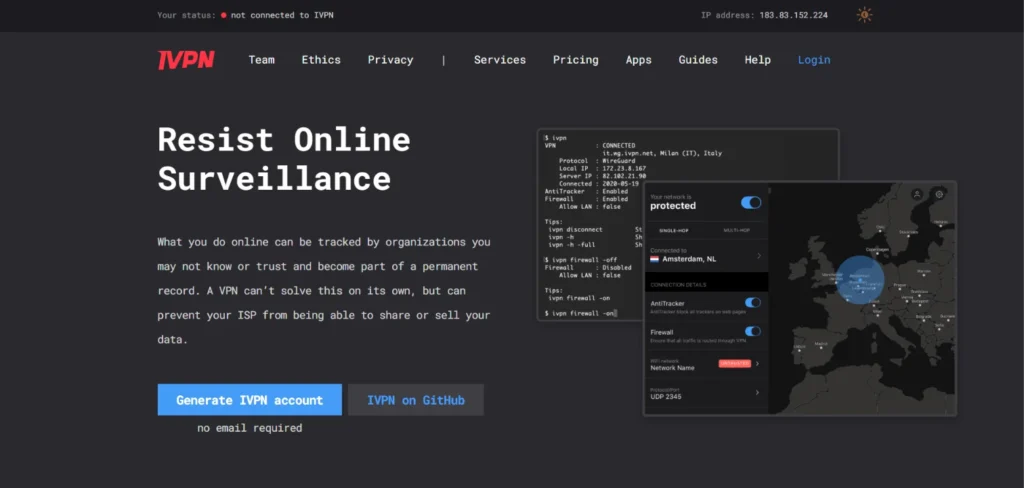
IVPN focuses on privacy by minimizing user data collection and maintaining exceptional transparency about its operations. It supports anonymous account creation, strong encryption, audited infrastructure, and modern VPN protocols while providing dependable protection against tracking.
IVPN’s applications are open source, allowing independent verification of security implementations. Although its server network is smaller than some competitors, it prioritizes trustworthy privacy over sheer scale.
Users seeking a transparent VPN provider committed to anonymous surfing and ethical business practices will appreciate IVPN’s focused approach to online privacy.
Speed and Performance: Reliable browsing speeds with dependable low-latency connections.
Key Features:
- Open-source audited VPN applications
- Anonymous account registration available
- Anti-tracker privacy protection included
- Multi-hop secure routing supported
- Minimal personal data collection
Pros:
- Excellent transparency
- Strong privacy commitment
- Clean user interface
- Ethical business model
Cons:
- Smaller server network
- Higher pricing tiers
- Fewer streaming features
Pricing:
- IVPN Standard- $6/mo
- IVPN Plus- $8/mo
- IVPN Pro Suite- $10/mo
2. Hide.me – Best for Fast Private Browsing With Zero Logs
Website: https://hide.me/en/
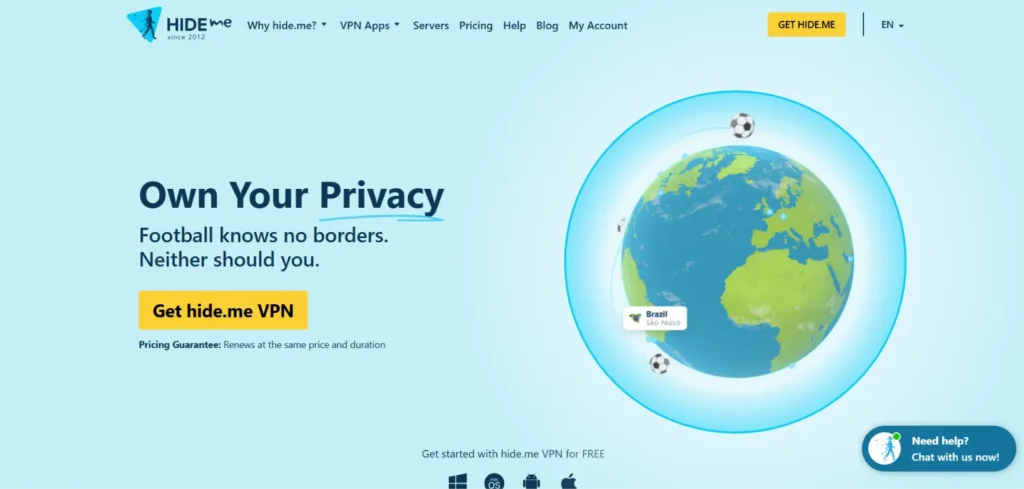
Hide.me has established itself as a dependable privacy-focused VPN with independently verified no-logs practices, strong encryption, and excellent protocol support. It offers WireGuard, OpenVPN, IKEv2, and SoftEther compatibility while maintaining impressive browsing speeds across its international server network.
Hide.me also includes split tunneling, kill switch functionality, and advanced DNS leak protection.
With transparent security practices, responsive customer support, and a capable free plan, Hide.me provides an excellent balance between anonymous browsing, usability, and consistent performance for privacy-conscious internet users.
Speed and Performance: Fast browsing speeds with reliable low-latency connections.
Key Features:
- Independently verified zero-logs policy
- Multiple modern VPN protocols
- Built-in split tunneling support
- DNS leak protection included
- Free plan with privacy
Pros:
- Excellent privacy protections
- Strong protocol support
- User-friendly applications
- Free plan available
Cons:
- Smaller server network
- Premium plan required fully
- Advanced options limited
Pricing:
- 27 Months- $2.59/mo
- 12 Months- $4.58/mo
- 1 Month- $11.99/mo
Suggested Read:
3. Windscribe – Best for Flexible Privacy on Any Budget

Website: https://windscribe.com/
Windscribe combines strong privacy protections with flexible subscription options that appeal to occasional and frequent VPN users alike.
As a VPN for anonymous surfing, it supports secure encryption, configurable connection settings, and a robust firewall that prevents accidental IP leaks. Windscribe’s R.O.B.E.R.T. filtering system blocks ads, trackers, malware domains, and unwanted content before connections reach the browser.
With both free and premium plans available, users can easily evaluate its privacy features before upgrading. Its flexibility and reliable performance make Windscribe a compelling anonymous browsing solution for diverse user needs.
Speed and Performance: Good browsing performance with competitive WireGuard speeds.
Key Features:
- R.O.B.E.R.T. intelligent content filtering
- Configurable VPN connection settings
- Firewall prevents accidental IP exposure
- WireGuard high-speed protocol support
- Flexible build-your-own subscription option
Pros:
- Flexible pricing options
- Strong privacy features
- Useful free plan
- Effective tracker blocking
Cons:
- Smaller premium network
- Inconsistent streaming support
- Interface feels technical
Pricing:
- $9.00 per month
- $69 USD per year
4. Private Internet Access – Best for Customizable Anonymous Connections

Website: https://www.privateinternetaccess.com/
Private Internet Access offers extensive configuration options that appeal to experienced VPN users seeking greater control over anonymous browsing. Its open-source applications, independently verified no-logs policy, customizable encryption settings, and large server network provide strong privacy protections.
PIA supports WireGuard and OpenVPN while offering advanced split tunneling and automation capabilities. Despite its technical flexibility, the interface remains approachable for everyday users.
Those wanting granular control over security settings alongside dependable anonymous browsing performance will find Private Internet Access an excellent long-term VPN solution.
Speed and Performance: Very good WireGuard speeds with stable worldwide connectivity.
Key Features:
- Open-source VPN applications available
- Advanced split tunneling controls
- Customizable encryption configuration settings
- Independently audited no-logs policy
- Large global server network
Pros:
- Highly customizable settings
- Strong privacy commitment
- Unlimited device connections
- Competitive pricing
Cons:
- Interface may overwhelm beginners
- Some servers inconsistent
- Streaming optimization varies
Pricing:
- 1 Month- ₹ 900.79/mo
- 1 Year- ₹ 250.83/mo
5. Mullvad VPN – Best for Maximum Identity Protection

Website: https://mullvad.net/en
Mullvad VPN has earned an exceptional reputation among privacy advocates by requiring no email address during registration and generating anonymous account numbers instead. It accepts cash payments and several anonymous payment methods, minimizing personally identifiable information.
Mullvad operates with a strict no-logs policy, transparent security practices, and independently audited applications. Although it offers fewer consumer-focused extras than competitors, its commitment to anonymity remains unmatched.
For users who prioritize identity protection over entertainment features, Mullvad remains one of the strongest anonymous VPN services available.
Speed and Performance: Consistently fast WireGuard speeds with stable global connectivity.
Key Features:
- Anonymous numbered account registration system
- Cash payment option supported
- Independently audited privacy protections
- WireGuard protocol optimized performance
- Transparent security infrastructure practices
Pros:
- Exceptional anonymity protections
- Transparent privacy philosophy
- No email registration required
- Flat monthly pricing
Cons:
- Smaller server selection
- Limited streaming optimization
- Fewer consumer extras
Pricing:
- €5/month
6. CyberGhost – Best for Effortless Private Browsing Beginners

Website: https://www.cyberghostvpn.com/
CyberGhost provides an intuitive VPN for anonymous surfing experience designed for users seeking anonymous surfing without technical complexity. Its independently audited no-logs policy, strong encryption, automatic kill switch, and dedicated privacy tools ensure secure internet sessions.
The provider operates one of the industry’s largest server networks, giving users numerous options for maintaining anonymous connections worldwide. CyberGhost’s clearly organized applications simplify server selection while maintaining competitive browsing speeds.
Long-term subscriptions offer excellent value, making it a practical option for beginners who prioritize privacy and straightforward usability.
Speed and Performance: Stable performance with excellent browsing and download speeds.
Key Features:
- Massive worldwide server network available
- Independently audited no-logs policy
- Automatic kill switch included
- WireGuard protocol support available
- Dedicated optimized privacy servers
Pros:
- Very beginner-friendly interface
- Extensive server coverage
- Strong privacy protections
- Affordable long-term pricing
Cons:
- Monthly plans expensive
- Advanced customization limited
- Some servers vary speeds
Pricing:
- 1 Month- ₹ 965/mo
- 6 Months- ₹ 560/mo
7. Proton VPN – Best for Privacy Enthusiasts Seeking Transparency

Website: https://protonvpn.com/
Developed by the creators of Proton Mail, Proton VPN emphasizes transparency, open-source software, and independently audited applications. It follows a strict no-logs policy while operating Secure Core servers that route traffic through hardened privacy-friendly locations before reaching the destination.
Its Swiss jurisdiction provides additional legal privacy advantages. Proton VPN supports advanced security protocols, DNS leak protection, and strong encryption while maintaining competitive browsing speeds.
Users looking for trustworthy, privacy-first software backed by public security audits will find Proton VPN among the strongest anonymous surfing solutions available today.
Speed and Performance: Reliable high-speed performance, especially on premium servers.
Key Features:
- Secure Core multi-hop architecture
- Open-source independently audited applications
- Swiss privacy-focused legal jurisdiction
- Strong AES and WireGuard security
- Integrated NetShield threat blocking
Pros:
- Highly transparent security approach
- Strong privacy jurisdiction
- Open-source applications
- Excellent security reputation
Cons:
- Premium features cost extra
- Free plan has limitations
- Smaller server network
Pricing:
- VPN Plus- $9.99 /month
- Proton Unlimited- $12.99 /month
8. NordVPN – Best for Double-Layer Privacy Without Slowing Down

Website: https://nordvpn.com/
NordVPN remains one of the strongest choices for anonymous surfing in 2026 thanks to its independently audited no-logs policy, RAM-only servers, and advanced privacy technologies. It offers features like Double VPN, Onion Over VPN, and Threat Protection Pro to reduce online tracking while maintaining excellent performance.
Based in privacy-friendly Panama, NordVPN keeps user activity private and supports anonymous browsing across thousands of high-speed servers worldwide.
With intuitive applications for every major platform and consistently fast speeds, it provides a dependable solution for users prioritizing online anonymity without sacrificing usability or performance.
Speed and Performance: Excellent speeds with minimal latency across nearby and long-distance servers.
Key Features:
- Double VPN encrypts traffic twice
- Onion Over VPN for privacy
- RAM-only diskless secure infrastructure
- Independently audited strict no-logs policy
- Threat Protection blocks malicious websites
Pros:
- Outstanding privacy-focused infrastructure
- Excellent streaming and browsing performance
- Easy-to-use applications
- Large global server network
Cons:
- Premium plans cost more
- Some advanced tools desktop-only
- Occasional server switching delays
Pricing:
- Basic- $14.69 /mo
- Complete- $19.49 /mo
- Complete Max- $21.49 /mo
9. Surfshark – Best for Unlimited Anonymous Devices
Website: https://surfshark.com/
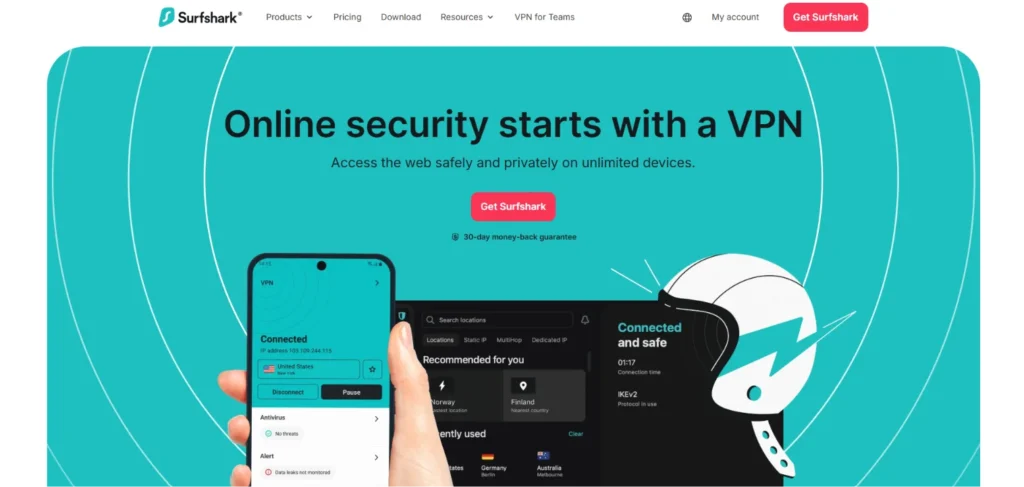
Surfshark delivers outstanding value for privacy-conscious users by allowing unlimited simultaneous device connections under one subscription. As a reliable VPN for anonymous surfing, it features an audited no-logs policy, CleanWeb tracker blocking, MultiHop routing, and Dynamic MultiHop options that strengthen anonymous browsing.
Surfshark operates RAM-only servers and uses modern encryption standards alongside secure WireGuard support for impressive speeds. The VPN also includes Alternative ID, helping users minimize exposure of personal information online.
Combining affordability with advanced privacy features, Surfshark has become one of the most attractive VPNs for individuals and families seeking anonymous internet access.
Speed and Performance: Fast WireGuard performance with reliable international server speeds.
Key Features:
- Unlimited simultaneous device connections supported
- MultiHop dual VPN routing
- CleanWeb blocks ads and trackers
- Alternative ID enhances online privacy
- RAM-only secure server infrastructure
Pros:
- Unlimited connected devices
- Excellent overall value
- Strong privacy protection
- Modern intuitive applications
Cons:
- Some servers occasionally crowded
- Advanced tools require learning
- Smaller enterprise feature set
Pricing:
- Surfshark Starter- $15.45/mo.
- Surfshark One- $17.95/mo.
- Surfshark One+- $20.85/mo
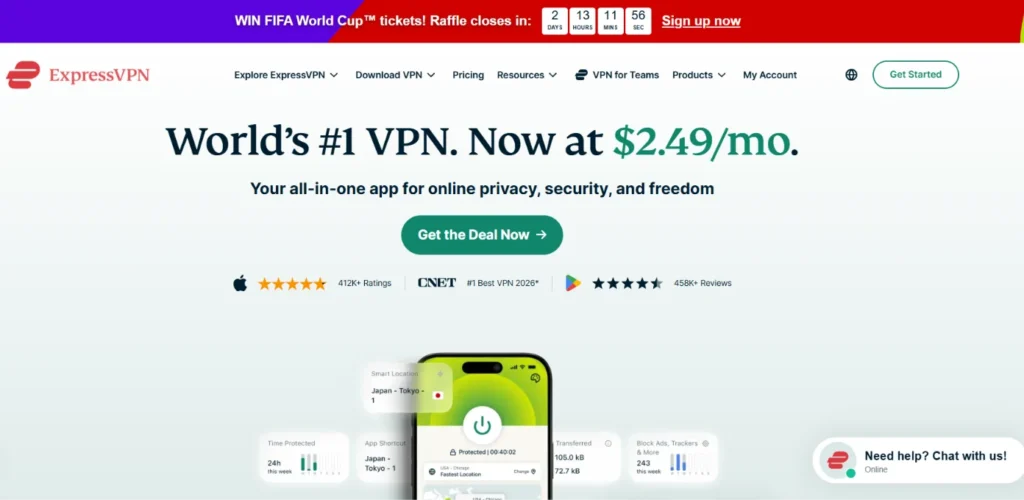
10. ExpressVPN – Best for Trusted Privacy Across Every Device
Website: https://www.expressvpn.com/
ExpressVPN combines exceptional privacy protections with consistently fast performance, making it an excellent VPN for anonymous surfing. Its TrustedServer technology ensures every server runs entirely on volatile memory, leaving no persistent data behind after reboot.
Headquartered in the British Virgin Islands, ExpressVPN follows a verified no-logs policy audited by independent security firms. Users benefit from reliable apps across desktops, smartphones, routers, and smart TVs while enjoying secure encryption and robust leak protection.
Its straightforward interface makes anonymous browsing accessible even for beginners without compromising advanced security standards.
Speed and Performance: Very fast connections with reliable performance for global browsing.
Key Features:
- TrustedServer RAM-only server technology
- Independently verified no-logs policy
- Built-in Network Lock kill switch
- Lightway protocol improves connection speed
- DNS leak protection by default
Pros:
- Excellent privacy reputation
- Consistently high connection speeds
- Beginner-friendly applications
- Strong security audits
Cons:
- Higher subscription pricing
- Fewer customization options
- Limited simultaneous device connections
Pricing:
- Advanced- $13.99/mo
- Basic- $12.99/mo
- Pro- $19.99/mo
VPN Anonymity Feature Comparison Table (All 10 VPNs Side by Side)
| VPN | No-Logs Audit | RAM-Only Servers | Multi-Hop / Double VPN | Kill Switch | Open Source Apps | Anonymous Payment | Best For |
| IVPN | Yes | No | Yes | Yes | Yes | Yes | Maximum transparency |
| Hide.me | Yes | No | No | Yes | No | Yes | Privacy with free option |
| Windscribe | Partial | No | No | Yes | No | Yes (Crypto) | Budget-conscious users |
| Private Internet Access | Yes | Yes | No | Yes | Yes | Yes | Advanced customization |
| Mullvad VPN | Yes | Yes | No | Yes | Yes | Yes (Cash & Crypto) | Strongest anonymity |
| CyberGhost | Yes | Yes | No | Yes | No | No | Beginners |
| Proton VPN | Yes | Yes | Yes (Secure Core) | Yes | Yes | Yes (Crypto) | Journalists & activists |
| NordVPN | Yes | Yes | Yes (Double VPN & Onion) | Yes | No | Yes (Crypto) | Overall anonymous browsing |
| Surfshark | Yes | Yes | Yes (MultiHop) | Yes | No | Yes (Crypto) | Unlimited devices |
| ExpressVPN | Yes | Yes (TrustedServer) | No | Yes | No | Yes (Crypto) | Premium all-round privacy |
Which VPN Is Best for Your Use Case?
Selecting the right VPN depends on how and where you use the internet. While all premium VPNs encrypt your traffic, some are optimized for privacy, others for streaming, censorship resistance, or mobile performance. Match the VPN’s strengths to your primary use case for the best experience.
Best VPN for Everyday Anonymous Browsing
1. Mozilla VPN
Website: https://www.mozilla.org/products/vpn/
Mozilla VPN delivers straightforward privacy protection backed by the trusted Mozilla brand. Built on the WireGuard protocol, it encrypts internet traffic while maintaining fast browsing speeds. Its transparent privacy approach and clean interface make it suitable for professionals and everyday users seeking reliable anonymous browsing without unnecessary complexity.
Key Features:
- Built on modern WireGuard protocol
- Simple privacy-focused user interface
- Supports multiple operating systems seamlessly
- Backed by trusted Mozilla organization
2. Bitdefender VPN
Website: https://www.bitdefender.com/solutions/vpn.html
Bitdefender VPN integrates seamlessly with the company’s security ecosystem, offering encrypted browsing and dependable privacy for everyday internet activities. Designed for simplicity, it protects users on public Wi-Fi while maintaining stable performance. Business users benefit from quick deployment, intuitive controls, and consistent day-to-day browsing security.
Key Features:
- One-click secure VPN connection
- Strong encryption for daily browsing
- Public Wi-Fi protection included
- Easy setup across supported devices
Best VPN for Journalists and Activists
1. AirVPN
Website: https://airvpn.org/
AirVPN emphasizes transparency, net neutrality, and strong encryption, making it attractive for users handling sensitive communications. Operated by privacy advocates, it offers advanced configuration options, open technical documentation, and reliable security. Experienced journalists and researchers appreciate its commitment to protecting online freedom and confidential communications.
Key Features:
- Operated by privacy-focused activists
- Advanced OpenVPN configuration controls
- Transparent technical documentation available
- Strong emphasis on net neutrality
2. Psiphon
Website: https://psiphon.ca/
Psiphon combines VPN, SSH, and proxy technologies to help users access an open internet where restrictions exist. Frequently used in heavily filtered regions, it prioritizes censorship circumvention over premium VPN features, making it valuable for journalists, researchers, and citizens seeking unrestricted access to information.
Key Features:
- Combines VPN and proxy technologies
- Designed for censorship circumvention
- Available across multiple platforms
- Easy deployment in restricted regions
Best VPN for Streaming Anonymously
1. VyprVPN
Website: https://www.vyprvpn.com/
VyprVPN balances privacy with consistent streaming performance through its proprietary infrastructure and Chameleon technology. As a VPN for anonymous surfing, it provides users with stable connections, strong encryption, and dependable speeds across international servers. It suits professionals who occasionally stream while maintaining encrypted browsing sessions across different networks and locations.
Key Features:
- Proprietary Chameleon anti-blocking technology
- Independently managed server infrastructure
- Stable international streaming performance
- Strong encrypted browsing sessions
2. PrivadoVPN
Website: https://privadovpn.com/
PrivadoVPN offers dependable streaming capabilities alongside strong privacy protections and a straightforward user experience. Its secure infrastructure, competitive speeds, and intuitive applications appeal to users wanting anonymous entertainment without sacrificing browsing security. Free and premium options provide flexibility for different privacy and streaming requirements.
Key Features:
- Reliable streaming server availability
- Secure encrypted internet connections
- User-friendly desktop and mobile apps
- Free plan with premium upgrades
Best VPN for Torrenting and P2P
1. TorGuard VPN
Website: https://torguard.net/
TorGuard VPN is specifically engineered for secure file sharing, offering extensive P2P support, high-speed servers, and advanced privacy controls. Its configurable applications, strong encryption, and optional dedicated IP addresses make it a preferred solution for experienced users requiring reliable torrenting performance alongside robust online anonymity and security.
Key Features:
- Optimized servers for P2P traffic
- Advanced customizable privacy settings
- Optional dedicated IP addresses
- High-speed encrypted file transfers
2. VPN Secure
Website: https://vpnsecure.me/
VPN Secure provides encrypted browsing and dependable P2P support through a globally distributed server network. Designed for users prioritizing privacy during downloads, it includes practical security features and straightforward applications. Its balanced approach makes secure file sharing accessible without requiring advanced networking knowledge or configuration.
Key Features:
- Supports secure peer-to-peer transfers
- Global encrypted server infrastructur
- Easy installation across platforms
- Built-in connection security tools
Best VPN for High-Censorship Countries (China, Iran, UAE)
1. Astrill VPN
Website: https://www.astrill.com/
Astrill VPN has developed a strong reputation for operating in regions with strict internet controls. Its specialized connection technologies and flexible protocol options help users maintain secure access where restrictions frequently change. As a VPN for anonymous surfing, it also appeals to privacy-conscious users who want to browse with greater confidentiality. Business travelers often choose Astrill for dependable encrypted connectivity during international assignments and travel.
Key Features:
- Optimized for restrictive internet environments
- Multiple proprietary connection protocols
- Fast international business connectivity
- Flexible server selection options
2. Lantern
Website: https://lantern.io/
Lantern focuses on bypassing internet censorship through adaptive networking technologies that maintain access to blocked websites. Rather than functioning solely as a traditional VPN, it provides practical connectivity for users needing uninterrupted information access while preserving privacy across heavily restricted digital environments.
Key Features:
- Adaptive censorship bypass technology
- Quick access to blocked websites
- Lightweight cross-platform applications available
- Reliable operation under restrictions
Best Free VPN for Anonymous Surfing
1. TunnelBear
Website: https://www.tunnelbear.com/
TunnelBear offers an approachable introduction to VPN technology through its free plan and highly intuitive interface. While usage limits apply, it provides strong encryption, transparent security practices, and simple setup. Beginners can experience secure anonymous browsing before deciding whether premium features better suit long-term privacy needs.
Key Features:
- Beginner-friendly application interface design
- Strong encrypted browsing protection
- Free usage tier available
- Transparent independent security audits
2. Hotspot Shield Basic
Website: https://www.hotspotshield.com/
Hotspot Shield Basic provides free encrypted browsing for users needing occasional online privacy. Its streamlined applications enable quick deployment across common devices while maintaining acceptable browsing performance. Although premium plans unlock additional features, the free version remains useful for basic anonymous internet protection.
Key Features:
- Free encrypted internet access
- Simple one-click connection process
- Cross-platform application compatibility
- Fast setup for beginners
Best VPN for Mobile Anonymous Browsing
1. Namecheap VPN
Website: https://www.namecheap.com/vpn/
Namecheap VPN provides secure mobile browsing through an intuitive application designed for Android and iOS users. It encrypts internet traffic, protects connections on public Wi-Fi, and offers stable global server access. Its affordable pricing and straightforward interface make it a practical option for mobile professionals and travelers.
Key Features:
- User-friendly Android and iOS applications
- Secure public Wi-Fi protection
- Global encrypted server network
- Affordable long-term subscription plans
2. McAfee Safe Connect VPN
Website: https://www.mcafee.com/
McAfee Safe Connect VPN secures mobile internet connections through encrypted tunnels that protect browsing sessions across cellular and Wi-Fi networks. Its intuitive applications, automatic protection features, and integration with McAfee security products make it suitable for professionals frequently working from smartphones or tablets.
Key Features:
- Automatic protection on public Wi-Fi
- Encrypted mobile browsing sessions
- Simple cross-device management tools
- Integrated with McAfee security products
Does a VPN Make You 100% Anonymous Online?
No, a VPN does not make you 100% anonymous online. Its primary purpose is to encrypt your internet traffic and hide your real IP address by routing your connection through a secure remote server. This prevents your internet service provider (ISP), public Wi-Fi operators, and many websites from easily tracking your location or monitoring your online activity. However, anonymity involves more than simply masking your IP address.
If you log into personal accounts such as Google, Facebook, or your online banking, those services can still identify you regardless of whether a VPN is active. Websites may also use cookies, browser fingerprinting, device identifiers, and account information to recognize returning users and build detailed behavioral profiles over time.
For stronger anonymity, combine a reputable no-logs VPN with privacy-focused browsers, tracker blockers, encrypted DNS, multi-factor authentication, careful account management, and good browsing habits. Together, these measures provide significantly better privacy, though complete online anonymity remains difficult to achieve.
How to Set Up Your VPN for Anonymous Browsing (Step-by-Step Guide for 2026)
Setting up a VPN correctly is just as important as choosing the right provider. A few privacy-focused settings can significantly improve your anonymity and reduce the risk of accidentally exposing your identity online. Follow these essential steps to maximize your VPN’s effectiveness for anonymous browsing in 2026.
- Choose a Trusted VPN: Select a reputable VPN with a verified no-logs policy, independent audits, RAM-only servers, and strong privacy-focused security features.
- Install the Official Application: Download the VPN directly from the provider’s official website or trusted app store to avoid modified or malicious versions.
- Enable the Kill Switch: Turn on the automatic kill switch to instantly block internet access if the VPN connection unexpectedly disconnects or fails.
- Use the WireGuard Protocol: Select WireGuard whenever available for faster speeds, strong encryption, improved efficiency, and reliable performance during everyday anonymous browsing sessions.
- Activate DNS Leak Protection: Enable DNS, IPv6, and WebRTC leak protection to prevent accidental exposure of your real IP address or browsing requests.
- Connect Before Browsing: Launch the VPN and connect to a secure server before opening your browser or accessing websites and online services.
- Combine with Privacy Tools: Use privacy-focused browsers, tracker blockers, cookie controls, and secure search engines alongside your VPN for stronger overall anonymity.
- Verify Your Connection: Test your IP address, DNS requests, and WebRTC status using online leak-testing tools before browsing sensitive or personal websites.
VPN for Anonymous Surfing on Mobile — What You Need to Know
More people browse the internet on smartphones than on desktop computers, making mobile privacy increasingly important. Whether you’re using Android or iPhone, a VPN helps protect your internet connection, especially when accessing public Wi-Fi, mobile banking, or sensitive work accounts. However, using a VPN on mobile requires a few additional considerations to maintain both privacy and performance.
- Always Enable Auto-Connect: Configure your VPN to connect automatically whenever your device joins public Wi-Fi or untrusted mobile networks for continuous protection.
- Use Battery-Efficient Protocols: Choose modern protocols like WireGuard, which provide strong encryption while consuming less battery and maintaining excellent browsing performance.
- Keep the Kill Switch Enabled: Enable the VPN kill switch to prevent accidental data exposure if your VPN disconnects while browsing or switching networks.
- Disable Unnecessary Location Sharing: A VPN hides your IP address but cannot stop apps from accessing GPS location if location permissions remain enabled.
- Review App Permissions Regularly: Limit unnecessary camera, microphone, contacts, and location permissions to reduce personal data collected by installed applications.
- Avoid Free Public Wi-Fi Without Protection: Always activate your VPN before connecting to airport, hotel, café, or shopping mall Wi-Fi networks.
- Update Your VPN Application Frequently: Install the latest app updates to receive security patches, protocol improvements, bug fixes, and new privacy features.
- Combine VPN with Mobile Privacy Settings: Enable private DNS, block ad tracking, use secure browsers, and activate two-factor authentication for stronger overall mobile privacy.
VPN + Tor — When and Why to Use Both
Using a VPN with Tor combines encrypted internet traffic with multi-layered anonymous routing, making it an effective VPN for anonymous surfing. A VPN hides your IP from your internet provider, while Tor routes traffic through volunteer relays to reduce traceability. This combination suits high-risk privacy needs but may reduce connection speeds and should not replace safe browsing practices.
- Hide Tor Usage: Choose VPN before launching Tor to hide Tor usage from your internet provider and local network administrators effectively every session.
- Prevent IP Leaks: Use trusted no-logs VPN providers with kill switch protection to prevent accidental IP exposure during unexpected connection interruptions online activities.
- Protect Your Identity: Avoid logging into personal accounts when maximum anonymity is required because identities become easily linkable despite VPN and Tor protection.
- Accept Slower Speeds: Expect slower browsing because Tor routes traffic through multiple encrypted relays increasing latency but strengthening anonymity against network surveillance efforts.
- Strengthen Overall Privacy: Combine VPN and Tor with privacy-focused browsers, tracker blockers, cautious downloading, and strong authentication for comprehensive online privacy protection overall.
Common Mistakes That Break Your VPN Anonymity
Even the best VPN cannot guarantee strong anonymity if it is used incorrectly. Many privacy risks come from everyday browsing habits rather than weaknesses in the VPN itself. Avoid these common mistakes to maximize your online anonymity and keep your personal information better protected.
- Logging Into Personal Accounts: Signing into personal email, social media, or banking accounts immediately links your browsing activity to your real identity online.
- Ignoring VPN Kill Switch: Browsing without an enabled kill switch may expose your real IP address whenever the VPN connection unexpectedly disconnects or fails.
- Using Weak or Free VPNs: Untrusted VPN providers may log user activity, display advertisements, or even sell browsing data to third parties for profit.
- Leaving Browser Tracking Enabled: Cookies, browser fingerprinting, and saved site data can identify you even while your VPN successfully hides your IP address.
- Skipping DNS Leak Protection: Disabled DNS leak protection may allow internet providers to see your domain requests despite encrypted VPN traffic remaining secure.
- Connecting Before Activating VPN: Opening websites before establishing the VPN connection can expose your real IP address and browsing activity to trackers immediately.
- Ignoring Software Updates: Outdated VPN applications and operating systems may contain security vulnerabilities that weaken your privacy and increase exposure to cyber threats.
- Sharing Personal Information Online: Posting identifiable details, documents, photos, or locations can reveal your identity regardless of how secure your VPN connection remains.
Final Verdict — Best VPN for Anonymous Surfing in 2026
For business professionals, entrepreneurs, remote teams, and privacy-conscious decision-makers, a VPN for anonymous surfing is no longer optional—it is a fundamental layer of cyber resilience. A premium VPN protects sensitive communications, masks your IP address, secures public Wi-Fi sessions, and reduces unnecessary tracking, helping safeguard valuable business data and client confidentiality.
Among the leading choices in 2026, NordVPN stands out for its independently audited no-logs policy, RAM-only infrastructure, Double VPN, and consistently fast performance, making it the strongest all-around solution for anonymous browsing. However, no VPN alone guarantees complete anonymity. Pair it with privacy-focused browsers, strong authentication, careful account management, and responsible browsing habits. Think of a VPN as the foundation of your digital privacy strategy not the entire security architecture.