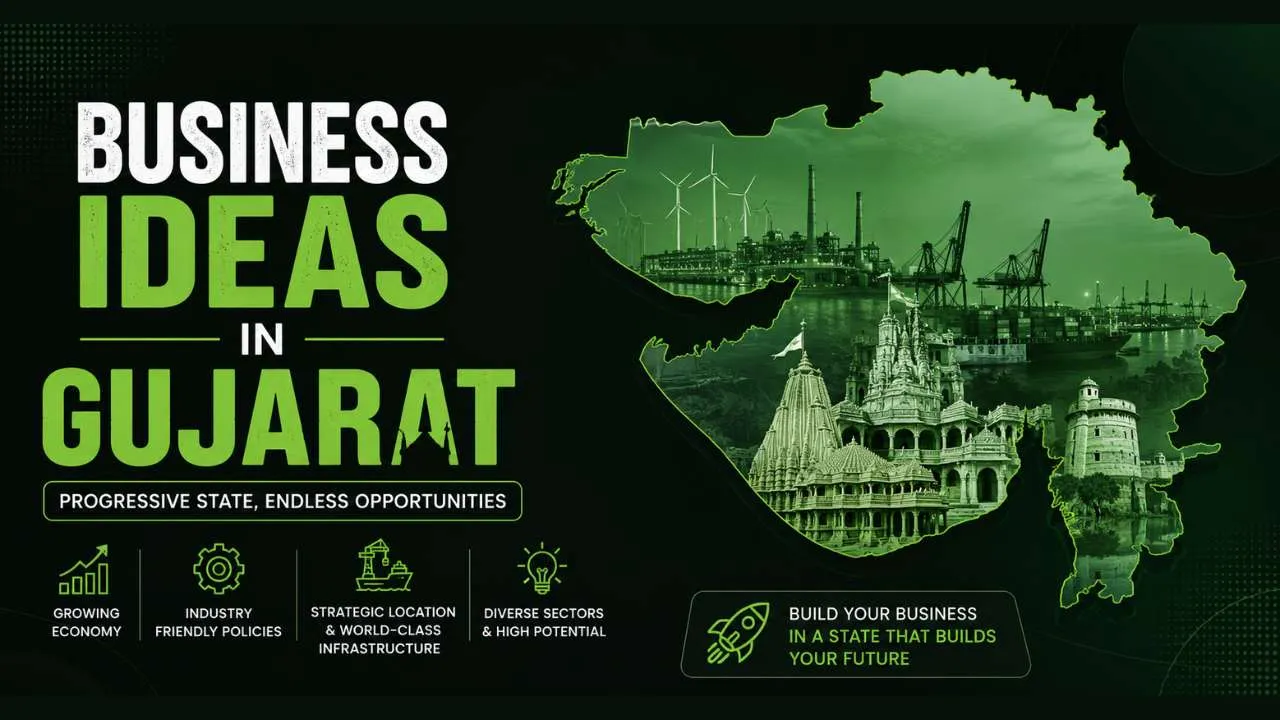
Let’s be honest — there’s no shortage of lists telling you what business to start in Gujarat. Most of them throw 20 ideas at you with a sentence each and call it a guide. This isn’t that.
This is a proper breakdown. We’ve taken the most credible opportunities in Gujarat’s market, dug into what actually makes them work (and where people go wrong), and added a few hidden angles that most business guides completely ignore. If you’re sitting in Ahmedabad, Surat, Rajkot, Vadodara, or even a smaller town — there is something genuinely actionable here for you.
Gujarat has a reputation for producing entrepreneurs, and that reputation is earned. The state is the third-largest contributor to India’s GDP, it attracts over ₹3 lakh crore in industrial investment annually, and it has one of the most business-friendly policy environments in the country. But beyond the stats, there’s something cultural here — a deep-seated belief that business is normal, that trying is expected, and that failing once doesn’t disqualify you from succeeding next time.
That’s the environment you’re working in. Let’s explore some best Business Ideas in Gujarat to start in 2026.
| #3 GDP Rank India’s top GDP contributors | ₹3L Cr+ Annual Industrial Investment One of India’s highest | 11%+ Economy Growth (5-yr CAGR) Leading national average |
Why Gujarat Is One of India’s Best States to Start a Business
Before you decide what to start, it helps to understand why Gujarat is such a strong launchpad. This isn’t about being patriotic — it’s about understanding the structural advantages that make certain businesses genuinely more viable here than in other states.
- Strong infrastructure: roads, rail connectivity, and major ports like Mundra, Kandla, and Pipavav
- Entrepreneurial culture baked into the social fabric — asking ‘what do you do’ in Gujarat often means ‘what business do you run’
- Active MSME ecosystem with government schemes, financing options, and trade networks
- Diverse industrial base: textiles, petrochemicals, diamonds, pharmaceuticals, agribusiness, and more
- One of India’s most business-friendly state administrations
- Large and active Gujarati diaspora (NRI network) that actively invests back into local businesses
There’s also an underrated geographic advantage. Gujarat sits at a natural crossroads — it borders Rajasthan, Madhya Pradesh, and Maharashtra, and its coastline stretches over 1,600 km. If your business involves trading, importing, or exporting anything, you are in a structurally advantageous location.
Top 14 Business Ideas in Gujarat for 2026
Here are 14 ideas — not ranked, because the ‘best’ idea is the one that fits your skills, resources, and market. Each one comes with honest context, not just optimistic projections.
1. Textile & Garment Business
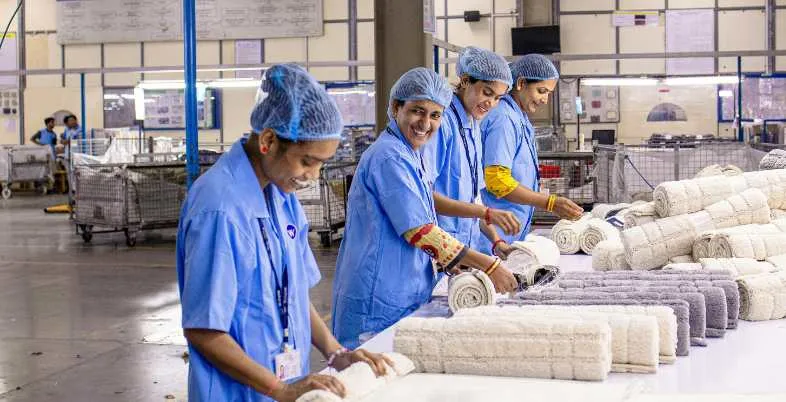
If there’s one industry that defines Gujarat’s commercial identity, it’s textiles. Surat alone handles a massive share of India’s synthetic fabric and saree production. Ahmedabad has a centuries-old weaving and garment tradition. Rajkot is known for embroidery and ethnic wear. This is an industry where the supply chain, the buyers, the logistics, and the skilled labour already exist — your job is to find your place in it, making it one of the most practical small business ideas in Gujarat.
For new entrepreneurs, the entry doesn’t have to be manufacturing. You can start as a fabric trader buying from mills and selling to garment makers. You can start a small garment unit producing uniforms, kurtis, or ethnic wear for local retailers. You can set up an embroidery or printing service that caters to larger manufacturers.
The sustainable textiles angle is worth calling out separately. Urban consumers — both in India and internationally — are increasingly asking where their clothes come from and how they’re made. Handloom, organic cotton, and natural-dye products from Gujarat have a genuine market in premium retail and export. This is a niche that is still small enough to enter but growing fast enough to build something meaningful.
Real Talk: The textile business is competitive and margin-sensitive. Do your homework on fabric costs, wastage, and return rates before scaling. Starting small and proving demand before investing in machinery is almost always the smarter path.
2. Solar Energy & Renewable Energy Business

Gujarat is India’s undisputed leader in solar energy capacity. The state gets over 300 sunny days a year, has committed to aggressive renewable energy targets, and has entire districts like Kutch that have become synonymous with solar farms. But the opportunity here isn’t just in large solar projects — it’s in the thousands of smaller installations that need to happen at the household, commercial, and agricultural level.
Think about it this way: every factory rooftop in an industrial zone, every farm that runs diesel pumps, every new housing society in Ahmedabad or Surat — all of them are potential solar customers. The Central Government’s PM Surya Ghar scheme (free electricity through rooftop solar) has created a fresh wave of demand that installation businesses are struggling to meet, making it one of the most promising unique business ideas in Gujarat.
You don’t need to manufacture solar panels to build a business here. Becoming an authorised installer and distributor for established panel brands is a legitimate business model. Energy auditing for commercial clients, where you assess their energy usage and recommend solar solutions, is another angle that commands good fees.
3. Food Processing & Agribusiness
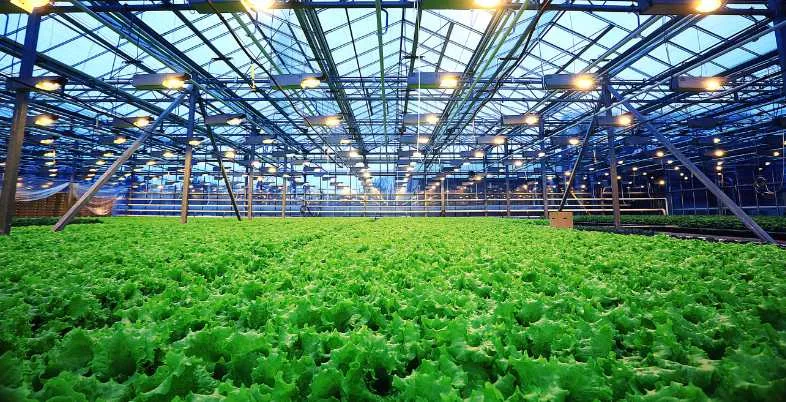
Agriculture contributes over 18% to Gujarat’s state GDP. The state produces cotton, groundnuts, cumin, sesame, onions, dates, and a range of vegetables at scale. But here’s the thing — most of that produce leaves Gujarat either raw or minimally processed. The value addition happens elsewhere, often in other states or countries, and those processors capture the margin that could have stayed in Gujarat.
That gap is your opportunity. A groundnut oil extraction unit can buy raw peanuts from Saurashtra farmers and sell branded oil to retailers. A farsaan (snack) manufacturing unit can turn standard ingredients into packaged products that sell at 3–4x the raw ingredient cost. A food export business can connect Gujarat’s agricultural surplus with international buyers who pay premium prices for Indian food products, making this one of the most scalable manufacturing business ideas in Gujarat.
The government has made this sector explicitly attractive. The PM FME (Formalisation of Micro Food Enterprises) scheme provides funding support, training, and branding assistance for small food businesses. APEDA (Agricultural and Processed Food Products Export Development Authority) actively supports food exporters with market linkages. These aren’t just feel-good schemes — they come with real money and real market access. A packaged food brand rooted in Gujarat’s culinary identity has a built-in story to tell — and in today’s market, story sells.
Explore: Earning Apps for Students
4. Diamond & Jewellery Business

Surat processes roughly 90% of the world’s rough diamonds. That single fact should tell you how deep this industry runs in Gujarat’s economy. The diamond trade here isn’t just cutting and polishing — it’s an entire ecosystem of traders, exporters, tool suppliers, finance companies, and support services that has built up over decades.
If you’re not already connected to this world, the direct diamond business has high barriers — capital requirements are significant, and relationships matter enormously. But there are adjacent opportunities that are far more accessible. Jewellery retail (gold, silver, fashion jewellery) serves an evergreen consumer demand. Custom jewellery design, particularly for wedding markets, commands premium pricing. Jewellery export, especially of silver and fashion jewellery to markets in the US, UK, and Middle East, is an established business that dozens of Surat-based entrepreneurs have built into multi-crore operations, making it one of the more premium small business ideas in Gujarat.
The biggest emerging opportunity in this space, though, is lab-grown diamonds. These are chemically identical to mined diamonds but produced in controlled laboratory conditions at a fraction of the cost. Global consumer acceptance is growing rapidly, especially among younger buyers who are both cost-conscious and ethically aware.
5. Pharmaceutical & Healthcare Business

Ahmedabad and Vadodara are among India’s most important pharmaceutical manufacturing centres. The city hosts hundreds of drug companies, API (active pharmaceutical ingredient) manufacturers, and biotech firms. India’s pharma industry exports to over 200 countries, and Gujarat is disproportionately represented in that export value.
Starting a pharmaceutical manufacturing unit is capital-intensive and heavily regulated — so for most new entrepreneurs, that’s not the entry point. But the ecosystem around pharma creates plenty of legitimate and profitable opportunities. Pharmaceutical distribution is one of the most stable businesses you can run — every hospital, nursing home, chemist, and clinic in your area is a recurring customer. The margins are lower than manufacturing, but the demand is consistent and the collection cycle is manageable, making it one of the most reliable small business ideas in Gujarat.
Medical equipment supply and rental (hospital beds, wheelchairs, nebulisers, oxygen concentrators) is another largely unglamorous but consistently profitable segment. Healthcare staffing — placing trained nurses, lab technicians, and medical support staff with hospitals and clinics — is another services business that requires more relationships than capital. And the fastest-growing corner of this space is herbal, Ayurvedic, and wellness products. Consumer demand for non-allopathic alternatives has exploded post-2020, and Gujarat has both the agricultural inputs (herbs, plants) and the manufacturing knowhow to serve this market.
6. Tourism & Heritage Business
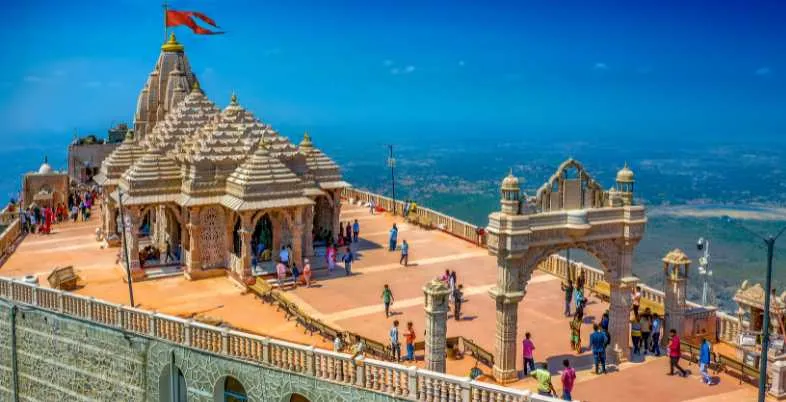
Gujarat is criminally underrated as a travel destination, and that gap is actually your opportunity. While Rajasthan and Kerala dominate tourism marketing budgets, Gujarat’s actual attractions are world-class: the Rann of Kutch (one of India’s most dramatic landscapes), Gir National Park (the only place in the world where you can see Asiatic lions in the wild), the Statue of Unity, the ancient cities of Dwarka, Somnath, and Lothal, and the textile and craft villages that dot Kutch and Saurashtra.
Domestic tourism to Gujarat has grown significantly in recent years, and international tourist arrivals are also increasing, particularly to Ahmedabad (the first Indian city to receive UNESCO World Heritage City status). This combination of under-supply and growing demand is exactly the condition where new tourism businesses can establish themselves before the market becomes crowded.
Homestays and boutique guesthouses are particularly interesting because they can be started with existing property — a spare room, a farmhouse, or a traditional haveli — and the demand for ‘authentic’ accommodation is genuinely strong among today’s experiential travellers. Cultural tour guiding, heritage walks, craft workshop experiences, and village tourism packages are services that international tourists and urban Indian travellers actively seek but rarely find through organised channels.
7. Digital Marketing & Local Language Content

Here’s a business that most traditional Gujarat business guides underestimate because it’s newer, less tangible, and harder to explain to a parent or uncle. But the numbers are real, and the opportunity is significant.
Lakhs of businesses in Gujarat — from textile manufacturers to restaurants to real estate agents to local shops — have little to no organised online presence. They have no website, no Google Business listing, no social media strategy, and no idea how to reach customers beyond word of mouth. A digital marketing agency that specifically serves small and medium Gujarat businesses, speaking their language (literally and figuratively), can build a very solid client base.
On the content creation side, Gujarati-language content on YouTube, Instagram, and podcasts is dramatically underserved relative to the audience size. Millions of Gujarati speakers want content in their language — about business, cooking, agriculture, comedy, local news, education, travel — and the supply is nowhere near the demand, making it one of the most scalable unique business ideas in Gujarat.
The combination play — running a digital agency while building your own content presence — is a legitimate strategy. Your content builds your reputation and demonstrates your skills; your agency generates immediate income while your content grows.
Also Read: Free Blog Sharing Sites
Real Talk: Content creation takes 12–18 months before meaningful income arrives. Don’t quit your day job for this immediately. Build it on the side, prove the traction, and then decide whether to scale it into a full-time business.
8. Real Estate & Interior Design Services

Gujarat’s rapid urbanisation shows no sign of slowing. Ahmedabad’s skyline has transformed over the past decade. Surat is one of India’s fastest-growing cities by population and income. Rajkot and Vadodara are expanding steadily. All of this urbanisation needs housing, commercial space, retail, and the services that make those spaces liveable and functional.
Real estate brokerage remains one of the most accessible ways to enter this space. You need local knowledge, a network, and persistence more than capital. The introduction of RERA (Real Estate Regulatory Authority) has actually made this a better profession to be in — it has cleaned up a lot of the opacity that previously gave brokers a bad reputation, and it has standardised processes in ways that make serious professionals more credible.
Interior design is a growing services business because new homeowners — especially younger, dual-income urban families — don’t want to spend months managing contractors and material sourcing themselves. They want someone to handle it. A competent interior designer or design-build firm that works transparently and delivers on time can build a strong referral network quickly, making it one of the most in-demand small business ideas in Gujarat.
Property management — handling rentals, maintenance, and tenant relations for landlords who are too busy or live elsewhere (including NRIs) — is another service business that is genuinely underserved. As the NRI property ownership base in Gujarat grows, so does the demand for a trustworthy local property manager.
9. Event Management

Gujarat loves to celebrate. Weddings here are multi-day affairs with elaborate decoration, catering for hundreds or thousands, multiple venues, and coordination requirements that are genuinely complex. Religious festivals — Navratri alone transforms the entire state for nine days — generate event planning work across every city and town. Corporate events, product launches, trade exhibitions, school functions, and sports tournaments add to a calendar that keeps event managers busy year-round.
The event management business doesn’t require you to own all the assets. You coordinate: you find the venue, you hire the caterer, you brief the decorator, you book the entertainment, you manage the timeline on the day. Your product is organisation, creativity, and the confidence that comes from having done this before. As you grow, you can start owning assets (vehicles, tent infrastructure, AV equipment) that reduce your dependency on third-party vendors and increase your margins.
The premium wedding segment in Gujarat is particularly strong. Urban, well-off Gujarati families spend significantly on weddings, and the expectation for professional coordination has risen sharply. A wedding planning business that positions itself clearly in the upper-mid or luxury segment — with a strong Instagram presence, a clean portfolio, and verifiable client testimonials — can command rates that make this a high-income business rather than a grind.
10. E-Commerce, Dropshipping & Private Label

Selling online has never been more accessible — and Gujarat’s position as a manufacturing hub means that if you’re based here, you have access to product sources that entrepreneurs in other states have to work much harder to find.
Dropshipping from Gujarat manufacturers is a model where you list products on platforms like Amazon, Flipkart, Meesho, or your own website, take orders, and have the manufacturer ship directly to the customer. Your margin is the difference between what you charge and what the manufacturer charges you. The advantage of being in Gujarat is that you can negotiate directly with manufacturers, visit factories, verify quality in person, and build actual relationships — things that dropshippers in other states simply can’t do as easily.
Private label is a step further: you source a product, put your own branding on it, and market it as your own brand. Gujarati spices, textile products, handicrafts, herbal wellness products, and agri-goods are all categories where a well-branded private label product can command 2–3x the generic product price. The margin improvement from good branding is genuinely significant.
The most important thing about e-commerce, though, is product-market fit before scale. Test your listings with small inventory, understand your return rate and customer feedback, refine your product and listing, and then invest in advertising and scale. Too many first-time e-commerce entrepreneurs reverse this sequence — they spend on ads before they know their product converts — and it’s expensive.
11. Logistics & Supply Chain Services

Every business that manufactures, sells, or trades something needs to move it from one place to another. Gujarat — with its ports, industrial zones, agri-markets, and dense network of small businesses — generates enormous demand for logistics services at every level.
At the small end, you can start with a single truck or tempo and build a route-based cargo business serving a specific industrial cluster or trade route. Many of Gujarat’s most successful transport companies started with one vehicle and a commitment to reliability. At the service end, logistics consulting — helping businesses optimise their supply chains, reduce freight costs, and navigate customs processes — is a high-value services business that requires expertise rather than physical assets.
Cold chain logistics is a specific segment worth highlighting. Fresh produce, dairy, pharmaceuticals, and processed food all require temperature-controlled storage and transport. Gujarat’s agri-produce (especially from Saurashtra and North Gujarat) goes to markets across India, but cold chain infrastructure between farm and market is still underdeveloped. This is a business that requires investment in refrigerated vehicles and storage, but the demand is clear and the margins are good.
12. Education & Skill Development

Education is one of those businesses that is almost recession-proof in India. Parents will cut spending on vacations and entertainment before they cut spending on their children’s education. Gujarat’s aspirational middle class — which is large and growing — invests significantly in tuitions, competitive exam coaching, and skill development.
The traditional coaching centre model (JEE, NEET, CA foundation, GPSC, banking exams) remains strong, particularly in cities where quality coaching is limited. But the more interesting growth is happening in adjacent spaces. Coding education for school students is a category that parents are now genuinely prioritising. Digital literacy programs for adults entering the workforce are in demand from both individuals and employers. Vocational skill training — electrical work, plumbing, beauty therapy, equipment operation — is supported by government schemes and feeds directly into employment demand.
Online education adds a completely different dimension. If you have genuine expertise in a subject, you can create courses on platforms like Udemy, Unacademy, or your own website and sell to a national audience. Gujarat-specific content (GPSC exam preparation, Gujarati language learning, Gujarat’s business and trade practices) has an obvious built-in audience that national platforms often underserve.
13. Pet Care & Grooming Services

This one surprises people. Urban Gujarat — especially Ahmedabad — has seen a significant increase in pet ownership over the past five years, and the services market hasn’t kept up. Dog grooming, veterinary clinics, pet boarding, pet daycare, and premium pet food retail are all underprovided relative to demand.
Pet care is a business built on trust. Pet owners are not price-sensitive when it comes to their animals’ wellbeing — they want someone reliable, skilled, and genuinely caring. A well-run grooming studio or boarding facility with good communication (photos and updates while pets are in your care) builds word-of-mouth referrals extremely quickly in the pet-owning community.
Mobile pet grooming — where you go to the customer’s home with equipment — is a format that urban families with busy schedules find particularly convenient, and it reduces your need for expensive premises. Starting with grooming and adding boarding, food retail, and basic health services as you grow is a logical progression.
14. Electric Vehicle (EV) Related Business

Electric vehicle adoption in India is accelerating, and Gujarat is well-positioned in this transition — both as a manufacturing base (Tata Motors, Ola, and others have or are planning presence in the state) and as a market with rising EV registrations.
The most accessible entry point is EV charging infrastructure. Installing and operating charging stations — at housing societies, commercial complexes, office parks, and highway dhabas — is a business with low operational complexity once the infrastructure is in place. Revenue comes from per-unit charging fees. The economics improve as EV adoption grows, meaning your investment now builds an asset that becomes more valuable over time.
EV-specific servicing and repair is another emerging segment. Existing auto mechanics largely aren’t trained for EVs, and EV owners are currently dependent on OEM service centres that may not be conveniently located. A trained EV technician operating an independent service centre fills a real gap.
Battery recycling — the responsible disposal and recovery of lithium-ion batteries from EVs — is an even more forward-looking opportunity that very few people are thinking about yet. As the first wave of EVs comes off the road in the next five to eight years, battery disposal will become a significant environmental and commercial problem that needs solutions.
What Most Business Guides Won’t Tell You
Beyond the specific business ideas, there are a few broader truths that tend to be missing from standard lists. These are things that actually matter when you’re building something real.
The importance of starting ugly
The version 1 of your business will not be impressive. Your first workshop will be cramped. Your first website will look basic. Your first batch of products might not be perfect. This is normal and fine. The entrepreneurs who make it are the ones who start anyway, learn from actual customers rather than imagined ones, and improve as they go.
Relationships in Gujarat run deep — use them
Business in Gujarat is still substantially relationship-driven. Your supplier will give you better terms once they trust you. Your first ten customers will come from your network, not from advertising. An introduction from a mutual contact opens doors that a cold call can’t. This isn’t nepotism — it’s how trust-based commerce works.
The GST and compliance piece matters more than you think
Many small businesses in Gujarat operate informally and this works — until it doesn’t. If you want to sell to larger businesses, get bank credit, apply for government schemes, or scale beyond a certain point, your business needs to be properly registered and compliant.
Digital presence is no longer optional
Even the most traditional business — a garment manufacturer, a food processor, a logistics company — benefits from having a Google Business listing, basic WhatsApp Business setup, and a simple website. Customers research before they buy, and a business with no online presence loses credibility with a growing segment of the market.
How to Actually Get Started
Theory is cheap. Here’s the practical sequence that works:
- Pick one idea — not three, not five. One. The one that fits your existing skills, your budget, and your genuine interest.
- Talk to potential customers before spending money — at least 10 conversations with real people who might buy from you. Listen more than you speak.
- Register your business — Udyam registration for MSMEs is free and takes 15 minutes online. Don’t skip this.
- Open a dedicated business bank account — keep business and personal finances separate from day one. You’ll thank yourself when tax season comes.
- Get your first customer — before anything else. First sale > first logo. First revenue > first office. Prove demand before investing in scale.
- Explore available support — Gujarat State Financial Corporation (GSFC), MUDRA loans, PM FME, Startup India. There is actual money available for serious entrepreneurs.
- Build a basic online presence — Google Business listing, WhatsApp Business, a simple website. Do this early, not after you’re ‘ready’.
Funding Options — Honest View
Most first businesses are self-funded or family-funded, and that’s fine. Here’s a realistic picture of what’s available:
- Personal savings — cleanest option; no interest, no approval required
- Family investment — most common first-round funding for Gujarat entrepreneurs; structure it clearly to avoid future conflict
- MUDRA Loans (PM Mudra Yojana) — up to ₹10 lakh for micro and small businesses; Shishu (up to ₹50k), Kishore (₹50k–₹5L), Tarun (₹5L–₹10L)
- GSFC (Gujarat State Finance Corporation) — term loans and working capital for SMEs in Gujarat
- PM FME Scheme — credit-linked subsidy specifically for food processing micro-enterprises
- Startup India Seed Fund — for early-stage startups with innovation potential
- NBFCs and fintech lenders — faster processing than banks, higher rates; useful for short-term working capital
- Angel investors and startup incubators — relevant if you’re building something scalable, not just a traditional business
Final Thoughts
Gujarat doesn’t guarantee success — no state does. But it does give you something genuinely valuable: a head start. The infrastructure, the culture, the policy environment, and the market access are all there. What you bring to the table is the drive to actually start.
The best business idea in Gujarat isn’t the trendiest one or the one with the highest theoretical margins. It’s the one you understand well enough to execute, that serves a real need, and that you can sustain through the inevitable early bumps.
Pick something. Start small if you have to. Adjust as you go. Gujarat has a long and proud tradition of exactly that approach — and it works.
Explore more articles from Gujarat: