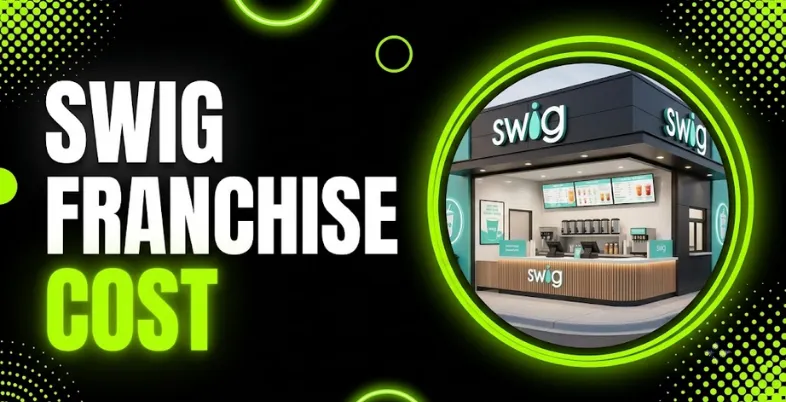
Investing in a franchise backed by a growing brand can be a smart business decision, especially in the food and beverage industry. One brand that has gained significant attention in recent years is Swig, a popular drive-thru beverage chain known for its customizable soft drinks, refreshers, and quick-service model. As the company continues to expand across the United States, many entrepreneurs are eager to understand the Swig Franchise Cost before making an investment.
The total investment depends on several factors, including the store format, location, construction expenses, and operating costs. Besides the initial franchise fee, prospective franchisees should also consider ongoing royalties, financial requirements, and long-term profit potential. This guide provides a complete breakdown of the Swig Franchise Cost in 2026, covering investment, franchise fees, eligibility, application process, expected returns, and the support offered by the company. By the end of this article, you’ll have a clear understanding of whether a Swig franchise aligns with your business goals.
What Is Swig and Why Is It a Hot Franchise Opportunity in 2026
Swig is a fast-growing beverage franchise that has transformed the way people enjoy soft drinks. Founded by Nicole Tanner in 2010 in St. George, Utah, the brand introduced the concept of “dirty sodas”—customized soft drinks made by mixing traditional sodas with flavored syrups, creams, fruit purees, and other add-ins. This unique concept quickly gained popularity, helping Swig stand out in the competitive quick-service beverage industry.
What started as a single location in Utah has expanded into a successful multi-state drive-thru chain, serving customers across several states. Swig has built a loyal customer base through its customizable menu, fast service, and convenient drive-thru experience. The brand’s strong social media presence and growing popularity have further accelerated its expansion.
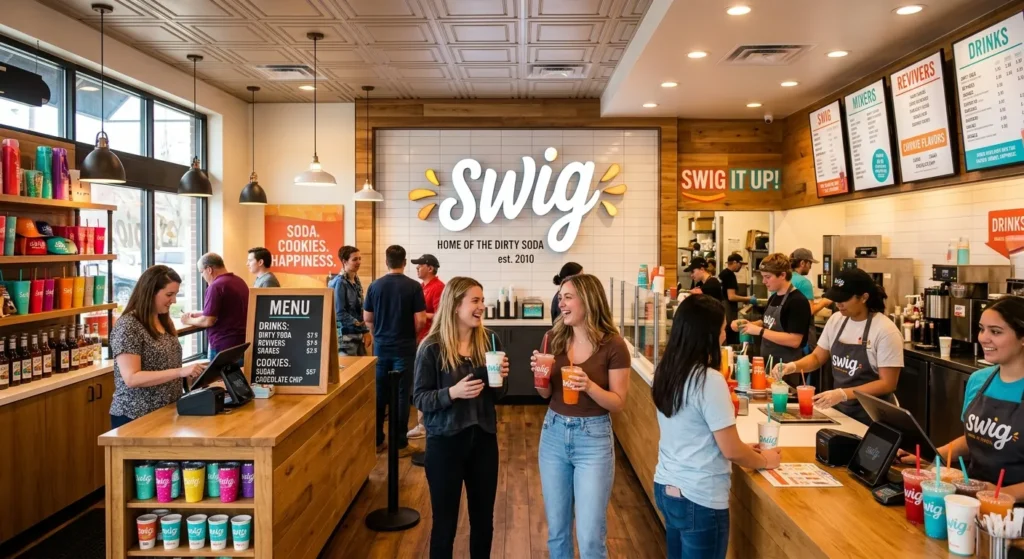
In 2026, Swig is considered an attractive franchise opportunity because of its efficient and scalable business model. Unlike traditional fast-food restaurants, Swig does not require a full kitchen, which helps reduce equipment needs and simplifies day-to-day operations. Its compact store footprint can also lower real estate and construction costs compared to larger restaurant concepts.
Another major advantage is Swig’s high level of repeat business. Many customers visit regularly to try different drink combinations or enjoy their favorite customized beverages, creating a steady stream of recurring revenue. The company also has ambitious expansion plans, targeting more than 500 locations nationwide, making it an appealing choice for experienced franchise investors looking to partner with a rapidly growing brand.
Swig Franchise Cost Overview: How Much Do You Need to Invest?
The Swig Franchise Cost in 2026 ranges from $559,000 to $1,981,000, depending on factors such as the store format, location, construction requirements, and local market conditions. According to Swig’s Franchise Disclosure Document (FDD), the total investment includes everything needed to establish and launch a new franchise, giving prospective franchisees a realistic estimate of the capital required before opening.
The overall investment is made up of several key expenses, including the initial franchise fee, site development and build-out, equipment, furniture, signage, initial inventory, technology systems, licenses, insurance, and working capital for the first few months of operation. The final amount can vary significantly based on whether you build a new drive-thru location from the ground up or renovate an existing retail space.
In addition to these startup expenses, franchisees should also budget for ongoing operating costs such as royalty fees, marketing contributions, payroll, rent, utilities, and inventory replenishment. Understanding each component of the Swig Franchise Cost is essential for creating an accurate business plan and determining whether the investment aligns with your financial goals. The following sections provide a detailed breakdown of every major cost involved in opening a Swig franchise.
Swig Franchise Fee
To open a Swig franchise, franchisees are required to pay an initial franchise fee of $39,500. This one-time upfront payment gives you the legal right to operate under the Swig brand and use its trademarks, business model, operating procedures, and proprietary systems. It also provides access to the company’s training programs, operational guidance, and ongoing franchise support. The franchise fee is already included in the total estimated investment of $559,000 to $1,981,000, so it should not be considered an additional expense beyond the overall startup cost.
Build-Out and Construction Costs
Build-out and construction costs represent the largest portion of the Swig Franchise Cost and can vary significantly depending on the type of location you choose. Developing a new drive-thru store from the ground up generally costs much more than renovating an existing retail or end-cap space. In most cases, construction expenses range from $200,000 to $400,000 or more, depending on the property, local labor costs, lease requirements, and market conditions. Swig provides franchisees with design standards, build-out guidelines, and construction support to help maintain brand consistency, but the final cost will depend on the specific project and location.
Equipment and Supplies Cost
Opening a Swig location requires specialized beverage preparation equipment, including soda dispensing systems, carbonation equipment, ice machines, refrigeration units, blenders, point-of-sale (POS) systems, and other operational tools. Since Swig focuses on beverages and does not require a full commercial kitchen with fryers, grills, or exhaust hoods, equipment costs are generally lower than those of many traditional restaurant franchises. Franchisees can typically expect to invest between $100,000 and $150,000 for equipment and essential supplies needed before opening.
Initial Inventory Cost
Before welcoming customers, every Swig franchise must be fully stocked with the products required for daily operations. Initial inventory typically includes flavored syrups, soda bases, creams, fruit purees, cookie ingredients, cups, lids, straws, ice, packaging materials, and other beverage-making supplies. Purchasing adequate inventory before launch helps ensure smooth operations and allows the store to meet customer demand from the first day of business.
Working Capital Requirements
Working capital is the amount of money needed to cover operating expenses during the first few months while the business establishes a steady customer base. These funds are used for expenses such as employee wages, rent, utilities, insurance, inventory replenishment, and other day-to-day operating costs. Swig recommends planning approximately $50,000 to $100,000 in working capital, although the exact amount depends on your location and business performance. Maintaining sufficient working capital is essential, as inadequate cash reserves are one of the most common reasons new franchise businesses experience financial difficulties in their early stages.
Grand Opening Marketing Budget
Launching a new Swig franchise requires an effective marketing campaign to create brand awareness and attract customers. Franchisees should budget between $10,000 and $25,000 for grand opening promotions and local advertising efforts. This budget typically covers digital marketing, social media promotions, community events, promotional offers, local advertising campaigns, and other activities designed to generate traffic during the initial launch period. While Swig provides marketing resources, branding guidelines, and promotional support, franchisees are responsible for funding their own local marketing initiatives to build a strong customer base from the start.
Swig Ongoing Fees and Recurring Costs
Apart from the initial investment, franchisees should also understand the ongoing costs of operating a Swig franchise. These recurring fees are paid throughout the life of the franchise and directly impact the overall profitability of the business. They typically include royalty fees, marketing contributions, technology charges, and fees associated with online ordering and delivery services. Before investing, it’s important to account for these expenses when estimating your monthly operating costs and expected returns.
| Fee Type | Estimated Cost | Purpose |
|---|---|---|
| Royalty Fee | 7% of Gross Sales | Paid for continued use of the Swig brand, operating system, and ongoing franchise support. |
| Marketing Fund Contribution | 3% of Gross Sales | Supports national and regional advertising, brand promotions, and marketing campaigns. |
| Technology Fee | Approximately $400 per month | Covers POS systems, software, online ordering platform, and other technology services. |
| Online Ordering & Delivery Fee | Approximately 15% of qualifying delivery orders | Applies to eligible online and third-party delivery orders to support digital ordering services. |
Swig Franchise Financial Requirements: Do You Qualify?
Before applying for a Swig franchise, you must meet the company’s minimum financial qualifications. These requirements help ensure that franchisees have the financial stability to open and operate a successful location.
- Minimum Net Worth: Applicants should have a minimum net worth of $500,000. This demonstrates the overall financial strength needed to support the investment and long-term business operations.
- Minimum Liquid Capital: Swig generally requires at least $150,000 in liquid assets, such as cash, savings, or other readily available funds. These funds are essential for covering upfront expenses and maintaining healthy cash flow during the initial months of operation.
- Ability to Secure Financing: If additional funding is required, franchisees should have the financial profile necessary to obtain loans or other financing from banks or lending institutions.
- Sufficient Working Capital: In addition to the initial investment, applicants should have enough working capital to cover payroll, rent, utilities, inventory, and other operating expenses until the business reaches stable profitability.
- Business and Financial Stability: Swig prefers franchisees who have a strong financial background and can comfortably manage the investment without relying solely on the franchise’s early revenue to meet personal financial obligations.
Meeting these financial requirements does not guarantee franchise approval, but it significantly improves your chances of qualifying for a Swig franchise opportunity.
Who Can Own a Swig Franchise: Franchisee Requirements
Swig is selective about who it partners with and primarily seeks experienced franchise operators rather than first-time business owners. To be considered for a franchise, applicants should meet the following requirements:
- Multi-Unit Franchise Experience: Swig prefers candidates who already own or operate multiple quick-service restaurant (QSR) or fast-casual franchise locations. Experience with established brands is considered a significant advantage.
- Ability to Develop Multiple Locations: Rather than offering single-store opportunities, Swig generally looks for franchisees who are capable of developing 10 or more locations within an assigned territory.
- Strong Leadership and Management Skills: Applicants should have proven experience managing teams, overseeing daily operations, and maintaining high customer service standards across multiple business locations.
- Financial Capability: Franchisees must meet Swig’s financial requirements, including the minimum net worth and liquid capital needed to support development and ongoing operations.
- Business and Operational Experience: Previous experience in the food and beverage, retail, or hospitality industry is preferred, as it helps franchisees understand inventory management, staffing, customer service, and operational efficiency.
- Commitment to Brand Standards: Swig expects franchisees to follow its operating procedures, quality standards, marketing guidelines, and customer service practices to ensure consistency across all locations.
- Long-Term Growth Mindset: The company values partners who are committed to expanding with the brand and contributing to its long-term growth strategy rather than operating a single location.
- Entrepreneurial Mindset: Successful franchisees should be proactive, business-focused, and willing to invest the time and resources needed to grow a profitable franchise while maintaining Swig’s brand reputation.
Swig Franchise Revenue and Profit Potential

The revenue and profit potential of a Swig franchise depend on several factors, including location, customer traffic, operating costs, and overall business performance. According to Item 19 of Swig’s Franchise Disclosure Document (FDD), annual gross sales vary significantly across locations. It’s important to remember that gross sales are not the same as profit. A franchise’s actual earnings depend on expenses such as rent, payroll, inventory, royalties, marketing fees, utilities, and other operating costs.
| Financial Metric | Estimated Figures | Details |
|---|---|---|
| Annual Gross Sales | $688,000 to $2.09 million | Reported in Swig’s Franchise Disclosure Document (Item 19). Actual sales vary by location and market conditions. |
| Franchise Fee | $39,500 (One-Time) | Paid before opening and included in the total initial investment. |
| Royalty Fee | 7% of Gross Sales | Ongoing fee paid for continued use of the Swig brand and support. |
| Marketing Contribution | 3% of Gross Sales | Supports national and regional advertising campaigns. |
| Technology Fee | Approximately $400 per month | Covers POS systems, software, and technology services. |
| Adjusted Earnings (SLEBITDA) | Up to approximately $469,242 | Top-performing locations reported adjusted earnings at this level, while lower-performing stores may earn significantly less or even report negative earnings. |
Swig’s financial performance can differ considerably from one location to another. High-performing stores in busy markets may generate strong sales and healthy returns, while new or underperforming locations may take longer to become profitable. Factors such as site selection, local competition, operational efficiency, labor costs, and customer demand all play a major role in determining overall profitability.
Before investing, prospective franchisees should carefully review Item 19 of the Franchise Disclosure Document (FDD) and consult financial and legal professionals to evaluate potential returns based on their specific market and investment plan.
Swig Franchise Territory: Is It Exclusive?
One of the most important factors to consider before investing in a Swig franchise is the territory policy. Swig does not grant exclusive territory rights to its franchisees. This means that while you may be assigned a designated operating area, the company generally retains the right to establish additional company-owned or franchised locations near your business if it believes the market can support further expansion.
In most cases, franchisees receive a defined territory, typically around a two-mile radius, to help identify their primary market. However, this does not prevent Swig from selling its products or services through other channels within or near that area. The company may also accept orders through its website, mobile app, or third-party delivery platforms without providing compensation for those sales.
Although a non-exclusive territory may increase competition over time, it also reflects Swig’s growth strategy of expanding into high-demand markets. Before signing a franchise agreement, prospective franchisees should carefully review the territory provisions outlined in the Franchise Disclosure Document (FDD) and seek advice from a franchise attorney to fully understand their rights and obligations.
Training and Support Swig Provides Franchisees
Swig offers comprehensive training and ongoing operational support to help franchisees successfully launch and manage their businesses. The company provides assistance before opening, during the grand opening, and throughout the franchise term.
- Comprehensive Initial Training: Franchisees and their management teams receive training on beverage preparation, recipes, food safety, customer service, inventory management, daily operations, and the use of Swig’s operating systems.
- Hands-On Learning: Training includes practical experience at an operating Swig location, allowing franchisees to gain real-world knowledge before opening their own store.
- Point-of-Sale (POS) System Training: Swig provides guidance on using its billing POS system, order management software, payment processing, and other technology tools essential for daily operations.
- Site Selection and Store Development Support: The company assists franchisees with site selection, store layout, design standards, and construction guidance to ensure every location meets Swig’s brand requirements.
- Grand Opening Assistance: Swig sends two corporate representatives to support the grand opening for up to seven days. This assistance helps with staff training, operational setup, and ensuring a smooth launch. Franchisees are generally responsible for the associated travel and lodging costs.
- Operations Manual and Brand Standards: Franchisees receive access to Swig’s operations manual, which contains detailed procedures for running the business, maintaining product quality, and delivering a consistent customer experience.
- Ongoing Operational Support: After the store opens, Swig continues to provide operational guidance, business updates, and assistance with implementing new products, promotions, and company initiatives.
- Marketing and Promotional Support: Franchisees receive access to marketing materials, promotional campaigns, branding guidelines, and social media resources to help attract and retain customers.
- Continuous Communication: Swig keeps franchisees informed through newsletters, email updates, and its learning management system, ensuring they stay current with operational changes, training resources, and best practices.
These training and support services are designed to help franchisees maintain brand consistency, improve operational efficiency, and deliver a high-quality customer experience across all Swig locations.
How to Apply for a Swig Franchise: Step-by-Step Process
Applying for a Swig franchise involves several stages, from confirming your eligibility to launching your store. Below is the typical process prospective franchisees can expect to follow.
Step 1: Review the Franchise Opportunity
Start by visiting the official Swig franchising page to learn about the business model, investment requirements, and franchise qualifications. Make sure you meet the company’s financial and operational criteria before submitting an application.
Step 2: Submit the Franchise Application
Complete the online franchise inquiry form by providing details about your financial background, business experience, preferred market, and the number of locations you plan to develop. Swig uses this information to evaluate whether you are a suitable franchise candidate.
Step 3: Initial Evaluation and Interview
After reviewing your application, the franchise development team may contact you for an initial discussion. This stage helps both parties determine whether your experience, financial capability, and long-term goals align with Swig’s franchise requirements.
Step 4: Review the Franchise Disclosure Document (FDD)
If you move forward, Swig will provide its Franchise Disclosure Document (FDD). Carefully review the document, paying close attention to the franchise fees, total investment, ongoing costs, financial performance information, and franchise agreement. It is highly recommended to consult a franchise attorney and financial advisor before making any commitments.
Step 5: Attend Discovery Day
Qualified applicants are invited to Discovery Day at Swig’s headquarters. This visit gives you the opportunity to meet the leadership team, learn more about the company’s culture, understand daily operations, and ask questions before signing the franchise agreement.
Step 6: Sign the Franchise Agreement
Once both parties agree to move forward, you will sign the franchise agreement and pay the initial franchise fee. This officially grants you the right to develop and operate a Swig franchise according to the company’s standards.
Step 7: Complete Training and Secure a Location
After signing the agreement, you’ll participate in Swig’s training program covering operations, customer service, product preparation, and technology systems. At the same time, the company will assist with site selection, lease negotiations, store design, and construction planning.
Step 8: Build, Launch, and Open Your Franchise
The final step involves completing construction, installing equipment, hiring staff, stocking inventory, and preparing for the grand opening. Swig provides launch support to help ensure a smooth opening and a successful start to your business.
Swig Franchise vs Competitors: How Does It Compare?
Swig competes with several beverage-focused franchises, including Dutch Bros, 7 Brew Coffee, and Sodalicious. While each brand offers a unique menu and business model, Swig stands out for its specialty “dirty sodas,” streamlined operations, and drive-thru-focused format. Here’s how it compares with some of its major competitors.
| Feature | Swig | Dutch Bros | Other Beverage Franchises |
|---|---|---|---|
| Primary Focus | Customized soft drinks, refreshers, cookies | Coffee, espresso, energy drinks | Coffee, teas, smoothies, specialty beverages |
| Initial Investment | $559,000–$1,981,000 | Generally higher due to larger store formats and infrastructure | Varies by brand and business model |
| Kitchen Requirements | No full kitchen required | Beverage preparation only, but larger operational setup | Depends on the franchise concept |
| Store Format | Compact drive-thru and retail locations | Larger drive-thru stores | Drive-thru, kiosks, or retail outlets |
| Operations | Simple beverage-focused model | More complex due to a larger menu and staffing needs | Varies depending on menu offerings |
| Ideal Franchisee | Experienced multi-unit operators | Qualified operators meeting brand requirements | Varies by franchisor |
One of Swig’s biggest advantages is its simple operating model. Since the brand focuses primarily on beverages and a limited food menu, franchisees do not need to invest in a full commercial kitchen with grills, fryers, or ventilation systems. This can simplify daily operations and reduce equipment and maintenance requirements compared to many traditional restaurant franchises.
Is the Swig Franchise Worth It in 2026?
Swig can be a worthwhile investment for experienced franchise operators looking to enter the growing beverage industry. Its unique dirty soda concept, loyal customer base, and expanding presence across the U.S. make it a promising franchise opportunity. However, the initial investment of $559,000 to $1,981,000, ongoing fees, and preference for multi-unit developers mean it may not be suitable for every investor. Before investing, review the Franchise Disclosure Document (FDD), assess your financial readiness, and evaluate your local market to determine whether a Swig franchise aligns with your business goals.
Explore more franchise options:
- Smoothie King Franchise Cost
- Tropical Smoothie Franchise Cost
- Mio Amore Franchise Cost
- Tanishq Franchise Cost
Conclusion
Swig has established itself as one of the fastest-growing beverage franchise brands in the United States, attracting entrepreneurs with its unique dirty soda concept, streamlined operations, and loyal customer base. However, investing in a Swig franchise requires significant capital, operational expertise, and a long-term growth mindset.
The Swig Franchise Cost ranges from $559,000 to $1,981,000, along with ongoing royalty and marketing fees, making it best suited for financially qualified and experienced multi-unit operators. Before making an investment, carefully review the Franchise Disclosure Document (FDD), evaluate your financial capacity, and analyze the local market. With the right location, effective management, and strong customer demand, a Swig franchise has the potential to deliver sustainable long-term growth and attractive returns.
FAQs
1. What is The Total Swig Franchise Cost in 2026?
The Swig Franchise Cost ranges between $559,000 and $1,981,000, depending on factors such as location, construction, store format, equipment, and working capital requirements.
2. How Much is The Swig Franchise Fee?
Swig charges an initial franchise fee of $39,500, which is included in the total estimated investment.
3. What are The Financial Requirements to Open a Swig Franchise?
Applicants generally need a minimum net worth of $500,000 and at least $150,000 in liquid capital. The company also prefers financially stable investors who can secure additional financing if required.
4. Does Swig Offer Exclusive Franchise Territories?
No. Swig generally does not provide exclusive territory rights. While franchisees receive a designated operating area, the company may open additional locations nearby if market demand supports expansion.
5. How Much Royalty Does Swig Charge?
Swig franchisees pay an ongoing 7% royalty fee on gross sales, along with a 3% marketing fund contribution and other applicable technology or delivery-related fees.
6. Is a Swig Franchise a Good Investment?
A Swig franchise can be a strong investment for experienced operators due to its growing brand recognition, efficient beverage-focused model, and repeat customer base. However, success depends on factors such as location, operational efficiency, local demand, and the ability to manage the Swig Franchise Cost effectively.