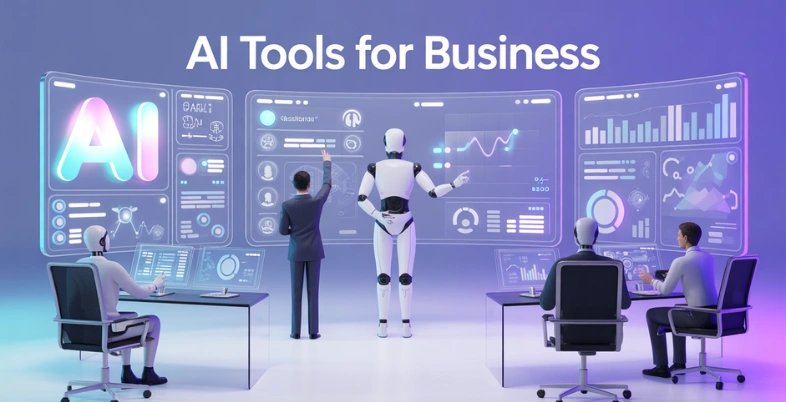
Artificial Intelligence is rapidly transforming the way companies operate, compete, and grow. AI Tools for Business help organizations automate repetitive tasks, analyze large volumes of data, improve customer interactions, and make smarter decisions with greater speed and accuracy. From marketing automation and customer support chatbots to predictive analytics and workflow optimization, these tools allow businesses to streamline operations and increase productivity without significantly increasing resources.
As technology continues to evolve, businesses of all sizes—from startups to large enterprises—are adopting AI-powered solutions to stay competitive in a data-driven marketplace. Whether it’s generating insights, improving personalization, or enhancing operational efficiency, AI tools are becoming essential for modern business strategies. By integrating the right AI solutions, companies can unlock new opportunities, reduce operational costs, and focus more on innovation and growth.
How Are Artificial Intelligence And Machine Learning Platforms Used In Business Analytics?
- Predictive Data Forecasting: AI and machine learning analyse historical data to forecast sales, demand trends, revenue growth, and future market behavior accurately.
- Customer Behavior Analysis: Platforms track customer interactions, preferences, and purchase patterns to personalize marketing campaigns and improve engagement strategies effectively.
- Real-Time Decision Support: AI tools process live data streams, enabling businesses to make faster, data-driven strategic and operational decisions confidently.
- Risk Detection and Fraud Prevention: Machine learning models identify unusual patterns, detect fraud risks, and minimize financial losses through automated monitoring systems.
- Process Automation and Optimization: AI automates repetitive analytical tasks, streamlines workflows, and improves operational efficiency while reducing human error significantly.
- Sentiment and Market Analysis: Platforms analyse social media, reviews, and feedback to measure public sentiment and understand brand perception clearly. Indian AI startups are at the forefront of building these sentiment and market intelligence platforms — check out our curated list of AI startup companies in India that are transforming how businesses understand their customers.
- Performance Monitoring and Reporting: AI dashboards generate automated reports, visualise key metrics, and track business performance against predefined goals consistently.
- Strategic Resource Allocation: Machine learning insights help allocate budgets, inventory, and workforce resources more effectively for maximum profitability and growth.
Quick Comparison Table of AI Tools for Business
| Tool | Best For | Ease of Use | Pricing |
| ChatGPT (OpenAI) | Content creation, automation, and business communication tasks | Very user-friendly interface suitable for beginners and professionals | Free & subscription-based |
| Jasper AI | AI-powered marketing and long-form content writing | Easy to use with guided templates | Subscription-based |
| Grammarly | Grammar checking and professional writing enhancement | Extremely simple browser and app integration | Free & subscription-based |
| MachineTranslation.com | AI-powered translation across 50+ language pairs | Very easy, no setup required | Free & subscription-based |
| HubSpot AI Tools | Marketing automation and CRM-driven business growth | Moderate, with onboarding support available | Free & subscription-based |
| Google Cloud AI | Enterprise-level AI analytics and machine learning | Advanced, requires technical knowledge | Subscription-based (usage-based pricing) |
| IBM Watson | Data analysis and enterprise AI solutions | Moderate to advanced for business users | Subscription-based |
| Salesforce Einstein | AI-powered CRM insights and sales forecasting | Moderate, best for Salesforce users | Subscription-based |
| Microsoft Azure AI | Cloud-based AI development and analytics solutions | Advanced, developer-focused interface | Subscription-based (pay-as-you-go) |
| Zoho Zia | Business automation within Zoho ecosystem applications | Easy for existing Zoho users | Subscription-based |
| Adobe Sensei | Creative design automation and marketing analytics | Easy within Adobe product suite | Subscription-based |
| Hootsuite Insights | Social media monitoring and sentiment analysis | Easy dashboard with analytics tools | Subscription-based |
| Tidio AI | AI chatbots and customer support automation | Very easy setup for small businesses | Free & subscription-based |
| Lumen5 | AI-powered video creation for marketing content | Simple drag-and-drop interface | Free & subscription-based |
| Canva AI Tools | AI-assisted graphic design and branding content | Extremely beginner-friendly interface | Free & subscription-based |
| Notion AI | Document writing, summarizing, and workflow management | Very easy within Notion workspace | Subscription-based |
List of 16 Best AI Tools For Business
1. ChatGPT (OpenAI)
Website: https://chat.openai.com/
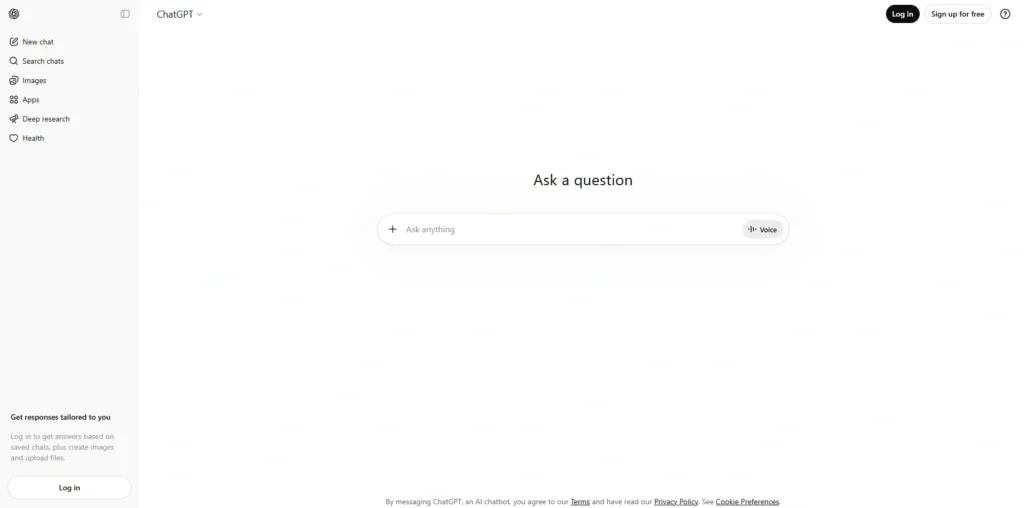
ChatGPT is a high-tech AI assistant that allows businesses to automate communication, create content, and be more productive. It is capable of composing emails, marketing copy, reports, writing code, and helping in customer support.
It is applied by businesses to brainstorm, summarise documents, and simplify internal processes. Its natural language processing features enable human-like interaction, so it can be used in chatbots and in knowledge management.
The API integration options allow companies to integrate it into web pages and applications. ChatGPT is free, and it has premium plans, thus accommodating both startups and companies that require AI-based solutions with scalability.
Key Features:
- Natural language understanding and generation
- Content creation assistance
- Automated customer support responses
- API integration for workflows
- Multi-task conversational capabilities
Pros:
- Highly versatile across use cases
- Generates human-like text outputs
- Scales for teams and automation
- Strong knowledge recall and reasoning
- Integrates with apps and systems
Cons:
- Requires prompt optimization skills
- Can produce hallucinated responses
- Advanced features need subscription
Pricing:
- Personal
- Free– ₹0
- Go– ₹399/month
- Plus– ₹1,999/month
- Pro– ₹19,990/month
- Business
- Free – ₹0
- Business – ₹2,099/month
- Enterprise – Custom Pricing
2. Jasper AI
Website: https://www.jasper.ai/
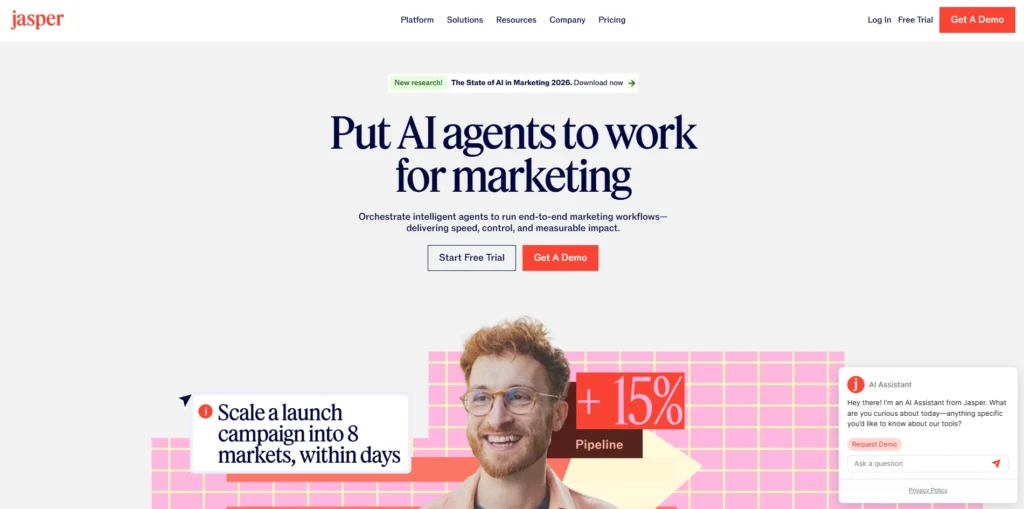
Jasper AI is a marketing-focused ai tools for business AI-based content creation tool. It assists in creating blog posts, social media captions, email campaigns, ad copy and product description. Jasper offers organised templates that ease content production, as well as ensures the consistency of brand voice.
They include better content scalability and a faster turnaround time by businesses. The site intertwines with search engine optimization tools to refine search engine functionality.
Jasper is primarily a paid subscription-based platform designed to be used by marketers and content creators; it also offers team collaboration with teams operating multiple campaigns across digital media.
Key Features:
- Marketing content generation templates
- SEO-optimized writing tools
- Long-form creative assistance
- Brand voice customization
- Collaborative workspaces
Pros:
- Boosts content productivity
- Great for marketing teams
- Provides consistent brand style
- Easy to use templates
- Supports long copy writing
Cons:
- Subscription required for full access
- Not ideal for technical writing alone
- Limited free options
Pricing:
- Pro– $69 month/seat
- Business– Custom Pricing
3. Grammarly
Website: https://www.grammarly.com/
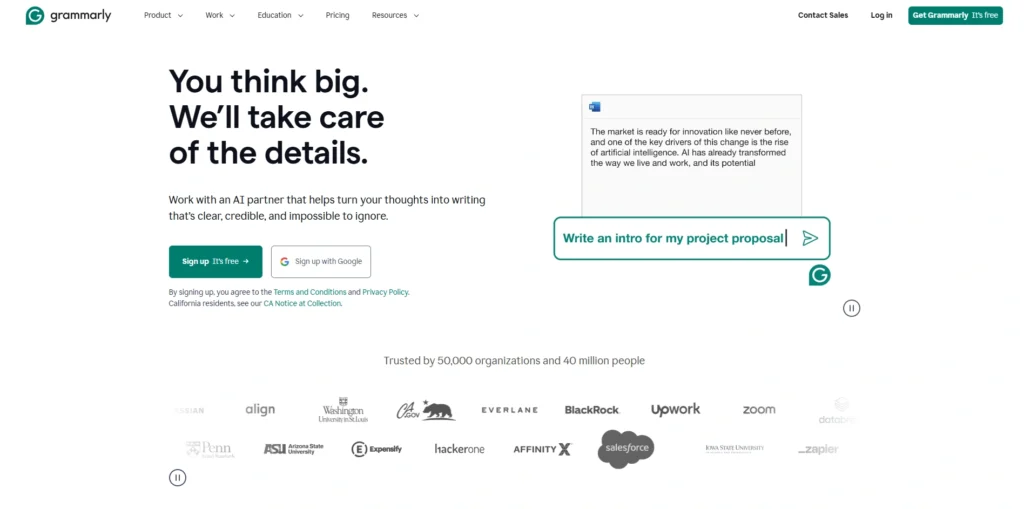
Grammarly is an artificial intelligence-based writing tool that makes communication sound, correct, and clearer. It corrects grammar, spelling, punctuation, and style and provides a tone idea on emails and reports.
Grammarly has become important to businesses so that they can have coherent and refined communication among teams, making it one of the most useful ai tools for business. It is compatible with browsers, e-mail systems and document applications so that it can provide real-time feedback.
The premium plan has enhanced style recommendations, plagiarism detection, and brand tone. Grammarly is particularly needed by marketing, HR, and customer support groups that want to enhance the quality and credibility of written communication.
Key Features:
- Grammar and spell checking
- Tone and clarity suggestions
- Plagiarism detection
- Writing insights dashboard
- Browser and app integration
Pros:
- Improves professional communication
- Works across platforms
- Enhances clarity and tone
- Easy setup and use
- Free starter plan available
Cons:
- Advanced suggestions need a premium
- Not designed for creative writing
- Sometimes over-corrects nuance
Pricing:
- Free– ₹0
- Plus– ₹391.67/member/month
- Enterprise– Custom Pricing
4. MachineTranslation.com
Website: https://www.machinetranslation.com/
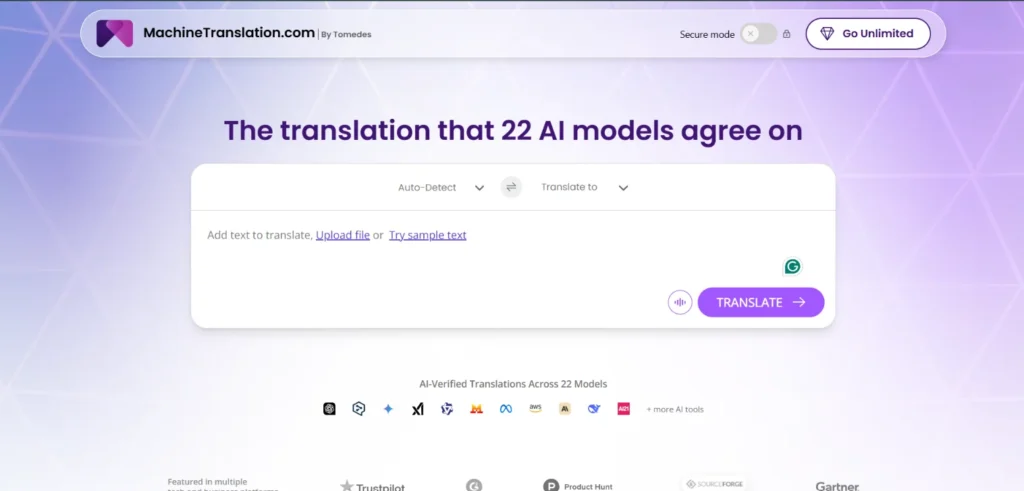
MachineTranslation.com is an AI translator that allows businesses to translate content across more than 50 language pairs instantly. It runs input text through multiple leading MT engines simultaneously and surfaces a consensus-based output, reducing the risk of mistranslation in business-critical content.
Companies use it to handle multilingual communications, localise documents, and evaluate translation quality without relying on a single engine’s output. MachineTranslation.com is designed to be accessible to non-technical users while providing enough depth for teams managing large volumes of translated content.
It fits organisations that operate across international markets and need fast, reliable translation at scale. MachineTranslation.com is available on a free plan with paid subscriptions for higher usage and advanced features.
Key Features
- Multi-engine AI translation comparison
- Consensus-based quality scoring
- Support for 50+ language pairs
- Simple, no-setup interface
- Translation history and workspace tools
Pros
- Fast output across multiple engines
- Reduces risk from single-engine errors
- No technical knowledge required
- Free plan available
- Suitable for individuals and teams
Cons
- Best suited for translation-specific workflows
- Advanced features require subscription
- Not a general-purpose AI assistant
Pricing
- Free – $0
- Pro – Subscription-based
- Enterprise – Custom Pricing
5. HubSpot AI Tools
Website: https://www.hubspot.com/ai
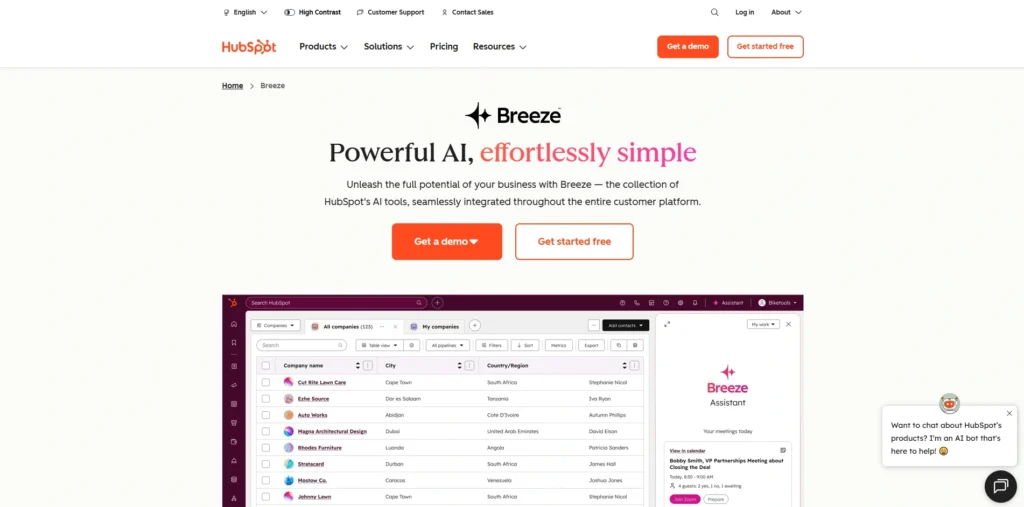
HubSpot AI Tools improve the process of marketing, sales, and customer relationships. These tools are integrated into the HubSpot platform and help to generate emails, score leads, chatbots, and workflows, making it one of the most useful Email Marketing Tools for modern businesses.
Companies utilise it to make the experiences of customers more personal and enhance the effectiveness of campaigns. AI-based analytics brings information of the customer behavior and engagement metrics. HubSpot offers small and big businesses with solutions that are scalable.
It is user-friendly with its powerful CRM base and can suit growing companies. Basic tools are free, whereas advanced AI functions are offered by subscription-based marketing and sales plans.
Key Features:
- AI email and content suggestions
- Predictive lead scoring
- Automated workflows
- Conversational bots
- Customer insights analytics
Pros:
- Strong CRM integration
- Improves inbound strategies
- Scales with business growth
- Encourages customer personalization
- Unified marketing suite
Cons:
- Advanced AI features cost more
- Learning curve for beginners
- Best for HubSpot users only
Pricing:
- Free– ₹0
- Starter– ₹752/mo/seat
- Professional– ₹66,697/mo
- Enterprise– ₹300,000/mo
6. Google Cloud AI
Website: https://cloud.google.com/products/ai
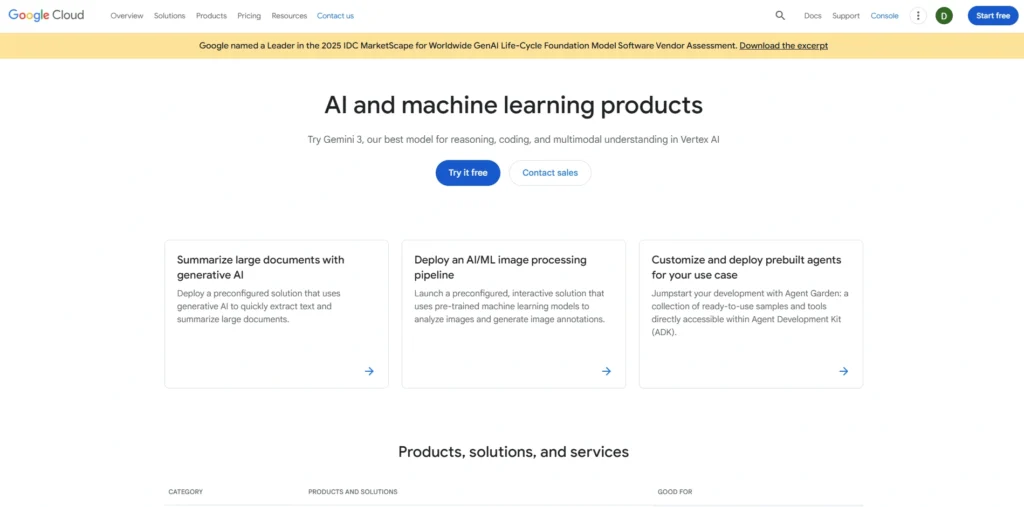
The Google Cloud AI offers artificial intelligence and machine learning services at an enterprise level. It is used in businesses to do predictive analytics, data modeling, natural language processing, and image recognition.
The platform has its own model development of AI and is integrated with Google cloud infrastructure. Advanced analytics, scalable computing power, and strong security standards are useful to companies.
Large companies working with complex data use it extensively. Even though it demands technical expertise, it is flexible to the developers and data scientists. Pricing is typically usage-based and the business is able to scale AI operations based on demand.
Key Features:
- Machine learning model building
- Vision and language APIs
- Data analytics integration
- Natural language processing
- Scalable cloud infrastructure
Pros:
- Powerful enterprise analytics
- Flexible model customization
- Integrates with Google ecosystem
- Strong data security
- Highly scalable
Cons:
- Requires technical setup
- Pricing based on usage
- Not beginner-focused
Pricing:
- Training– $2529.45/1 month
- Training (Edge on-device model) – $13140.00/1 month
- Deployment and online prediction– $1461.46/1 month
- Batch Prediction – $1622.06/1 month
7. IBM Watson
Website: https://www.ibm.com/watson
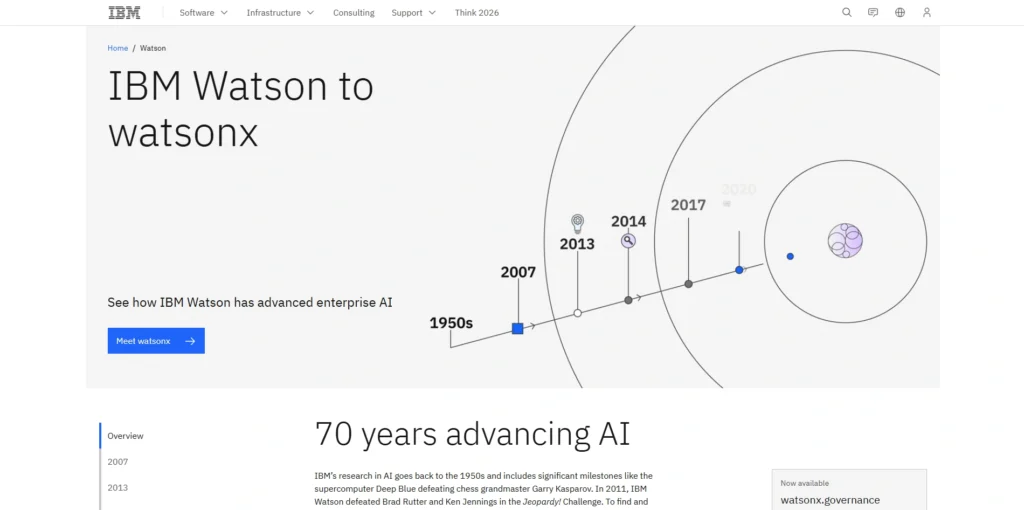
IBM Watson is an all-purpose AI system that is to be used in enterprise analytics and automation and is considered one of the powerful AI tools for business. It provides natural language processing, predictive analytics, and conversational AI solutions.
Watson is used by businesses to automate customer service, predict health data, forecast finances, and evaluate risks. Its high machine learning has enabled organizations to derive actionable insights out of large datasets. IBM Watson connects with other enterprise systems and cloud platforms.
It is specifically applicable in data-related industries that need high-level customization. The platform is based on subscription-based and enterprise pricing in relation to usage and business needs.
Key Features:
- NLP and conversational AI
- Predictive analytics tools
- Visual recognition APIs
- Custom AI model training
- Cognitive data insights
Pros:
- Enterprise-grade AI suite
- Strong analytics performance
- Customizable solutions
- Integrates with business systems
- Robust data processing
Cons:
- Complex for new users
- Subscription/enterprise pricing
- Setup requires expertise
Pricing:
- Plus– Starting at $500
- Enterprise– Starting at $5,000
- Premium– Contact Sales
- IBM Cloud Pak for Data cartridge– Contact Sales
8. Salesforce Einstein
Website: https://www.salesforce.com/artificial-intelligence/
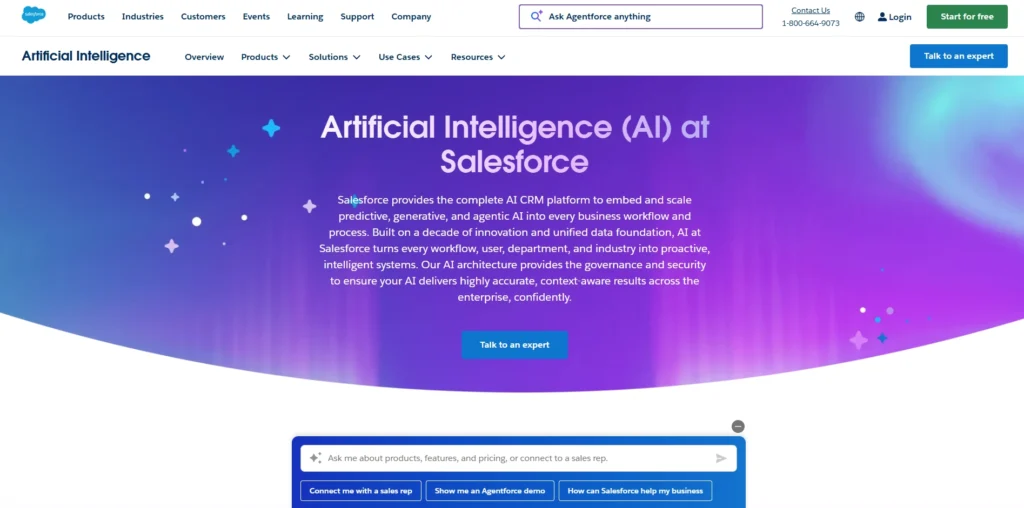
Salesforce Einstein is a CRM platform of Salesforce that has been built on AI. It offers predictive lead score, automatic data entry, sales forecasting and custom recommendations.
Einstein is used by businesses to enhance customer interaction and facilitate sales. Using CRM data, it finds opportunities and trends that improve decision-making. AI-powered campaign optimization and customer segmentation are useful to marketing teams.
The tool would suit those organisations that use Salesforce products best. As a subscription-based service, Salesforce Einstein assists businesses in enhancing their growth in revenues and operations by automating smart CRM.
Key Features:
- Predictive lead scoring
- Automated data entry
- Intelligent forecasting
- Personalised AI insights
- CRM integration
Pros:
- Enhances sales efficiency
- Improves customer forecasting
- Native to the Salesforce platform
- Scalable enterprise tool
- Actionable AI recommendations
Cons:
- Requires Salesforce subscription
- Advanced features cost extra
- Not standalone AI
Pricing:
- Agentforce for Service– $125/user/month
9. Microsoft Azure AI
Website: https://azure.microsoft.com/en-us/overview/ai-platform/
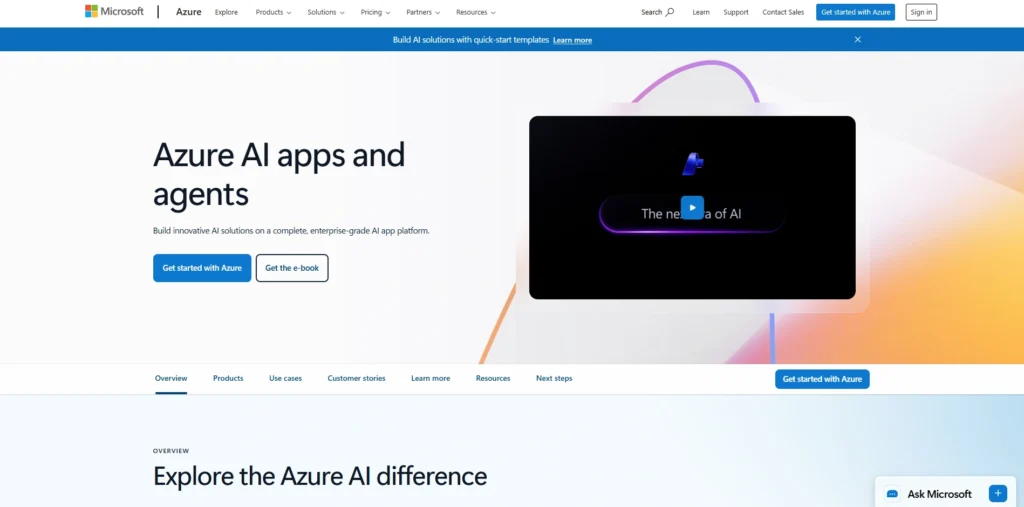
The Microsoft Azure AI is a set of AI services that provide full service to businesses and developers. It has machine learning capabilities, cognitive capabilities, chatbots, and data analytics capabilities.
Azure AI helps organisations to create intelligent applications, automate their workflow, and process large-scale data safely using AI tools for business. The platform is compatible with Microsoft packages like Office and Dynamics.
Its cloud-based computing platform is scalable and reliable to businesses. It might need some technical expertise, but the price of the Azure AI is flexible pay-as-you-go. It fits best within businesses that want to have tailor-made AI in a safely hosted cloud.
Key Features:
- Cognitive services (vision, speech, language)
- Custom AI model training
- Real-time analytics
- Bot framework
- Secure cloud infrastructure
Pros:
- Enterprise-grade performance
- Developers’ flexibility
- Integrates with the Microsoft ecosystem
- AI scalability options
- Reliable uptime
Cons:
- Technical setup required
- Pay-as-you-go pricing
- Not beginner-focused
Pricing:
- Request a Pricing Quote
10. Zoho Zia
Website: https://www.zoho.com/zia/
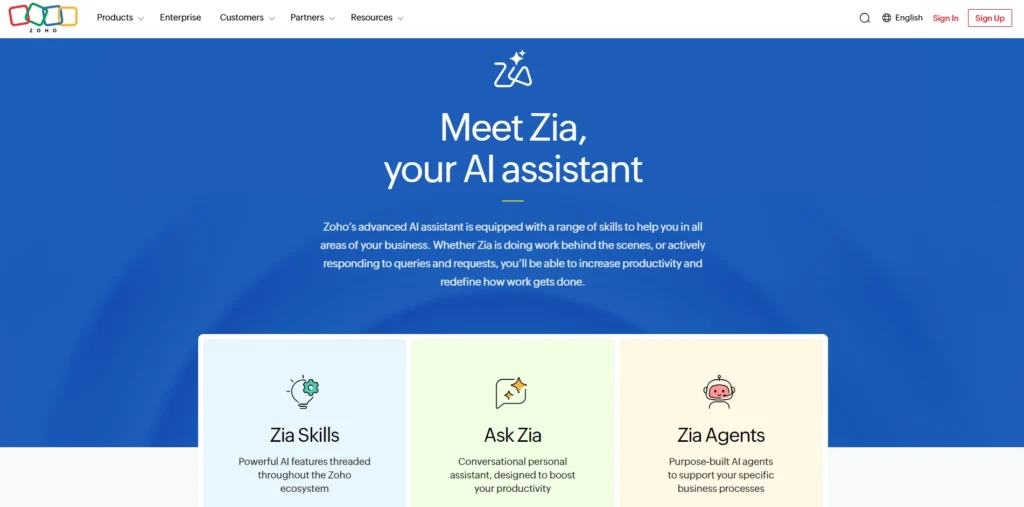
Zoho Zia is the artificial intelligence assistant that is built into the business applications of Zoho. It features sales forecasting, data analysis, workflow automation and smart notifications.
Predictive insights and automated suggestions are beneficial to businesses that use Zoho CRM and other Zoho tools. Zia will improve productivity as it will analyze customer interactions and propose the best actions. It assists small and medium-sized businesses in optimising operations.
Zia is simple to use with easy-to-adopt dashboards and integration throughout the ecosystem of Zoho. The AI capabilities come with different eZoho subscription options and this makes it affordable to current Zoho users.
Key Features:
- Predictive sales insights
- Automated task suggestions
- Smart customer analytics
- Workflow automation
- AI-based recommendations
Pros:
- Integrated within Zoho apps
- Easy for small businesses
- Simplifies CRM workflows
- Insightful customer data
- Cost-effective
Cons:
- Limited outside Zoho ecosystem
- Advanced features require subscription
- Not standalone
Pricing:
- Standard– $14/user/month
- Enterprise– $40/user/month
11. Adobe Sensei
Website: https://www.adobe.com/sensei.html
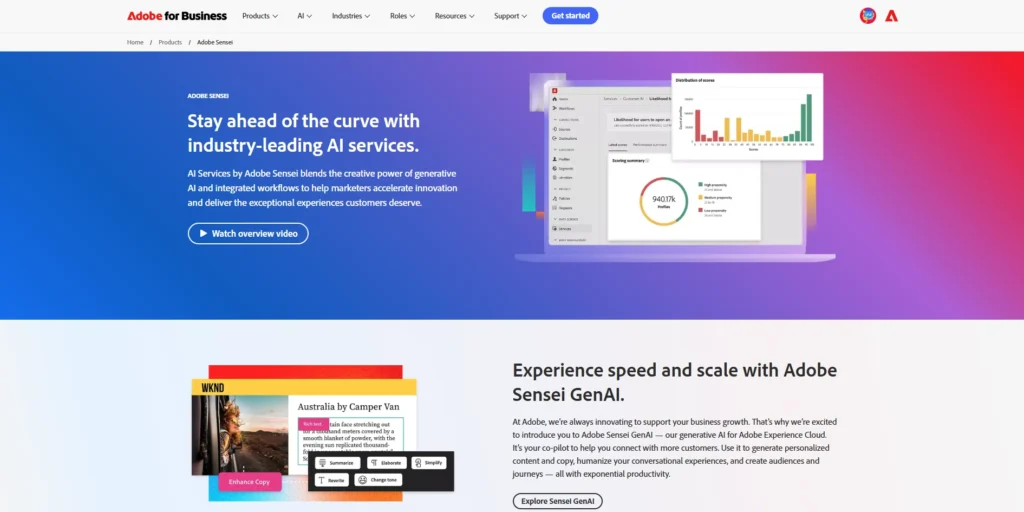
Adobe Sensei drives artificial intelligence in creative and marketing products of Adobe. It automates image editing, video tagging, audience segmentation and campaign optimization, making it one of the powerful AI tools for business.
It is utilised in marketing and design businesses to advance creative processes and to optimise personalisation. Sensei processes customer data in order to provide performance insights and target content. It enhances the productivity of designers and marketers as it is integrated into Adobe Experience Cloud and Creative Cloud.
Its automated features powered by AI save on the time of manual editing and enhance content accuracy. Adobe Sensei is a product ecosystem of Adobe that operates on a subscription model.
Key Features:
- Automated image and video tagging
- Content personalization
- Marketing analytics
- AI design tools
- Recommendation systems
Pros:
- Enhances creative workflows
- Strong marketing AI features
- Seamless Adobe integration
- Powerful automation tools
- Improves content relevance
Cons:
- Subscription-based (Adobe products)
- Premium pricing
- Best for creative teams
Pricing:
- Pricing is tailored to business needs
12. Hootsuite Insights
Website: https://hootsuite.com/products/insights
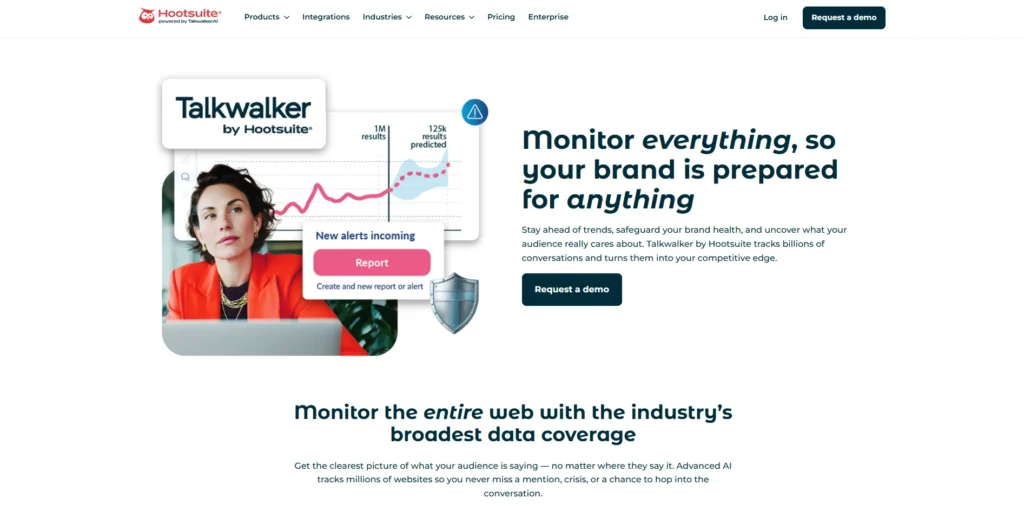
Hootsuite Insights is an analytics tool that relies on AI to track the performance of a brand across social media. It monitors mentions, sentiment, and engagement trends in real-time.
Companies utilise it to fine-tune their marketing missions and reputation on the internet. The web-based application offers graphical dashboards and reports to aid in decision making. Artificial intelligence can be used to determine the new trends and preferences of the audience.
It is also useful especially among marketing teams that have numerous social accounts. Hootsuite Insights is based on a subscription model and it is combined with the other Hootsuite social media management tools.
Key Features:
- Realtime social listening
- Sentiment analysis
- Trend detection
- Competitive analytics
- Custom dashboards
Pros:
- Improves social campaigns
- Easy visualisation tools
- Realtime performance monitoring
- Strong integration with Hootsuite
- Scalable for agencies
Cons:
- Subscription pricing
- Some insights limited in basic plans
- Requires some training
Pricing:
- Standard– ₹2,600/month/user
- Advanced– ₹10,500/month/user
- Enterprise– Custom Pricing
13. Tidio AI
Website: https://www.tidio.com/ai/
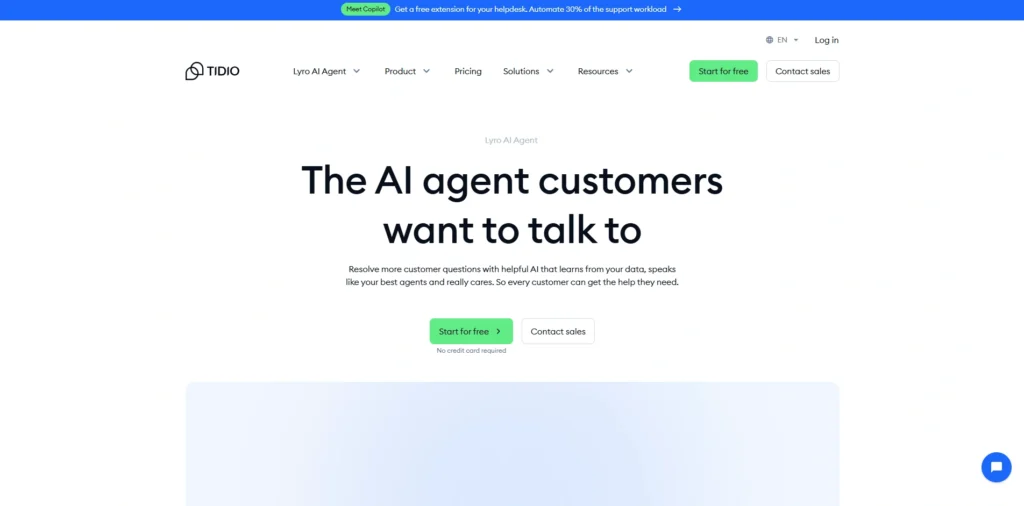
For businesses looking to improve customer service, Tidio AI provides live chat and chatbot services. It automates the answering of frequent inquiries, takes leads and facilitates live conversations.
The AI chat can be installed on websites and e-commerce platforms without a hassle. Small businesses gain the advantage of the shortening of response time and better customer satisfaction.
The Tidio platform has analytics capabilities to monitor the performance and optimise communication practices. It provides a free plan with limited functionality and paid subscriptions to the advanced automation functionality.
Key Features:
- AI chatbot automation
- Live chat support
- Lead capture bots
- Multichannel support
- Chat analytics
Pros:
- Eases support workload
- Quick installation
- Helps increase conversions
- Improves customer experience
- Free plan available
Cons:
- Advanced automation paid
- Not as robust as enterprise bots
- Limited beyond chat
Pricing:
- Customer Service Platform
- Starter– $29/mo
- Growth– $59/mo
- Plus– $749/mo
- Premium– Contact for Pricing
- Lyro AI Agent
- Core– $39/mo
- Plus– $749/mo
- Premium– Contact for Pricing
14. Lumen5
Website: https://lumen5.com/
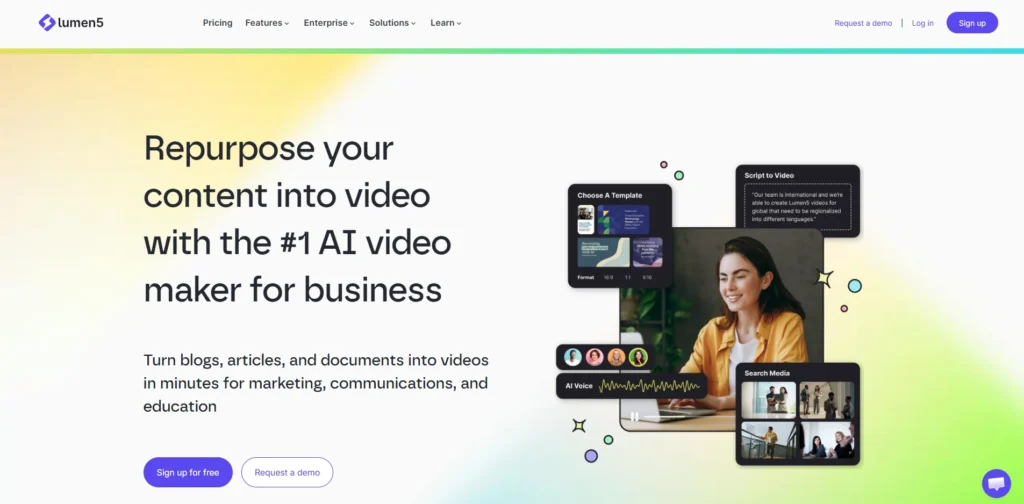
Lumen5 is an artificial intelligence video-making system that converts written text into attractive marketing video content. Businesses rely on it to reuse blog posts, generation of promotional video clips, and increased presence in social media.
The tool is an automated tool that proposes visuals, music, and layouts based on the input text. Its drag and drop feature makes video creation so easy that it does not need technical knowledge.
Lumen5 can be particularly convenient as a substitute for digital marketing teams who would like to find cost-effective video solutions. It is free of charge with a basic account and paid subscriptions with features of premium and branding.
Key Features:
- Converts text to video
- AI scene selection
- Custom branding options
- Stock media library
- Auto audio matching
Pros:
- Simplifies video production
- Great for marketing teams
- Easy draganddrop interface
- Improves engagement
- Free tier available
Cons:
- Premium for full features
- Video quality limited in free tier
- Not for advanced editors
Pricing:
- Basic– $29/month
- Starter– $79/month
- Pro– $199/month
- Team– Custom
15. Canva AI Tools
Website: https://www.canva.com/ai/
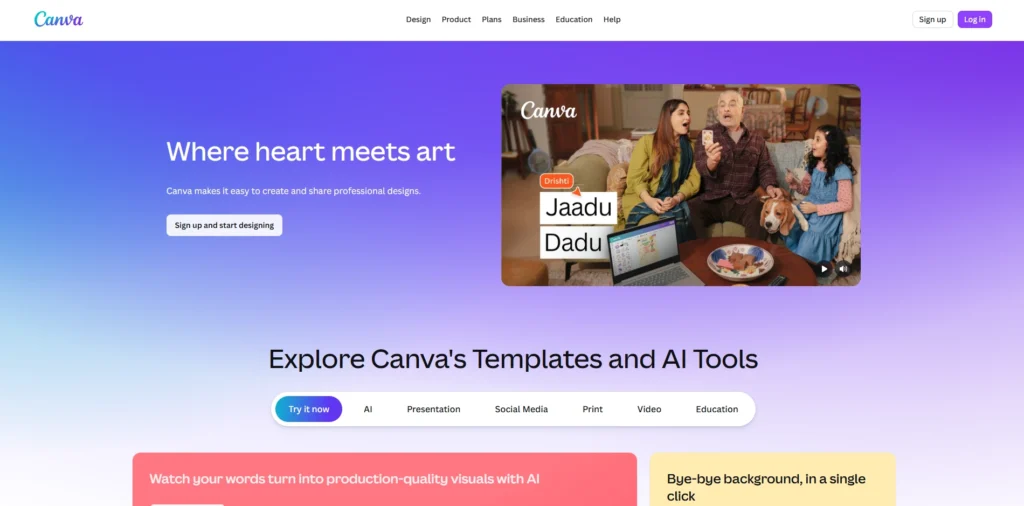
Canva AI Tools improve design events with such features as Magic Write, background remover, and image generation using AI.
Canva is a business tool that helps companies to design social media graphics, presentations, and marketing resources in a short period. It is a simple tool to use; thus, professional designing is accessible even without experience in design. There are AI capabilities that suggest and generate layouts and content, making it one of the most useful AI tools for business.
Through teams, they are able to work in real time thereby having an efficient project management. Canva is an AI-powered free design tool that is available under subscription-based plans and is, therefore, applicable to both startups and established businesses.
Key Features:
- AI design suggestions
- Magic Write text generator
- Background remover
- Template recommendations
- Collaborative editing
Pros:
- Beginnerfriendly design tools
- Speeds up creative tasks
- Realtime collaboration
- Cross-platform support
- Free plan available
Cons:
- Premium needed for advanced tools
- Some AI features limited
- Online dependency
Pricing:
- Free– ₹0
- Pro– ₹500 per month for one person
- Business– ₹650 per month for one person
- Enterprise– Custom Pricing
16. Notion AI
Website: https://www.notion.so/product/ai
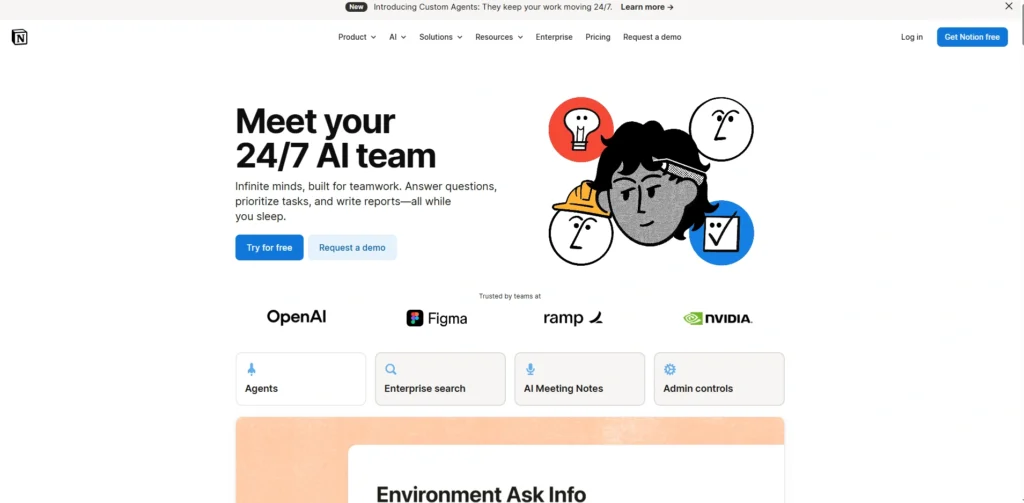
Notion AI combines intelligent writing and summarizing features in the Notion workspace. It is created to assist businesses in preparing documents, meeting summaries, brainstorming, and workflow organisation, making it one of the useful AI tools for business.
It improves work speed by automating the process of taking notes and structuring content. The teams get better collaboration and knowledge management. Notion AI makes research and brainstorming more straightforward, which saves time in the different departments.
It is flexible and fits in the project management systems. The AI functionality can be added as an option to the subscription services of Notion, which makes it a viable option in current digital offices.
Key Features:
- Smart writing assistance
- Summaries & outlines
- Task automation
- Brainstorming support
- Knowledge management
Pros:
- Enhances productivity
- Built into Notion workspace
- Great for teams
- Speeds content creation
- Flexible platform
Cons:
- Subscription required
- Limited standalone features
- Best with Notion ecosystem
Pricing:
- Free– $0
- Plus– $12 per member / month
- Business– $24 per member / month
- Enterprise– Custom Pricing
Ending Thoughts
In conclusion, AI Tools for Business have become essential assets for modern businesses seeking growth, efficiency, and competitive advantage. They streamline operations, enhance customer engagement, improve data-driven decision-making, and automate time-consuming tasks with precision.
By integrating the right AI solutions, organizations can reduce costs, boost productivity, and adapt quickly to changing market demands. Whether used for marketing, analytics, customer support, or workflow automation, these tools empower businesses to operate smarter and scale faster. Embracing AI is no longer just a technological upgrade; it is a strategic move that positions companies for long-term success in an increasingly digital world.
FAQs
1. What Are AI Tools For Business?
AI tools for business are software applications that use artificial intelligence to automate tasks, analyse data, improve customer service, and enhance decision-making processes.
2. How Can AI Tools Benefit Small Businesses?
AI tools help small businesses reduce operational costs, automate repetitive work, improve marketing performance, and provide better customer support without needing large teams.
3. Are AI Tools Expensive To Implement?
Many AI tools offer flexible pricing plans, including free versions and scalable subscriptions, making them affordable for startups, small businesses, and large enterprises.
4. Which Business Areas Can AI Tools Improve?
AI tools can improve marketing, sales, customer service, finance, human resources, data analysis, inventory management, and workflow automation.
5. Do AI Tools Require Technical Knowledge To Use?
Most modern AI tools are designed with user-friendly interfaces, so non-technical users can operate them with minimal training.